Aeration is often recommended as a cure-all for struggling lawns. But while the advice to “aerate” is common, the guidance usually stops there—leaving homeowners to choose between spike aerators and plug (core) aerators without understanding how differently they work.
On the surface, both tools create holes in the lawn. Below the surface, however, the results couldn’t be more different.
This article breaks down how spike and plug aerators actually affect soil, which lawns benefit from each, and how to choose the right option based on your goals—not marketing claims.
What Lawn Aeration Is Really Meant to Solve
Before comparing tools, it helps to understand the problem aeration is meant to address.
Over time, lawns suffer from:
- Soil compaction
- Reduced oxygen flow to roots
- Poor water infiltration
- Shallow root systems
- Slower nutrient uptake
Aeration aims to reverse these issues by improving soil structure, not just surface appearance. The way an aerator interacts with soil determines whether it truly helps—or merely gives the impression of improvement.
What Is a Spike Aerator?
A spike aerator uses solid tines or spikes to punch holes into the soil. These can be:
- Manual step-on tools
- Rolling spike drums
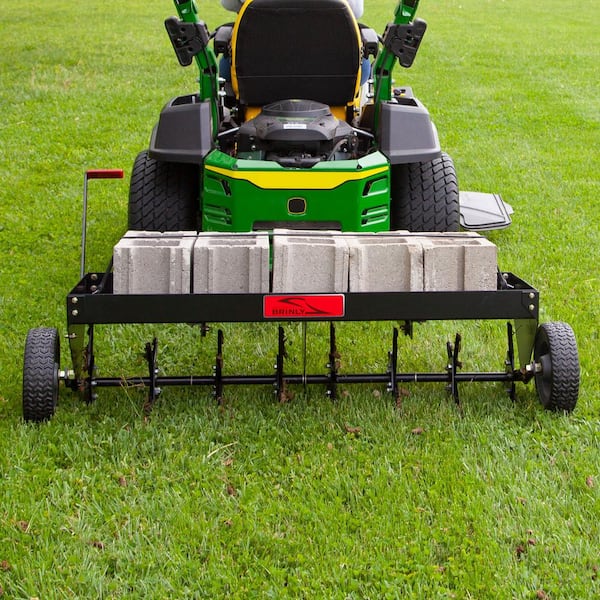
- Tow-behind spike attachments
How Spike Aerators Work
Spike aerators displace soil sideways as the spike enters the ground. The hole closes quickly, especially in clay soil, and surrounding soil becomes slightly compressed.
Where Spike Aerators Make Sense
- Lightly compacted soil
- Sandy or loamy soil types
- Routine maintenance on already healthy lawns
- Small lawns where convenience matters
Spike aerators are simple, affordable, and easy to store—but their effectiveness is limited.
What Is a Plug (Core) Aerator?
A plug aerator removes small cylindrical cores of soil from the lawn and deposits them on the surface.
These tools come as:
- Manual core aerators
- Tow-behind plug aerators
- Gas-powered rental machines
How Plug Aerators Work
By removing soil entirely, plug aerators:
- Relieve compaction rather than shifting it
- Create open channels for air, water, and nutrients
- Encourage deeper root growth
- Improve soil structure as plugs break down naturally
This approach addresses the root cause of many lawn problems instead of masking symptoms.
Spike vs Plug Aerators: Side-by-Side Comparison
| Feature | Spike Aerator | Plug (Core) Aerator |
|---|---|---|
| Soil Impact | Displaces soil | Removes soil |
| Compaction Relief | Minimal | Significant |
| Best Soil Type | Sandy, loose | Clay, compacted |
| Root Growth Benefit | Limited | Strong |
| Overseeding Support | Moderate | Excellent |
| Ease of Use | Easy | Moderate |
| Cost | Lower | Higher |
| Long-Term Results | Short-term | Long-term |
This difference explains why results vary so dramatically between the two.
Does a Spike Aerator Make Compaction Worse?
This is one of the most debated questions in lawn care.
In dense or clay-heavy soil, spike aerators can compress soil around the hole as the spike enters. Over time, this can create harder walls beneath the surface, limiting root expansion.
That doesn’t mean spike aerators are useless—but it does mean they’re often misapplied.
For lawns with real compaction problems, a spike aerator alone is rarely enough.
Which Aerator Is Better for Overseeding?
If overseeding is part of your plan, plug aerators are clearly superior.
The open cores:
- Improve seed-to-soil contact
- Allow moisture to reach germinating seed
- Reduce competition from existing turf
Spike aerators can help slightly, but they don’t create the same receptive environment for new grass.
Tow-Behind Spike vs Tow-Behind Plug Aerators
For larger lawns, tow-behind aerators are popular—and the same principles apply.
Tow-Behind Spike Aerators
- Lower cost
- Easier to pull
- Better for light annual maintenance
Tow-Behind Plug Aerators
- Heavier and more expensive
- Much more effective on compacted soil
- Ideal for serious lawn improvement
For homeowners with riding mowers and compacted soil, a tow-behind plug aerator often delivers the best return on investment.
When a Spike Aerator Is the Right Choice
Despite their limitations, spike aerators have a role.
They’re a reasonable choice if:
- Your lawn is already healthy
- Soil drains well
- You aerate frequently
- You want quick, low-effort maintenance
- You’re supplementing with occasional plug aeration
Used appropriately, they can help maintain good conditions—but they shouldn’t be relied on as a cure for deeper problems.
When a Plug Aerator Is the Better Tool
Choose a plug aerator if:
- Soil feels hard or compacted
- Water pools or runs off
- Grass roots are shallow
- You’re overseeding or renovating
- The lawn sees heavy foot traffic
For most struggling lawns, plug aeration provides noticeably better and longer-lasting results.
How Often Should You Use Each Type?
- Spike aerator: Can be used annually on healthy lawns
- Plug aerator: Typically every 1–3 years, depending on compaction
Over-aerating—especially with aggressive tools—can stress turf. More is not always better.
Aeration and Dethatching: How They Work Together
Aeration is most effective when paired with proper surface preparation.
Best sequence:
- Dethatch first (or power rake if needed)
- Aerate second
- Overseed and fertilize
This combination maximizes soil access and sets the stage for strong recovery.
Final Verdict: Spike vs Plug Aerators
If the goal is long-term lawn improvement, plug aerators are the clear winner. They address compaction directly, support overseeding, and improve soil health over time.
Spike aerators are best viewed as a maintenance tool, not a solution for underlying soil problems.
Choosing the right aerator isn’t about price or convenience—it’s about matching the tool to the condition of your lawn.