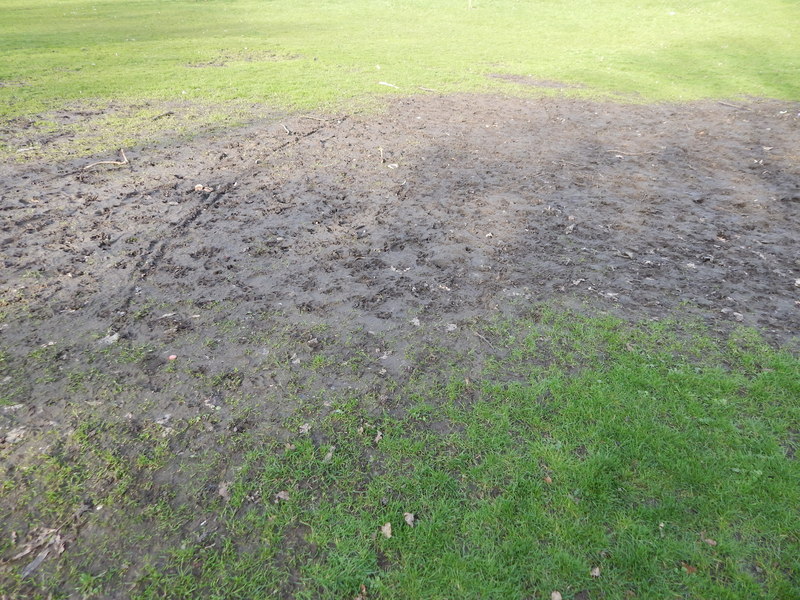
A muddy backyard is rarely caused by just “too much rain.” In almost every case, it’s the result of one or more underlying issues working together.
The most common culprits include:
• Compacted soil that can’t absorb water
• Heavy clay soil with poor drainage
• Low spots where water naturally collects
• Poor grading that funnels water toward the yard
• Thin or damaged turf that can’t stabilize soil
• Excess foot traffic from kids, pets, or paths
Fixing the mud permanently means addressing the cause—not just covering it up.
Step One: Identify the Root Cause of the Mud
Before buying anything or hauling in soil, take a close look at how water behaves in your yard.
Ask yourself:
• Does water pool after rain, or does it slowly soak in?
• Are muddy areas always in the same spots?
• Is the soil hard and compacted even when dry?
• Is the problem worse in spring and fall?
Most muddy yards fall into one of three categories: compaction problems, drainage problems, or grass coverage problems—often a combination of all three.
Fix #1: Relieve Compacted Soil With Aeration
Compaction is the number-one reason backyards stay muddy.
When soil becomes compressed, water has nowhere to go. It sits on the surface, turning grass into muck.
Why Aeration Works
Core aeration removes plugs of soil, creating channels for:
• Water infiltration
• Oxygen flow to roots
• Stronger root growth
• Faster drying after rain
For muddy backyards, plug (core) aeration is far more effective than spike aeration.
Best Practice
Aerate in early fall or spring when soil is moist but not soaked. Follow aeration with compost or overseeding for best results.
Fix #2: Improve Soil Structure With Organic Material
Clay-heavy soil holds water like a sponge. Sand alone won’t fix this—in fact, it can make things worse.
The real solution is organic matter.
What to Add
• Compost
• Screened topsoil with organic content
• Compost/topsoil blends
Topdress aerated areas with a thin layer and rake it into holes. Over time, soil structure improves dramatically.
This is a slow fix—but it’s permanent.
Fix #3: Reseed With the Right Grass (or Replace Weak Turf)
Bare soil turns to mud instantly. Grass is nature’s erosion control system.
If Grass Is Thin or Patchy
Overseed after aeration using grass suited to your conditions:
• Tall fescue for durability and deep roots
• Perennial ryegrass for fast establishment
• Shade blends if trees are involved
Water consistently until established, then reduce frequency.
If Grass Won’t Grow at All
Constant moisture or heavy shade may prevent turf success. In these areas, grass may not be the answer.
Fix #4: Correct Low Spots and Poor Grading
If mud always forms in the same places, chances are water is collecting there.
How to Fix Low Areas
• Fill depressions with topsoil (not sand)
• Compact lightly and reseed
• Repeat as soil settles
For larger problems, regrading may be necessary to gently slope water away from problem zones.
Even a slight grade change can make a huge difference.
Fix #5: Install Drainage Where Needed
Some yards simply need help moving water.
Common Backyard Drainage Solutions
French Drains
Best for yards with persistent pooling. Gravel-filled trenches redirect water underground.
Dry Wells
Ideal for areas where water collects after heavy rain but drains slowly.
Channel Drains or Surface Swales
Useful when water flows across the yard from neighboring properties.
Drainage doesn’t have to be expensive—but it must be planned correctly.
Fix #6: Create Defined Paths for Foot Traffic
Dogs, kids, and regular walking routes compact soil faster than anything else.
If mud forms along paths:
• Install stepping stones
• Add mulch or gravel walkways
• Redirect traffic away from fragile turf
Sometimes the fix isn’t more grass—it’s smarter design.
Fix #7: Consider Alternatives to Grass in Problem Areas
In chronically wet spots, grass may never thrive.
Smart alternatives include:
• Decorative gravel
• Mulch beds
• Ground covers like creeping thyme
• Hardscape patios or pavers
These solutions eliminate mud entirely while improving usability.
What Not to Do (Common Muddy Yard Mistakes)
Don’t Add Sand to Clay Soil
This can create a concrete-like mix.
Don’t Overwater
Wet soil without oxygen worsens compaction.
Don’t Mow Too Low
Short grass exposes soil and weakens roots.
Don’t Ignore Drainage
Aeration alone won’t fix standing water.
How Long Does It Take to Fix a Muddy Backyard?
Results vary by approach:
• Aeration improvements: noticeable within weeks
• Soil amendment results: months, but lasting
• Drainage fixes: immediate impact
• Grass restoration: one growing season
Most homeowners see meaningful improvement within a single season if problems are addressed correctly.
A Simple Action Plan for Most Yards
For typical muddy backyards, this sequence works well:
- Core aerate compacted areas
- Topdress with compost
- Overseed with durable grass
- Improve drainage in low spots
- Control foot traffic
It’s not flashy—but it works.
Final Thoughts: Fix the Cause, Not the Mud
A muddy backyard isn’t a cosmetic problem. It’s a symptom.
When you fix compaction, improve soil, and manage water flow, mud disappears—and stays gone.
The result is a yard that drains properly, grows healthier grass, and can actually be used again, even after rain.