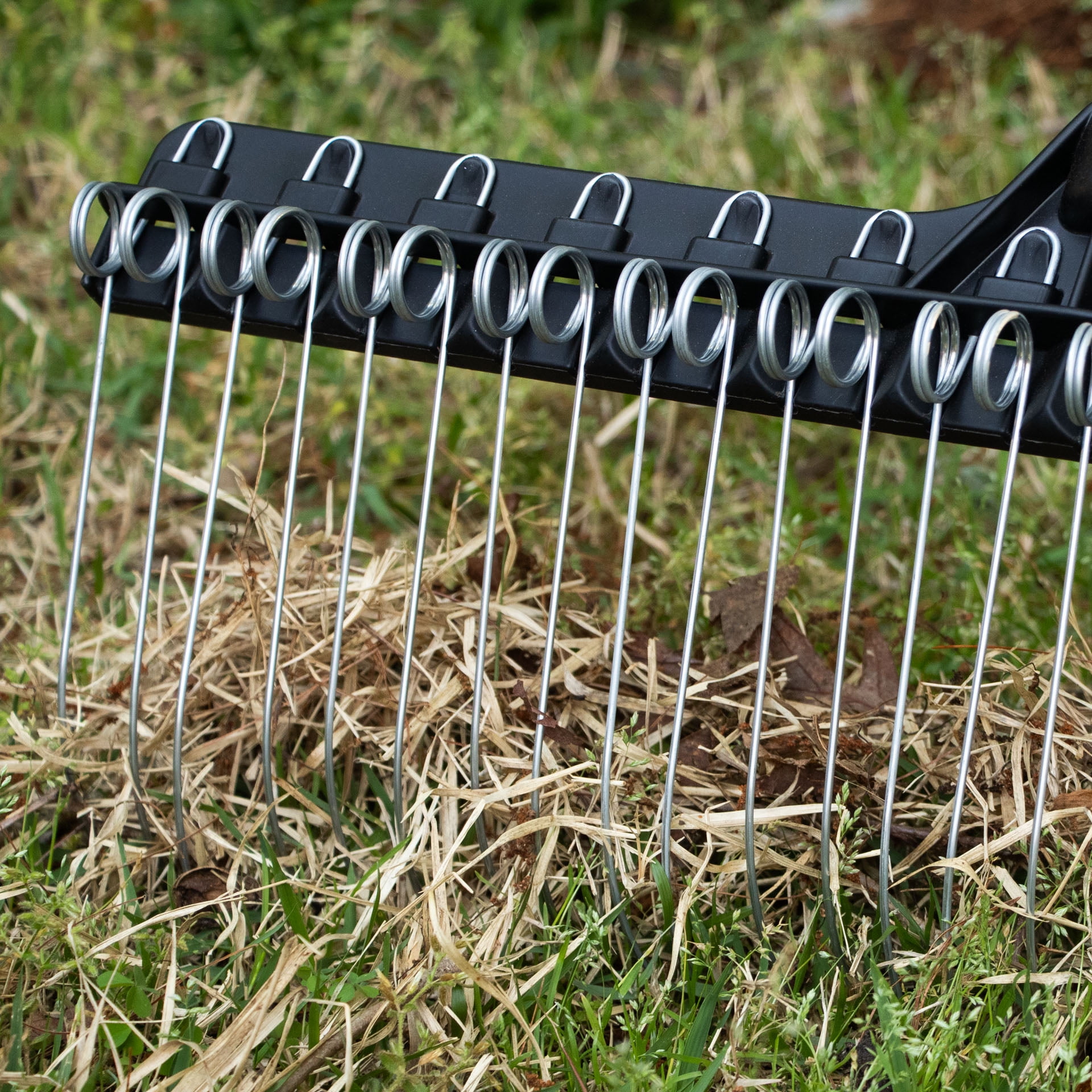
A manual thatch rake is a specialized lawn rake designed to pull dead grass, roots, and organic debris — known as thatch — from the surface of your lawn. Unlike standard leaf rakes, thatch rakes have short, rigid, often sharpened tines that dig slightly into the turf to loosen and lift material trapped between grass blades and soil.
They’re simple tools. No engines. No cords. No fuel. Just leverage, muscle, and patience.
And while they may look old-school, manual thatch rakes still have an important place in modern lawn care.
When a Manual Thatch Rake Makes Sense
A manual thatch rake is not a replacement for a power dethatcher in every situation — but in the right scenario, it can be the best option.
Manual thatch rakes work best when:
- Your lawn is small to medium sized
- Thatch buildup is light to moderate
- You want precision, not aggression
- You’re spot-treating problem areas
- You want to avoid stressing healthy grass
If you’re dealing with thin thatch or isolated trouble spots, a manual rake gives you far more control than a machine.
When a Manual Thatch Rake Is the Wrong Tool
There are limits.
A manual thatch rake may not be ideal if:
- Your lawn is large
- Thatch exceeds about ½ inch across the entire yard
- You’re planning a full lawn renovation
- Physical strain is a concern
In those cases, an electric dethatcher or rented power rake will save time — and your back.
Manual Thatch Rake vs Power Dethatcher
| Feature | Manual Thatch Rake | Power Dethatcher |
|---|---|---|
| Cost | Very low | Moderate |
| Precision | Excellent | Moderate |
| Speed | Slow | Fast |
| Lawn Stress | Low (if used correctly) | Medium–High |
| Maintenance | None | Electrical/mechanical |
Many experienced homeowners use both — a power dethatcher for seasonal work and a manual rake for touch-ups.
How to Use a Manual Thatch Rake Properly
Using a thatch rake incorrectly is one of the fastest ways to damage grass. Technique matters.
Step 1: Mow Slightly Lower Than Normal
Shorter grass exposes thatch and reduces tearing.
Step 2: Work in Short, Controlled Strokes
Don’t yank aggressively. Pull backward with steady pressure so the tines comb through the turf rather than rip it.
Step 3: Focus on Problem Areas
Concentrate where thatch is visible or where water pools after rain.
Step 4: Rake, Then Remove Debris
Once loosened, collect the thatch with a leaf rake or by hand. Leaving debris behind defeats the purpose.
Step 5: Water Lightly Afterward
This helps stressed grass rebound and reduces shock.
Best Manual Thatch Rakes Worth Buying
These tools sell consistently on Amazon because they solve a real problem without requiring machines.
Ames True Temper Thatch Rake (15-Inch)
A classic design with sharp, rigid tines that cut through thatch effectively.
- Affordable
- Durable steel head
- Trusted brand recognition
GroundsKeeper II Adjustable Thatching Rake
Adjustable tine angles make it gentler for lighter lawns and tougher for thicker thatch.
How Often Should You Use a Manual Thatch Rake?
For most lawns:
- Once per year is plenty
- Spot treatments as needed
- Best done during active growth (spring or early fall)
Overuse can thin turf unnecessarily.
Common Mistakes With Manual Thatch Rakes
Raking too aggressively
This pulls live grass, not just thatch.
Raking when soil is wet
Leads to tearing and compaction.
Using it on dormant grass
Grass can’t recover if it isn’t growing.
Manual Thatch Rake + Aeration: A Smart Combo
Light dethatching followed by aeration improves airflow, water infiltration, and microbial activity — reducing future thatch buildup.
This is especially effective for:
- Clay soil
- Compacted lawns
- High-traffic areas
Is a Manual Thatch Rake Enough for Most Homeowners?
For many lawns — yes.
If you:
- Maintain regularly
- Avoid letting thatch accumulate
- Focus on prevention (aeration, proper watering)
…a manual thatch rake may be all you ever need.
For others, it’s a perfect entry tool before moving up to powered equipment.
Final Thought
The manual thatch rake is one of the most misunderstood lawn tools. It’s not outdated — it’s selective.
Used correctly, it removes thatch without tearing up turf, costs very little, and gives homeowners precise control over their lawn’s health. For small yards, spot fixes, and careful maintenance, it remains one of the smartest tools you can own.