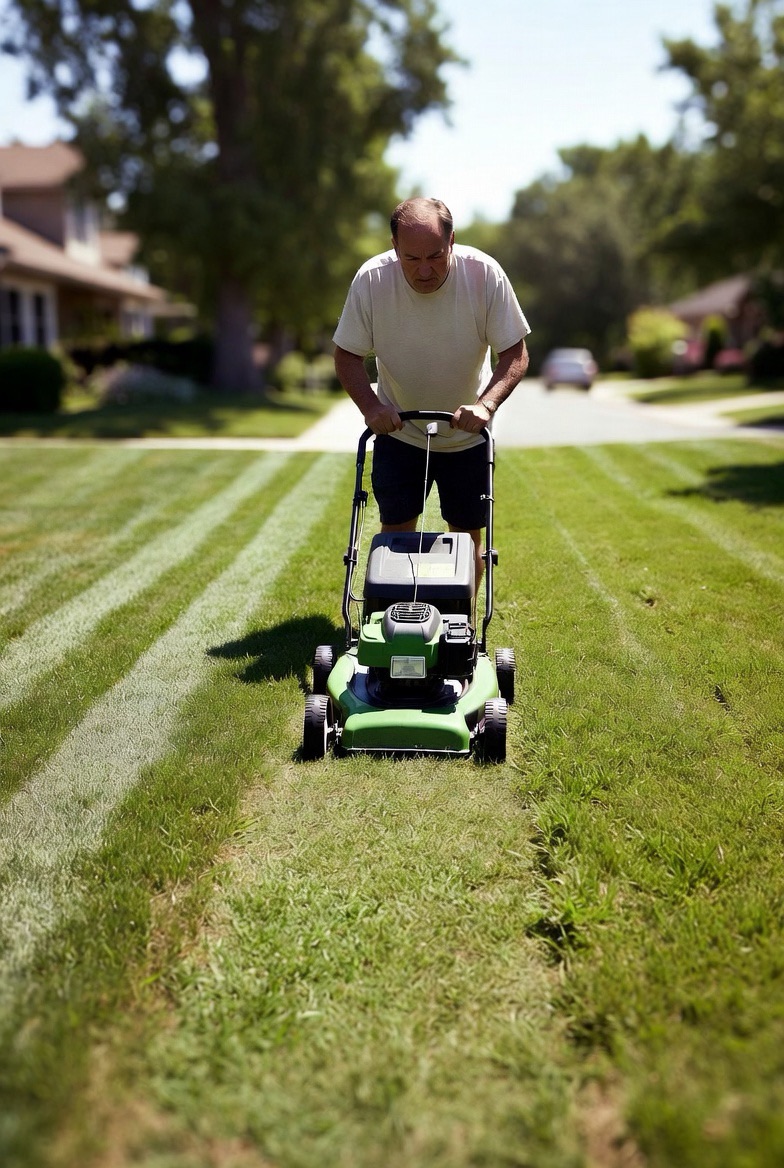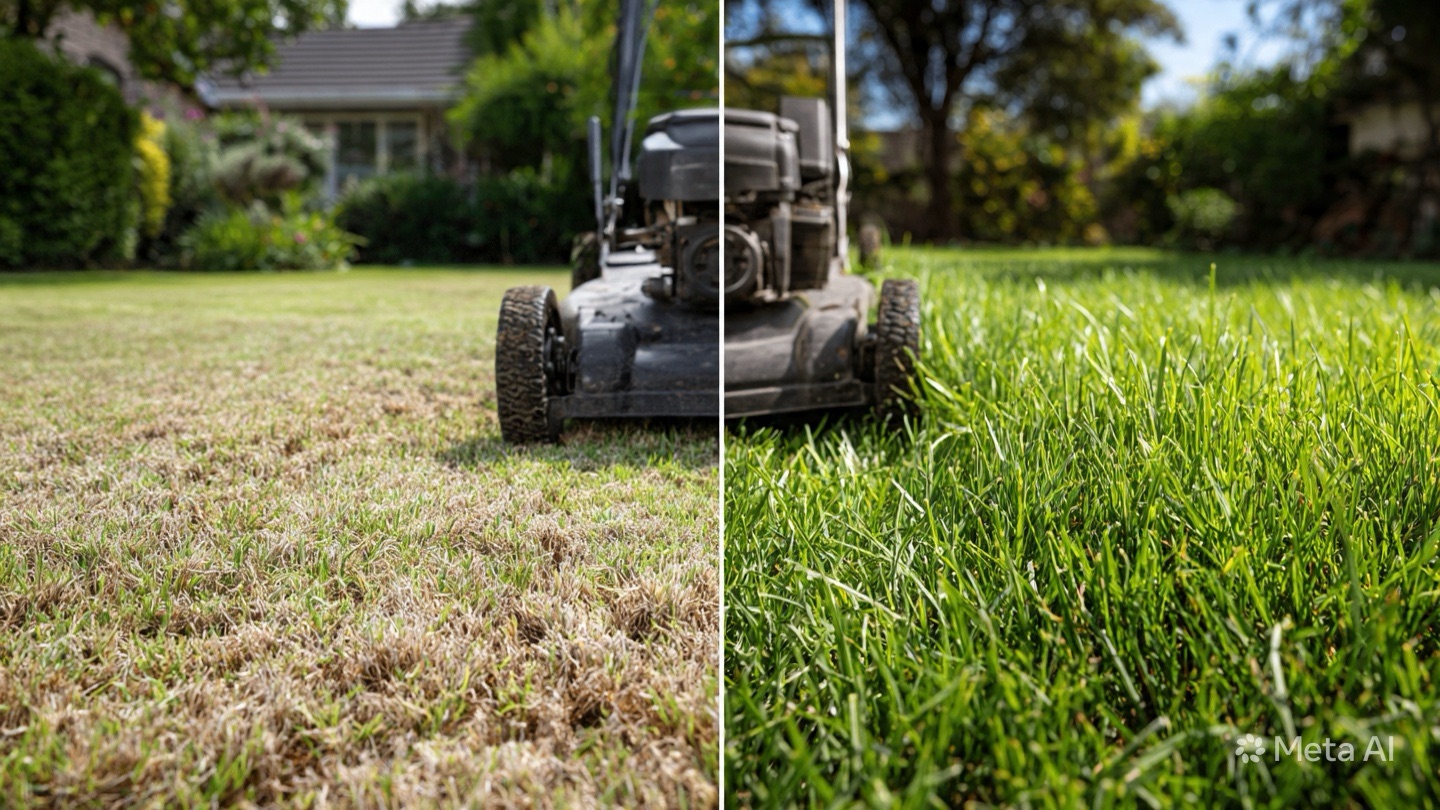
You finish mowing the lawn expecting that crisp, striped, golf-course look… but instead your grass suddenly looks stressed, pale, patchy, or even brown.
Sound familiar?
Most homeowners assume mowing is helping their lawn simply because they’re keeping it neat. But the truth is, mowing is one of the most important — and most commonly misunderstood — parts of lawn care. In many cases, the mower itself is creating the problem.
If your lawn consistently looks worse right after cutting, there’s a good chance you’re making one of these common mistakes.
1. You’re Cutting the Grass Too Short
This is the biggest lawn mistake homeowners make.
Scalping your lawn may seem like a way to mow less often, but cutting grass too short weakens the root system and exposes the soil to heat and drought stress. Instead of growing thick and green, the lawn becomes thin, stressed, and vulnerable to weeds.
When grass blades are taller, they shade the soil naturally, helping retain moisture and prevent weed seeds from sprouting.
What pros do instead:
- Keep cool-season grasses around 3–4 inches tall
- Never remove more than one-third of the blade at once
- Raise mower height during summer heat
A taller lawn is usually a healthier lawn.
2. Your Mower Blade Is Dull
A dull mower blade doesn’t cut grass cleanly — it tears it.
That shredded, frayed edge quickly turns brown, making the lawn look dry and unhealthy almost overnight. Many homeowners mistake this for disease or lack of water when it’s actually blade damage.
Sharp blades create clean cuts that heal faster and stay greener longer.
Signs your blade is dull:
- Brown or white tips after mowing
- Ragged-looking grass blades
- Uneven lawn appearance
- Excess clumping
Most homeowners should sharpen mower blades at least 2–3 times per season.
3. You’re Mowing During Peak Heat
Mowing in the middle of a hot afternoon adds major stress to already stressed grass.
Heat, sunlight, and mowing damage combined can leave lawns looking faded and exhausted within hours. Grass loses moisture rapidly after being cut, especially during summer.
Best mowing times:
- Early morning after dew dries
- Late afternoon or early evening
- Avoid peak afternoon heat whenever possible
Timing matters more than most people realize.
4. You’re Letting Grass Get Too Long Between Cuts
When grass becomes overgrown, mowing removes too much leaf tissue at once. This shocks the lawn and often leaves behind uneven color and heavy clippings.
Long periods between mowing also encourage weak growth patterns and increase disease risk.
Instead:
- Mow more frequently during peak growing season
- Stick to a consistent schedule
- Adjust mowing frequency based on rainfall and temperature
Consistency creates healthier turf.
5. Your Lawn Is Suffocating Under Clippings
Grass clippings are usually beneficial — but only in moderation.
Heavy piles of wet clippings can block sunlight and trap moisture against the lawn, leading to fungal problems and yellow patches.
If clippings are thick or clumped:
- Spread them out evenly
- Bag excessive buildup
- Avoid mowing wet grass
Done correctly, mulching can actually improve lawn health by returning nutrients back into the soil.
Quick Tips for a Better-Looking Lawn
- Raise your mower height
- Sharpen blades regularly
- Water deeply, not daily
- Avoid mowing wet grass
- Mow during cooler parts of the day
- Aerate compacted soil annually
- Feed your lawn seasonally
The healthiest lawns are rarely cut the shortest.
In fact, many professional landscapers intentionally mow higher because taller grass develops deeper roots, stronger drought resistance, and thicker growth overall.
So if your lawn looks worse every time you mow, don’t immediately blame fertilizer, watering, or disease.
The mower itself may be the real problem.