A patio heater is, in the end, a controlled fire on a pole — which is exactly why it works so well, and exactly why placement deserves ten minutes of thought before the first lighting. The good news: outdoor heaters have an excellent safety record when they’re used the way their manuals describe. Almost every incident traces back to one of a handful of placement and storage mistakes. Here’s how to avoid all of them.
The Clearance Rules
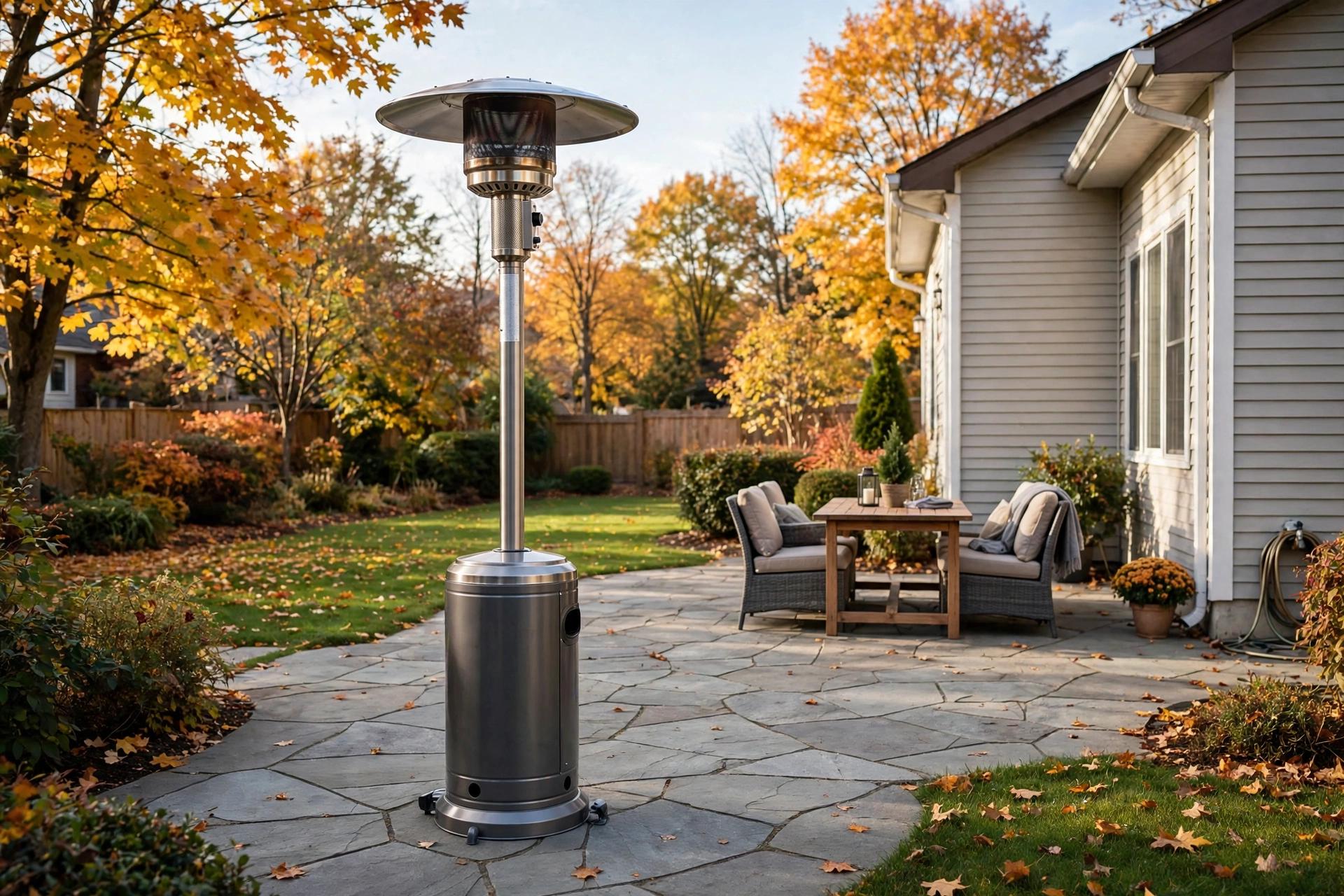
Every heater ships with manufacturer clearances, and those numbers rule. As a general pattern for freestanding propane mushroom heaters, expect to need roughly 3 feet of clearance to the sides and above from anything combustible — house siding, outdoor furniture, umbrellas, low branches, and especially the ceiling of any covered structure. Many covered patios and pergolas simply don’t have the overhead clearance a full-size tower heater requires; that’s a job for a tabletop unit, a wall-mounted electric heater, or no heater at all.
- Never use a propane patio heater indoors — not in a garage, not in a screened porch with a low ceiling, not in a tent. Carbon monoxide is the reason, and it doesn’t negotiate.
- Keep the reflector away from vinyl siding and soffits. Heat rises and concentrates above the heater; warping vinyl is the most common “I didn’t think it would get that hot” story in this category.
- Mind the wind. Wind tilts the flame, cuts heating performance dramatically, and is the top reason heaters tip. If it’s gusty enough to blow napkins off the table, move the party or skip the heater.
Surfaces: Where a Heater (or Fire Pit) Can Sit
Level, stable, non-combustible is the ideal: concrete, pavers, stone, or gravel. Tall heaters on uneven ground are tip-over candidates, and the anti-tip switch is a backup, not a plan.
Decks deserve special care. A propane tower’s heat radiates mostly upward and outward, so a deck is generally fine for the heater itself with clearances respected — but fire pits are a different story. Even a smokeless pit radiates serious heat downward. On any wood or composite deck, a fire pit belongs on a stand plus a heat shield or fire pit mat, with clearance from railings. Composite decking softens at lower temperatures than wood, so give it extra margin. Grass is fine for a pit with a stand; dry leaves underneath are not — clear the area first. (Fall cleanup helps here — our pine needle cleanup guide covers the fastest ways to clear a yard.)
Propane Tank Basics
- Store tanks outdoors, upright, and ventilated — never in a garage, basement, or living space.
- Check connections with soapy water when you swap a tank: bubbles mean a leak. Sniff tests and match tests are not methods.
- Turn the tank valve off when the heater is stored, not just the heater’s control knob.
- Keep the spare tank away from the heater in use — not stored in the heater’s base unless the manufacturer designed the base for it.
Kids, Pets, and Parties
The pole and burner housing of a running heater get genuinely hot, and the reflector stays hot after shutdown. Set the heater where traffic doesn’t flow past it, brief the kids once (it works better than hovering), and let the unit cool completely before anyone moves it or a cover goes on. Covers, by the way, are worth it — a weather cover is the difference between a heater that lasts three seasons and one that lasts ten. Just never cover a warm heater.
Fire Pit Safety, Briefly
Smokeless pits reduce smoke, not heat or sparks. Keep the same combustible clearances you’d give any fire, keep water or an extinguisher within reach, let ash cool fully — ideally 48 hours — before disposal in a metal container, and check local ordinances and HOA rules before your first burn; some municipalities restrict open fires seasonally. For pit picks that are built with stands and ash management in mind, see our best smokeless fire pits guide.
Storing the Heater for Winter
- Disconnect the tank and store it outdoors, upright.
- Wipe down the reflector and burner screen; check the burner ports for spider webs and debris — the classic cause of a heater that won’t light in spring.
- Cover it, or better, wheel it into a garage or shed (heater yes, tank no).
- In spring, do a soapy-water leak check before the first lighting.
Ready to Buy?
With placement sorted, the fun part is choosing. Start with our best patio heaters for fall evenings, compare the flame route in fire pit vs patio heater, and browse our wider look at top-rated outdoor heaters for patios.