
As an Amazon Associate, Landscape & Leisure earns from qualifying purchases made through links on this page.
The edger aisle splits cleanly in two: walk-behind gas machines that cut like a mower, and stick-style cordless edgers that cut like a trimmer with a blade. Both make a crisp edge along a driveway. They differ in power, weight, noise, and what they cost to own — and the right one is decided by your driveway length and your tolerance for engine maintenance, not by brand loyalty.
For keeping whichever one you buy in shape, see how to sharpen and replace a lawn edger blade.
Gas vs cordless compared
| Gas walk-behind (McLane class) | Cordless stick (Greenworks 40V class) | |
|---|---|---|
| Weight | About 66 to 70 lb | About 12 lb |
| Blade | 2 x 9 in. spring steel | 8 in. hardened steel |
| Cutting depth | Up to about 3 to 4 in. | About 2 in. typical |
| Noise | Loud — hearing protection advised | Quiet enough for early mornings |
| Starting | Pull cord, seasonal maintenance | Push button, no fuel |
The gas case: McLane walk-behind edgers
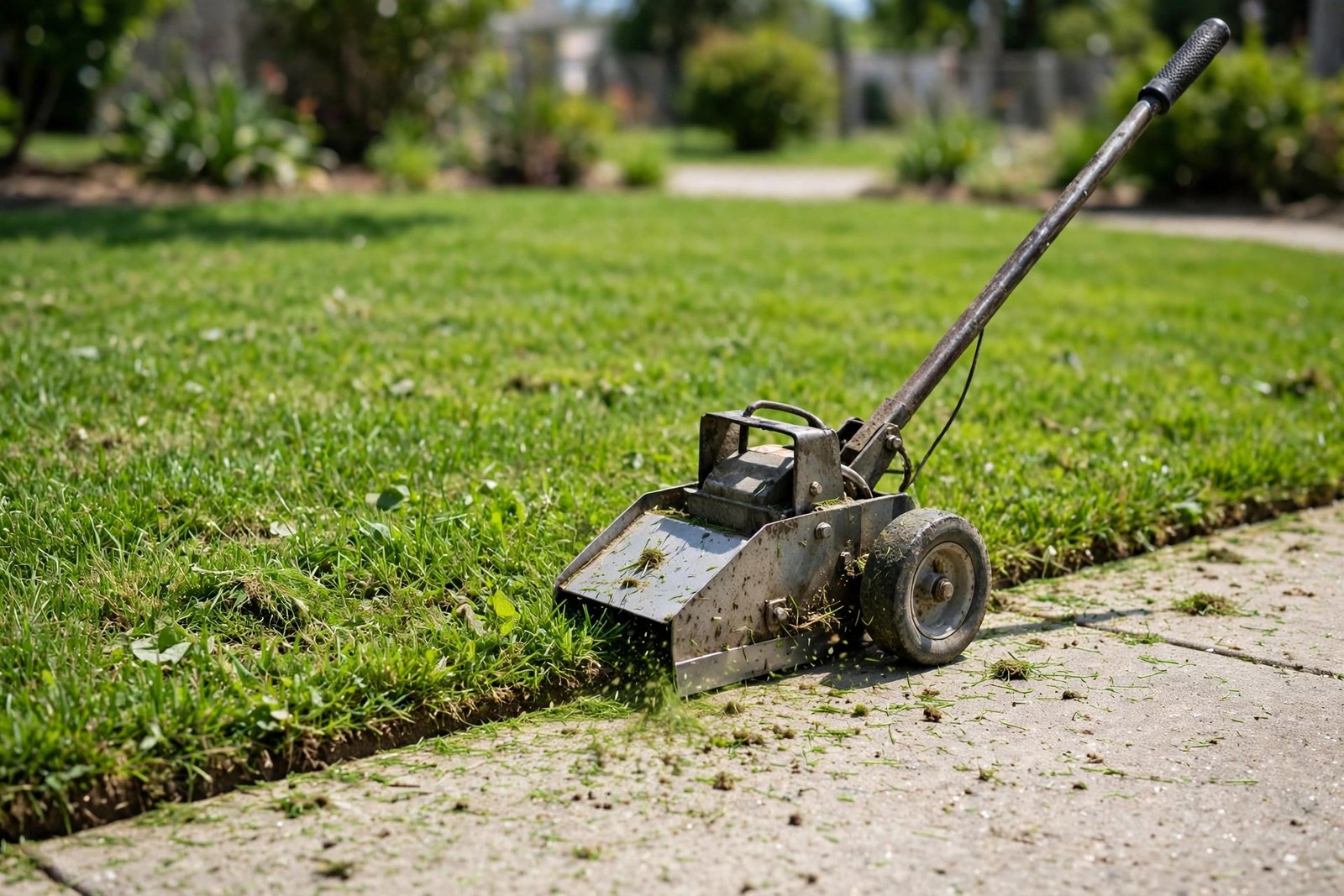
A McLane-class machine — the 101 series with a Briggs & Stratton 3.5-horsepower engine and a 2-by-9-inch spring steel blade — is a small mower that happens to edge. Its weight is a feature: four wheels and 66-plus pounds hold the blade in a straight line along a curb, and the single-lever blade clutch and depth control let you cut vertically as an edger or tilt the head flat to trim horizontally. It reclaims overgrown edges that have swallowed the curb, and it does it in one pass where a stick edger needs three. The price is maintenance: fuel, oil, air filter, spark plug, winterizing, and a pull cord that will eventually test your patience.
The cordless case: Greenworks 40V 8-inch edger
The Greenworks 40V edger (model ED40L410) is the other end of the spectrum: an 11.9-pound stick tool with an 8-inch hardened-steel blade, a 4.0Ah battery, and a charger in the box. It maintains an existing edge beautifully, starts with a button, and stores on a wall hook. Its limits are honest: it will not reclaim a curb that grass has buried under an inch of overgrowth, the battery sets a session length, and deep cutting drains the pack fast. If you already own Greenworks 40V tools, the shared battery removes the biggest cordless objection — a dead pack mid-job.
Greenworks 40V 8 in. Brushless Edger (ED40L410, 4.0Ah kit)
An 11.9-pound stick edger with battery and charger included — the easy choice for maintaining an existing edge.
Running cost reality
Cordless costs more up front per unit of power and less over time: no fuel, no oil, no spark plugs, and a battery that lasts years if stored charged and indoors. Gas costs less for the machine’s capability and more every season in fuel and maintenance, plus the time cost of winterizing and spring starting rituals. Over five years of weekly edging, the totals roughly converge for a typical suburban lot — so decide on the work, not the spreadsheet. For budget picks, see best budget-friendly lawn edgers.
Which yard gets which
- Small lot, existing edges, noise-sensitive neighborhood: cordless stick edger, without question.
- Long driveway, curbs, or reclaimed overgrowth: gas walk-behind — the weight and blade depth earn their keep.
- Already invested in a battery platform: that platform’s edger, because a shared battery beats a second charger.
- Rental or small storage: cordless — a gas walk-behind needs garage floor space and fuel storage.
The verdict
Buy cordless if you maintain edges. Buy gas if you create them. And whichever you buy, keep the blade sharp — a dull blade tears grass and doubles the work, which is covered in how to sharpen and replace a lawn edger blade.