Most people buy a raised bed that is too wide, too shallow, or both — then spend the first season fighting the frame instead of growing in it. Size is not a style choice. Width decides whether you can reach the middle without stepping on the soil. Depth decides which plants can root properly. And soil volume decides what the whole project actually costs.
The width mistake
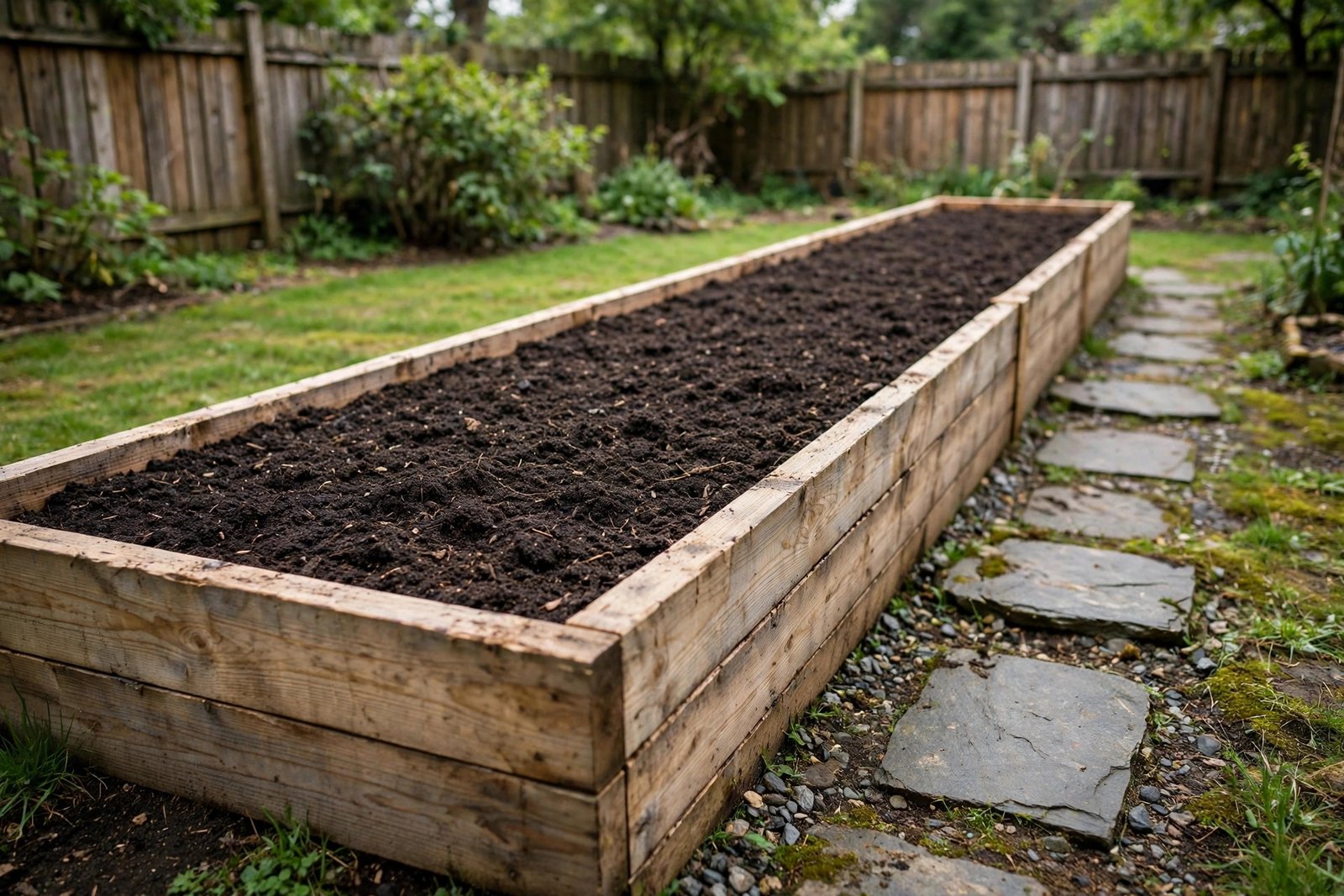
A bed against a fence gets worked from one side only, so keep it 2 feet wide. A bed you can walk around gets worked from both sides, so 4 feet is the maximum — 2 feet of reach from each side. Wider than 4 feet, and the middle becomes a stretch, then a step, then compacted soil. The length can be anything that fits the space; 8 feet is the common, practical choice because it takes standard boards and leaves room for a path at each end.
Leave paths wide enough to kneel and to push a wheelbarrow: 2 feet minimum, 3 feet if the path is your main route to the compost pile. A garden with generous paths gets used more than a garden crammed with beds.
Depth: match it to what you grow
Six inches is enough for lettuce, herbs, radishes, and flowers. Ten to 12 inches covers most vegetables, including peppers, beans, and bush tomatoes. Twelve to 17 inches is where deep-rooted crops — full-size tomatoes, carrots, parsnips — stop fighting the bottom of the bed. The Greenes cedar bed at 7 to 10.5 inches works well over decent native soil, because roots can continue down past the frame. The 17-inch Vego kit works well over clay or pavement-adjacent ground, because the whole root zone sits inside the bed. Compare the kits in the raised garden bed roundup.
Do not buy depth you will not fill. A 17-inch bed that gets 8 inches of soil is a 8-inch bed with tall walls shading the seedlings. Fill the bed to within an inch or two of the top, and water the mix before planting so it settles where it will stay.
Soil volume: do the math before checkout
Volume in cubic feet is length times width times depth, all in feet. Divide by 27 for cubic yards, which is how bulk soil is sold. A 4-by-8-foot bed at 12 inches deep needs 32 cubic feet — about 1.2 cubic yards. The same footprint at 17 inches needs about 45 cubic feet, or 1.7 cubic yards. Two beds, and you are ordering a truckload rather than a pile of bags.
| Bed size | Depth | Soil needed |
|---|---|---|
| 4 x 4 ft | 12 in. | 16 cu. ft. (0.6 cu. yd.) |
| 4 x 8 ft | 12 in. | 32 cu. ft. (1.2 cu. yd.) |
| 4 x 8 ft | 17 in. | About 45 cu. ft. (1.7 cu. yd.) |
| 4 x 12 ft | 10.5 in. | About 33 cu. ft. (1.2 cu. yd.) |
Bagged raised-bed mix is usually sold by the cubic foot — a 1.5-cubic-foot bag fills a small share of one bed, so count bags before you assume the price on the shelf is the price of the project. Bulk delivery is cheaper per yard for two or more beds, but it needs a driveway spot for the pile and a wheelbarrow day to move it.
How many beds?
One 4-by-8 bed grows a surprising amount: a row of tomatoes, a row of peppers, herbs at one end, and lettuce in the shady corner. Two beds let you rotate crops and rest one section. Three or more, and watering becomes the job — plan irrigation before the third bed, not after. Start with one bed done well. You can add a matching bed next season; you cannot un-buy a bed that is too big for its spot.
What to do next
Pick the footprint that fits your space with real paths, pick the depth for the crops you actually grow, and order the soil with the frame. If you are still choosing between materials, metal vs. wood raised garden beds settles the lifespan question. Then plant by soil temperature and frost date, not by the date the bed arrived — the Midwest planting calendars have the dates for your zone.