A wooden deck and an open flame are a bad pairing on instinct — and instinct is mostly right. But the full answer is not a flat no. A gas or propane fire pit can work on a wooden deck with the right protection and clearance, while a wood-burning pit usually cannot. The difference comes down to three things: the fuel, the barrier underneath, and what your pit’s manual actually allows.
Start with the manual, not with a blog post
Every fire pit ships with a manual, and that manual is the deciding document. It states the clearances the manufacturer requires and whether the unit is approved for use on combustible surfaces like wood. If the manual says the pit is not for use on a deck, that settles it — no heat mat overrides the manufacturer’s own prohibition. If the manual permits deck use, it will spell out the conditions: the barrier, the clearances, the fuel. Read that page before you buy, not after the pit is already on the boards.
Local rules sit on top of the manual. Some municipalities, fire codes, and homeowners associations restrict or prohibit open flames on decks outright. A quick check with your local fire department or HOA saves a purchase you cannot legally use.
Gas and propane: the deck-friendly option
Gas and propane fire pits — especially fire pit tables — are the safer deck choice for a simple reason: they produce no sparks or embers, and the flame burns upward rather than throwing heat and debris in every direction. A table-style unit with legs also keeps the burner well above the deck surface, which is half the protection already.
That does not mean you can set one straight on the boards. You still need a heat-rated barrier underneath: a fire pit mat or heat shield made for the purpose, sized with a good margin beyond the base of the unit. Quality pads are rated to resist temperatures of 1,100 degrees Fahrenheit or more. A paver pad works too — pavers or fire bricks laid tight under and around the pit, catching heat and any stray debris. Either way, the barrier goes down first, and the pit goes on the barrier, never directly on wood.
Wood-burning: usually the wrong call on a deck
A wood-burning pit on a wooden deck combines the two risks decks handle worst: sparks and sustained radiant heat. Embers can drop between boards and smolder where you cannot see them, and the heat from the bowl can scorch or dry out the wood beneath it over time. Most manufacturers do not approve their wood-burning models for deck use at all.
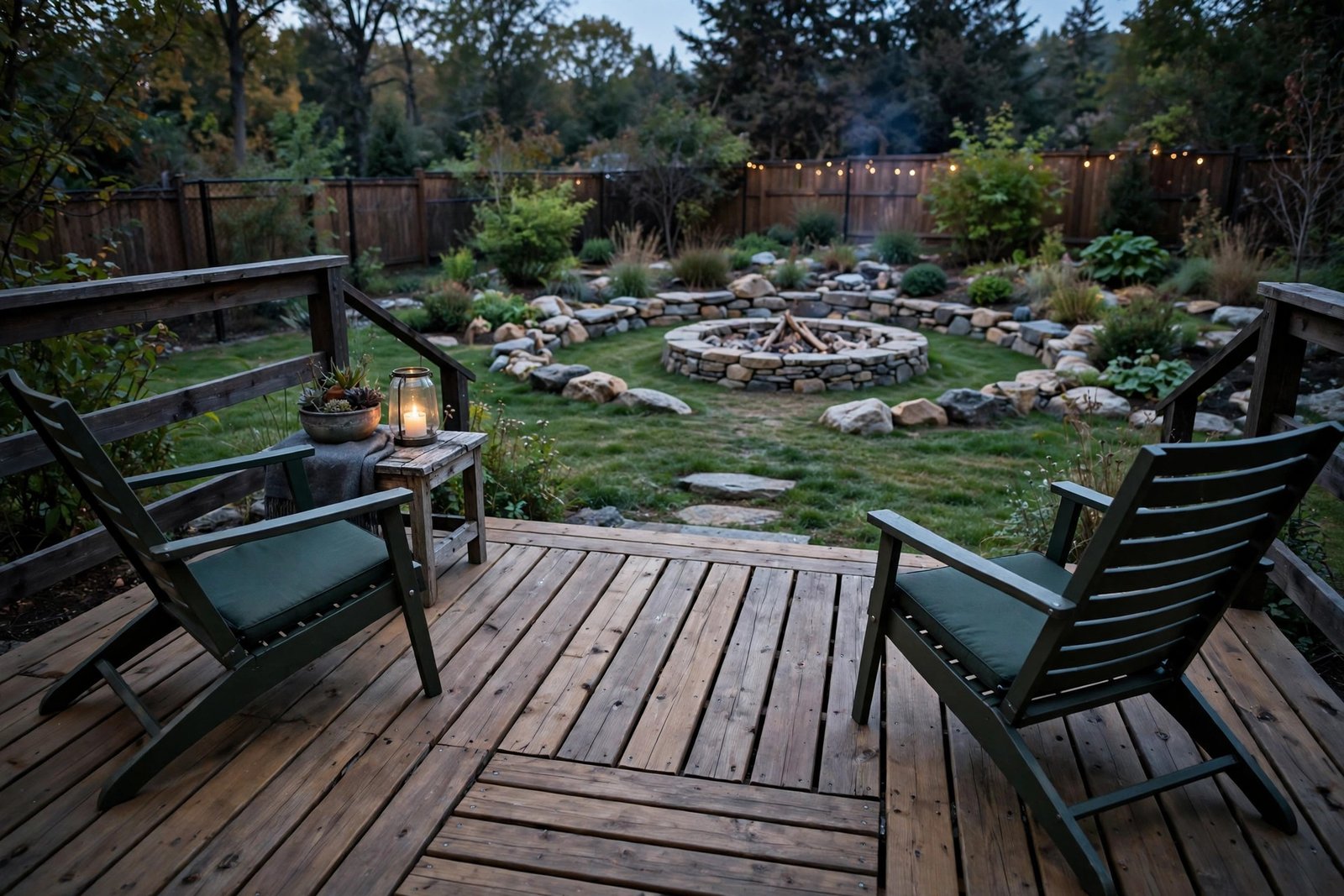
The exception proves the rule: a wood-burning model whose manual explicitly approves deck use, set on a non-combustible base — stone or concrete — extending well beyond the pit on all sides, with a spark screen in place every time it burns. If your pit’s manual does not say that, do not improvise it. The yard, on a stone or gravel pad away from the deck, is where a wood-burning pit belongs.
Clearance: the numbers that matter
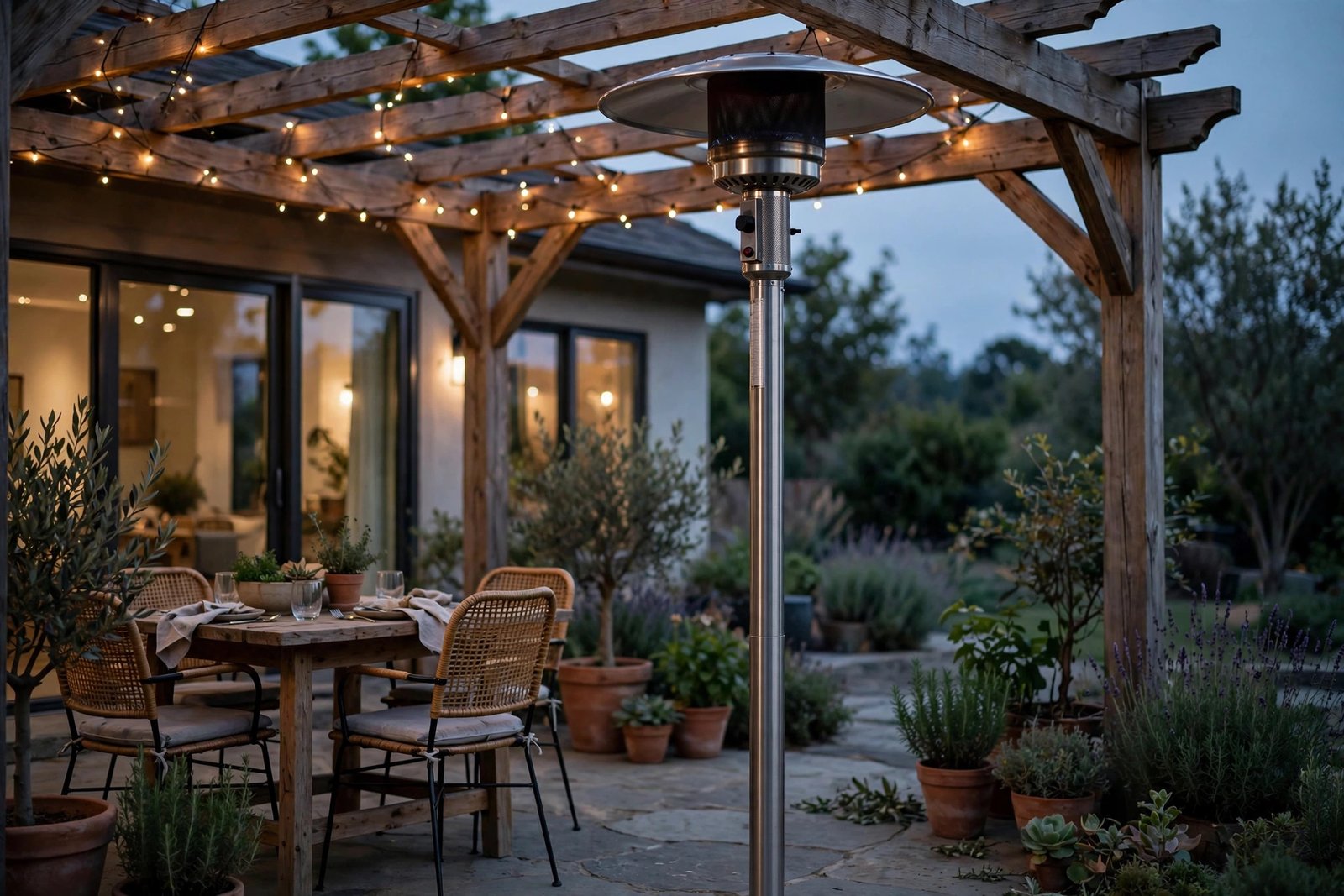
Fire-safety guidance commonly calls for at least 10 feet between a fire pit and any structure — house walls, railings, overhangs, and low branches included. Never tuck a pit under a roof overhang or a pergola beam, and keep furniture and cushions out of the heat zone. On a small deck where 10 feet is impossible, that is your answer: the deck is too small for a fire pit, whatever the fuel.
Weight deserves a check too. A fire pit can weigh 150 to 300 pounds before fuel and seating gather around it, and older decks were not all built for that kind of concentrated load. If your deck boards flex or the structure is aging, have the framing checked before adding a heavy stone-topped table.
The deck setup checklist
- Manual first: confirmed approved for deck use, with its clearance diagram followed exactly.
- Barrier down: a rated heat mat or a tight paver pad, larger than the pit’s base on every side.
- Air gap: legs or a stand lifting the bowl off the surface, used with the mat — not instead of it.
- Clearance kept: 10 feet from structures, nothing combustible overhead, no overhang above the flame.
- Spark control: a screen on any wood-burning unit, every single burn, no exceptions.
- Never unattended: a fire extinguisher within easy reach, and the fire fully out before anyone goes inside.
When the answer is no
Skip the deck pit if your manual prohibits it, if local rules prohibit it, if the deck cannot give you real clearance, or if the only pit you want is a wood-burning one without deck approval. A paver landing pad just off the deck gives you the same evenings with none of the risk — and it is the setup most fire-safety guidance points to when the deck itself does not qualify.
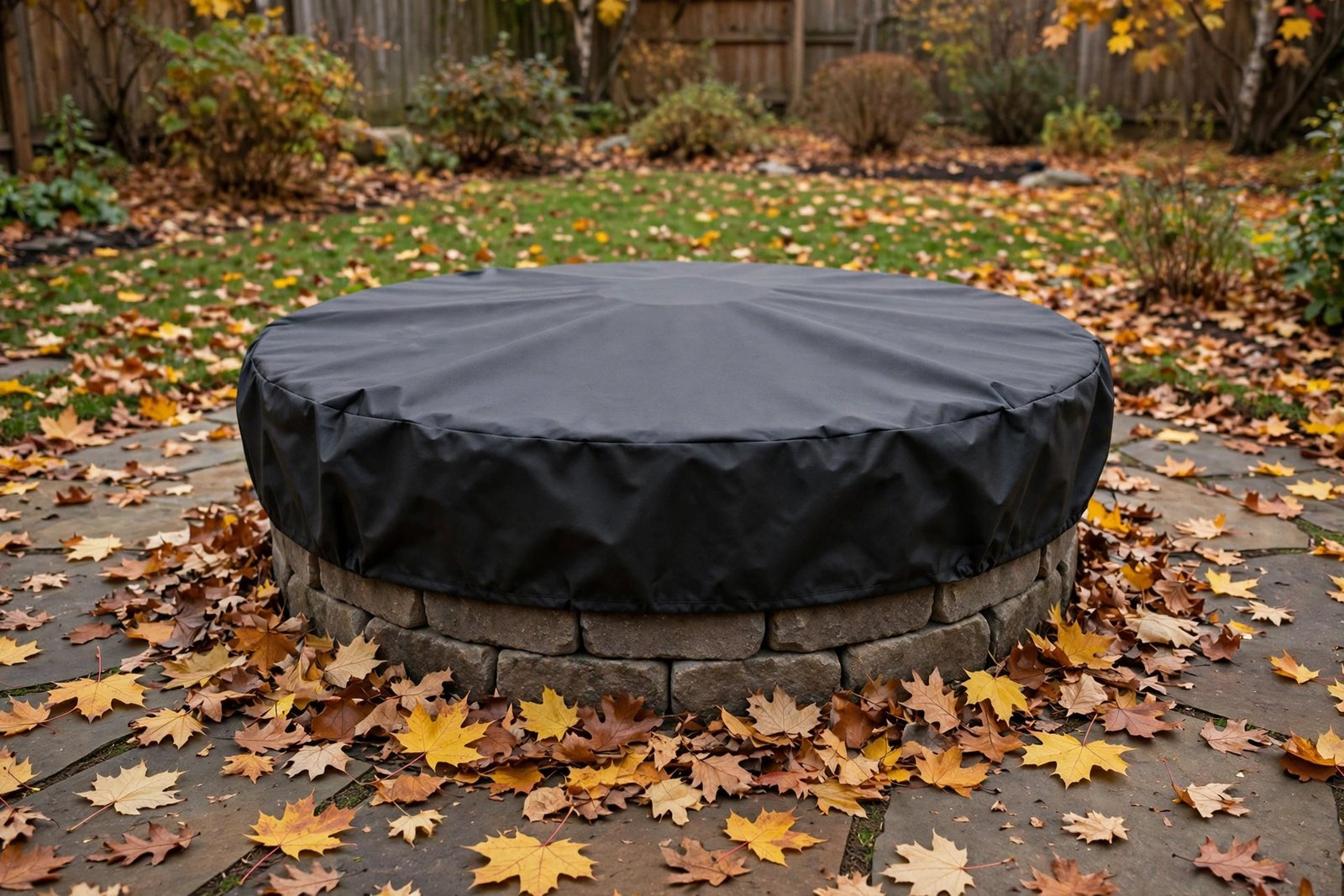
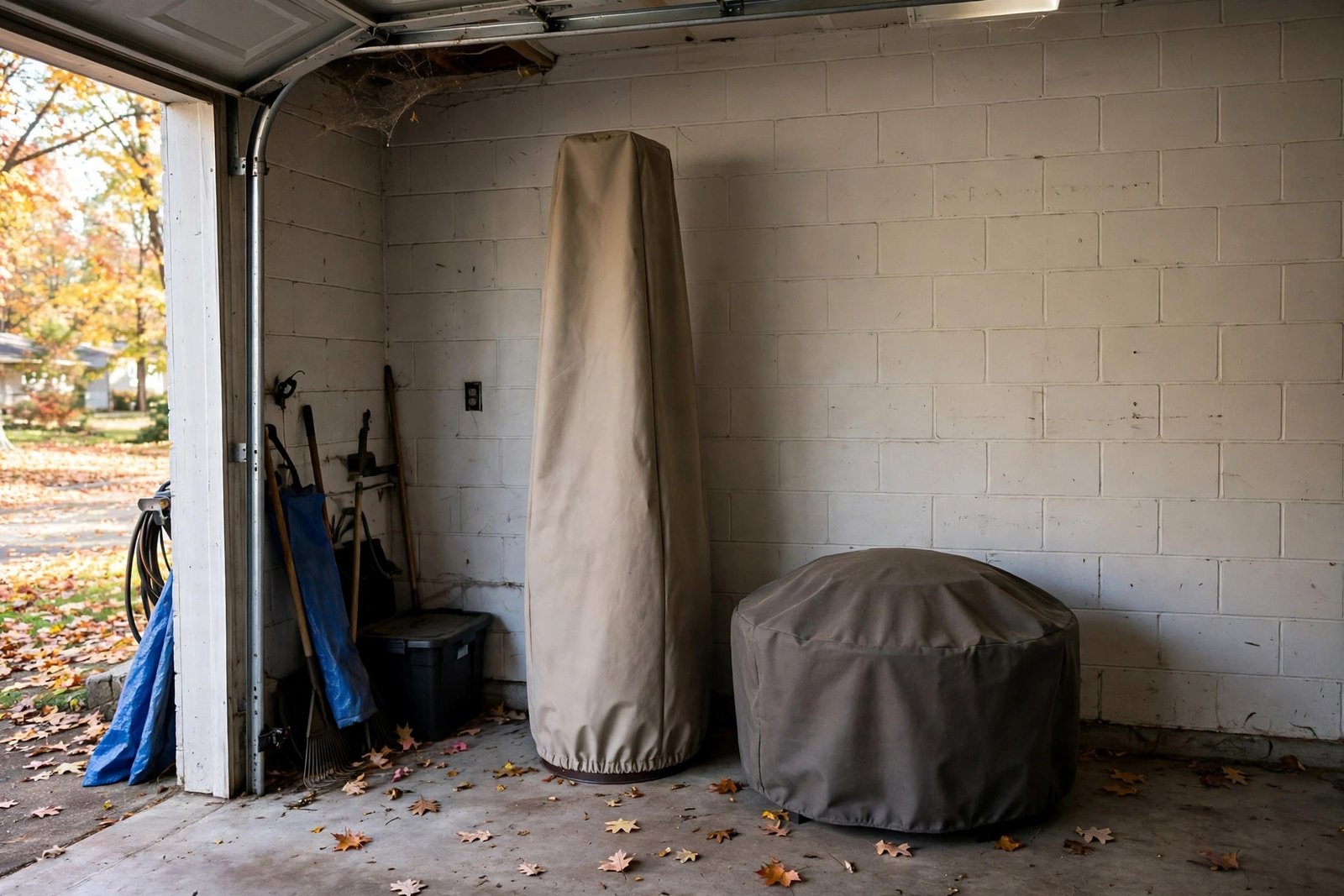
If you do run a gas pit on the deck, keep the rest of the setup safe too: Can You Use a Patio Heater Under a Covered Patio or Pergola? covers the overhead-clearance rules that matter just as much, and How to Store a Patio Heater and Fire Pit for Winter walks through shutting the whole setup down for the season. For choosing the pit itself, start with The Best Propane Fire Pit Tables for Patios and Decks.