Buy the timer for the system you actually own, not the yard you wish you had. A hose-end timer on a faucet and a smart controller wired to valves are not two versions of the same tool — one runs a hose, the other runs a system, and choosing the wrong one is how you end up paying for zones you will never wire.
Get this choice wrong and you either pay for zones you will never wire, or you spend every dry week moving a sprinkler by hand. Get it right and watering mostly takes care of itself.
What each one actually controls
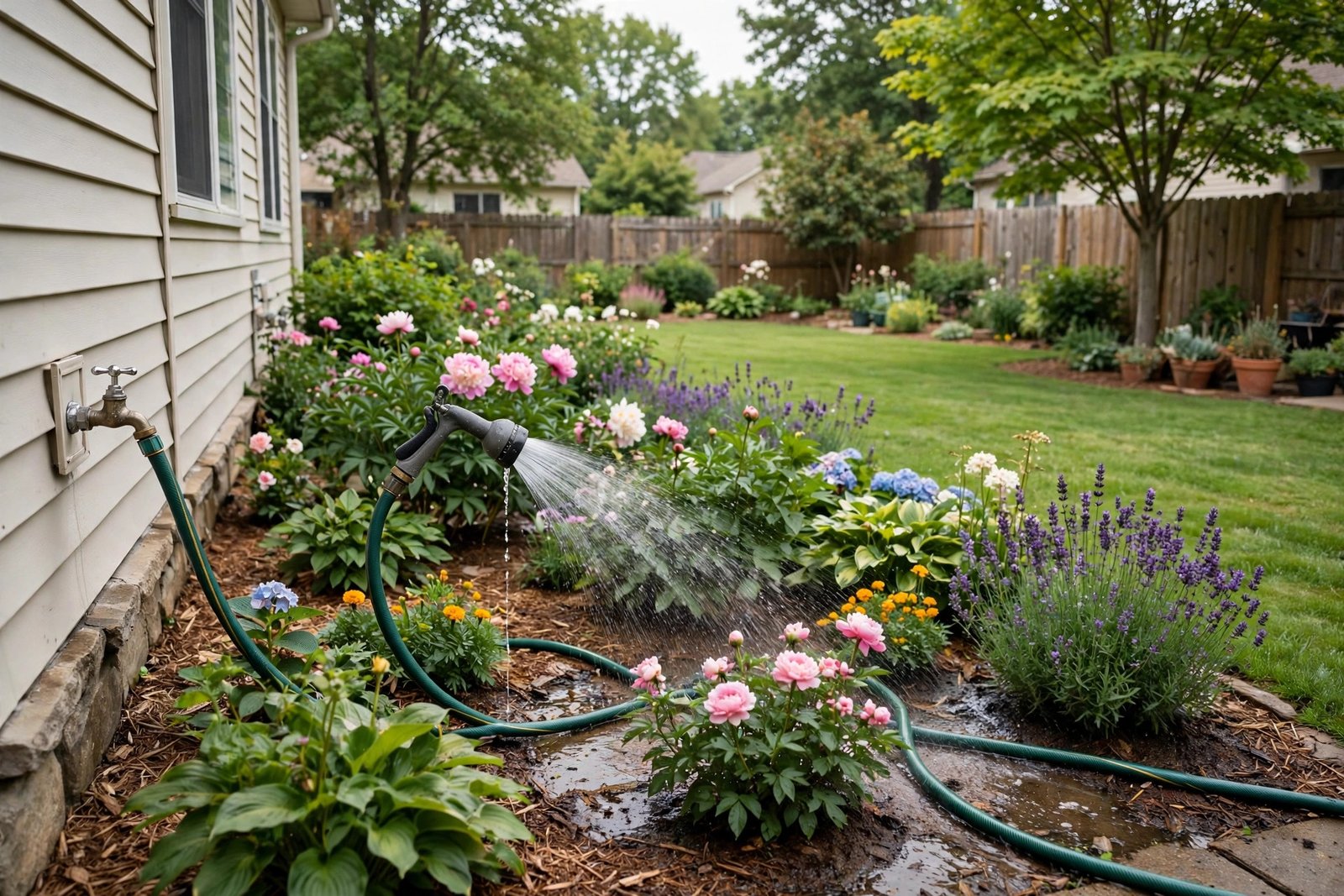
A hose-end timer screws onto an outdoor faucet. It opens and closes that one outlet on a schedule you set, for one hose or one sprinkler at a time. The Orbit 1-outlet programmable hose timer, model 62061, runs 1 to 240 minutes per cycle, on intervals from every 6 hours to once every 7 days, with a rain delay built in.
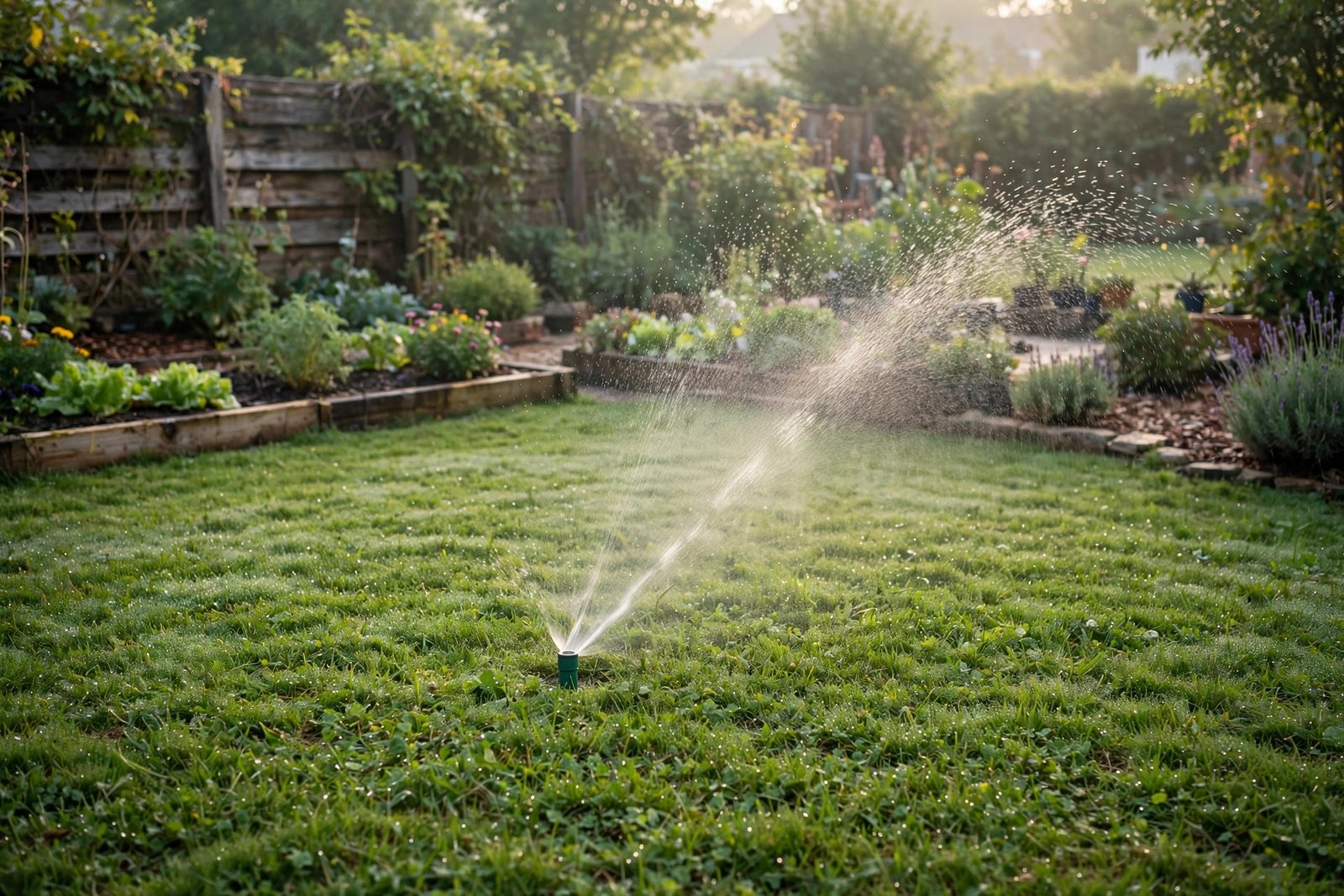
A smart controller replaces the old box wired to your in-ground valves. Each valve is a zone, and the controller runs zones in sequence, on different days, for different lengths of time. The Orbit B-hyve 6-zone controller handles six zones from an app, and the Rachio 3 8-zone controller handles eight, with weather-based skips after rain.
The decision, in plain terms
Count your water sources. One faucet, one hose, a few beds: a hose-end timer is the right tool, and a smart controller would be money spent on wiring you do not have. An in-ground system with valves in a box: a hose-end timer cannot help you, because there is no single faucet to time.
Size matters too. A hose-end timer waters whatever the hose reaches, one area at a time. A controller waters the front lawn on Monday, the beds on Tuesday, and the side strip on Wednesday, without you dragging anything.
Where hose-end timers win
Renters, small yards, and new beds are the hose timer’s home ground. No wiring, no valve box, no installer. You screw it on, set the dial or the buttons, and it runs. The trade-off is blunt: one schedule, one outlet, no zone-by-zone control, and no weather skip on the basic programmable models.
If you water from a hose today and that works, a hose timer makes it automatic without changing anything else. That is a real win, and it is cheaper than a controller by a wide margin.
Where smart controllers win
Any yard with an in-ground system belongs on a controller. The win is not the app, though the app is convenient. The win is different schedules for different zones, and a rain skip that actually saves water instead of watering a wet lawn on principle.
The mistake to avoid here is buying zones you cannot use. A 16-zone controller on a 4-zone yard is not future-proofing; it is paying for capacity that sits idle. Buy for the zones you have, plus one spare.
What about a smart hose timer?
A smart hose timer, like the B-hyve hose faucet timer with a Wi-Fi hub, splits the difference: app control and weather-based scheduling, still on one faucet. It is the right upgrade if you love hose watering but hate remembering to turn it off. It still cannot run an in-ground system, and it still waters one area at a time.
Bottom line
Water from a hose? Buy a hose-end timer and stop there. Water from an in-ground system? Buy a smart controller sized to your zone count — the Orbit B-hyve for six zones or fewer, the Rachio 3 for eight. Buying the wrong class of timer is the expensive mistake; buying the right one is a one-time fix.
For the full roundup, see Best Sprinkler Timers for Lawns and Gardens. For setting deep-watering runs once you have a controller, see How to Program a Sprinkler Timer for Deep, Infrequent Watering.