Landscape & Leisure is reader-supported. When you buy through links on our site, including Botanical Interests seed links, we may earn a commission at no extra cost to you. Prices change, so click through to confirm current pricing.
Late spring is when chamomile starts paying you back — small white flowers opening a few at a time, each one a cup of tea waiting to be picked. But there are two chamomiles sold under one name, and they are not interchangeable: one is a tall annual grown for its flowers, the other a low perennial grown for the ground it covers. Plant the wrong one and you will wait all summer for a tea harvest that never quite arrives. Here is how to tell them apart, and how to grow the right one.
If you are building the whole tea garden, start with our roundup of the best herbs to grow for tea. For what to do with the harvest once it is picked, see our fresh vs. dried comparison.
German vs. Roman: The Difference That Matters
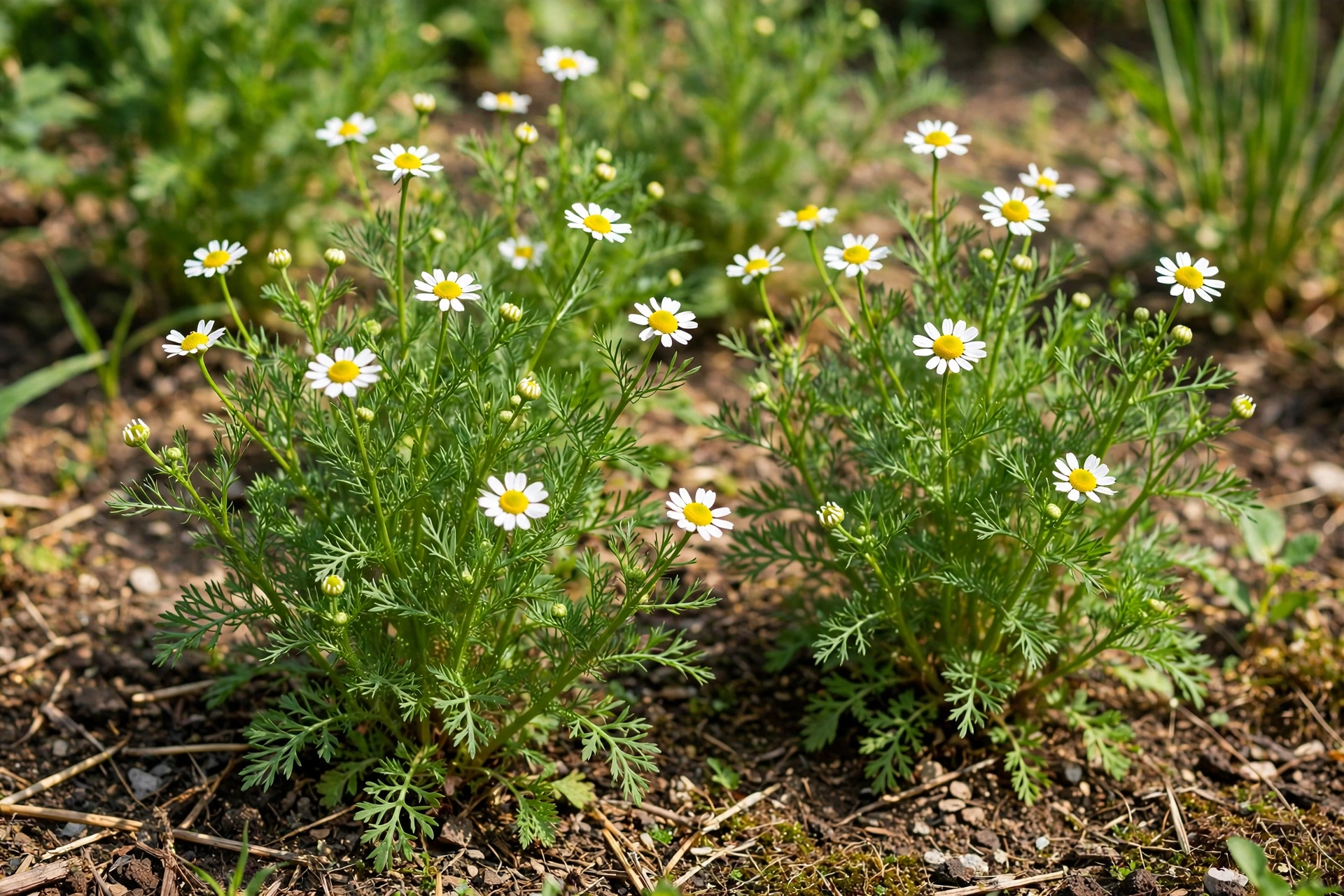
German chamomile (Matricaria recutita) is the tea plant. It is an annual that grows taller than 24 inches, with fern-like foliage on thin stems and 3/4-inch apple-scented white flowers with yellow centers, blooming from late spring into summer. You grow it for the flowers, and it gives you plenty of them across a long season.
Roman chamomile (Chamaemelum nobile) is a different plant with a different job. It is a low-growing perennial groundcover, spreading by rooting stems, that stays close to the ground and is often kept mowed for fragrant paths and herbal lawns. Its small daisy-like flowers carry a similar scent, but it flowers less freely than German, so a Roman patch grown for tea gives you a garnish, not a harvest.

The practical rule is short: if you want tea, grow German. If you want a sweet-smelling path you can walk on, grow Roman. Botanical Interests sells German chamomile seed; it does not currently list a Roman chamomile seed packet, so the German packet below is the only chamomile pick in this guide, and Roman is covered here so you do not buy the wrong plant elsewhere expecting a tea crop.
When to Sow German Chamomile
German chamomile is a cool-season-friendly annual, and its timing is forgiving. Direct sowing is recommended: sow 4 to 6 weeks before your average last frost date, as soon as the soil can be worked. You can also start indoors 4 to 6 weeks before your last frost, in soil of 65° to 85°F, but most gardeners direct-sow and skip the transplant step entirely. Germination takes 10 to 15 days. Press the seed into the surface rather than burying it — chamomile seed needs light to sprout, and a buried packet is a packet wasted. Thin to one plant every 8 inches when seedlings reach 1/2 inch tall, in rows 18 inches apart, in full sun.
How to Harvest for Tea
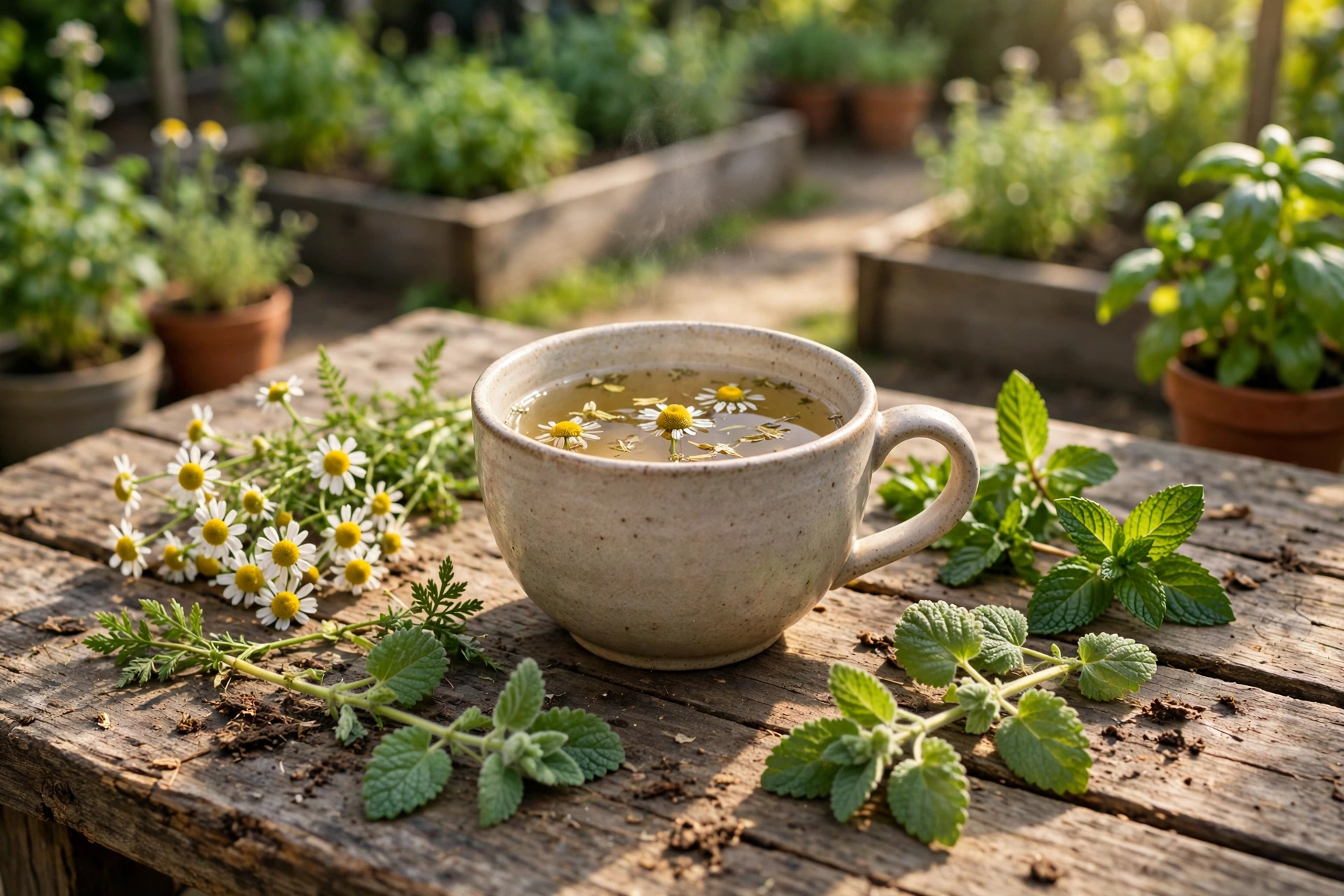
Pick flowers in the morning, just before they fully open — that is when the scent is strongest. A plant in full bloom gives you a steady trickle rather than a single flush, so pick every few days through the season and the plant keeps producing. Dry the flowers on a screen covered with cheesecloth in a cool, dark, well-ventilated area, or hang plants upside down to dry. Once crisp, store the dried flowers in a sealed jar away from light, and they will carry you through winter. Leave a few flowers to set seed and German chamomile will return on its own next year — welcome in a cottage bed, a chore in a tidy one, so deadhead the plants you do not want to spread.
What You Need to Start
Chamomile needs almost no gear, which is part of its charm. Two things genuinely help: a heat mat if you start indoors in a cold house, and cell trays if you want tidy transplants instead of direct sowing. Neither is required — direct sowing in workable spring soil is the recommended route — but both remove the two common excuses for a thin stand.
German Chamomile Seeds
The tea chamomile — tall annual, apple-scented flowers, direct-sow in early spring.
Seed Starting Heat Mat
Bottom warmth for indoor starts in a cold house — chamomile wants 65° to 85°F soil to sprout.
Epic 6-Cell Seed Starting Trays
Tidy transplants for the gardeners who prefer to start indoors rather than direct-sow.
Side-by-Side: German vs. Roman
| Trait | German chamomile | Roman chamomile |
|---|---|---|
| Botanical name | Matricaria recutita | Chamaemelum nobile |
| Life cycle | Annual | Perennial groundcover |
| Height | Taller than 24 inches | Low, close to the ground |
| Flower harvest | Abundant, late spring to summer | Lighter; flowers less freely |
| Best use | Tea, dried flowers | Fragrant paths, herbal lawns |
| Seed from Botanical Interests | Yes — German Chamomile Seeds | Not currently listed |
Bottom Line
Grow German chamomile for tea: direct-sow 4 to 6 weeks before your last frost, press the seed into the surface, pick flowers in the morning just before they open, and dry them on a screen. Save Roman chamomile for the path, not the teapot. For the rest of the tea garden, see our best herbs to grow for tea, and for what drying does to the cup, see our fresh vs. dried comparison.