Landscape & Leisure is reader-supported. When you buy through links on our site, including Botanical Interests seed links, we may earn a commission at no extra cost to you. Prices change, so click through to confirm current pricing.
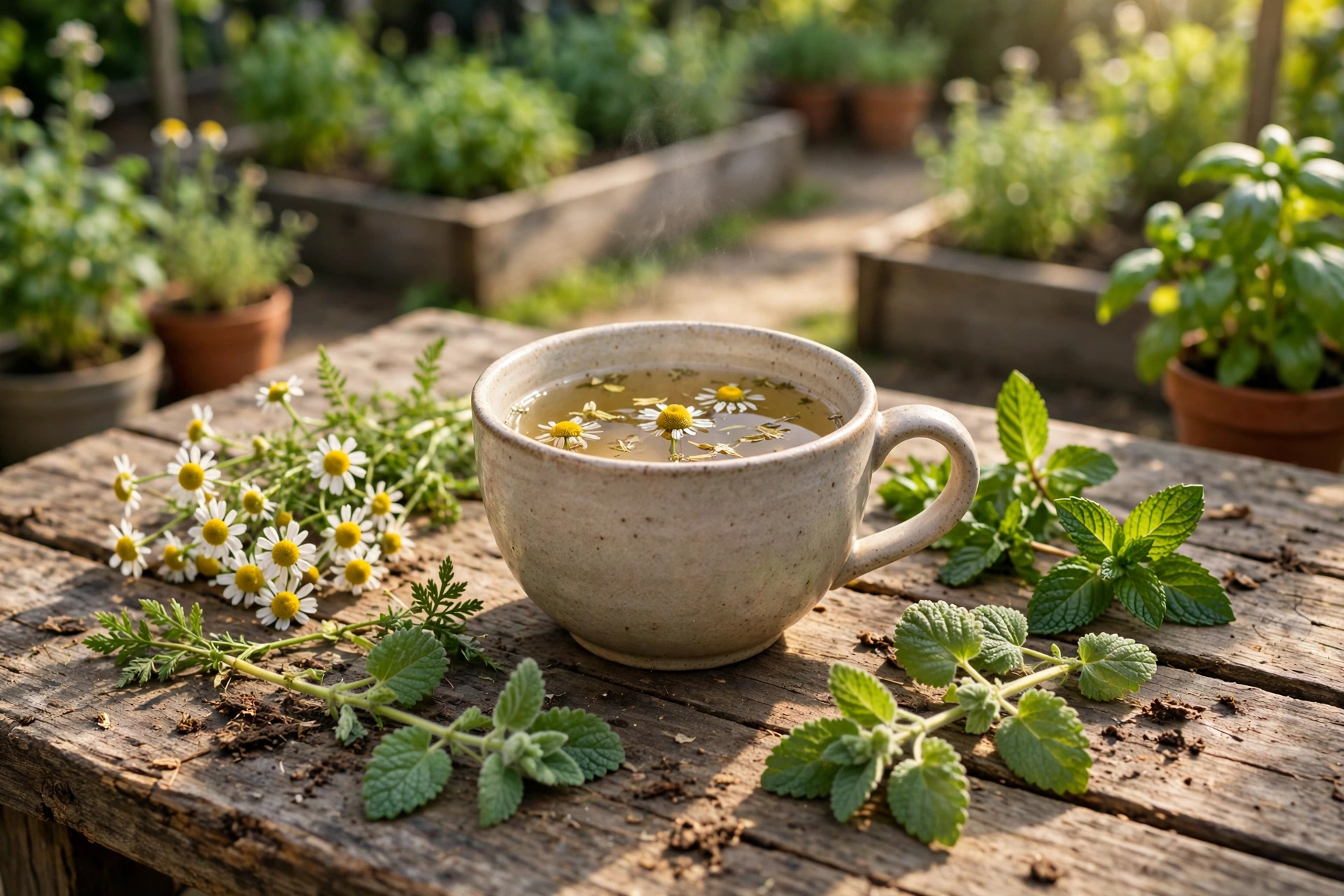
The mistake is treating the drying rack like a single decision. Chamomile forgives almost anything — pick it, dry it on a screen, and it tastes like itself all winter. Lemon balm does not forgive: dry it carelessly and the bright lemon note that made it worth growing goes flat. Fresh and dried are not better and worse versions of the same tea. They are two different cups, and each herb belongs clearly in one camp or the other.
For the full tea garden lineup, see our roundup of the best herbs to grow for tea. For the herb that anchors the dried shelf, see our guide to growing chamomile for tea.
What Drying Actually Does
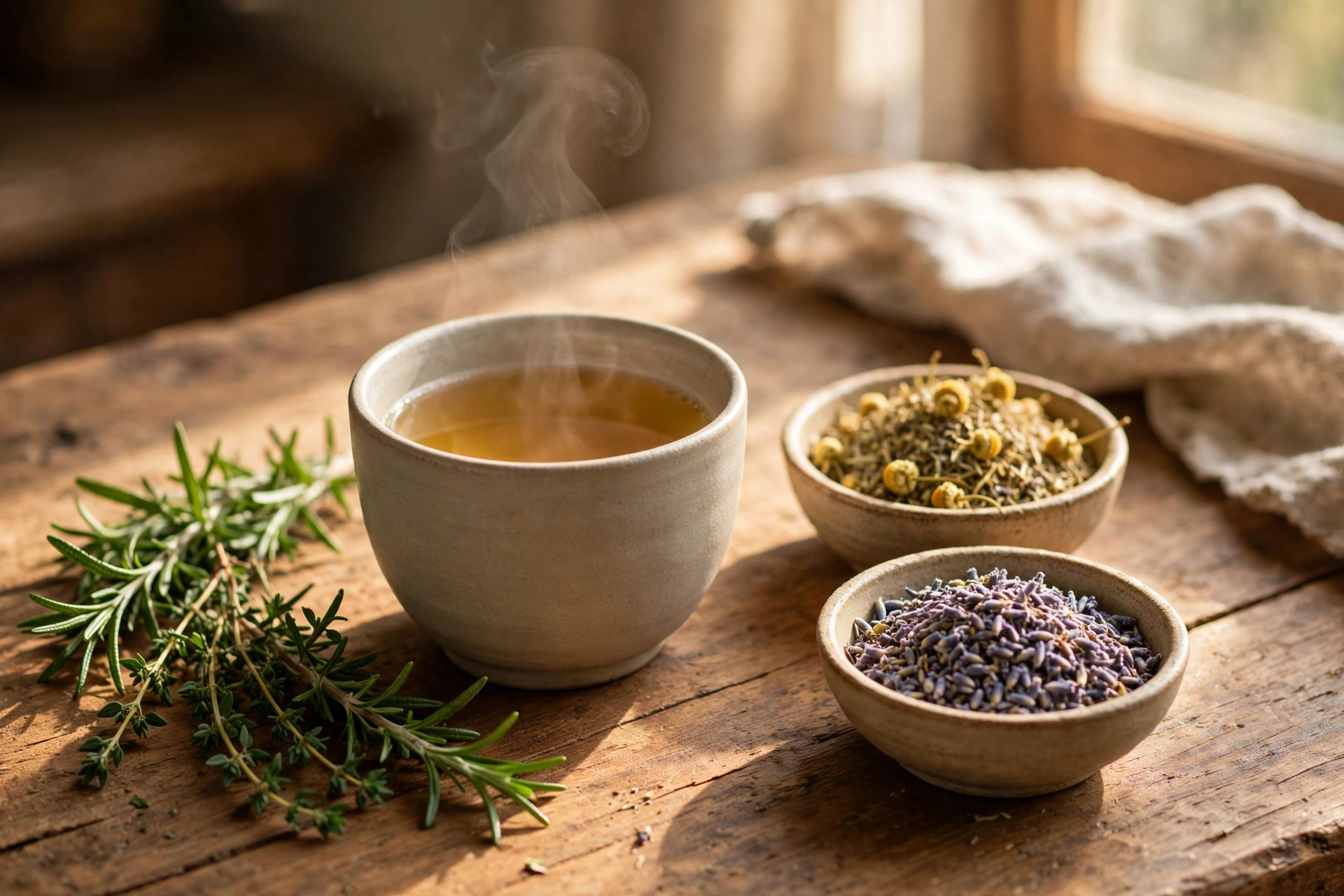
Drying removes water, and water carries flavor two ways. In flowers like chamomile and lavender, the scent sits in the dried petals themselves, so a dried flower brews a deep, round, honeyed cup — often better than the fresh flower, which can taste thin and green. In leafy herbs like lemon balm and mint, much of the brightness lives in volatile oils that fade as the leaf dries, so the dried cup tastes rounder and duller than the fresh one. Neither result is a failure. The error is expecting one herb to behave like the other.
A good starting point for amounts: use about one teaspoon of dried herb where you would use a tablespoon of fresh. Dried herbs are concentrated by weight, so a pinch goes further — and because every harvest dries a little differently, taste the first cup and adjust rather than trusting any fixed ratio.
Best for Drying: German Chamomile
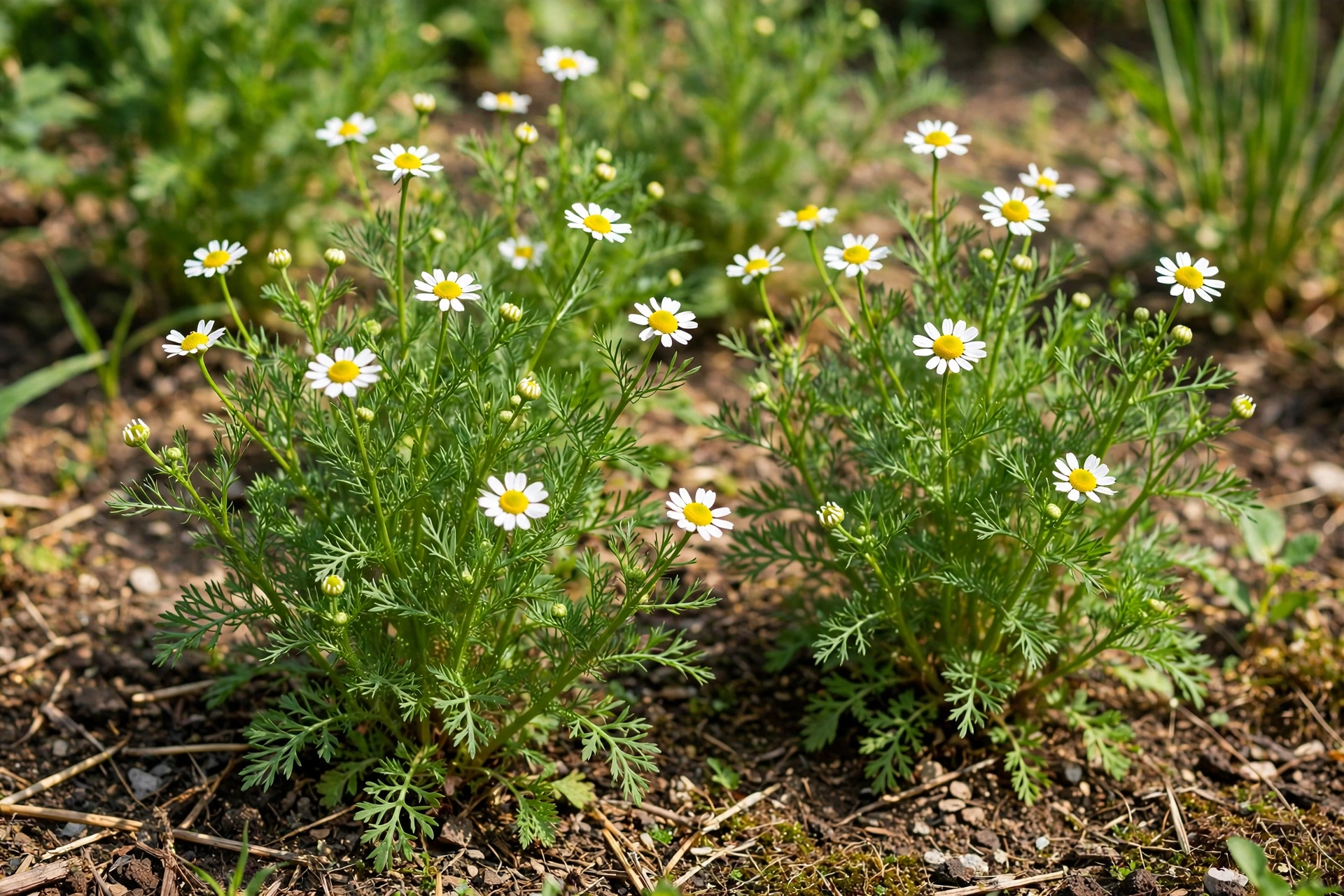
Chamomile is the dried shelf’s anchor, and the harvest guidance says why: pick the flowers in the morning, just before they fully open, and dry them on a screen covered with cheesecloth in a cool, dark, well-ventilated area, or hang plants upside down. Dried this way, the apple-scented flowers keep their character for months in a sealed jar away from light. Fresh chamomile makes a pleasant cup, but it is the dried flower that built the herb’s reputation — this is the one herb where drying is not a compromise but the point. German chamomile is an annual taller than 24 inches, blooming late spring into summer, and a plant in full bloom gives you a steady trickle of flowers to pick every few days. The trade-off is only patience: you pick a little at a time, and the jar fills slowly.
Pros: dried flowers keep their scent for months; steady picking all season; simple screen drying.
Cons: the jar fills slowly; fresh flowers taste thinner than dried.
German Chamomile Seeds
The dried shelf’s anchor — pick in the morning, dry on a screen, brew all winter.
Best Fresh: Lemon Balm
Lemon balm is the fresh-first herb in this comparison, and the reason is in the leaf. Its crinkled, oval leaves carry a lemony mint flavor and fragrance that is brightest the hour you pick it — a perennial in zones 3 to 7, growing 12 to 24 inches tall, with small white flowers from mid- to late summer. Dried lemon balm still brews a pleasant cup, but the sharp lemon note softens into something rounder and quieter, and gardeners who grew it for that brightness will notice the difference. The smart move is to treat lemon balm as a fresh herb with a dried backup: pick fresh leaves all season, and dry only what you cannot use before frost. Prune the flowering stalks before they set seed, or this perennial will spread well beyond its welcome. Gardeners rate it 4.5 from 21 reviews.
Pros: brightest flavor fresh; perennial in zones 3–7; abundant leaves all season.
Cons: dried cup loses its sharp lemon note; spreads aggressively by seed if left to set seed.
Lemon Balm Seeds
Brightest the hour you pick it — brew fresh all season, dry only the pre-frost surplus.
The Middle Ground: Mint and Lavender
Not every herb picks a side. Common mint brews well both ways: fresh mint tea is the classic summer cup, and dried mint keeps enough character to carry a winter pot — though, like lemon balm, it loses some brightness in the drying. The mint catch is at the growing end, not the brewing end: from seed it is the finickiest starter in the tea garden, so sow thickly and keep it in a pot, because it spreads by underground stems. Munstead lavender sits on the drying side with chamomile: its flowers are cut just as buds begin to show color and stored in a cool, dry place away from direct sunlight, and a pinch of dried buds is all a blend needs. Lavender’s cost is time, not technique — germination takes 15 to 90 days, and indoor starts need 10 to 12 weeks before your last frost.
How to Dry Without Ruining the Harvest
Four rules cover nearly every mistake. First, pick in the morning, after dew dries and before the day’s heat — that is when scent is strongest. Second, dry in a cool, dark, well-ventilated spot, never in direct sun or a hot attic, because heat and light strip the oils you are trying to keep. Third, dry flowers on a screen and leaves in loose bunches or on a screen, never packed tight in a bag, because trapped moisture means mold, not tea. Fourth, store only when fully crisp: a leaf that still bends will spoil the jar. Sealed jars away from light keep dried herbs at their best for months; a jar that smells faint when you open it is past its prime, whatever the calendar says.
Side-by-Side: Fresh vs. Dried
| Herb | Fresh cup | Dried cup | Verdict |
|---|---|---|---|
| German Chamomile | Pleasant, a little thin | Deep, round, honeyed | Dry it — drying is the point |
| Lemon Balm | Bright, sharp lemon | Rounder, quieter | Brew fresh; dry the surplus |
| Common Mint | The classic summer cup | Good, slightly less bright | Both work; fresh wins |
| Munstead Lavender | Strong, easy to overdo | Soft floral pinch for blends | Dry it; a pinch per pot |
| Lambada Bee Balm | Bold, citrusy petals | Keeps color, softer flavor | Fresh for punch; dried for blends |
Grow the Comparison Yourself
The cheapest way to settle this question for your own taste is to grow both sides of it. The Tea Bundle holds six tea herbs — German chamomile, Lambada bee balm, lemon balm, common mint, Resina calendula, and Munstead lavender — so one purchase stocks a fresh patch and a drying rack at the same time. Brew each herb fresh the week you pick it, dry a jar of the same herb, and taste them side by side in winter. Your palate will sort the rest faster than any article can.
Tea Bundle Seeds
Six tea herbs in one set — brew each fresh, dry a jar of the same herb, taste the difference.
Bottom Line
Dry the chamomile and the lavender, brew the lemon balm fresh, and let mint play both sides. Start with that split and your winter tea shelf will taste like the garden it came from — not like dust. For the full lineup, see our best herbs to grow for tea, and for the growing detail, see our chamomile guide.