November leaves you with the same question every year, once the raking is done: the pile is sitting there, and the curb, the beds, and the compost bin all want it. Vacuumed leaves answer that question better than raked ones, because the vacuum has already done the hard part — it shredded them.
Shredded leaves are useful in a way whole leaves are not. Whole leaves mat together into a wet layer that blocks air and water. Shredded leaves stay loose, let rain through, and break down in months instead of sitting there until spring. What you do with them comes down to three options: mulch, compost, or bag.
Why Shredded Leaves Are Worth Keeping
A leaf vacuum shreds as it collects, and that changes what the leaves are good for. The shredding opens up air pockets between the pieces, so water drains through instead of pooling on top, and soil organisms can get to work on far more surface area. A pile of whole leaves can take a year or more to break down. Shredded leaves in a compost pile move much faster.
That is the reason to vacuum rather than rake when you have a use for the leaves. The machine does the shredding while it cleans, so the bag you carry to the beds is already garden-ready.
Mulch: The Easiest Win
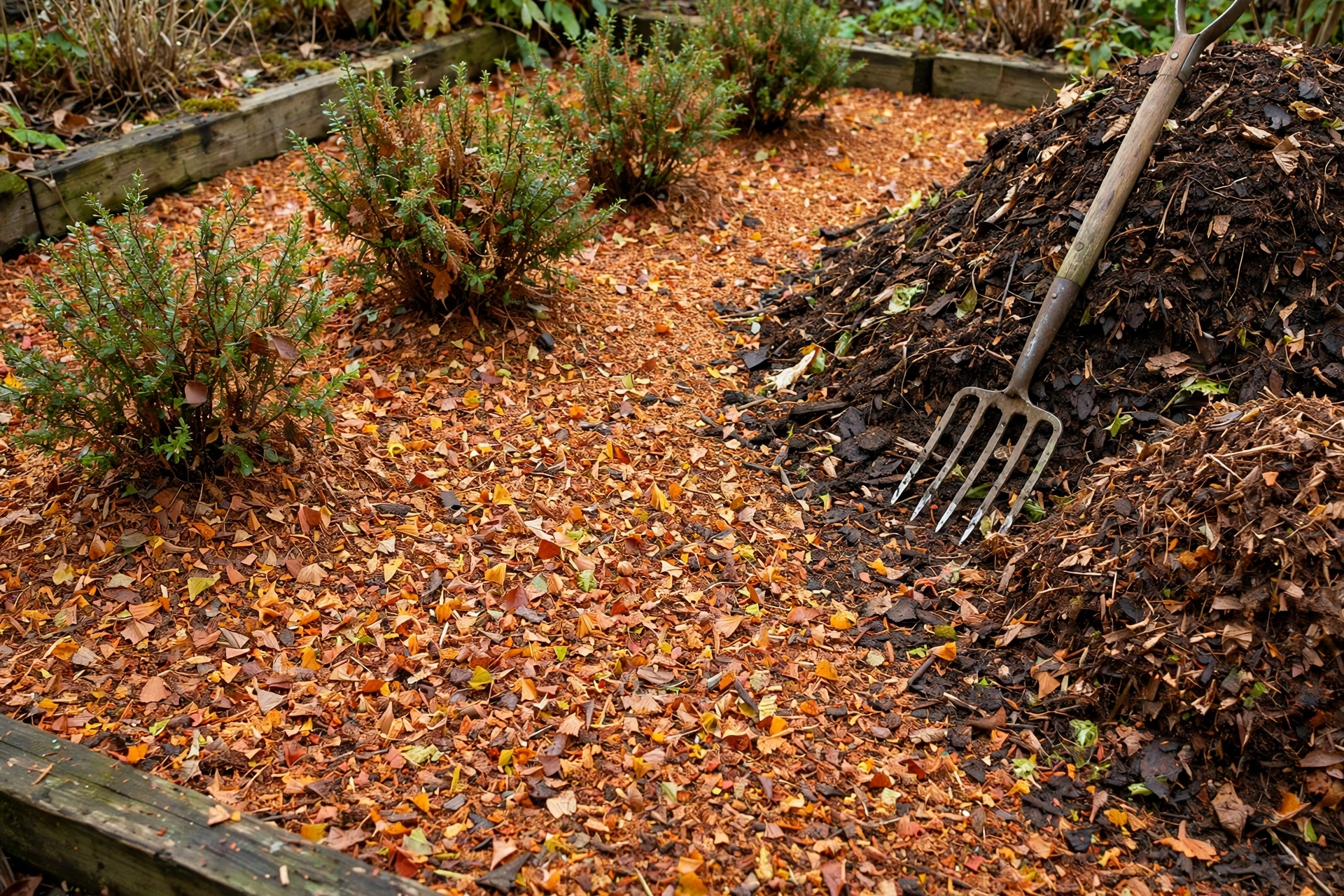
Spread shredded leaves 2 to 3 inches deep around shrubs, perennials, and in garden beds. That layer holds moisture in the soil, keeps weeds down, and insulates roots against freeze and thaw as winter sets in. It is the best use for most of the leaves a small yard produces, because it takes the most volume with the least work.
Keep mulch off stems and trunks. Pull the layer back a few inches from the base of every plant. Mulch piled against bark holds moisture where it does not belong and invites rot and rodents over winter.
Do not mulch the lawn with whole leaves. A thick layer of unshredded leaves smothers grass. If you want the leaves on the lawn, run the mower over them first, or vacuum them up and spread the shreds thin.
Fall is the right time. Mulch goes down after the leaves fall and before the ground freezes, so the beds go into winter covered and the soil stays workable longer.
Compost: The Slower Payoff
Shredded leaves are the brown half of a compost pile: dry, carbon-rich material that balances kitchen scraps and green clippings. Layer them in with green material, keep the pile damp like a wrung-out sponge, and turn it every few weeks to keep air moving through it.
A leaf-only pile still works, but slowly. It becomes leaf mold — a dark, crumbly soil conditioner — rather than true compost, and it takes months. Mixing in green material and turning the pile speeds the whole process up, and the finished compost is ready to spread in spring.
Start the pile now, while the leaves are falling, and let winter do the slow work. By the time beds need feeding in spring, the bottom of the pile is usually ready.
Bag Them: When It Is the Right Call
Not every leaf belongs in the garden. Bag the leaves when the volume is more than your beds and compost pile can take, when your town picks up yard waste for free, or when the leaves come from a tree with a known disease problem. Diseased leaves do not belong in mulch or in a home compost pile, which rarely gets hot enough to kill the problem.
Bagging is also the honest answer for a yard with more leaves than garden. A small lot under two big maples can produce far more than the beds can absorb, and a full bag at the curb beats a pile rotting on the lawn.
What Not to Do
Do not pile whole leaves thick on beds. The mat they form blocks rain and air, and perennials underneath can rot. Shred first, or use them in the compost pile instead.
Do not mulch with diseased leaves. Leaves with heavy fungal spots or blight go in the bag, not on the beds. The disease overwinters in the leaf litter and comes back with the plant in spring.
Do not leave a deep layer on the lawn. Grass under a wet leaf layer dies back over winter. Clear the lawn before the snow, even if the beds can wait.
The Order That Uses Every Leaf
Work through the pile in this order. Mulch the beds first, because that takes the most volume and does the most good over winter. Start or feed the compost pile second, with whatever is left. Bag only the remainder — the diseased leaves, the overflow, and whatever the garden cannot take. On most small yards, the bag ends up far lighter than it would have been if you had bagged everything.
If you are still choosing the machine, our best leaf vacuums for small yards roundup covers which models shred best, and leaf vacuum vs leaf blower settles whether to vacuum or blow each part of the yard. For the bigger fall routine, the pine needle cleanup guide covers what to blow, vacuum, and mulch across the whole yard.
Bottom Line
Mulch the beds first. Shredded leaves spread 2 to 3 inches deep protect roots all winter, and they take the biggest share of the pile with the least effort. Compost what is left, and bag only the diseased leaves and the overflow.