Your lower back starts talking before the driveway is half clear, and the ache is the symptom worth listening to.
Back pain from shoveling rarely comes from one bad lift. It comes from a pattern: lifting instead of pushing, twisting to throw, and taking loads that are too heavy, repeated dozens of times in cold muscles. The fix is not strength. It is a different sequence — and it starts before you pick up the shovel.
What the Ache Is Telling You
Shoveling strains the back in three ways, and most sore backs involve at least two of them at once.
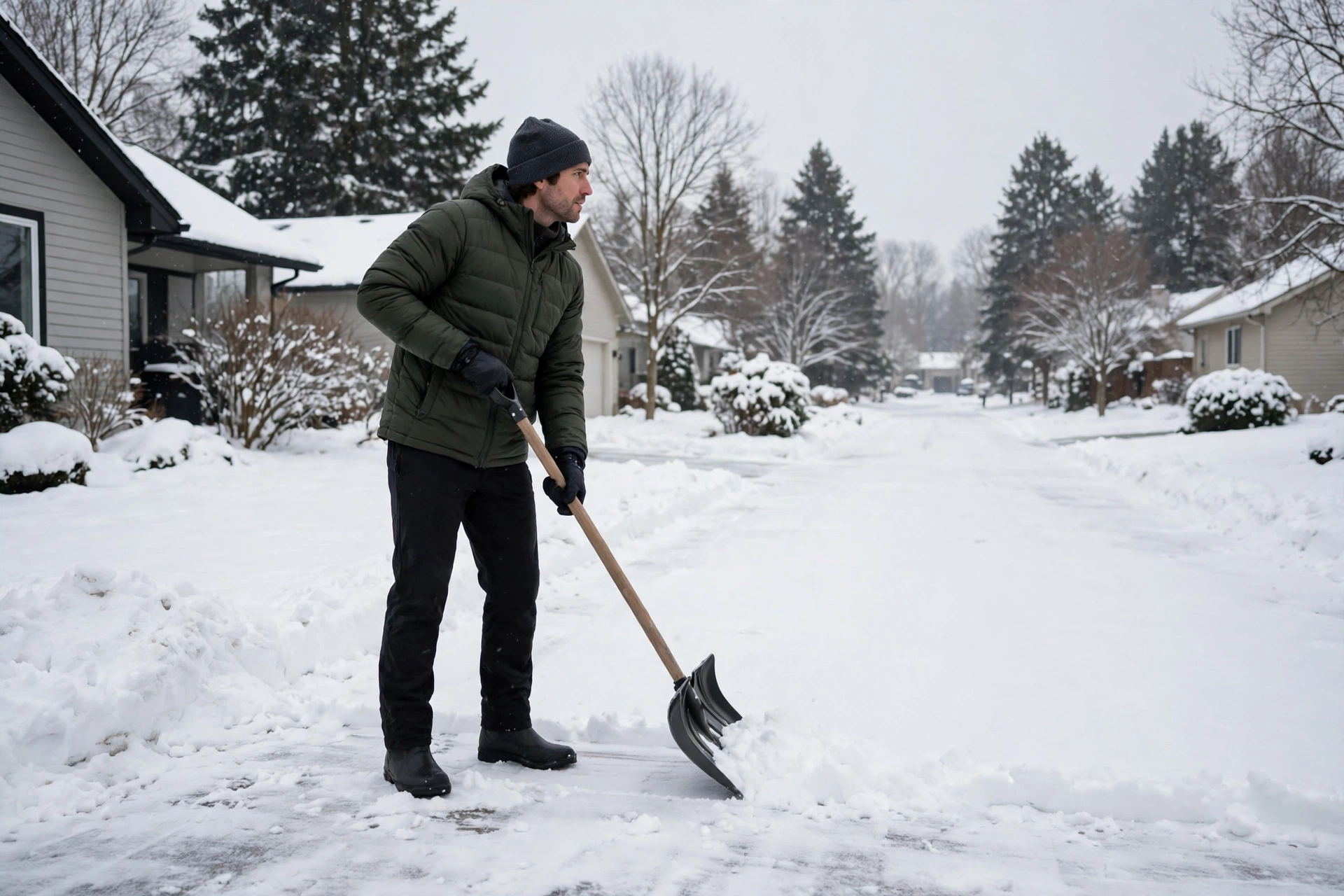
Lifting instead of pushing. Every load you lift and throw is weight your spine carries. Pushing the same snow forward costs your back almost nothing by comparison. If your shovel spends more time in the air than on the ground, that is the first thing to change.
Twisting while loaded. Turning your torso to toss snow to the side while the blade is full is the move that hurts people. Your spine handles bending and twisting separately far better than it handles both at once under load.
Cold muscles and too-big loads. You step out of a warm house into freezing air and start working at full effort. Cold muscles are stiffer and slower to respond, and a heaping blade doubles the load on every repetition. Small, steady loads in warmed-up muscles are the whole game.
The Fix: Shovel Like This
1. Push, don’t lift. Keep the blade on the ground and push the snow forward, then off to the side at the edge. Lift only the snow that has nowhere to be pushed — the plow berm, the steps, the pile at the end of the drive.
2. Take small loads. A half-full blade lifted twenty times beats a heaping blade lifted ten times. Your back notices the weight of each load, not the number of trips.
3. Bend at the knees, not the waist. Drop your hips to scoop, keep your back as straight as you can, and let your legs do the lifting. If you feel the pull in your lower back instead of your legs, the load is too big or your knees are too straight.
4. Switch sides. Most people shovel one-sided for the whole driveway, which loads one side of the back for an hour. Swap your hand positions every few passes. It feels awkward for a minute, and your back will notice the difference by the end.
5. Warm up first. Give yourself five minutes before the heavy work: walk around the block, do a few easy stretches indoors, or clear the light snow off the steps first. Cold muscles and a full blade are a bad combination.
6. Take breaks. Step inside, stand up straight, and let your back reset every 15 minutes or so, especially with wet, heavy snow. The driveway will still be there. Your back will thank you for the pause.
The Morning After: What Soreness Means
Some soreness the morning after a big shoveling session is normal — muscles you do not use every day did a hard job in the cold. That kind of ache is dull, spreads across both sides of the lower back, and eases as you move around. Gentle movement, not bed rest, is what helps it fade: a short walk, easy stretching, and normal activity through the day.
Sharp pain is different. Pain that stays in one spot, pain that shoots down a leg, or pain that does not ease when you stand up straight deserves attention rather than another round with the shovel. The same goes for soreness that is worse on the second morning instead of better. Those are signs to rest the back and, if the pain persists, to talk to a doctor rather than pushing through it.
The best test is the next storm. If the same technique leaves you less sore than last time, the changes are working. If the ache shows up in the same place every time no matter how you shovel, the problem may be the tool rather than the technique — and that is when a pusher or an ergonomic shovel earns its keep.
When to Put the Shovel Down
Some days the smart move is to stop. If you feel chest pain, dizziness, or shortness of breath, stop shoveling and get help — do not try to finish the driveway first. The same goes for sharp pain that does not ease when you stand up straight, or numbness running down a leg.
Heavy, wet snow in bitter cold is the hardest combination there is. On those days, clear in short sessions with long breaks, or clear the essentials — the walkway and the car — and leave the rest until the temperature rises. No driveway is worth an injury.
The Right Tool Helps Too
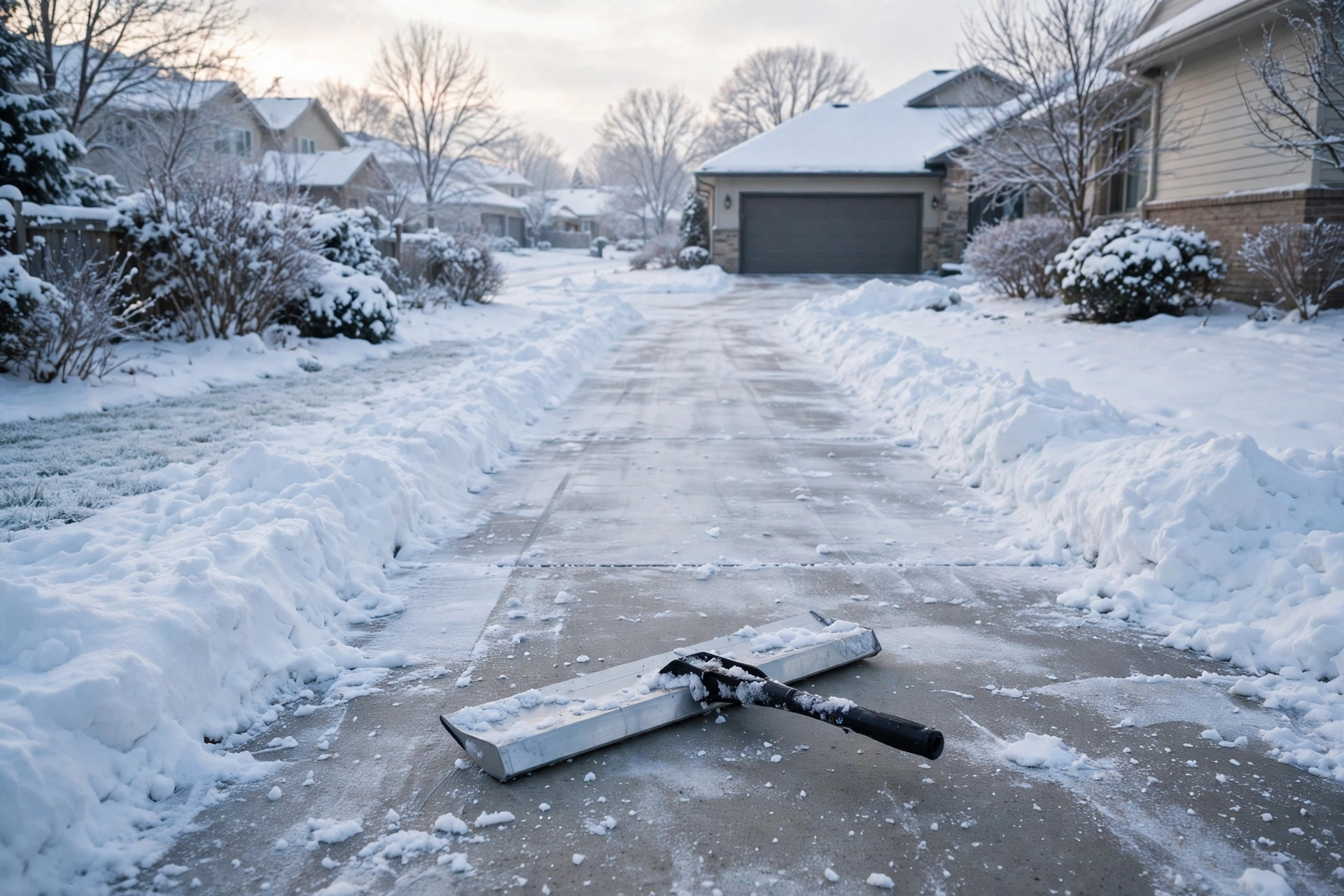
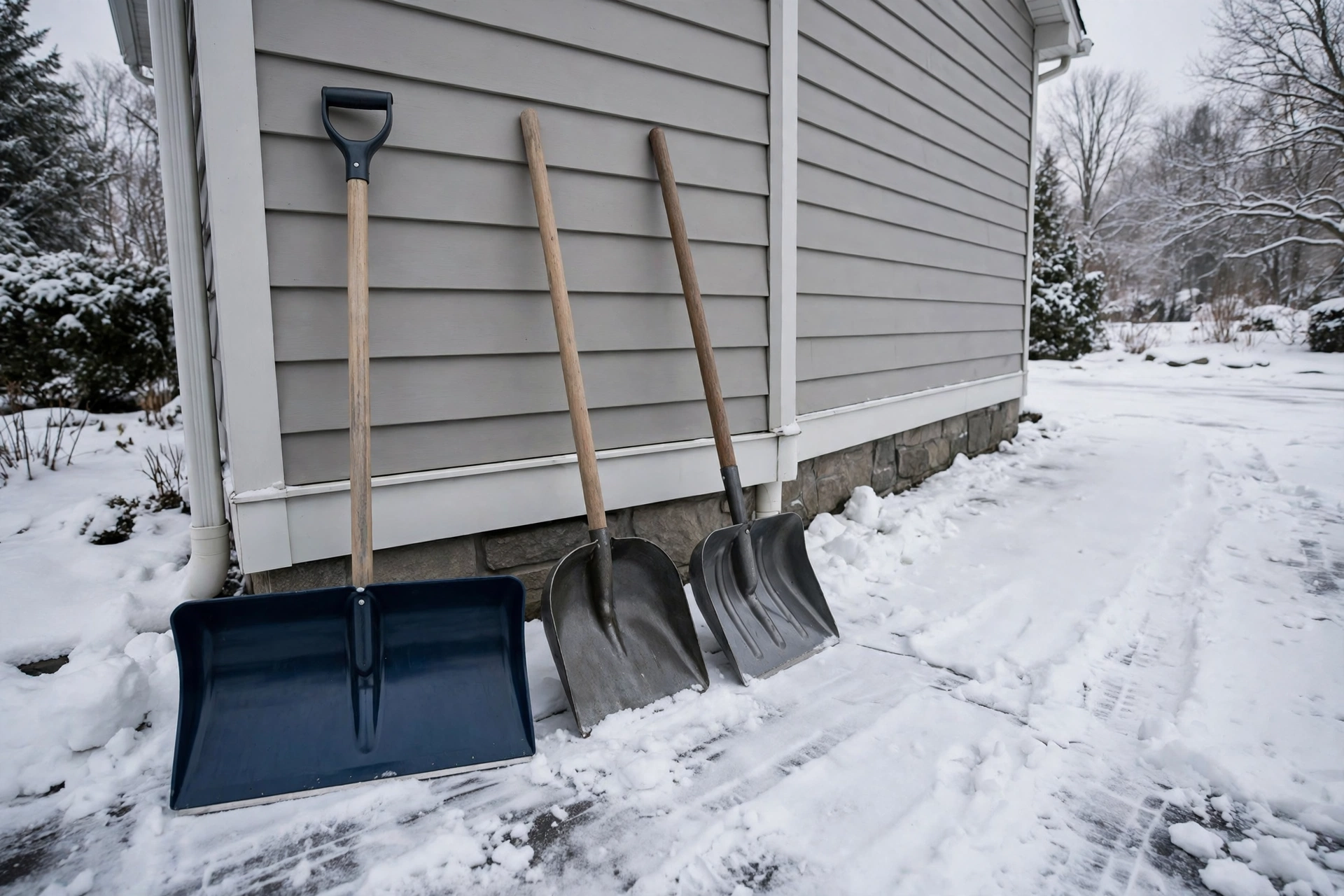
Technique does most of the work, but the tool matters. A wide pusher moves light snow without any lifting at all, and an ergonomic shovel with a second handle changes your posture on every scoop. Our best snow shovels for driveways roundup compares the options, including a spring-assist shovel built specifically to take strain off your back.
If your back complains every winter, the cheapest fix is a pusher for the open driveway. The second-cheapest is a shovel with a second grip. Either one beats a third winter of lifting a heaping blade with cold muscles.
The Short Version
Push, take small bites, bend your knees, and switch sides. Warm up, take breaks, and stop when your body tells you to. Do that, and the driveway gets cleared by legs and leverage instead of by your lower back.