This site contains product affiliate links. We may receive a commission if you make a purchase after clicking on one of these links.
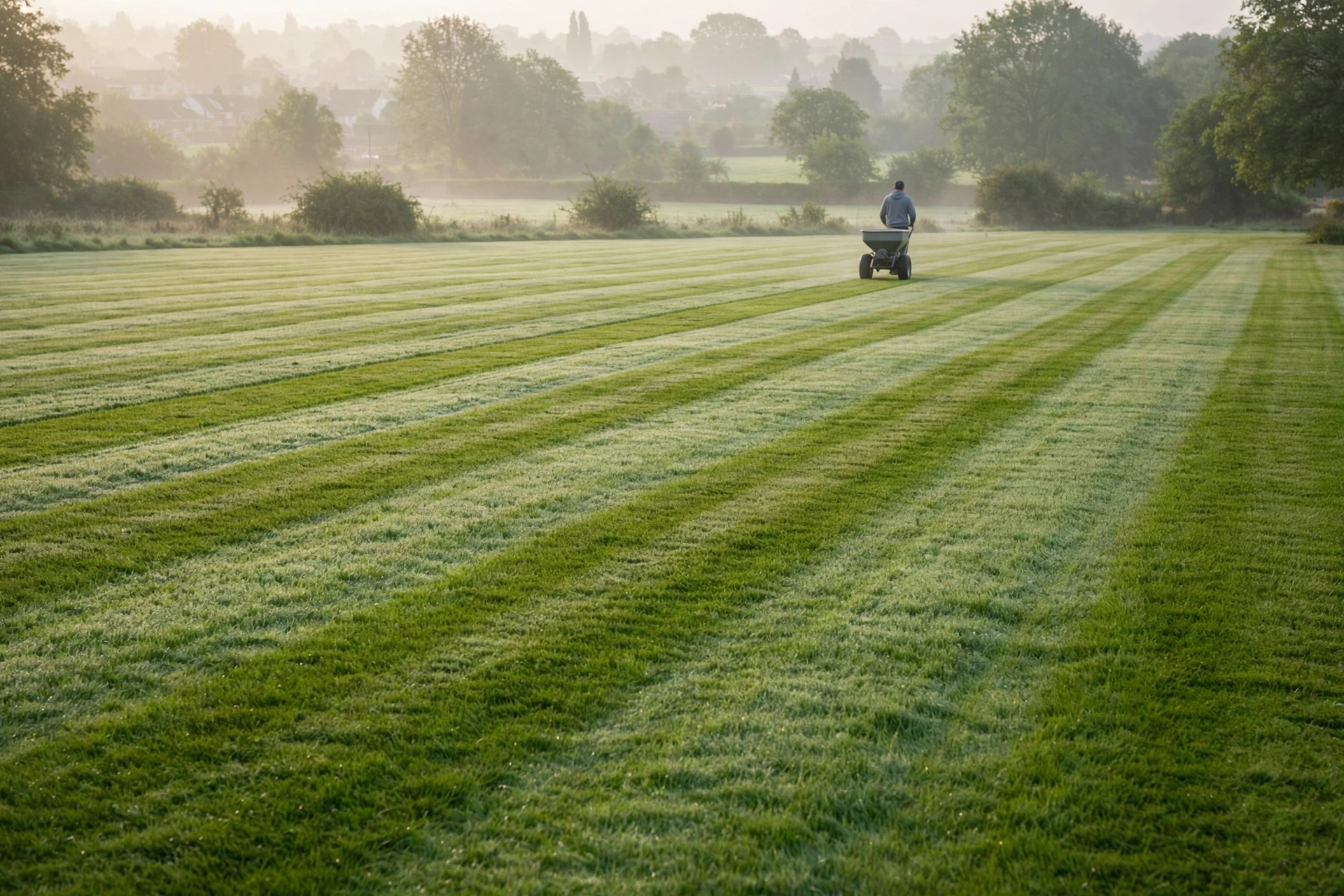
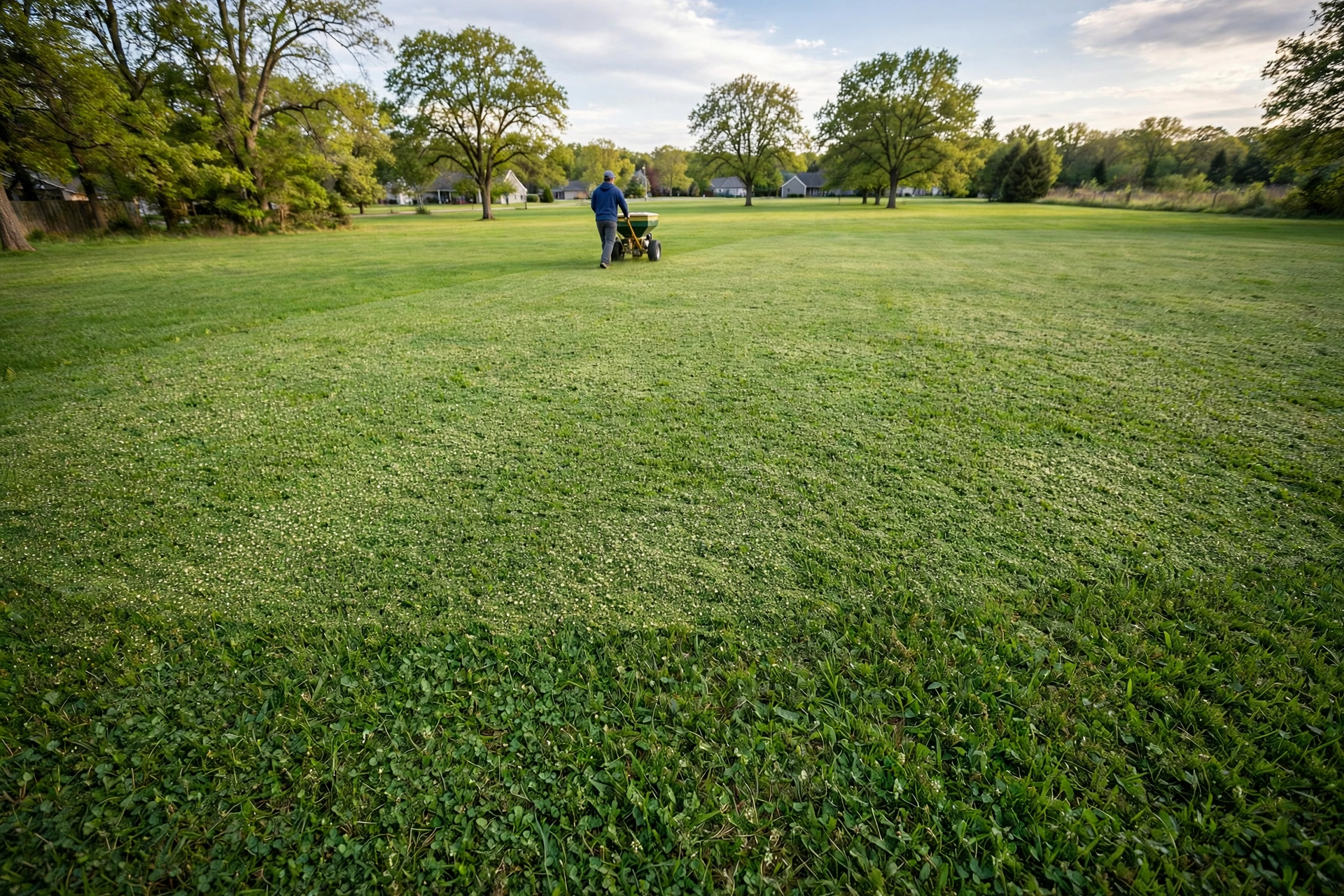
The first time you spread fertilizer by hand, you learn something the bag never mentions: granules do not distribute themselves evenly just because you threw them in the right direction. Two weeks later the lawn tells on you, with dark green stripes where you doubled up and pale, hungry patches where you missed, and a few burned spots where the granules sat too thick on a hot afternoon. A spreader is supposed to fix that. A bad one just makes the stripes wider.
Vevor’s walk-behind lawn spreader costs $149.90, and it is built around a simple promise: a 130-pound hopper, a twelve-foot broadcast width, and a 30-level flow dial that lets you match the rate to the material. One hundred sixty-five owners rate it 3.85 out of 5 — a number that says this machine does the job for most people and leaves a real share of them unimpressed, which is exactly the kind of honest record worth reading before you buy. The verdict up front is that it is a capable, no-frills workhorse for a mid-size to large lawn, and its weaknesses are the kind you can work around once you know they are there.
That 3.85 is the first thing to understand, because it sets the terms of the whole review. One hundred sixty-five owners is a real base, and a 3.85 across that many people means the machine does the job for most of them and leaves a real share unimpressed. The useful questions are what it does well, where it falls short, and whether the shortfall is something a careful owner can manage.
What you get for $149.90
The hopper is the headline. One hundred thirty pounds of granules in a single load means most quarter-acre lawns get fed without stopping to refill, and a full hopper turns a job that used to take an afternoon of trips back to the garage into a single steady walk. The hopper is UV-stabilized, so it will not go brittle in the sun the way cheap plastic does, and it detaches from the frame along with the handle, which means the whole machine folds down to a footprint a small garage can actually hold.
Underneath, the spreader runs on 13-inch pneumatic tires — real air-filled tires, not hard plastic wheels — mounted on a powder-coated steel frame. The tires matter more than they look like they should: they keep the machine rolling smoothly over soft grass, gravel paths, and the uneven ground at the edge of a lawn, and a steady roll is what keeps the broadcast pattern even. Pneumatic tires do need air now and then, and they can go flat, which is the price of the smoother ride. Check the pressure before the first pass of the season, the same way you would check a wheelbarrow.
The control is a 30-level precision flow dial, and it is the only adjustment the listing describes. Thirty settings sounds like a lot, and it is — the point is that fine grass seed and dense ice melt do not flow at the same rate, and a dial with real range lets you set a light flow for seed and a heavy one for salt without guessing. What the dial does not do is tell you which setting matches which product. That part is on you, and it is the single most important thing about owning this spreader: calibrate before you spread, every time, with a new product. Our broadcast spreader calibration guide walks through the test that keeps a lawn from striping, and it is worth doing the first time you load a new bag.
Assembly is straightforward, with some parts pre-assembled at the factory and no drilling required. The listing is clear that you will still put parts of it together yourself, so set aside a flat spot in the garage and check every bolt twice before the first load, because a spreader that loosens up mid-pass is how a hopper ends up on its side in the driveway.
One machine, four seasons
The spreader earns its garage space by working all year. Grass seed in spring, granular fertilizer in summer, weed-control product in fall, and ice melt on the driveway and walkways in winter — the same hopper, the same dial, a different setting. That is the real value of a walk-behind spreader over a handheld shaker: it turns four separate jobs into one machine you already know how to run.
Four-season use also means the machine lives outside its comfort zone for part of the year. Ice melt is corrosive, and a steel frame that spends January throwing salt needs a rinse when the job is done, not a trip straight back to the corner of the garage. The powder coating slows rust down, but it does not stop salt from working on the steel — wash the hopper and the frame after a salt run, let them dry, and the spreader will still be rolling next spring. Skip the rinse a few winters in a row and the frame will tell you about it.
The same logic applies to fertilizer. Granular fertilizer left in a hopper absorbs moisture, clumps, and jams the flow on the next pass, so empty the hopper when you finish and store the machine dry. It is a small habit, and it is the difference between a spreader that works for years and one that gets replaced after two seasons because the dial stopped turning.
Which spreader is yours?
A walk-behind broadcast spreader is one of three honest ways to feed a lawn, and the right one depends on how much lawn you own and how you get around it. Here is how this Vevor compares with the other two.
| Spreader | Hopper | Spread width | Needs | Best for |
|---|---|---|---|---|
| Vevor walk-behind 130 lb | 130 lbs | 12 ft | A homeowner on foot | A mid-size to large lawn, four seasons |
| Agri-Fab 45-0463 tow-behind | 130 lbs | Up to 12 ft | A riding mower or tractor | Lawns past an acre |
| Scotts Elite | Up to 20,000 sq ft per fill | Wide broadcast, edge control | A homeowner on foot | One machine for a typical suburban lawn |
The tow-behind Agri-Fab carries the same 130-pound hopper and the same twelve-foot width, but it needs a riding mower to pull it — which makes it the right call once a lawn passes an acre and the wrong call for anyone spreading on foot. The Scotts Elite is the best-known walk-behind in this class, and its edge control is the feature this Vevor does not offer: a lever that shuts off the side facing the driveway so granules stay on the grass instead of staining concrete. If your lawn is ringed with sidewalks and flower beds, that feature is worth real money, and our best broadcast spreaders roundup covers it in full. Our broadcast vs. drop spreader guide covers the third option, the drop spreader, which trades width for precision on lawns with tight edges.
Where the Vevor wins is the combination: the same capacity as the tow-behind and the same walking pace as the Scotts. What it gives up is the edge control and the polish. For a lawn with open edges and an owner who calibrates, that is a fair trade.
Who should buy it, and who should not
Buy this spreader if your lawn is big enough that a handheld shaker is a joke and small enough that a tow-behind is overkill — a quarter acre to an acre, roughly — and you want one machine for seed, fertilizer, weed control, and ice melt. The 130-pound hopper and the twelve-foot width make short work of that size, and the four-season range means it earns its garage space all year.
Do not buy it if your lawn is a postage stamp. A mini spreader stores in a closet and does the same job on 5,000 square feet without the garage footprint. Do not buy it if your lawn is ringed with concrete and beds and you will lose sleep over granules on the driveway — the Scotts Elite’s edge control exists for exactly that lawn. And do not buy it if you will not calibrate: a 30-level dial with no settings printed on the box is a tool that rewards the owner who tests it and punishes the one who guesses. If that is not you, pick a machine that holds your hand a little harder.
For everyone else, the verdict is plain. This is a $149.90 spreader with a 3.85-star record, a big hopper, a wide pattern, and a dial that does what you tell it to. Calibrate it, rinse it after salt, empty the hopper when you finish, and it will feed a lawn for years. Skip those three habits and the stripes will come back.
VEVOR Walk-Behind Lawn Spreader, 130 lbs, 12-Ft Width
A 130-pound hopper, a twelve-foot pattern, and a 30-level dial — one machine for seed, fertilizer, and ice melt.