Landscape & Leisure is reader-supported. When you buy through links on our site, including Botanical Interests seed links, we may earn a commission at no extra cost to you. Prices change, so click through to confirm current pricing.
By the time the cucumbers start piling up on the counter, the pickling herbs should already be growing — dill going to seed and fennel bulbs fattening in the bed. That timing is the whole trick with these two herbs. They grow with very little fuss, and the timing is the part that trips people up: a dill patch sown too late gives you leaves when what you needed was seed heads, while a fennel bulb sown at the wrong moment bolts before it ever fattens.
This guide covers the sowing, spacing, and succession routine for both herbs, so the brine jars stay full. For the varieties themselves, see our dill and fennel roundup, and if you are still deciding between the two, our dill-versus-fennel comparison settles it.
Why these two herbs run on a schedule
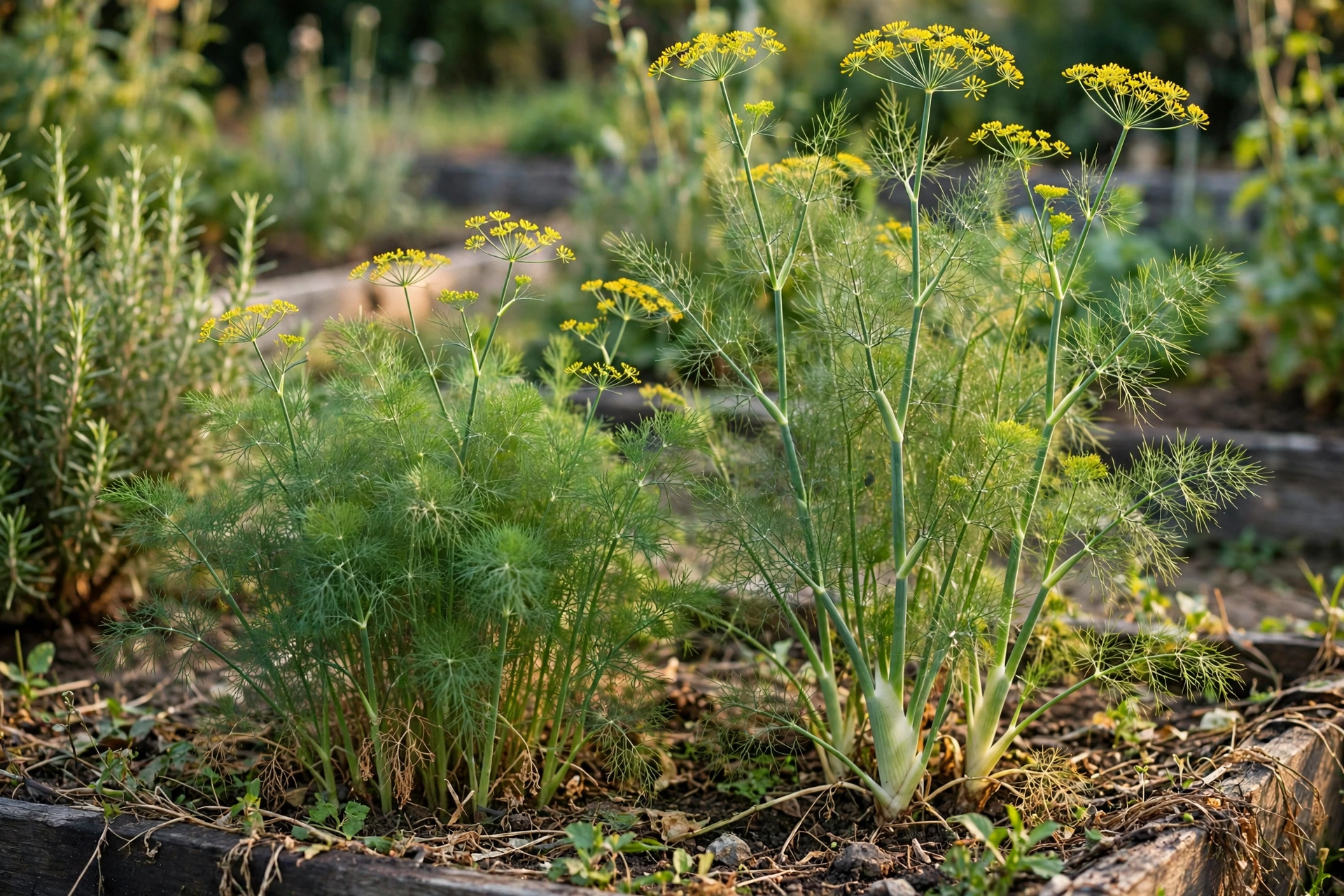
Dill and fennel do not wait for a free weekend. Dill is grown for its leaves until it flowers, and the seed heads you pickle with arrive 2 to 3 weeks after flowering begins — so the sowing date decides whether the seed is ready when the cucumbers are. Fennel is the same story in reverse: the bulb is a fall-harvest crop when you sow in midsummer, and a spring sowing in a hot summer will bolt before the base ever fattens. Get the timing right and both herbs practically grow themselves. Get it wrong and you will have a bed full of the wrong harvest.
Telling dill from fennel
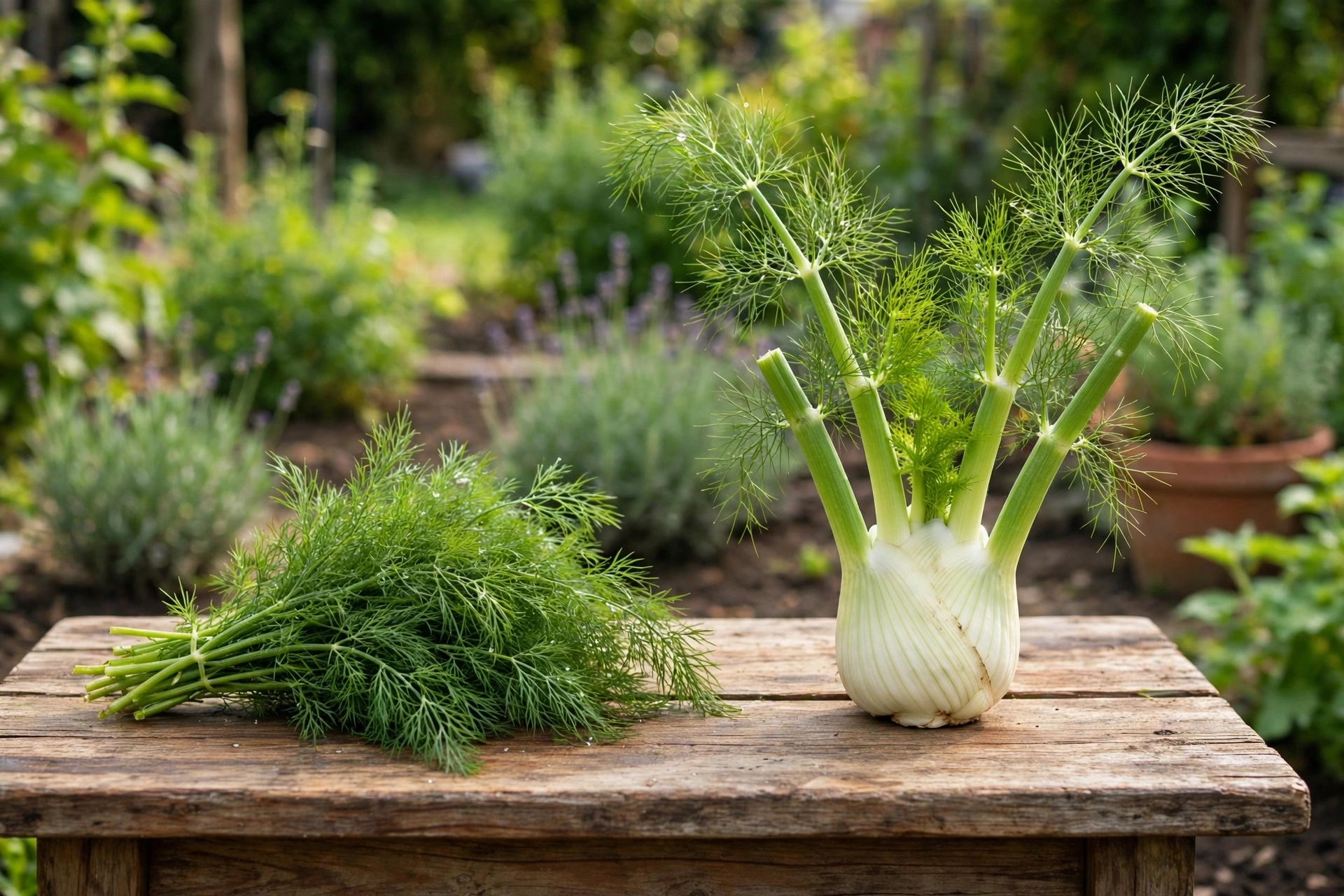
The two look alike at a glance — tall, feathery, and both in the carrot family — but the fronds give them away once you know what to look for. Dill fronds smell of dill. Fennel fronds smell of anise. And a Florence fennel swells at the base into a bulb, which dill never does.

Sowing dill
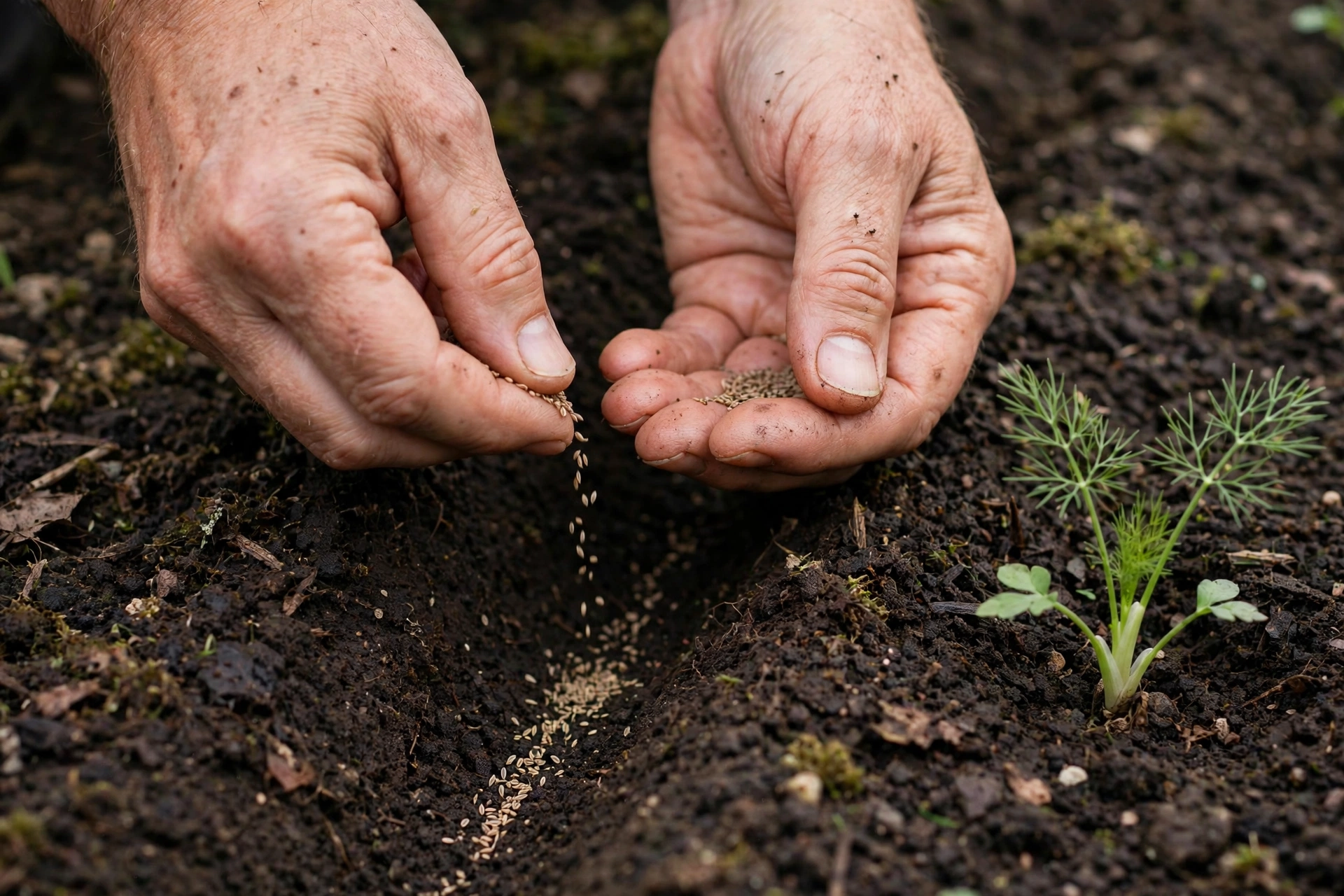
Direct sowing is the way to go with dill. Sow 1 to 2 weeks before your average last frost date, once the soil reaches at least 60 degrees, and press the seed into the surface rather than burying it. Sow groups of 3 seeds every 4 inches, in rows a foot apart, and thin to one plant every 4 inches when the seedlings reach 3 inches tall.
Germination takes 20 to 25 days, which is slow enough that a new gardener might assume the seed failed. It has not — give it time, and keep the bed evenly moist while you wait. If you start dill indoors instead, start it 8 to 10 weeks before your last frost in biodegradable pots you can plant whole. Our seed-starting guide covers the indoor routine.
Succession is what keeps dill on the table. Sow again every 2 to 3 weeks through the season, and you will have fresh foliage and a steady run of seed heads instead of one flush that flowers all at once. Harvest the leaves any time until the plant flowers, cutting as close to the stem as possible. For seed, wait until 2 to 3 weeks after flowering begins and the heads have turned brown, then cut the heads with their stems and drop them into a paper bag before the seed gets too mature and falls to the ground. Tie the top shut around the stems and the seed will fall to the bottom of the bag. Store it in an airtight glass jar.
BEST FOR LEAVES
Tetra Dill Seeds
The leaf dill that keeps producing — late-flowering, slow to bolt, and a packet that sows 240 feet.
Sowing fennel
Fennel wants more room than dill and a different calendar. Sow a quarter inch deep, in groups of 3 seeds every 10 inches, in rows 10 inches apart, and thin to one plant every 10 inches when the seedlings reach an inch tall. Germination takes 7 to 14 days — much faster than dill, so the bed fills in quickly.
For bulbs, the sowing date is the decision. Midsummer for a fall harvest is optimal, in soil between 60 and 75 degrees. In cool-summer areas, where summer stays under 75 degrees, sow 1 to 2 weeks after your last frost instead. In mild climates, sow in fall for a cool-season harvest. If you start fennel indoors for spring bulb production, start it 4 to 6 weeks before your last frost in biodegradable pots, and plant the pots whole — root disturbance is one of the things that pushes fennel to bolt. For foliage only, sow every 3 weeks after your last frost until midsummer.
Mulch around the base of the plant to blanch the bulb and keep it tender. The four things that trigger bolting are water stress, root disturbance, heat, and lengthening days, so keep the bed watered, do not move the plants, and let the fall sowing dodge the worst of the heat. Harvest the bulb any time after the base begins to fatten and before the plant bolts, cutting just below the soil surface. The leaves can be clipped for fresh use almost any time after the plant is established, and the seeds are ready when they turn from yellow-green to grey-green — once they go brown, they may fall to the ground before you can gather them.
BEST OVERALL
Finocchio Fennel Seeds
Three harvests from one plant — a licorice-flavored bulb, anise fronds, and seeds for the spice shelf.
BEST SWEET BULB
Dragon Fennel Seeds
Big, sweet, slow-to-bolt bulbs from a hybrid Florence fennel — the bulb is the reason to grow it.
Spacing and timing at a glance
| Crop | Sow depth | Spacing | Germination | Sow window |
|---|---|---|---|---|
| Dill | Press into surface | Groups of 3 every 4″, thin to 1 every 4″ | 20–25 days | 1–2 weeks before last frost; succession every 2–3 weeks |
| Fennel, for bulbs | ¼” | Groups of 3 every 10″, thin to 1 every 10″ | 7–14 days | Midsummer for fall harvest; soil 60–75°F |
| Fennel, for foliage | ¼” | Groups of 3 every 10″, thin to 1 every 10″ | 7–14 days | Every 3 weeks after last frost until midsummer |
Harvesting for the brine
Pickling runs on seed, so the harvest that matters most is the one you time last. Dill seed heads are ready 2 to 3 weeks after flowering begins, once the heads have turned brown — cut them with their stems and drop them in a paper bag before the seed gets too mature and falls. Fennel seeds are ready a shade earlier, when they turn from yellow-green to grey-green. The bulb is a separate harvest: cut it just below the soil surface any time after the base fattens and before the plant bolts. And the leaves of both herbs can be clipped for fresh use almost any time after the plants are established, so nothing in the bed goes to waste while you wait for seed.
What to watch next
Two things catch new growers off guard. The first is striped caterpillars on the dill — dill is a host plant for swallowtail butterfly caterpillars, so they are doing what the plant is for, and they move on after eating some leaves. The second is a dill head left to go brown on the plant: the seed drops where it stands, which is how a dill patch plants itself for next season whether you planned it or not. For fennel, the thing to watch is bolting in a hot stretch — keep the bed watered and mulched, and the fall-sown bulbs will fatten instead of flowering. Sow the dill early, sow the fennel for fall, and keep a second sowing coming every few weeks, and the brine jars will take care of themselves.