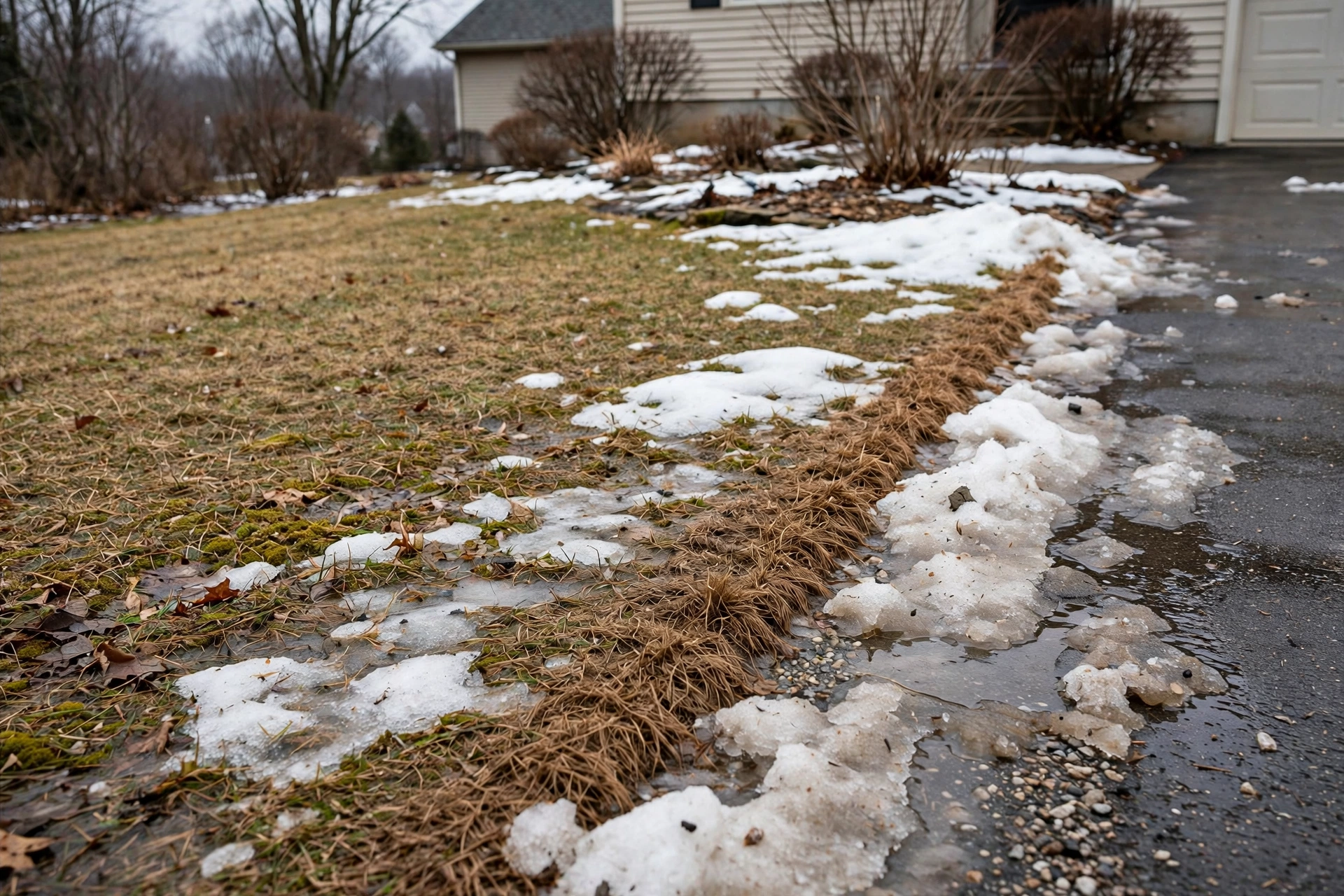
In spring the grass along your driveway comes up thin, pale, and patchy in exactly the strip where the ice melt landed all winter. That pattern is not a coincidence, and it is not usually a disease.
Yes, ice melt can injure and kill grass, especially when it piles up along edges, gets shovelled onto the lawn in salty snow, or is applied heavily before a storm that never arrives. The injury is salt stress: salts pull water away from grass roots and leaves, and sodium can harm soil structure over time.
How to tell salt damage from other spring problems
Location gives it away first. Salt damage follows pavement — driveway edges, sidewalk borders, and the spots where ploughed or shovelled snow sat all winter.
The look is scorched and thin. Grass may be brown or straw-coloured, sparse, and slow to green up while the rest of the lawn wakes up normally.
The timing fits. If the strip looked fine in autumn and failed first in spring, salt moves to the top of the list. For the repair steps, see how to fix salt-damaged grass in spring.
Which ice melts are hardest on grass?
Rock salt (sodium chloride) is the most common and one of the hardest on plants and soil, particularly with repeated heavy use. Calcium chloride and magnesium chloride products are often used because they work at lower temperatures, but any chloride salt can injure grass when it concentrates along edges. The dose and the placement matter as much as the label.
Choosing a product marketed as pet-safer or lawn-kinder does not make heavy application harmless. Our roundup of the best pet-safe ice melt for lawns explains the trade-offs, and our driveway guide covers best ice melt for driveways when pavement, not lawn, is the priority.
How to use ice melt without wrecking the edge
Apply less, and apply it evenly. A thin, even scatter melts ice; piles in one spot become a salt concentrate in spring.
Shovel first. Removing snow before applying melt means you need far less product to clear what remains.
Keep salty snow off the lawn where you can. Spread shovelled snow out rather than stacking it on the same grass strip every storm.
Sweep up leftovers. Once the pavement is dry, sweep visible granules off the surface instead of letting the next rain wash them into the edge.
Bottom line
Ice melt kills grass mainly by concentration, not by a single light application. Use less, shovel first, and keep the salty snow spread out, and most edge damage never happens.
Will the grass grow back on its own?
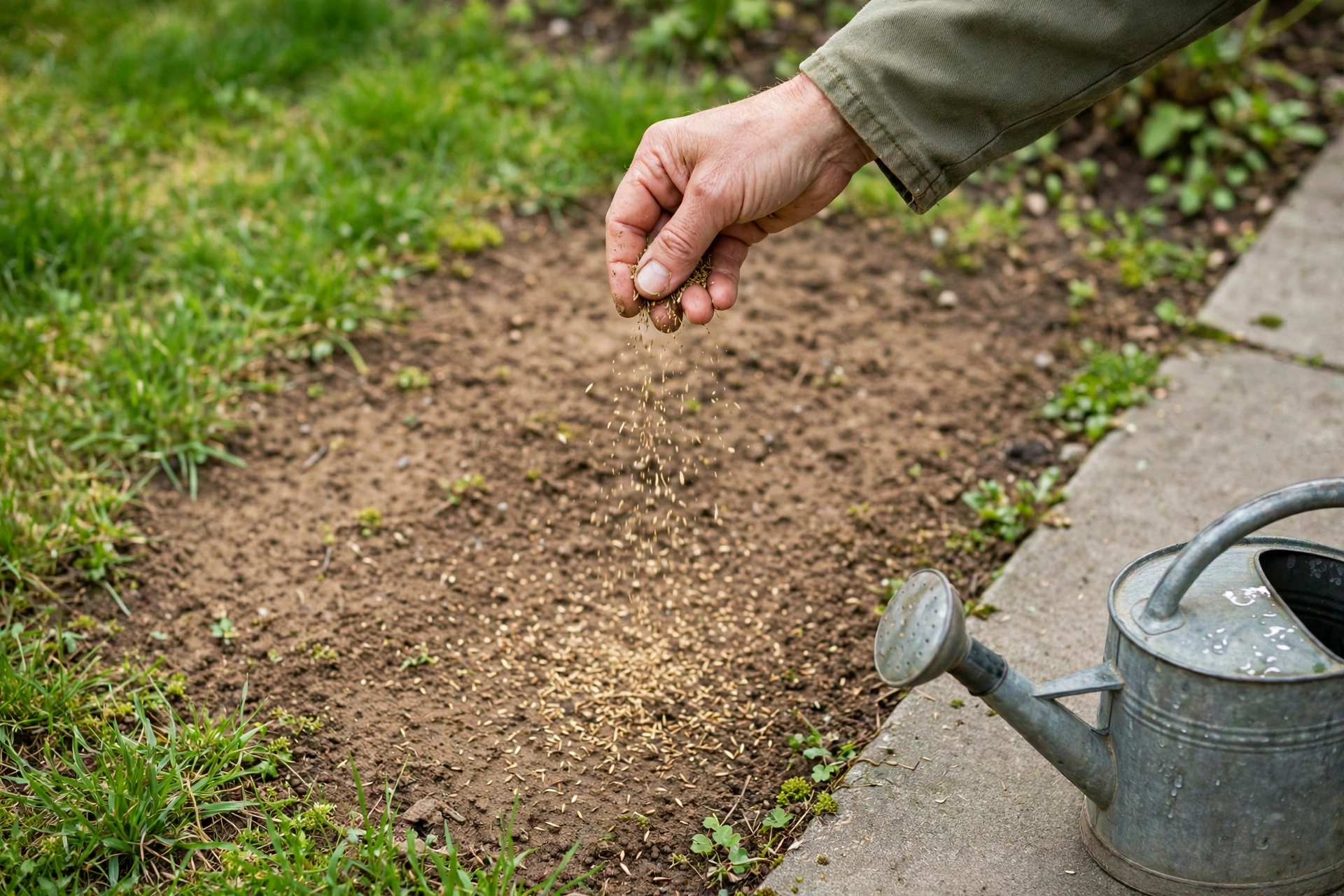
Often, yes. Light salt stress thins grass rather than killing every plant, and spring rain flushes salts through the soil, so a pale strip in March can fill in by May without reseeding. The patches that stay bare after the rest of the lawn is growing strongly are the ones that need repair, which is why waiting for a fair comparison matters before you buy seed. Bare soil in a salt strip also invites weeds, so do not leave a dead patch unaddressed through a whole summer hoping it will close.