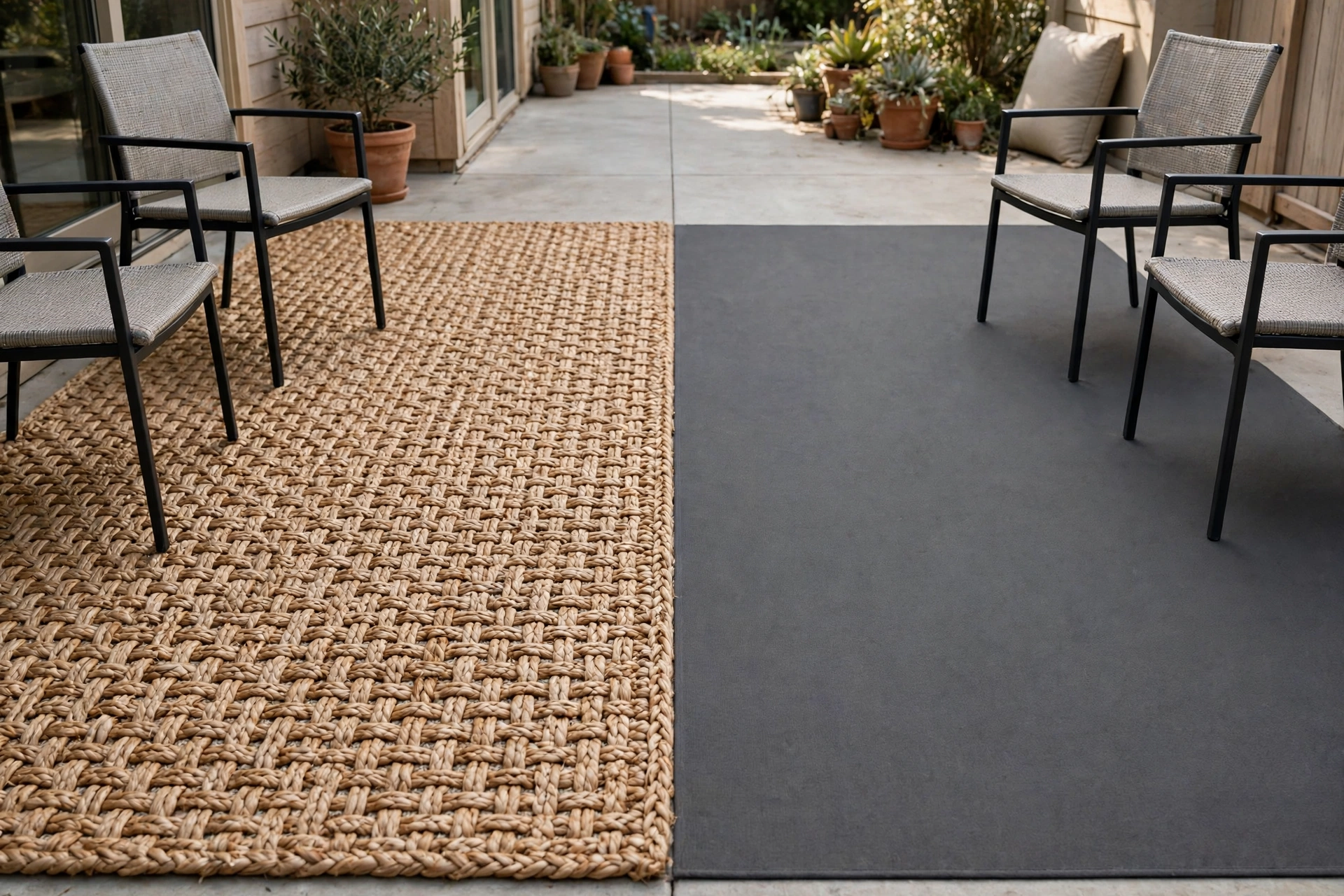
By late fall the patio rug tells the season’s story — pollen ground into the weave in spring, a summer of spilled drinks, and leaves that sat wet long enough to leave their outline — and the week you roll it up is the week that decides whether it comes back out clean next year.
Cleaning an outdoor rug is simple work done in the right order: dry debris off first, water second, soap only where it is needed, and a full dry before storage. Stored damp, even a polypropylene rug comes out smelling like a basement. Stored clean and dry, the rugs in our outdoor rug roundup come back ready in one sunny afternoon.
What you need
A broom or leaf blower, a garden hose, a bucket of water with a small amount of mild dish soap, a soft brush, and a railing, fence, or two chairs to drape the rug over. Skip the pressure washer — it frays flat weaves and drives dirt deeper into pile.
How to clean an outdoor rug
1. Shake and sweep it dry. Take the rug to the driveway, shake out what will shake, and sweep both sides. Most of what looks like staining is loose grit, and grit left in place turns a wash into mud.
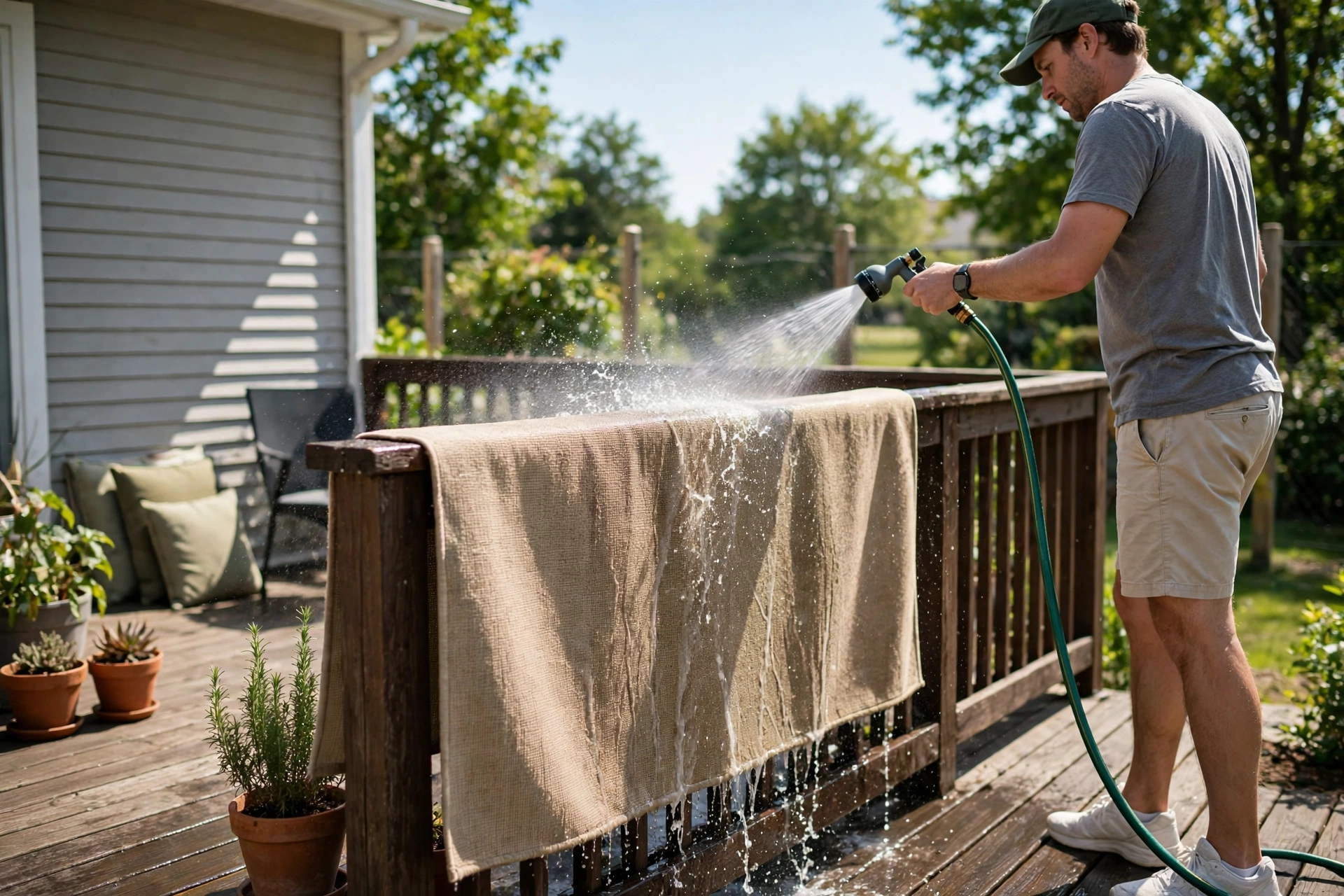
2. Hose it down. Wet the whole rug, top side first. On a plastic-straw mat, this step alone finishes the job — hose, shake, and drape it to dry.
3. Spot-scrub with mild soap. Work the soapy brush on stains in small circles, following the weave instead of fighting it. Rinse until the water runs clear and no soap film remains, because dried soap attracts new dirt faster than the original stain did.
4. Dry it completely, both sides. Drape the rug over a railing in the sun, and flip it once. The underside is the part everyone forgets, and it is the part that mildews in storage. A rug that feels dry on top can still be damp against the backing.
How to store an outdoor rug for winter
Roll it, do not fold it. A pile rug rolled around a pool noodle or a length of pipe comes out without creases. Folding a pile rug for four months sets lines that take weeks to relax. A plastic-straw mat is the exception — folding is what it is built for, as our rug vs mat comparison explains.
Store it dry, indoors, and off concrete. A garage shelf or a closet beats a shed floor. If the only space is a garage, rest the roll on a shelf or blocks so a damp floor cannot wick into the bottom edge all winter.
Skip the sealed plastic bag. A rug stored with any trace of moisture in an airtight bag comes out smelling musty. A breathable wrap or a plain cotton sheet keeps dust off without trapping damp.
The spring check
Unroll the rug on the first dry day and walk it before the furniture goes out. A faint musty smell fades in a sunny afternoon with both sides aired. Frayed edges and a backing that crumbles are the real end-of-life signs — at that point the rug has done its seasons, and replacing it beats scrubbing it.
Bottom line
Clean it dry-to-wet, dry it on both sides, and roll it up only when it is truly dry. That order, followed once each fall, is the whole difference between a rug that lasts one summer and a rug that anchors your patio for years.