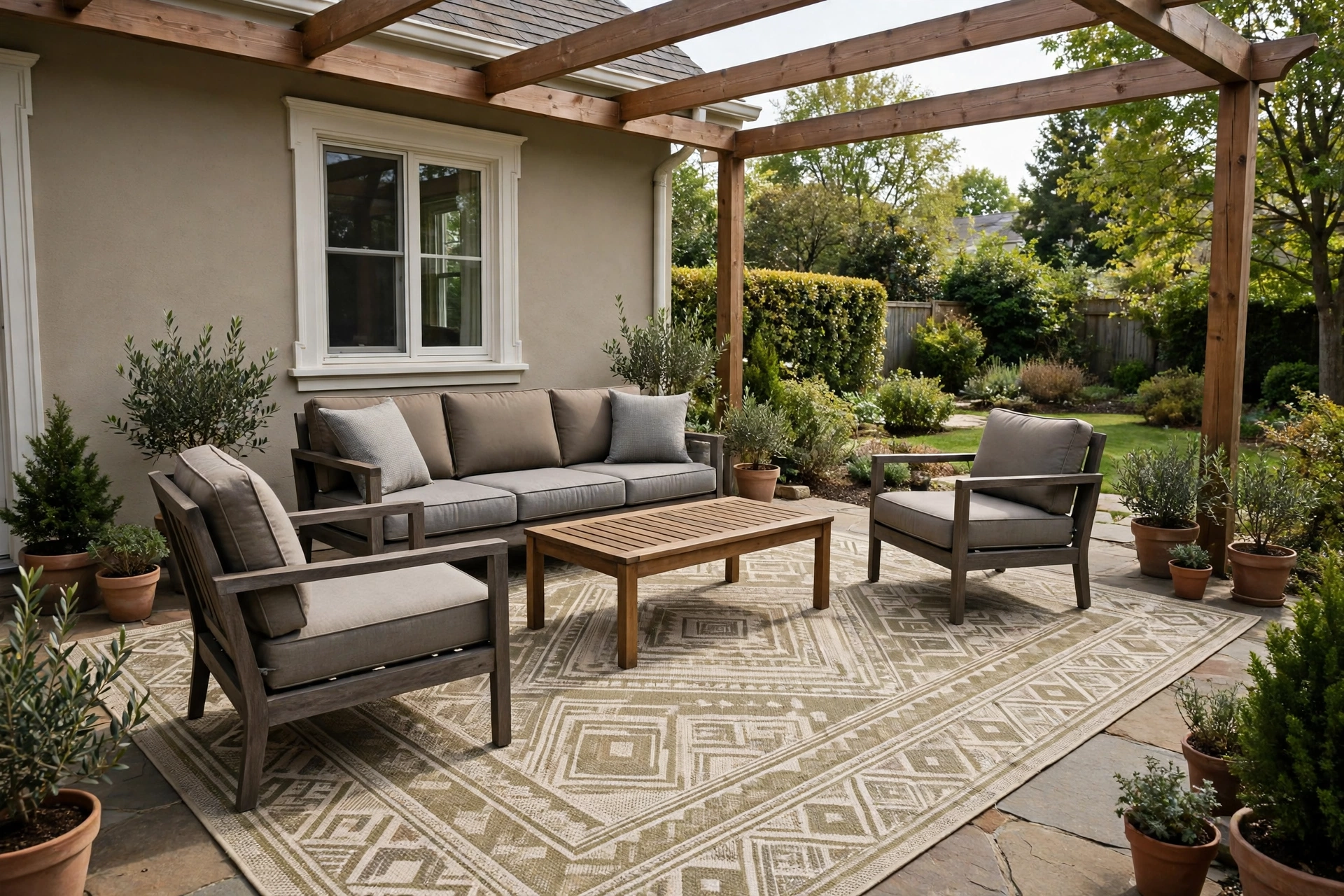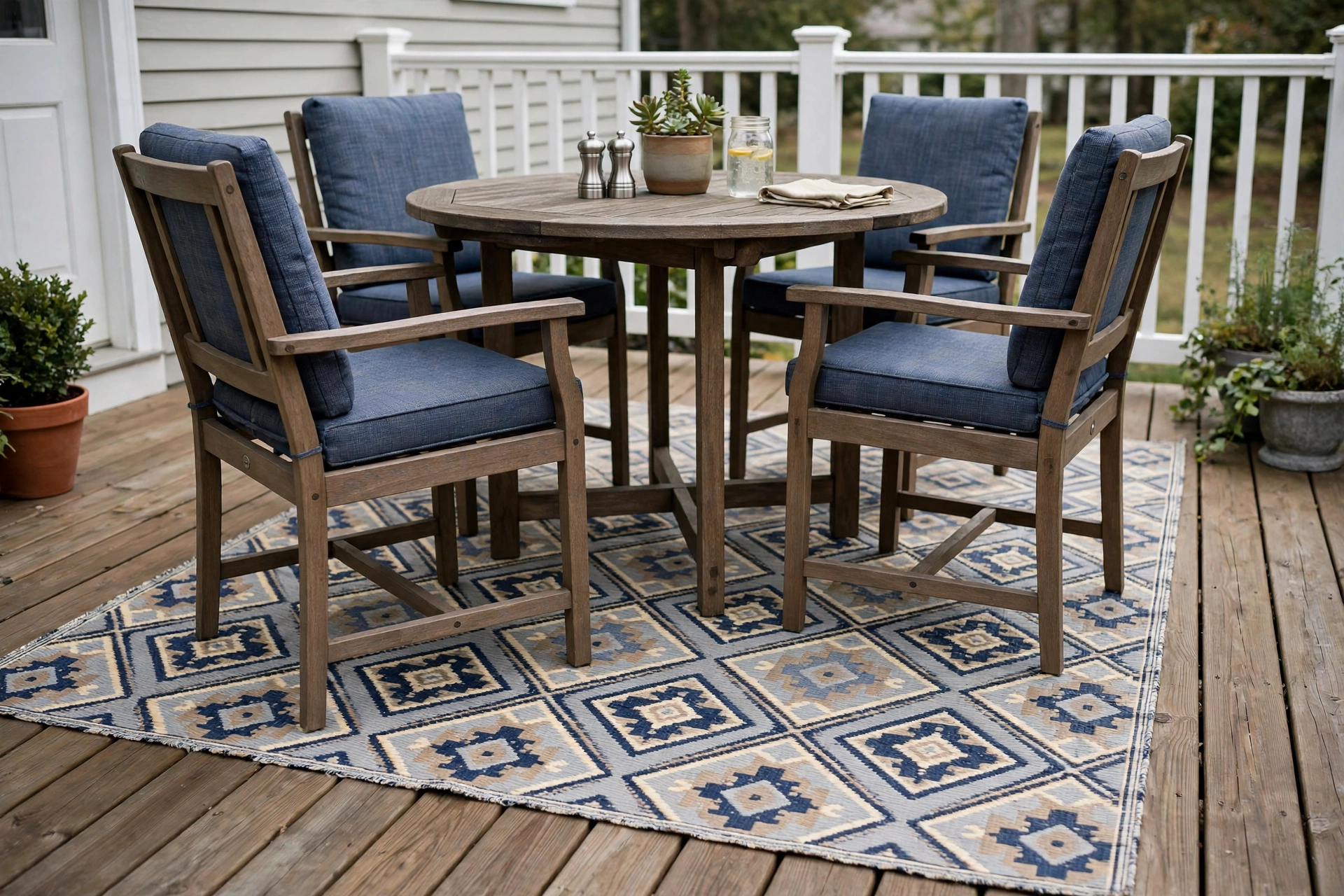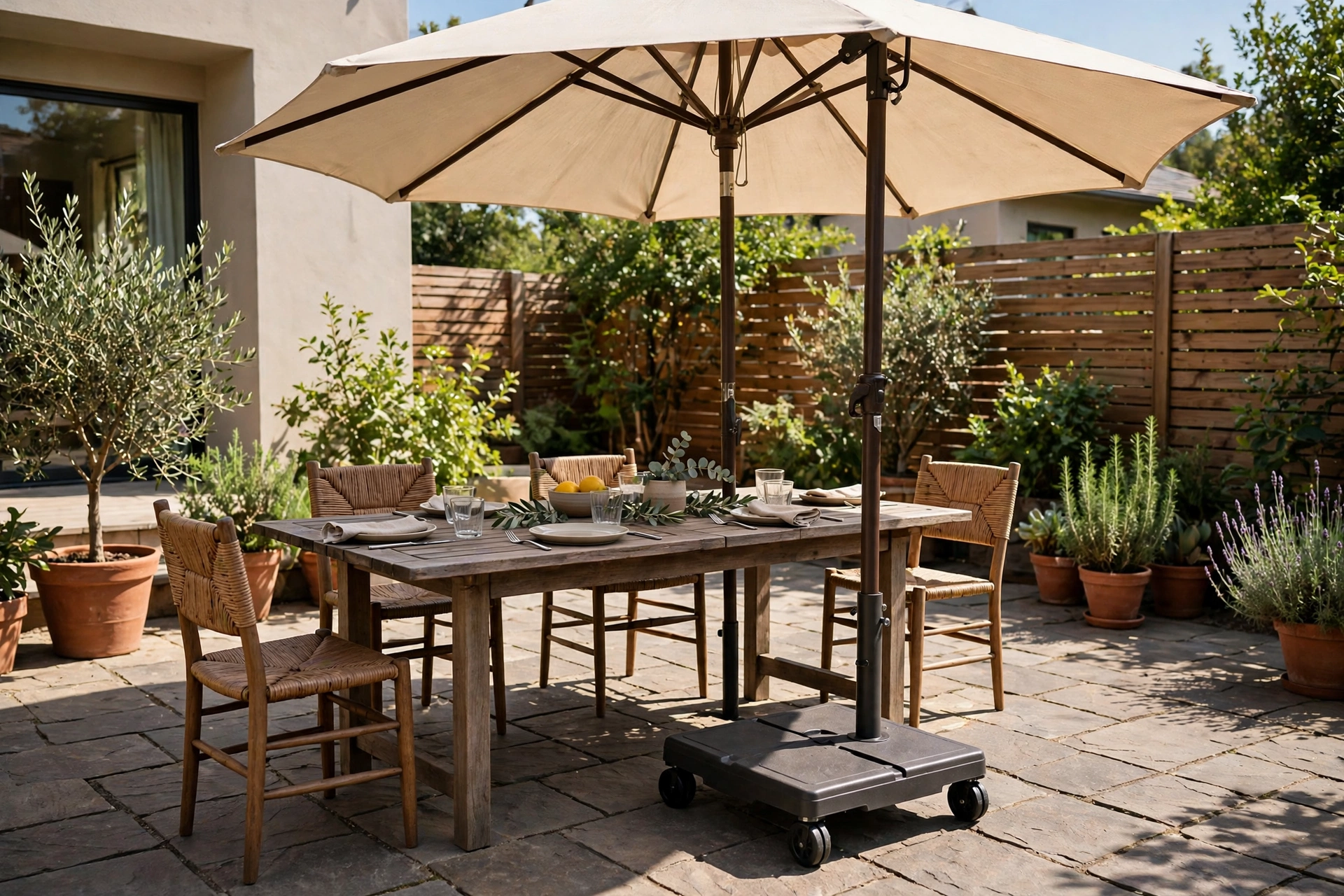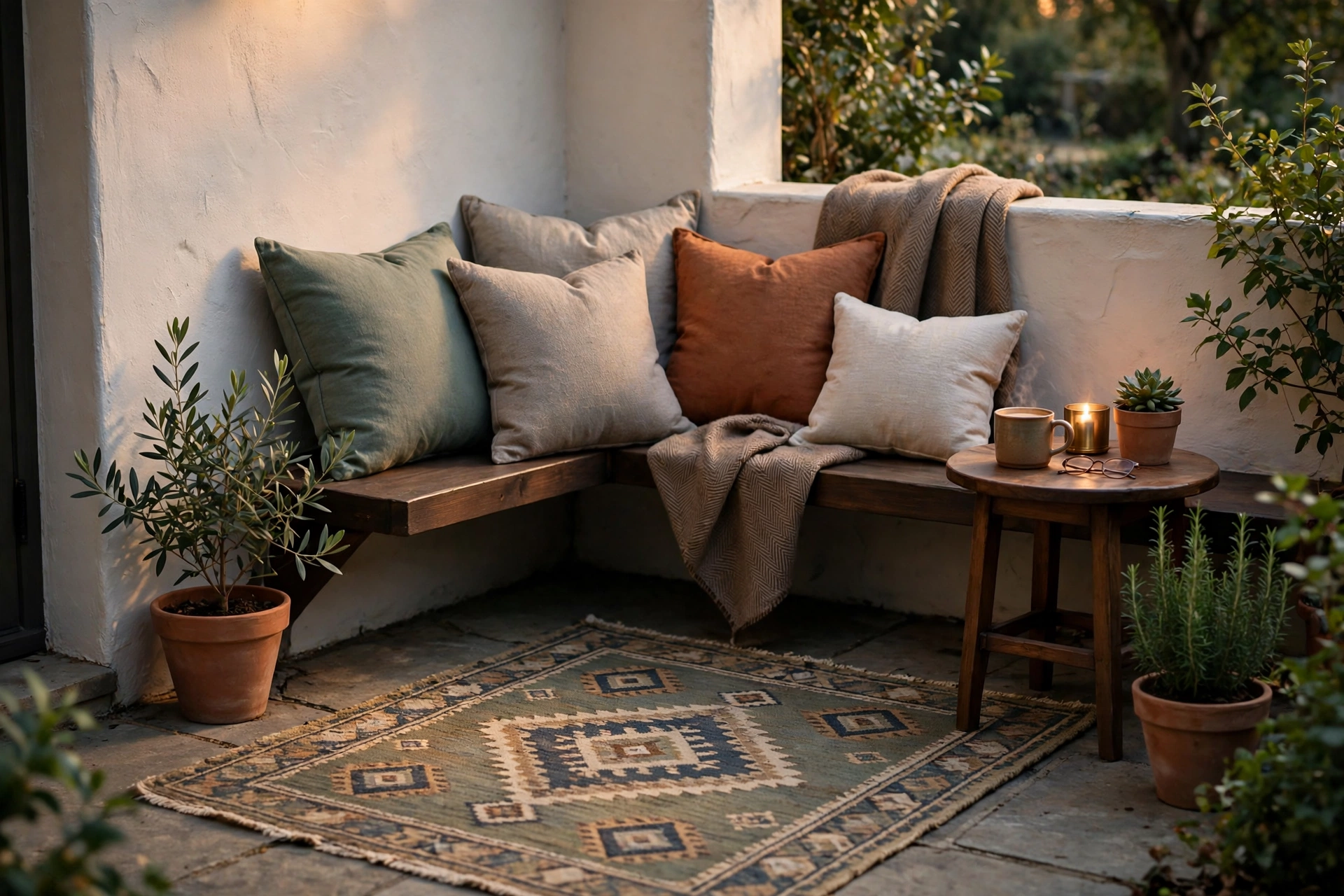
Do you need an outdoor rug, or does a patio look fine bare? The honest answer splits by surface: a rug earns its keep on hot concrete, splintered decking, and any patio where the furniture currently wanders, and it is decoration only on a shaded, smooth patio you already find comfortable.
That split matters because a rug is not free of upkeep. It has to dry after rain, it needs cleaning a bare patio never asks for, and a cheap one in the wrong spot creates more chores than comfort.
Four jobs a rug actually does, weighed against the costs it brings with it, settle the question for most patios.
It protects the surface under the furniture
Chair feet concentrate the weight of a seated person onto a few square inches. On a wood or composite deck, that pressure grinds grit into the finish every time a chair shifts, and the wear shows first exactly where people sit most.
A rug spreads that load and traps the grit in its weave instead. The protection runs the other way as well: metal furniture feet rust, and a rug keeps rust rings off light-colored concrete.
It takes the heat out of the surface
Dark concrete and composite decking get hot enough in afternoon sun to end barefoot use by early afternoon. A light-colored rug surface runs noticeably cooler than the slab it covers, because the weave shades the surface and air moves through it.
Plastic straw mats do this job best on the hottest surfaces, since the open weave lets air reach the ground. A dense woven rug still helps, though it holds more heat than the straw construction.
It draws a boundary the furniture respects
Chairs on bare concrete migrate. A week of evenings pushes a seating group a foot off its arrangement, because every sit and stand nudges a leg.
A rug edge gives the group a visible home, and chairs get pushed back inside it without anyone thinking about it. Getting that boundary right is a sizing question, covered in How to Choose an Outdoor Rug Size, and a placement question, covered in Patio Furniture Layout.
It adds grip on smooth surfaces
Sealed concrete and smooth composite boards get slick when wet. A woven rug gives shoes and bare feet a textured surface across the main walking path, which is the stretch between the door and the seating.
The grip claim has a limit. Plastic straw mats can slide on smooth concrete and turn slick themselves when wet, so on a polished surface a woven rug with a pad under it is the safer construction.
It softens the ground for kids, dogs, and dropped glasses
Concrete is unforgiving at knee height. A rug gives toddlers a surface that forgives the daily falls of learning to walk, and it gives older dogs traction their paws cannot find on smooth, wet boards.
Dropped glassware tells the same story in one sound. A glass that shatters across bare concrete sends shards ten feet; on a woven rug it breaks in a small radius, and the cleanup takes minutes instead of a barefoot ban for the rest of the evening.
The costs: drying, mildew, and wind
Water is the real price. A woven rug holds moisture against a deck after rain, and decking that stays damp under a rug for weeks can discolor, so the rug has to be lifted or rolled to dry after a wet stretch.
Mildew follows the same pattern. Polypropylene fiber itself resists mildew, but dirt trapped in the weave feeds it, which means a rug on a shaded, damp patio needs a hose rinse and a full dry far more often than one in sun.
Wind handles the third cost. A lightweight mat on an exposed patio lifts at the corners and travels, and stakes only solve that on grass, not on concrete.
Storage closes the list. A woven rug rolls to about a foot in diameter and needs dry indoor space for winter in cold climates, while a straw mat folds flat enough for a deck box. Neither is a burden, but both need a home that a bare patio never asks for.
The mid-afternoon test is simple. Stand barefoot on the patio at the hour it gets used most, then stand on any rug or mat already out there, and the difference in heat and hardness makes the decision concrete.
Skip the rug in these cases
A north-facing patio that stays damp all season will keep a woven rug wet more days than dry. Bare concrete and an occasional rinse serve that space better.
Skip it under a fire pit as well. Sparks and embers melt synthetic fibers, and every rug in Best Outdoor Rugs for Patios and Decks is polypropylene, a plastic that high heat damages.
A very small balcony where the rug would cover every inch wall to wall gains little. The border of bare floor is part of what makes a rug read as a finished surface rather than outdoor carpet.
The verdict for most patios
On a sunny patio with a seating group or a dining set — the setups paired with the furniture in Best Outdoor Furniture Sets Under $2,000 — buy the rug. The surface protection and the heat relief show up the first week.
Choose a woven polypropylene rug for a fixed seating area and a plastic straw mat where the ground is wet or the rug has to travel. On a shaded, damp patio, spend the money on a bench instead and leave the concrete bare.