A cushion storage box is a deck box that was sized and shaped around cushions, while a general deck box is built for whatever the yard throws at it, from pool noodles to fertilizer bags. The materials, lids, and weather claims overlap almost completely, which is why the two names sit side by side on the same products and why shoppers end up comparing a category against itself.
The difference that matters is geometry. Cushions are wide, flat, and awkward, so a box that protects them well has to be long and low enough to take them stacked flat, while a general deck box can be deeper and taller because tools and pool gear do not care what shape they land in.
If your main job is cushions, buy the box shaped for cushions. Our best outdoor cushion storage boxes roundup names the specific models; what follows is how to tell the two types apart before brand names enter the picture.
The honest answer: same family, different proportions
There is no separate construction standard behind the cushion box label. Both types are molded resin boxes with hinged lids, both are sold as weather resistant, and plenty of individual models carry both names in the same listing.
What the cushion label signals is intent. A box marketed for cushions is usually at least 55 inches long inside, low enough to sit at bench height, and sized in the 120- to 230-gallon range, because that is what a full furniture set actually needs.
A general deck box makes no such promise. Sizes run from 22-gallon side tables to tall utility boxes, and the interior may be broken up by wheel wells, handle cutouts, or a depth that suits a leaf blower better than a stack of seat cushions.
Interior length is the cushion question
Chaise cushions settle the argument fastest. A chaise cushion can run 72 inches or more in one piece, and no standard box in either category swallows that whole, so chaise cushions are usually folded once, stored on edge, or kept in the tallest boxes available.
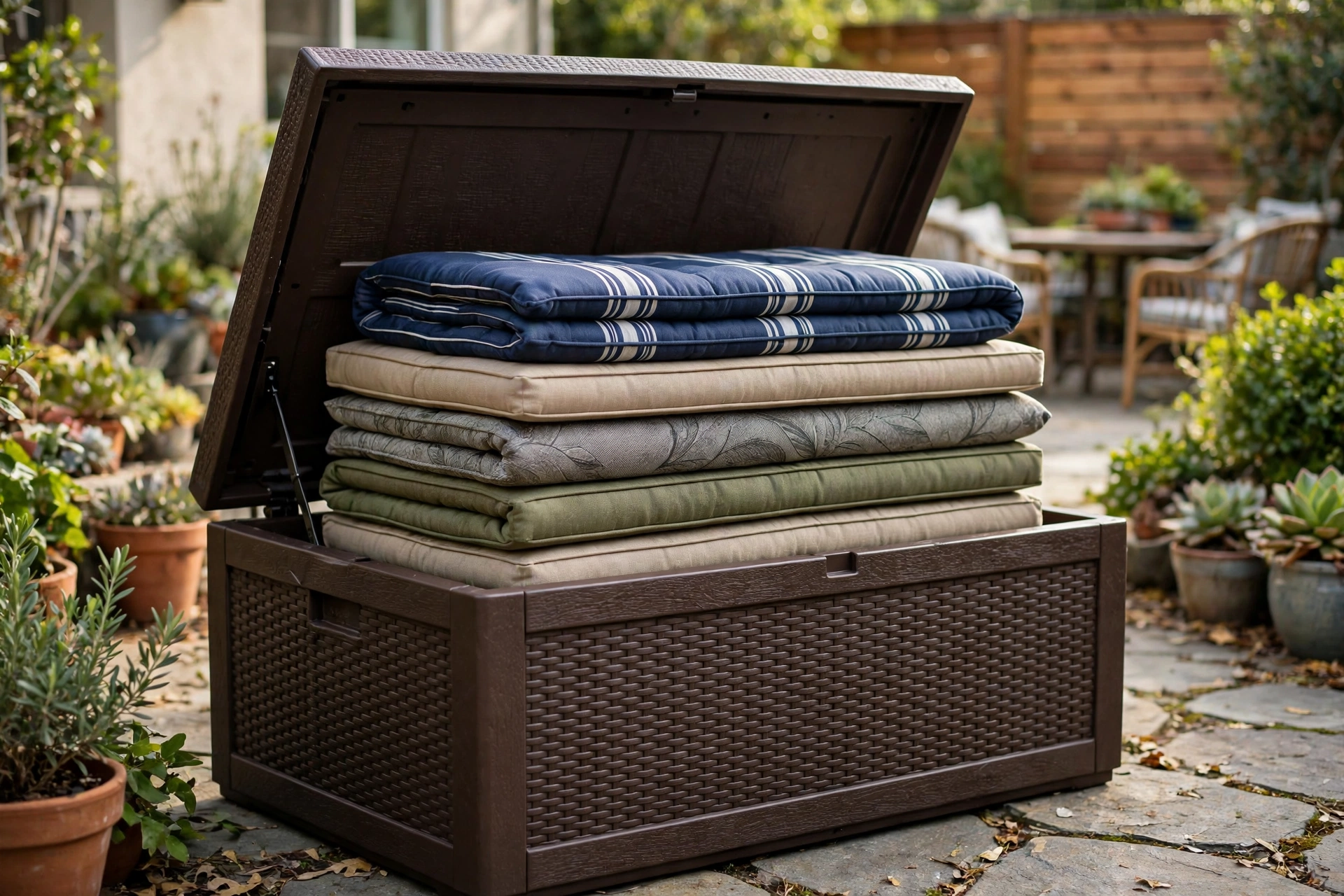
For standard seat and back cushions, interior length decides whether they lie flat. Flat stacking protects the foam and the seams; cushions wedged in at an angle spend the season bent, and they come out holding the crease.
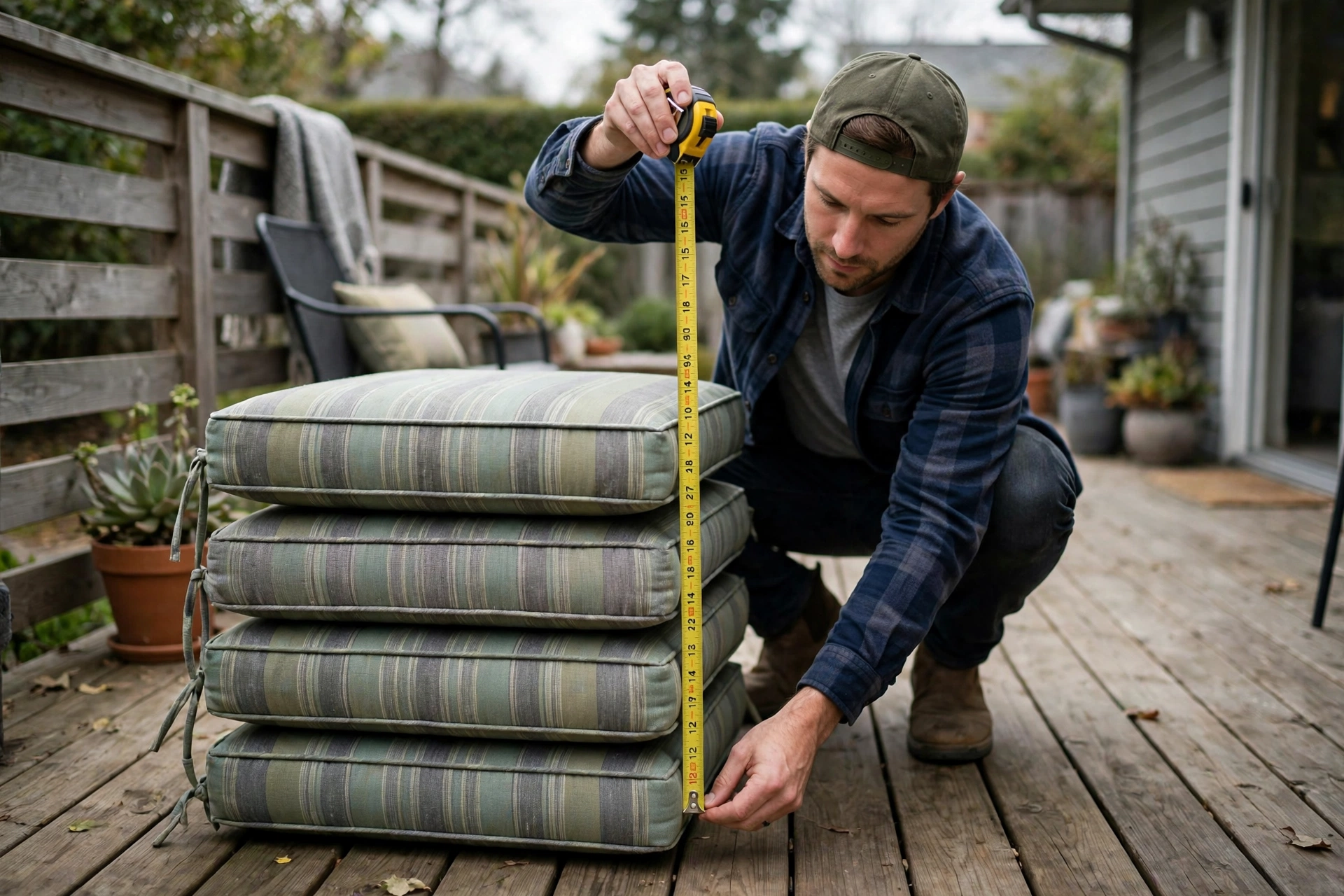
Before buying either type, measure your largest cushion and compare it against the interior dimensions, not the exterior ones. Wall thickness and lid structure can take several inches off the numbers printed largest on the box, a point the cushion storage sizing guide covers in detail.
Weather sealing: a draw, with one caveat
Neither type is waterproof in the way a cooler is waterproof. Both rely on an overlapping lid edge that sheds rain running down, and both can let wind-driven rain find the seam in a hard storm, which is why placement under an eave or against a wall helps either box.
The caveat is lid fit over time. A long cushion box lid spans five feet or more, and a lid that warps or sags at the center leaves a gap exactly where rain lands, so a lockable latch that holds the lid seated is a genuine weather feature and not just a security one.
General deck boxes built for tool duty often have stouter hinges and lids, because they are opened with armfuls of gear and closed with a knee. If a box will be opened daily all season, that hardware matters more than the label on the front.
Lid weight and bench use
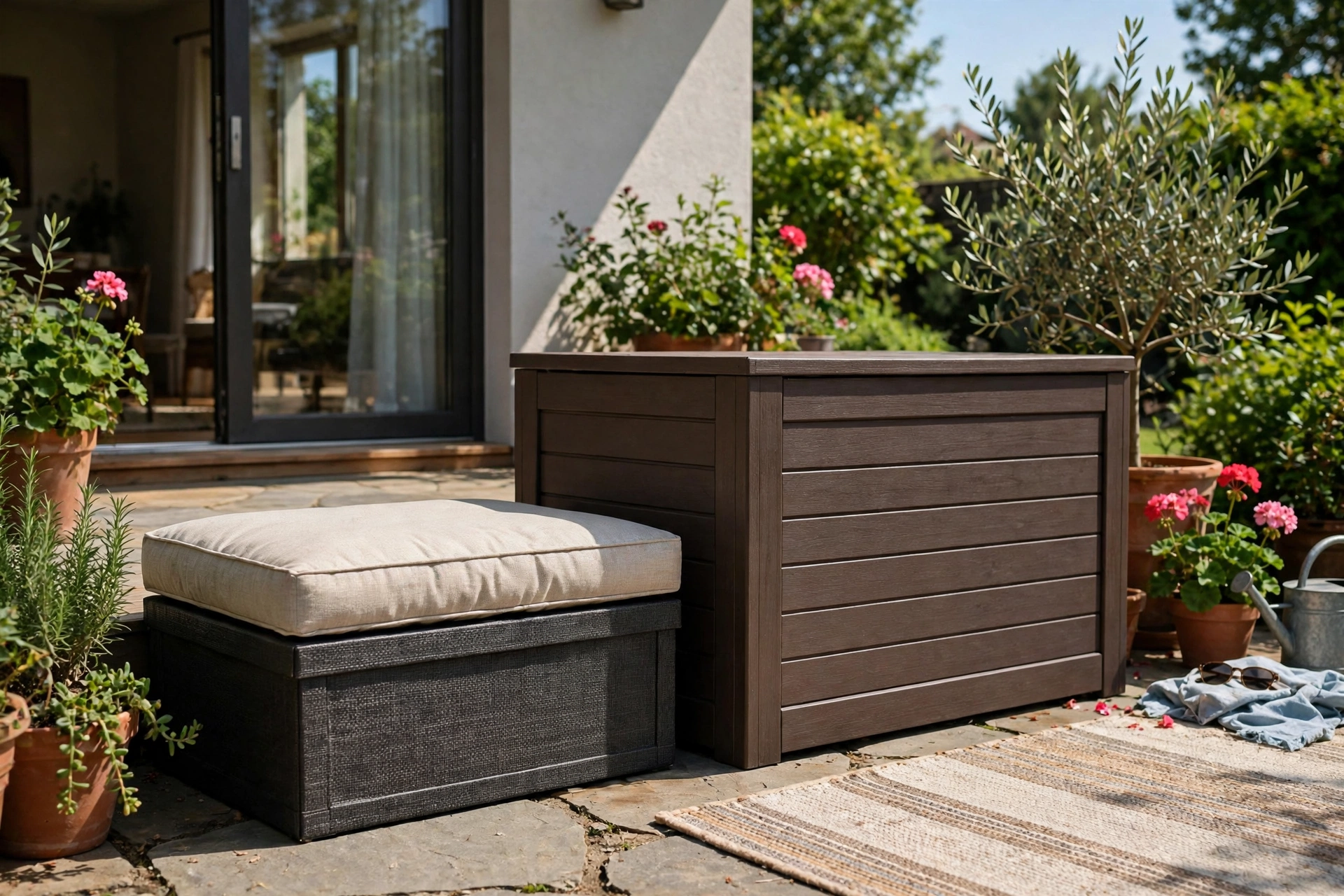
Cushion boxes are designed to be sat on. Their lids are typically rated as two-person benches, the height lands near standard seat height, and the styling leans toward furniture because the box is expected to live inside the seating group.
General deck boxes split on this point. Many carry the same bench rating, but tall utility models are too high to sit on comfortably, and some lids are shaped to shed water in ways that make them poor seats.
There is a small daily pleasure in a lid that opens with one hand while the other holds a stack of cushions. Piston or spring hinges, common on cushion-oriented models, hold the lid up on their own; a plain hinged lid on a general box may need a prop or a free hand.
Venting and mildew
Cushions go into storage damp more often than anyone admits, after a humid evening or a light shower that did not seem worth reacting to. Inside a closed box, that moisture has nowhere to go, and mildew is the predictable result.
Cushion-oriented boxes address this more often, with built-in ventilation panels that let the interior breathe while the lid still sheds rain. General deck boxes, built around keeping tools dry and secure, tend to close up tighter.
Whichever type you buy, the habit matters more than the hardware. Store cushions dry, and crack the lid on a sunny day after a wet week so the inside of the box dries out along with everything in it.
Cushion storage box vs deck box, side by side
| Question | Cushion storage box | General deck box |
|---|---|---|
| Typical shape | Long and low, bench height, 55+ inches of interior length | Any shape, including deep and tall utility boxes |
| Typical capacity | 120 to 230 gallons, matched to a full furniture set | 22 to 230 gallons, sized by the job rather than the furniture |
| Weather sealing | Overlapping lid edge; lockable latch keeps the lid seated | Overlapping lid edge; often stouter hinges for heavy daily use |
| Bench use | Designed for it; lid rated as a two-person seat | Varies; tall models are too high to sit on comfortably |
| Venting | Often built in, aimed at keeping stored cushions mildew-free | Less common; boxes tend to close up tighter for tools |
| Best at | A full set of seat and back cushions, stored flat | Mixed loads: tools, pool gear, toys, and some cushions |
Which one protects cushions better?
For cushions specifically, the cushion-shaped box wins on the points that decide how cushions age: interior length for flat stacking, ventilation for the damp evenings, and a bench-height lid that stays seated. A general deck box of the same size and build quality keeps rain off just as well, because the sealing method is the same.
Choose the general deck box when the load is genuinely mixed and cushions are the minority, or when you need a deep box for tall gear. Our deck storage box roundup covers that mixed-duty end of the range.
For a patio whose storage problem starts and ends with cushions, buy the cushion storage box, sized to your largest cushion with room to spare. That is the recommendation, and the label on the box matters far less than the interior measurements behind it.