Disclosure: This post contains affiliate links. If you buy through them, we may earn a commission at no extra cost to you.
Thirteen. That is how many plant-available nutrients a mail-in lab test measures, along with pH, before it tells you exactly what your soil needs. A home color kit measures four things, and gives you a range for each one instead of a number.
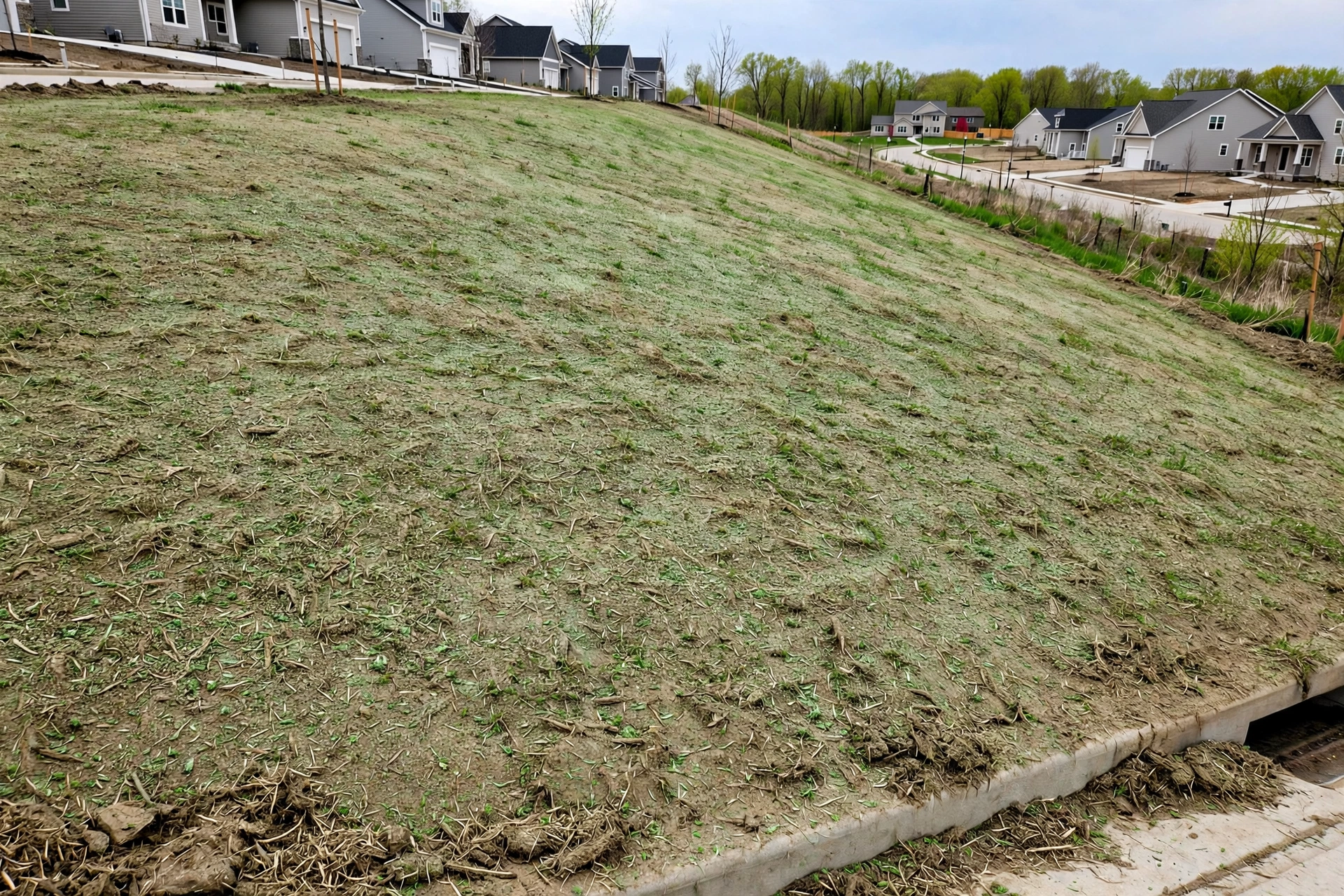
That gap is the whole decision when you are choosing the best soil test kit, and it matters most when the symptom is familiar: a lawn that stays thin and pale even though you fertilized it on schedule. Fertilizer cannot fix a pH problem, and pH is the number most home lawns have never had measured.
What’s wrong? Start with the symptom
If your lawn or garden shows any of these, the cause is usually in the soil chemistry rather than in your effort.
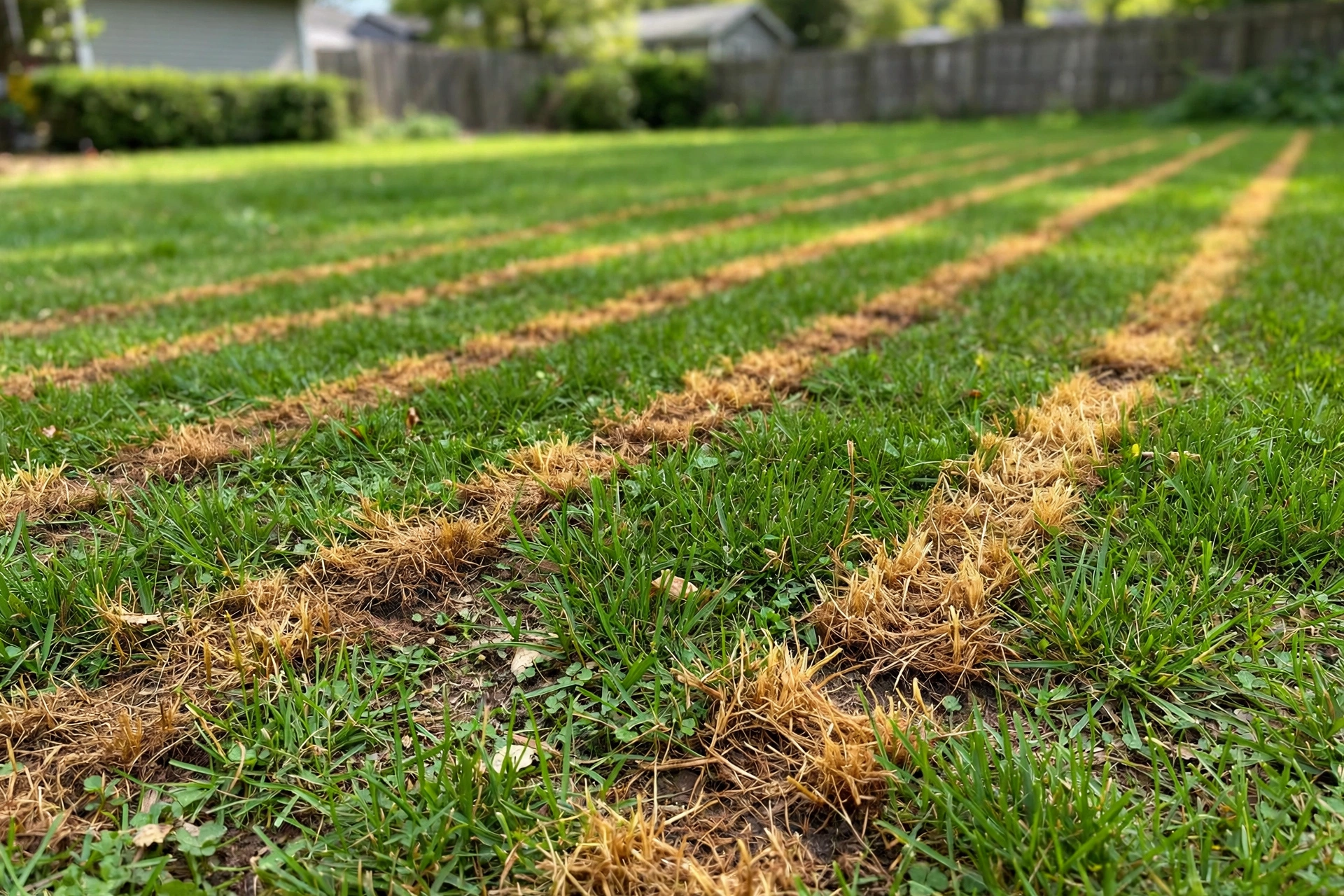
- Thin, pale grass despite regular fertilizing. Nutrients may be present but locked out by a pH too low or too high for roots to use them.
- Moss spreading through shaded sections. Moss points toward acidic, compacted, or poorly drained soil, and pH is the first to check.
- Vegetables that grow leaves but set little fruit. Phosphorus shortage and pH problems both produce this pattern, and they call for different fixes.
- One bed thriving and the next one struggling. Different soil in different spots is common where fill was brought in, and a whole-yard guess misses it.
Each of these is a guessing problem. You can keep adding products and hoping, or you can get numbers and add only what the soil is short of.
Three kinds of test, three levels of answer
Mail-in lab tests give you exact figures: pH to a decimal place, phosphorus and potassium in parts per million, plus micronutrients and organic matter, with recommendations calculated for your soil. The trade-off is time — you mail a sample and wait several days.
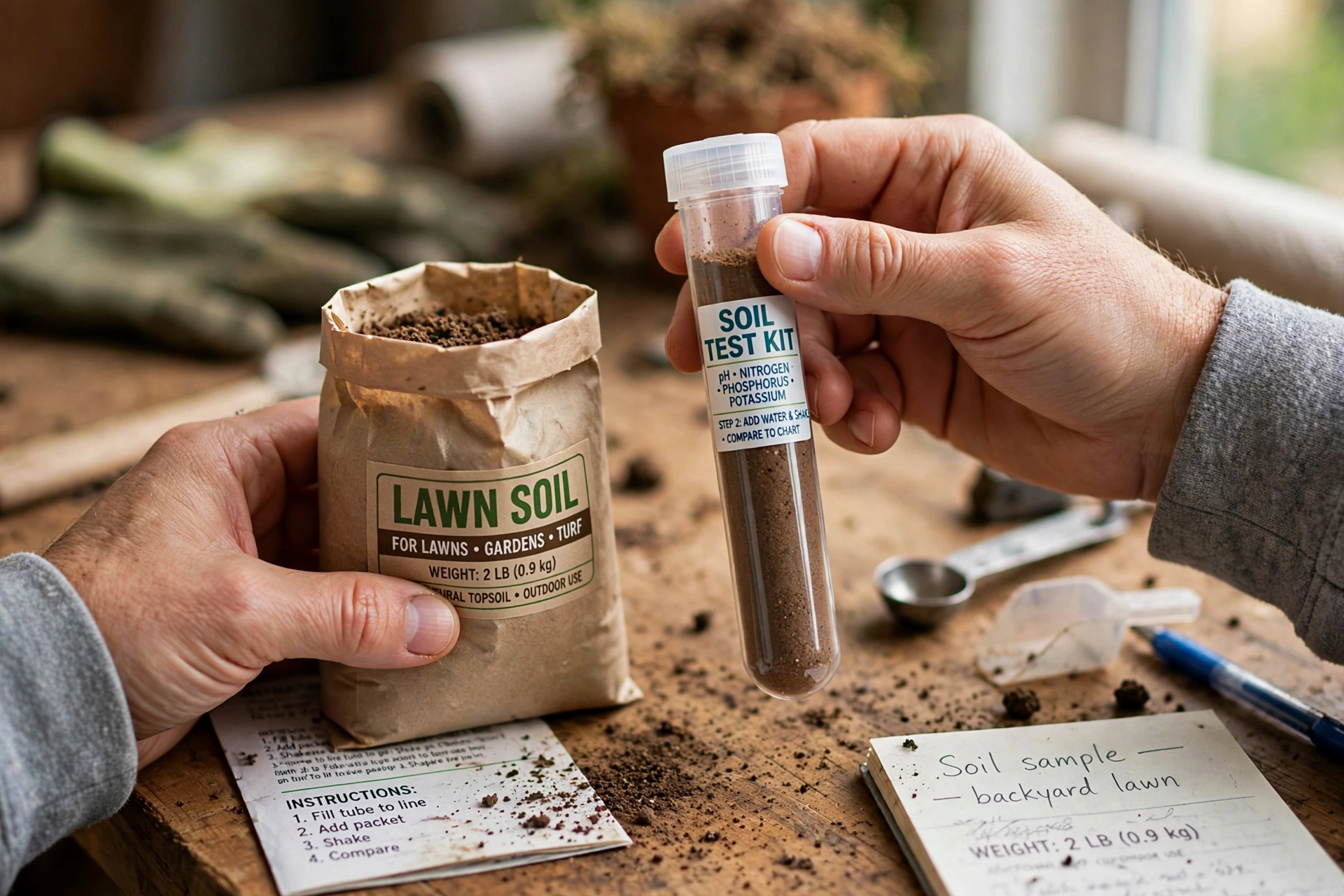
At-home color kits give you ranges the same day. You mix soil and water, add a reagent capsule, and match the color to a chart. The reading is a band — low, medium, high — which is enough to catch a badly acidic bed or a clear phosphorus shortage.
Probe meters pushed into the ground measure pH and moisture only, and the pH reading is rough. They are quick and reusable, which makes them handy for checking whether a bed is dry. They do not measure nitrogen, phosphorus, or potassium at all.
One honest point before the picks: a university Extension lab test gives you the same class of exact numbers and recommendations as a commercial mail-in kit, often for about the same money. If your Extension office is easy to deal with, that route is the most accurate option on this page.
The picks at a glance
| Kit | Type | What it measures | Results |
|---|---|---|---|
| MySoil Test Kit | Mail-in lab | pH plus 13 nutrients, with tailored recommendations | Lab report in about 6–8 days |
| Luster Leaf Rapitest 1601 | At-home color kit | pH, nitrogen, phosphorus, potassium — 40 tests | Same day, as ranges |
| Luster Leaf 1662 Professional | At-home color kit | pH, nitrogen, phosphorus, potassium — 40 tests, sturdier kit | Same day, as ranges |
Best overall: MySoil Test Kit
The MySoil kit is a mail-in lab test in a box. You take small cores from several spots, mix them into one sample, register the kit online, and mail it in the prepaid envelope. The lab measures pH and 13 plant-available nutrients, then returns a report with recommendations matched to your soil.
That recommendation is the reason this kit wins. A color kit tells you phosphorus is low, while the MySoil report tells you how much of which product to apply to correct it, in amounts scaled to your yard.
The trade-off is patience and price per test. Results take about 6 to 8 days, and each kit tests one area, so a front yard, back yard, and vegetable garden need three kits. Owners consistently praise the clarity of the report, and the recurring complaint is the wait.
MySoil Test Kit
A real lab analysis of pH and 13 nutrients, with amounts to apply — not just ranges to interpret.
Runner-up: Luster Leaf Rapitest Soil Test Kit 1601
The Rapitest 1601 is the classic home color kit: 40 tests in total, 10 each for pH, nitrogen, phosphorus, and potassium, run with color-coded capsules and comparator chambers. You mix soil with water, add the capsule, and match the developed color against the chart.
It earns the runner-up spot on speed and cost. You get an answer the same afternoon, for several beds in a row, at a lower price than a single mail-in kit. For a first look at a bed that has never been tested, a range is often all the information the decision needs.
Read the results as ranges, because that is what they are. Two people can match the same tube to slightly different points on the chart, and nitrogen readings move around with recent rain and fertilizing.
Use distilled water for the sample, since tap water can shift the pH reading. Owners praise the simplicity and the included pH preference list for common plants; the common complaint is that the small capsules are fiddly to open.
Luster Leaf Rapitest Soil Test Kit 1601
Forty same-day color tests for pH and N-P-K — the fast, low-cost first look at a bed or lawn.
For many beds, tested often: Luster Leaf 1662 Professional Soil Kit
The 1662 Professional kit uses the same capsule-and-color method as the 1601, with 40 tests in a fuller kit aimed at gardeners testing several areas through the season. If you run a large vegetable garden or retest after amending to confirm the pH moved, it is the practical buy.
It carries the same limits as any color kit: ranges instead of figures, and no micronutrients or organic matter. Buy it for frequency, not for precision.
Luster Leaf 1662 Professional Soil Kit
Forty tests in a fuller kit, for gardeners checking several beds across the season.
Not recommended: cheap 3-in-1 probe meters sold as nutrient testers
The inexpensive three-way probe meters sold everywhere — two metal prongs, a dial, a switch for moisture, light, and pH — are the one category to skip if what you want is a soil test. The moisture setting is genuinely useful, but the pH reading is approximate at best, and the fertility setting does not measure nitrogen, phosphorus, or potassium in any meaningful way.
The problem is the purchase it leads to. A dial that waves somewhere near neutral can convince you pH is fine when it is the very thing locking nutrients out of your grass.
If you own one, use it as a moisture meter, which is honest work. Just do not let it stand in for a test.
How to take a sample any kit can use
Sample the root zone. Push a trowel or probe 4 to 6 inches down for lawns, a little deeper for garden beds, rather than scraping the surface.
Combine several spots. Take cores from 8 to 10 places across one uniform area, mix them in a clean bucket, and test that mixture. One scoop from one corner describes that corner only.
Keep areas separate. The lawn, the vegetable garden, and the bed under the pine tree are three different soils, and an average of the three describes none of them.
Act on the pH first. Once you have a pH figure, our soil pH amendment calculator works out how much lime or sulfur a correction takes for your soil type and area. Then match fertilizer to the nutrient gaps the test actually found, instead of applying a balanced product to a soil short of only one thing.
Bottom line
Send one sample to a lab — through the MySoil kit, or through your university Extension — before you spend another season fertilizing a lawn that stays thin. Exact numbers plus a calculated recommendation end the guessing in a way no dial or color band can.
Keep the Rapitest 1601 on the shelf for the quick checks after that: a new bed in spring, a retest after liming, a question that needs an answer today.