A silver leaf is a water bill already paid
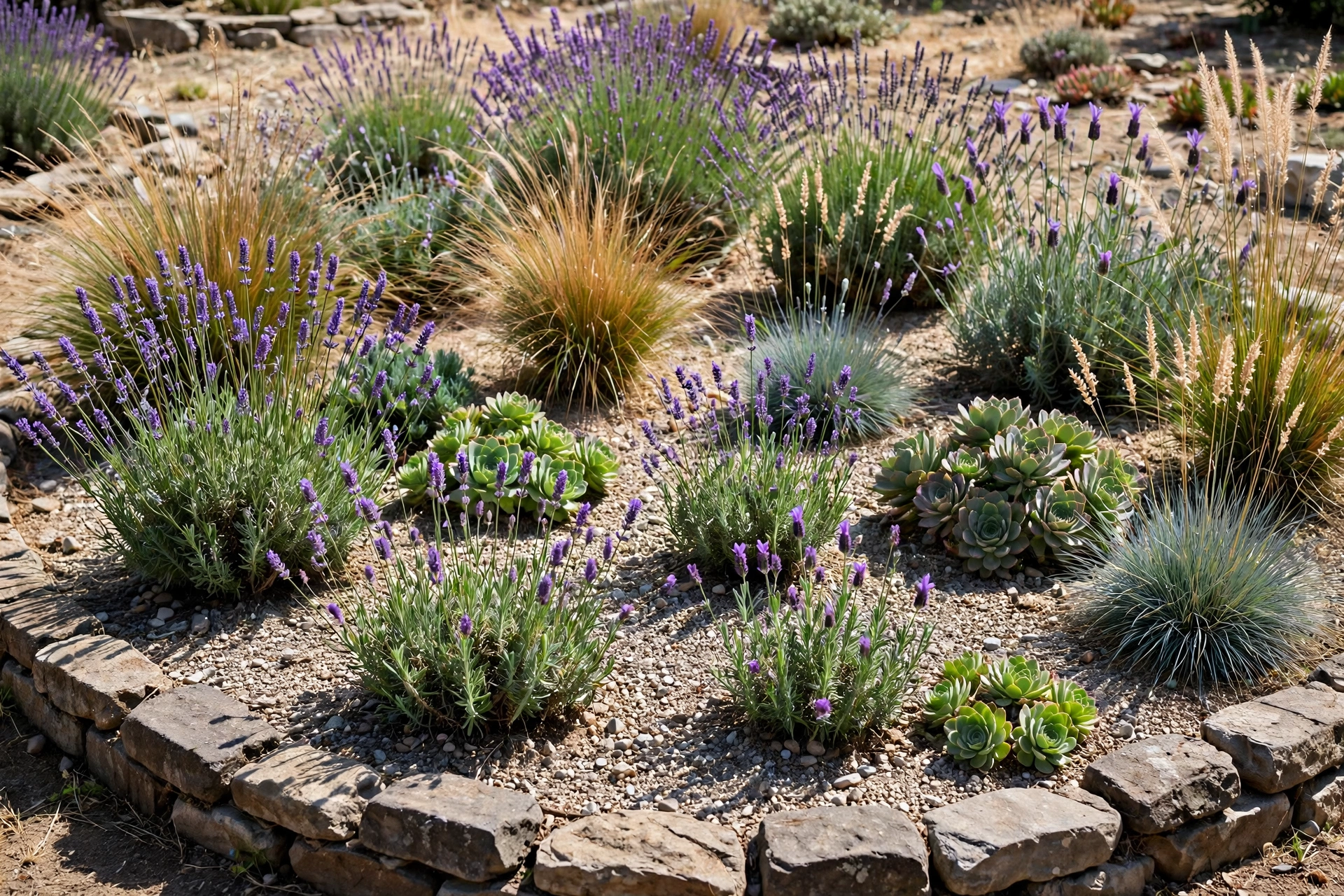
Look at lavender in August: narrow gray-green leaves, almost no surface to lose water from, still standing straight in a bed that has not been watered in weeks. That leaf is the whole idea — low water plants are built, in leaf and root, to wait out dry spells that flatten thirstier plantings.
Plants that carry a dry yard
| Plant | Zones | Height | Why it lasts |
|---|---|---|---|
| Lavender | 5-9 | 1-3 ft | Narrow leaves, deep roots, hates wet feet |
| Russian sage | 4-9 | 3-4 ft | Silver foliage, thrives in lean dry soil |
| Yarrow | 3-9 | 2-3 ft | Deep taproot, blooms on neglect |
| Sedum (stonecrop) | 3-9 | Under 2 ft | Stores water in thick leaves |
| Gaura | 5-9 | 2-4 ft | Deep roots, flowers through heat |
Dry is a soil condition first
Even drought-tolerant plants need regular water their first season while roots establish — about an inch a week until the plant has been through one full growing season. After that, the watering can mostly stays in the shed, except in containers, where every plant is only as drought-tolerant as its pot is large.
Mulch helps, but keep it off the crowns of lavender and sedum, which rot where wet mulch sits against them. Gravel suits those two better than bark in a dry bed, and it keeps the soil splash off the silver leaves after a storm.
Bottom line
Start with lavender, yarrow, and sedum in the driest bed you have, water them through season one, then let them prove the point. For dry shade lines and screens, see best fast-growing privacy trees for the deep-rooted end of the same idea.