The season turns on one quiet morning: frost on the windshield, breath showing, and a forecast with the first real snow still two days out. That morning, not the storm itself, is when ice melt earns its keep.
A thin layer spread before the snow starts keeps the bottom inch from bonding to the pavement. Snow that never bonds shovels cleanly, right down to the concrete, instead of leaving the packed, polished layer that turns into ice by the weekend.
How Early Is Early Enough?
One to two hours before the snow begins is the practical window for a home driveway. The pellets need a little moisture to start forming brine, and the first flakes provide it. Spread a day ahead and traffic, wind, and a dry afternoon will scatter or waste much of the layer before it can work.
On a steep drive, treat the slope and the apron where it meets the street first. Those are the spots a car needs most and the spots that ice over first as meltwater runs down and refreezes at the bottom.
How Much, and Where It Goes Wrong
Use a thin, even scatter, roughly a coffee mug of pellets per square yard. The common mistake is a heavy hand: piles of melt do not melt faster, they track inside on boots, and the excess washes onto the lawn edge, where the grass along the drive pays for it in April with a brown, salty stripe.
The sound of a good application is almost nothing at all. Pellets ticking softly on bare concrete, spread wide enough that you can barely see them from the porch, is the right picture.
After the Storm
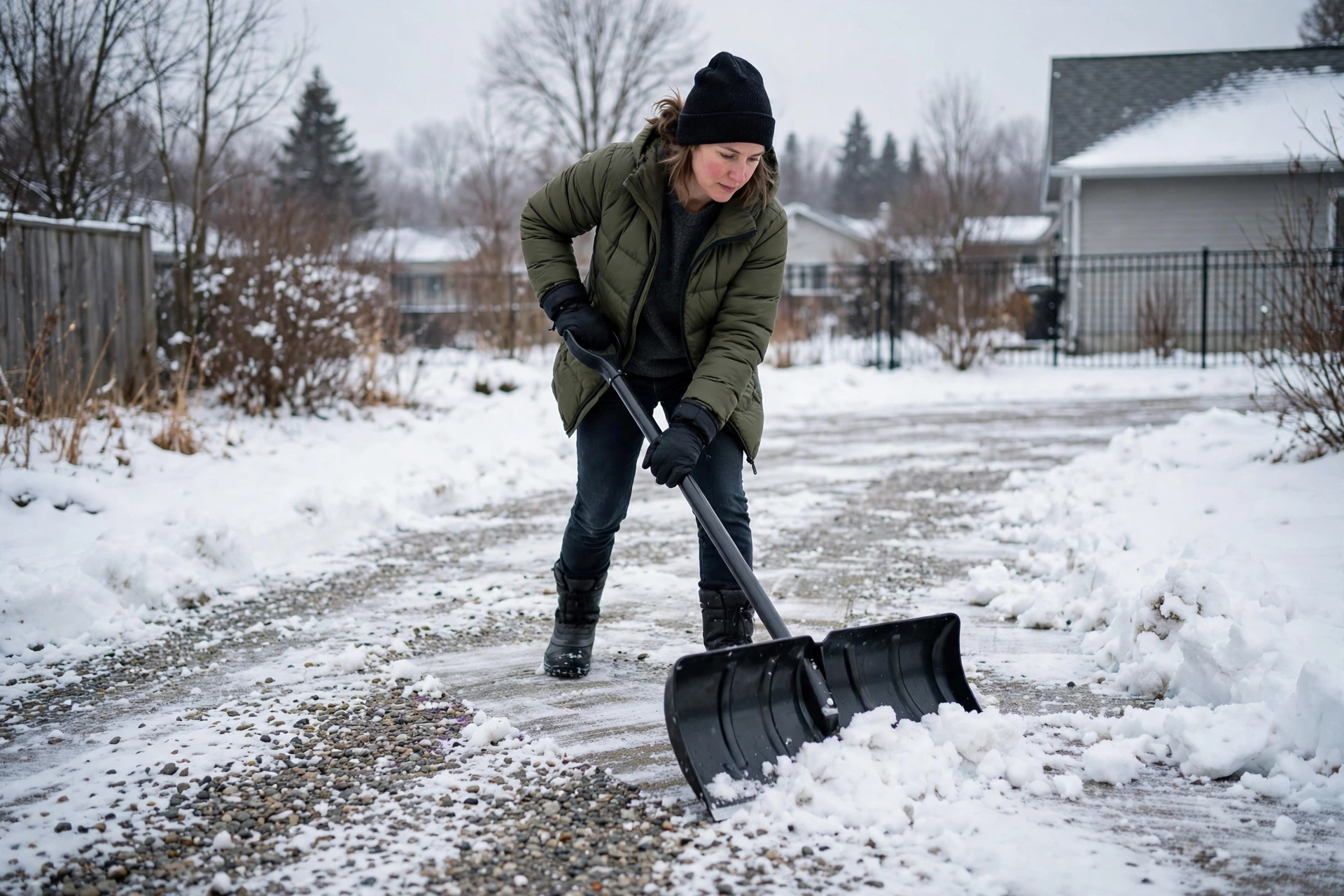
Shovel first, then treat what remains. Melt spread on top of six inches of snow mostly melts the top inch and refreezes. Clear the bulk, then a light second application on the packed remainder finishes the job with a fraction of the product. For which melt to use on concrete, see the best ice melt for concrete driveways, and if dogs use the drive, pet-safe ice melt vs regular ice melt.
Bottom Line
Treat one to two hours before the snow, thinly, slope first. Pre-treating is the cheapest hour of winter maintenance there is, because it turns a scraping job into a shoveling job.