This post contains affiliate links. If you buy through them, we may earn a commission at no extra cost to you.
Sow gourds the way you would sow squash and they sulk. The seed sits in cool soil, the roots resent being moved, and the vine that finally emerges has lost the warm weeks it needed. Gourds are a warm-soil crop first and everything else second.
The packet numbers settle the routine: direct sow 1 to 2 weeks after the last frost, when soil is 70 to 85 degrees, seed a half inch to an inch deep, in mounds. What follows is that routine, with the differences between the small ornamentals and the big hard-shells kept separate, because they are not quite the same job.
Sowing: mounds, not rows
For Gourdgeous Blend, sow 4 seeds per mound, half an inch to an inch deep, with rows 5 to 10 feet apart. For Speckled Swan, 2 to 3 seeds per mound at the same depth. Birdhouse takes 4 seeds per mound an inch deep, Corsican 2 to 3 seeds per mound an inch deep.
Starting indoors is not recommended except in very short seasons — 2 to 4 weeks before transplanting, in biodegradable pots that go straight into the ground, because the roots dislike disturbance. Germination runs 5 to 10 days in warm soil.
Thinning and room to run
Thin Gourdgeous Blend and Speckled Swan to one plant per mound when the seedlings are 3 inches tall. Birdhouse is the exception: thin to three per mound at 3 inches. Corsican thins to one per mound once it has several leaves.
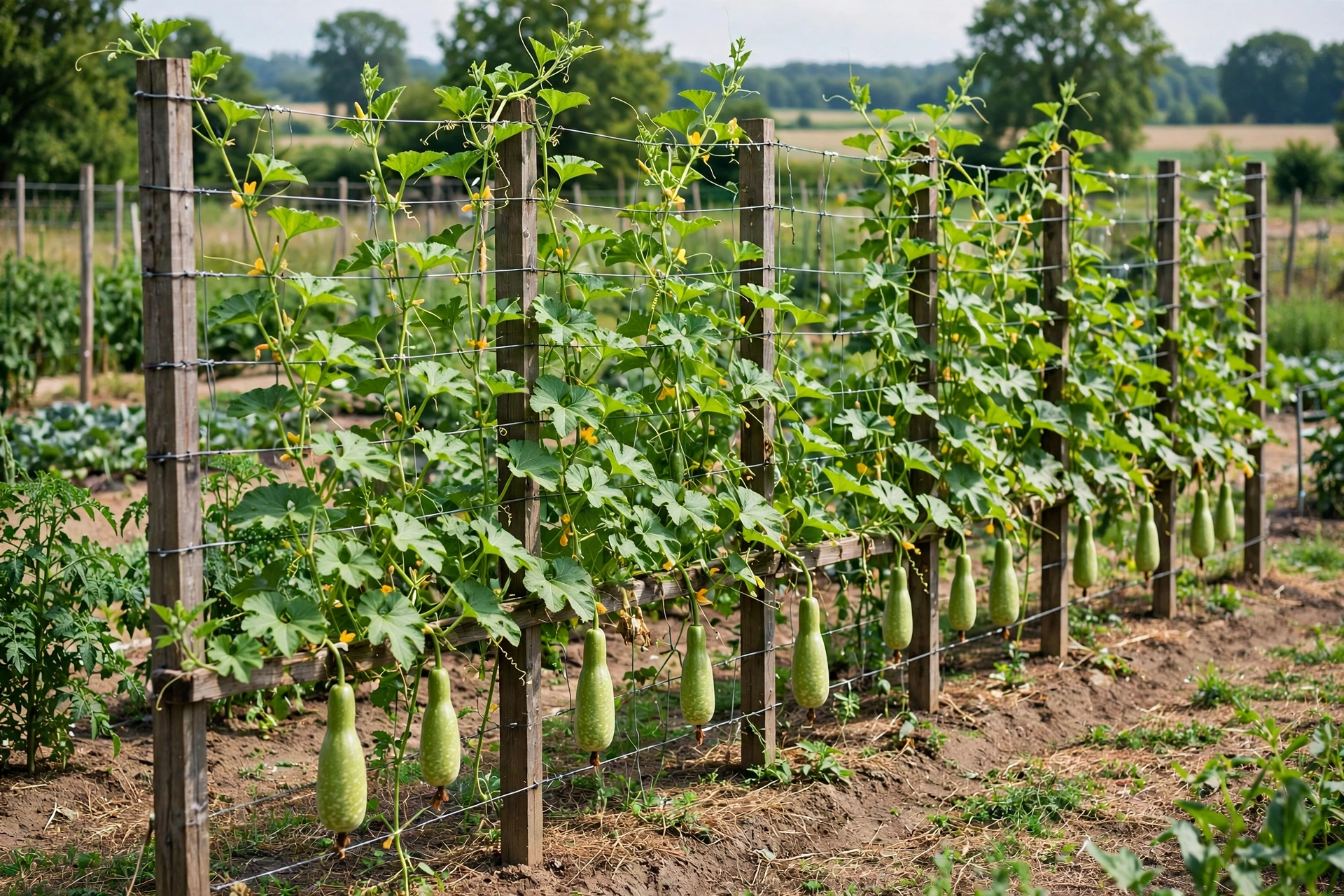
Then give the vines somewhere to go. Birdhouse vines run 10 to 16 feet and Luffa can reach 20 feet. A sturdy trellis or fence keeps fruit off the ground, which the Speckled Swan packet notes gives more consistent color and better shapes; fruit left on soil can sit on a board, a stone, or straw instead.
Water, pruning, and the long middle
The middle of the season is mostly restraint. Keep the bed watered while vines establish and fruit sets, prune vines when they reach about 8 feet to encourage branching and more fruit, and remove poorly shaped or rotting fruit so the plant spends itself on the good ones.
That pruning note comes straight from the hard-shell packets, and it is the step most often skipped, because an 8-foot vine in July looks like success rather than a plant asking to branch.
Harvest: wait for the vine to give up
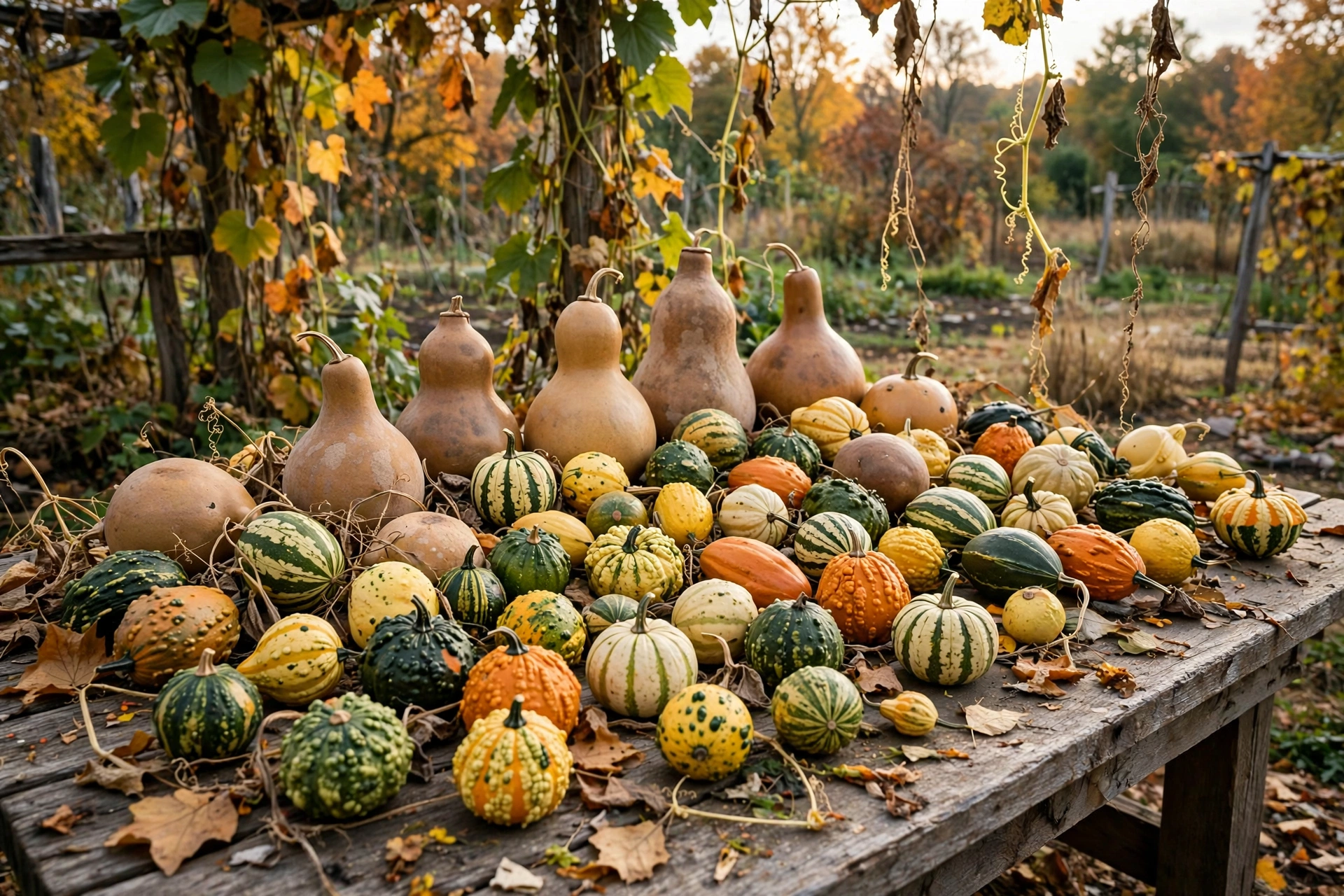
Hard-shelled gourds should stay in the garden as long as there is any life left in the vines. Cut them only when the vines are dead and the skin has begun to turn an ivory color, with a sharp knife or pruners, leaving 1 to 3 inches of stem attached as a handle, and choose only fruit without cracked or broken skin.
Some growers leave hard-shells in the garden over winter, which adds color variation for craft projects, but the packet is honest that results can be variable. I would cure the main harvest properly and treat any overwintered extras as a bonus, not the plan.
Curing, in plain terms
| Variety | Type | Days | Size / note |
|---|---|---|---|
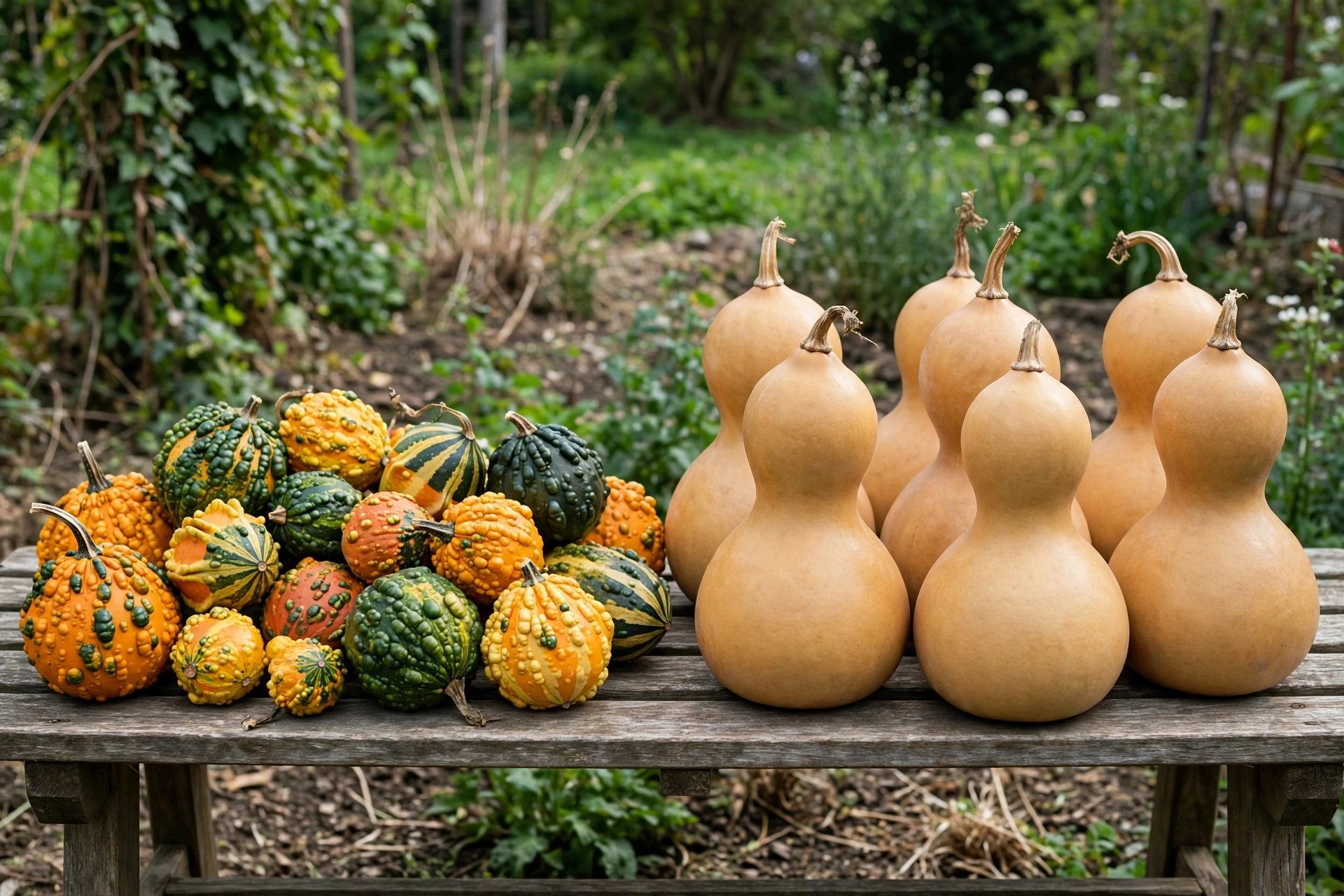
| Gourdgeous Blend | Ornamental | 100 days | Cures hard, keeps for years, paint or carve |
| Speckled Swan | Hard-shelled | 100 days | Cure until skin turns ivory, then craft |
| Birdhouse | Hard-shelled | 95 to 110 days | Cured gourds can last for decades |
| Corsican | Hard-shelled | 140 days | Cure fully before cutting into bowls |
Curing is drying, slowly, until the shell is hard and light and the seeds inside are loose. Rushing it by bringing green fruit indoors early is how shells collapse or mold. The varieties themselves, with ratings and sizes, are compared in Best Gourd Varieties to Grow from Seed, and the family choice is worked through in Ornamental vs Hard-Shelled Gourds: Which to Grow.
Gourdgeous Blend Gourd Seeds
Small ornamental blend, 100 days, 4 seeds per mound, rows 5 to 10 feet apart — the forgiving first gourd to grow.
Birdhouse Hard-Shelled Gourd Seeds
Birdhouse hard-shell, 4 seeds per mound thinned to three, vines 10 to 16 feet on the ground or a very sturdy trellis.
Luffa Gourd Seeds
Luffa for sponges, 12 to 24 inch fruits on vines to 20 feet — give it a fence and it will cover it.
The short version I plant by
Wait for 70-degree soil, sow in mounds, thin without mercy, trellis what you can, and do not cut a hard-shell while its vine is still green. Do those five things and the cure at the end is mostly patience. The same warm-soil discipline runs through Best Winter Squash Varieties to Grow from Seed, if squash is sharing the bed.