Landscape & Leisure is reader-supported. When you buy through links on our site, including Botanical Interests seed links, we may earn a commission at no extra cost to you. Prices change, so click through to confirm current pricing.
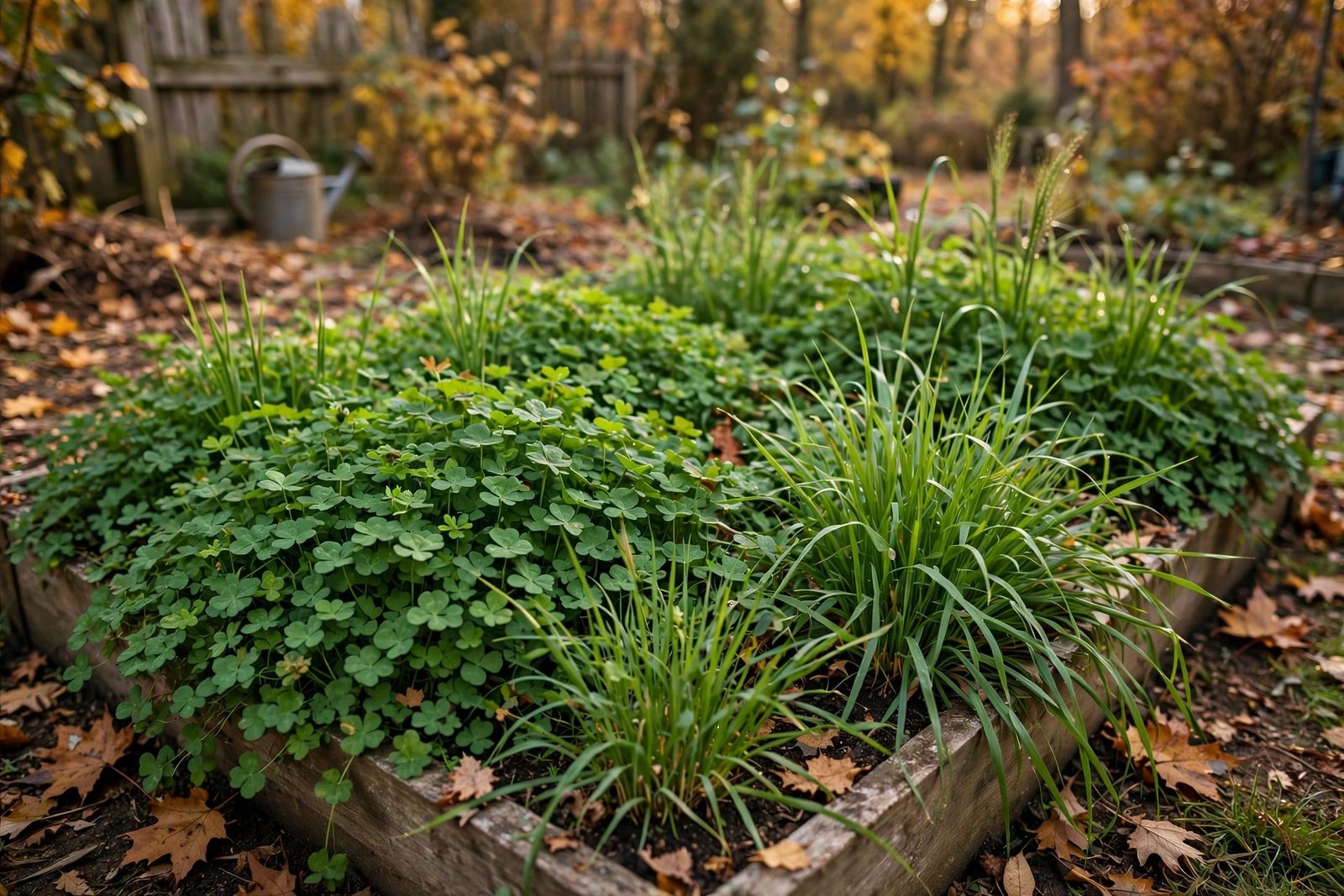
Every garden has a moment when it looks finished. The last tomato comes off, the vines get pulled, and the bed sits there, bare dirt under an open sky, all winter. That bare dirt is the problem. Rain pounds it flat, wind lifts the good topsoil, and weeds move in like they own the place.
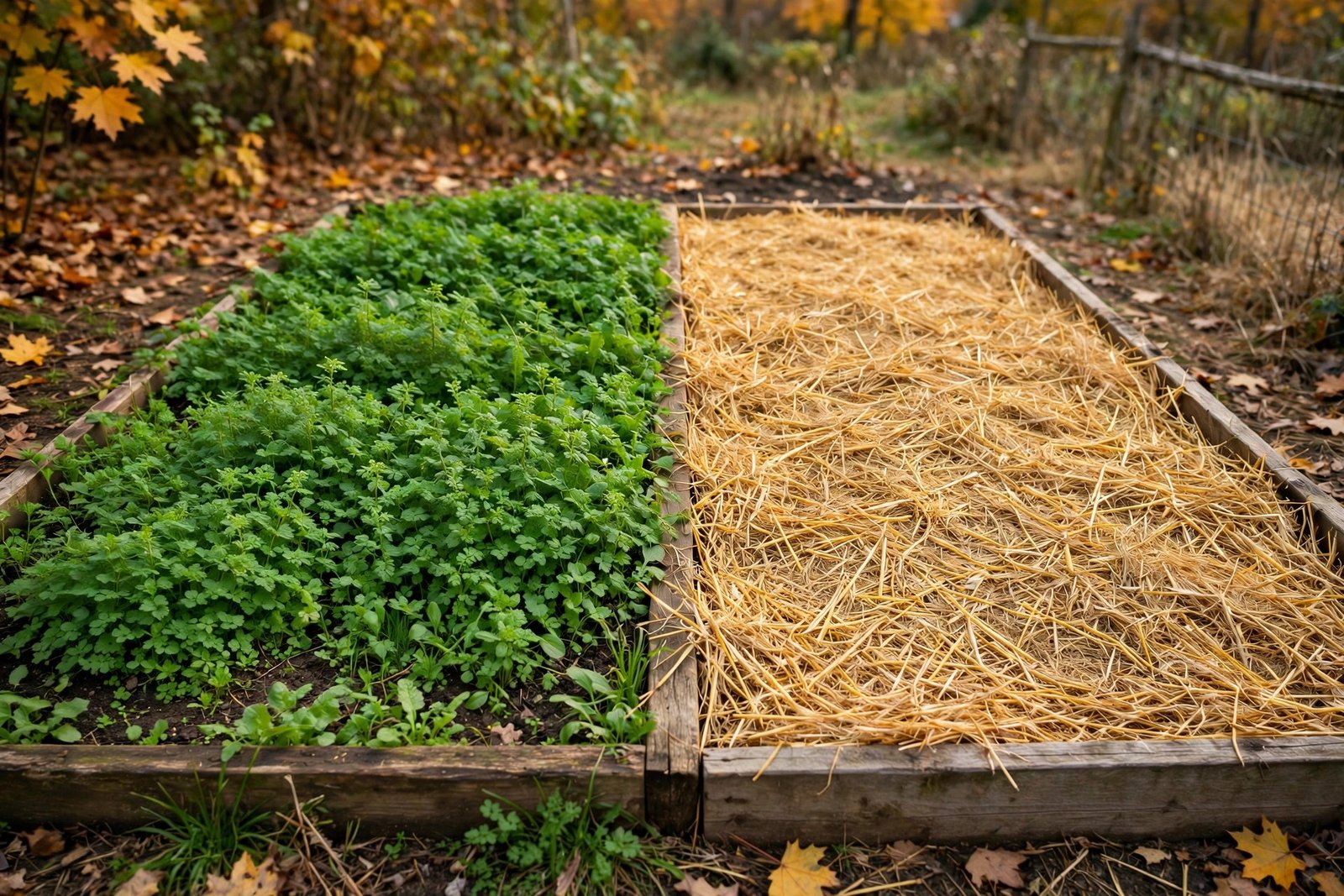
A cover crop is the simplest answer to that empty bed: a plant you grow not to eat, but to feed the soil itself. Sow it after the harvest, let it hold the bed through the off-season, then turn it under before your next planting. The right one depends on what your soil actually needs — nitrogen, organic matter, weed suppression, or a root that can punch through clay. Here are the five that earn their bed space, plus one popular mix to skip for now. For the indoor counterpart to this outdoor work, see our guide to growing microgreens indoors, and for how a living cover stacks up against a spread mulch, see our cover crops vs. mulch comparison.
| Cover crop | Days to maturity | Packet coverage | Best for |
|---|---|---|---|
| Crimson Clover | 70–90 days | About 178 sq ft | Nitrogen plus flowers the bees will find first |
| Common Buckwheat | Fast; ready to turn under in weeks | See packet | Poor soil and a quick summer gap |
| Lacy Phacelia | 45–60 days | About 140 sq ft | Pollinators and dry, low-water gardens |
| Borage | Grows through spring to summer | See packet | A cover crop you can also eat and garnish with |
| Miyashige White Daikon | Winter radish; sow after midsummer | See packet | Breaking up heavy, compacted clay |
Best Overall: Crimson Clover Cover Crop Seeds
If you plant exactly one cover crop, plant this one. Crimson clover is an annual legume, which means it pulls nitrogen from the air and stores it in the soil for whatever you plant next — and it does it while looking like a flower bed. The deep red, elongated flower heads open from the bottom up over a long bloom, and they are a genuine draw for ladybugs and bees.
Sow it as a spring or fall cover crop, scattering seed about 2 inches apart and a quarter inch deep, 6 to 8 weeks before your average first fall frost. In zones 6 and warmer it overwinters and flowers the following spring. For the most nitrogen, cut or mow it at the end of bloom, before seed forms, and turn it under. One packet sows about 178 square feet.
Pros: Fixes nitrogen fast; beautiful enough for a flower bed; tolerates some shade, so it works between rows and under fruit trees.
Cons: Needs well-drained soil; a 70–90 day run means it is not the pick for a bed you need back in a month.
Crimson Clover Cover Crop Seeds
Nitrogen, pollinators, and a flower show from one packet — the cover crop that earns its bed space twice over.
Best Fast Cover: Common Buckwheat Cover Crop Seeds
Buckwheat is the cover crop for impatience, and impatience is sometimes the right instinct. It germinates fast, smothers weeds before they get established, and grows better than most cover crops in poor soil. It also retrieves phosphorus, a nutrient later crops need for roots, flowers, and fruit.
The other reason to love buckwheat is how quickly it gets out of your way. It breaks down fast in the soil, so you can plant in the same bed just 3 to 4 weeks after turning it under. Sow it in spring or summer for a gap between crops, let the white flowers feed pollinators, then chop it in as green manure before it sets seed.
Pros: Fastest payoff here; thrives in poor soil; pollinator-friendly flowers; bed ready again in weeks.
Cons: Frost-sensitive, so it is a warm-season play, not a winter cover; must be turned under before seed sets or it self-sows.
Common Buckwheat Cover Crop Seeds
The quick gap-filler for poor soil: up fast, smothers weeds, and gone in time for your next planting.
Best for Pollinators and Dry Gardens: Lacy Phacelia Cover Crop Seeds
Lacy phacelia goes by “Bee’s Friend” for a reason. Its violet, bell-shaped flowers cluster on fiddlehead stems that keep unfolding as they bloom, and they pull in native bumblebees, bee flies, and honeybees — plus they make genuinely good cut flowers, which is a rare bonus from a soil crop.
It is also the toughest plant on this list about water. Native to Arizona and California, it tolerates drought and poor soils and grows from sea level up to 8,000 feet. It matures in 45–60 days, likes full sun, and is frost-tolerant to 19°F, though a hard freeze at 18°F will kill it — leave the residue in place as winter cover if that happens. Sow about 2 inches apart, a quarter inch deep, in spring as soon as the ground can be worked, or 8 weeks before your first fall frost. One packet sows about 140 square feet.
Pros: Outstanding pollinator draw; drought-tolerant; doubles as a cut flower; fast 45–60 day maturity.
Cons: Germination takes 15–30 days and needs darkness, so seeds must be fully covered; plants can cause minor skin irritation in sensitive people.
Lacy Phacelia Cover Crop Seeds
The bee magnet that also survives dry, poor soil — a cover crop with flowers worth cutting.
Best Dual-Purpose: Borage Seeds
Borage is the cover crop that pays you in the kitchen as well as the soil. It is a 2- to 3-foot herb with blue, sometimes pink, star-shaped flowers that taste faintly of cucumber — lovely fresh on salads and summer drinks or candied for garnish — and leaves and stems that cook like spinach when young.
As a cover, it attracts bees and beneficial insects, tolerates drought once established, and even resists deer. Direct-sow it 1 to 2 weeks before your last frost, when soil is at least 40°F, in groups of 3 seeds every 12 inches, thinned to one every 12 inches. It does not like its taproot disturbed, so skip starting it indoors unless you use biodegradable pots you can plant whole.
Pros: Edible flowers and greens from a cover crop; pollinator magnet; deer-resistant and drought-tolerant once established.
Cons: Old leaves get tough and hairy, so harvest young; self-sows freely if flowers are left to seed.
Borage Seeds
A soil cover that also garnishes your drinks — cucumber-flavored flowers from a plant the bees love.
Best for Clay: Miyashige White Daikon Radish Seeds
Clay is the soil problem no amount of good intentions fixes — you need a root that does the digging for you. Daikon is that root. Its deep, tapered roots push into heavy soil, and when they rot down they leave channels that water and air can follow. Gardeners who grow it for cover often end up eating it too: young roots shred into sushi and salads, mature roots pickle, cook, and store well.
Sow it after midsummer or in fall, depending on your season — daikon is a winter radish that needs shortening days and cool temperatures to form properly. It is the one pick here where the harvest and the soil work are genuinely the same plant: pull some for kimchi, leave the rest to break up the bed.
Pros: Deep roots break up heavy soil; dual harvest and cover value; stores well.
Cons: Needs the cool-season window — a summer sowing will bolt and disappoint; not a nitrogen fixer, so pair it with a legume if nitrogen is your main goal.
Miyashige White Daikon Radish Seeds
Let a root do the digging: deep daikon roots open heavy soil and still make a harvest worth eating.
The One to Skip for Now: Soil Builder Peas and Oats
On paper, Soil Builder Peas and Oats is exactly the kind of mix a home gardener wants: field peas that fix nitrogen and condition the topsoil, plus oats that hold nitrogen and add green matter, with pea flowers for bees and edible young shoots as a bonus. It is a genuinely good combination.
It is also sold out at the time of writing, so it cannot be the plan for a bed you need to sow now. Buy the crimson clover for nitrogen and the buckwheat for fast green matter instead, and check back on the mix when it is back in stock — it is worth a row when you can actually get it.
How to Choose, and When to Turn It Under
Start with the job, not the seed packet. If your beds are tired and pale, sow a legume — crimson clover first. If you have a short gap between crops, buckwheat. If pollinators are the point, phacelia. If the soil is heavy clay, daikon. And if you want one plant to do two jobs, borage.
Whatever you sow, the ending matters as much as the beginning. Turn cover crops under before they set seed, or mow them and leave the cuttings as mulch — our cover crops vs. mulch guide walks through that choice. Give the bed a few weeks of rest after incorporation before you plant into it, and you will plant into soil that is noticeably darker, looser, and more alive than the bare dirt you started with.
Bottom Line
Plant crimson clover for nitrogen, buckwheat for speed, phacelia for bees, borage for the kitchen, and daikon for clay — and never leave a bed bare again. The soil you feed this winter is the garden you harvest next year.