Clay Soil: The Hidden Enemy of Healthy Lawns
If your lawn feels hard underfoot, puddles after rain, or struggles despite regular watering and fertilizing, clay soil is often the culprit.
Clay soil packs tightly, leaving little room for air, water, or nutrients to reach grass roots. Over time, foot traffic, mowing, and seasonal weather compress it even further, creating a dense layer that roots simply can’t push through.
The solution isn’t more fertilizer or watering. It’s aeration — and not just any aeration.
Clay soil demands the right kind of aerator.
Why Clay Soil Needs Plug (Core) Aeration
There are two common aeration types homeowners encounter:
Spike Aerators
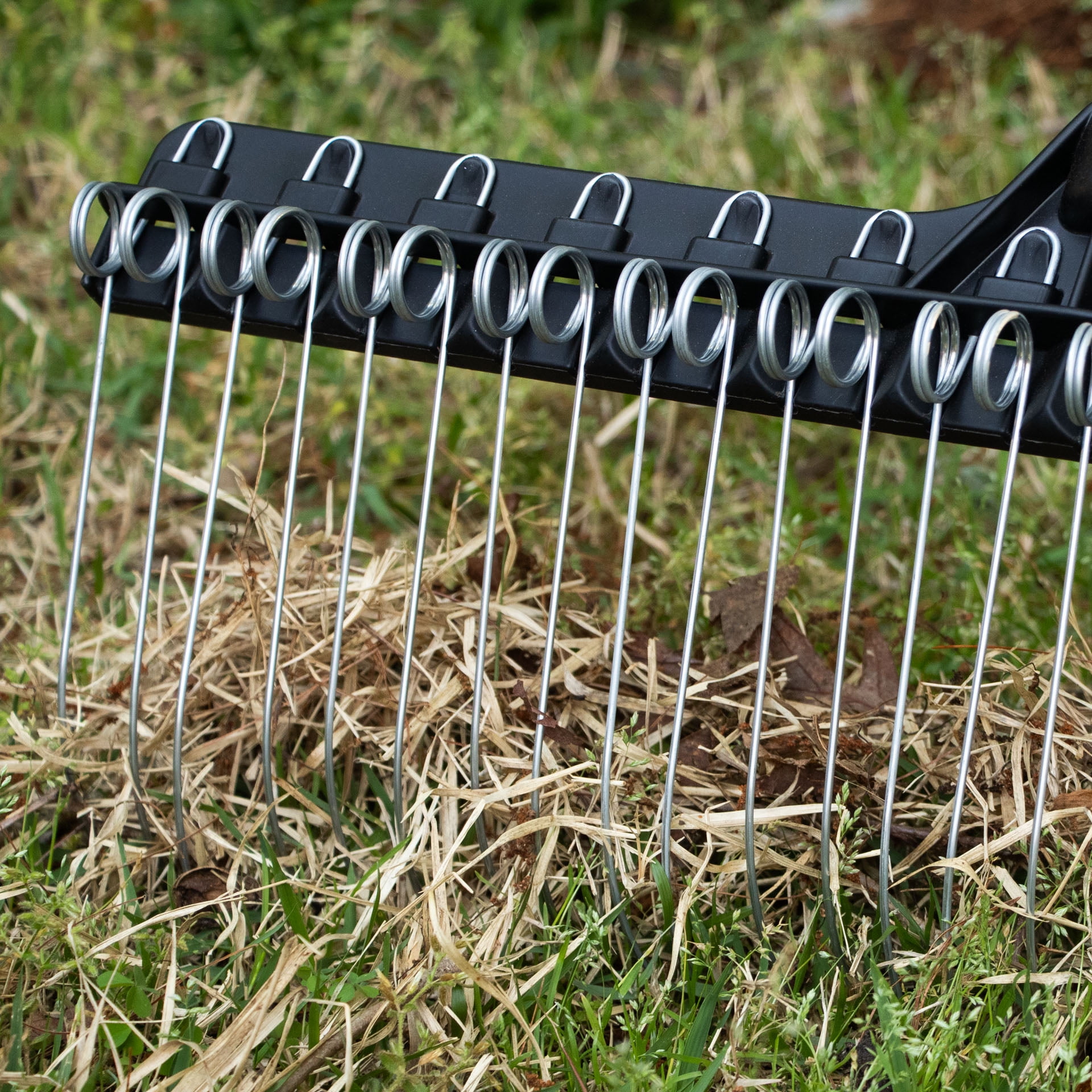
These poke holes in the ground but do not remove soil. In clay soil, spikes can actually compress the surrounding soil further, worsening the problem.
Plug (Core) Aerators
These remove cylinders of soil, creating open channels that allow:
• Oxygen to reach roots
• Water to penetrate instead of running off
• Fertilizer to move deeper
• Roots to expand into loosened soil
For clay-heavy lawns, plug aeration is the only method that consistently works.
What Makes a Good Aerator for Clay Soil?
Clay requires more force to penetrate than sandy or loamy soils. The best aerators share several traits:
1. Hollow Tines That Pull Real Plugs
Solid spikes simply don’t solve compaction.
2. Weight Capacity
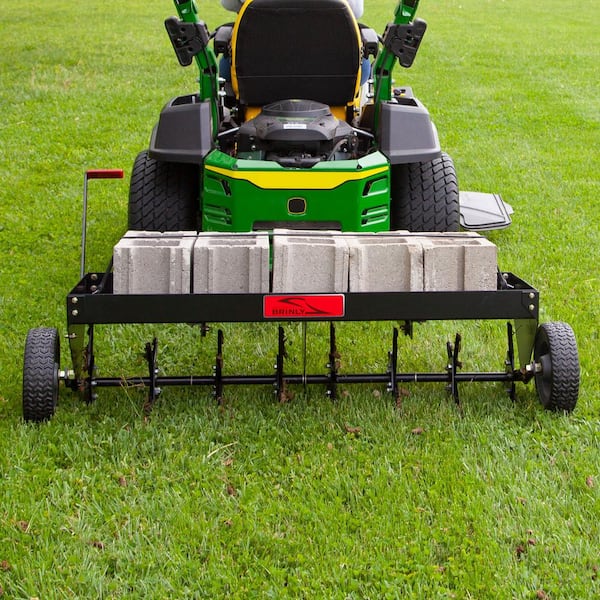
Heavier aerators drive tines deeper into hard soil. Tow-behind models allow you to add weight for better penetration.
3. Wide Coverage for Efficiency
Clay lawns often need repeated passes, so wider units save hours of work.
4. Durable Construction
Clay puts serious stress on equipment. Strong frames and heat-treated tines matter.
Best Types of Aerators for Clay Soil
Here’s how aerator categories stack up in clay conditions.
Best Overall: Tow-Behind Plug Aerators
For most homeowners with medium to large lawns, tow-behind plug aerators deliver the best results.
These attach to riding mowers or lawn tractors and allow added ballast weight for deeper penetration. Models from brands like Agri-Fab and Brinly consistently perform well in compacted clay conditions.
Best for:
- Lawns over ~5,000 sq ft
- Heavily compacted yards
- Homeowners who aerate yearly
Best Budget Option: Manual Core Aerators
Manual tools like the Yard Butler Manual Coring Aerator work surprisingly well in clay if soil is slightly moist.
They’re slower but effective for:
- Small yards
- Spot aeration
- Problem areas near sidewalks or play zones
They also appeal to homeowners who don’t want to rent equipment annually.
Rental Alternative: Walk-Behind Core Aerators
Rental machines are powerful and effective but heavy, expensive to rent repeatedly, and difficult to transport.
Many homeowners eventually buy their own aerator after renting once or twice.
Recommended Aerators for Clay Soil
Best Tow-Behind Choice for Most Homes
A 40–48 inch tow-behind plug aerator from Agri-Fab or Brinly strikes the best balance of price, performance, and durability. Added ballast helps tines bite into stubborn clay.
Best Manual Option for Small Lawns
A two-tine manual corer like the Yard Butler provides real aeration without machine cost, ideal for smaller properties.
Tips for Aerating Clay Soil Successfully
Aerating clay is as much about timing as equipment.
Water Before Aerating
Slightly moist soil allows tines to penetrate deeply. Water the lawn the day before if conditions are dry.
Add Weight Gradually
Tow-behind units often need extra weight to pull full plugs in clay.
Make Multiple Passes
Clay soil may need two perpendicular passes for best results.
Leave Soil Plugs on Lawn
They break down naturally and return nutrients to soil.
Overseed After Aeration
Open holes create perfect seed-to-soil contact.
Signs Your Clay Lawn Needs Aeration
If you notice:
• Water puddles after rain
• Grass struggles in high-traffic areas
• Soil feels rock-hard when dry
• Grass roots are shallow
• Lawn turns brown quickly in heat
…your soil is likely compacted and ready for aeration.
Rent or Buy for Clay Soil?
For clay lawns, aeration is rarely a one-time fix. Many homeowners aerate every year or every other year.
Buying a tow-behind aerator often becomes cheaper than repeated rentals within a few seasons — and far more convenient.
Final Verdict: What’s the Best Lawn Aerator for Clay Soil?
For most homeowners:
A tow-behind plug aerator is the best long-term solution.
It delivers deep soil penetration, covers large areas quickly, and allows adjustable weight for tough clay conditions.
Manual coring tools remain excellent supplemental tools for small yards or spot fixes, but clay soil usually benefits from heavier equipment.
Once you relieve compaction, you’ll notice better drainage, greener turf, and stronger root systems — often within a single growing season.