If your lawn is measured in fractions of an acre—or full acres—manual aeration tools quickly become unrealistic. Tow-behind lawn aerators solve that problem by pairing wide coverage with true core removal, allowing homeowners to achieve professional-grade aeration without renting commercial equipment.
Unlike spike aerators, which merely poke holes that can collapse back in on themselves, tow-behind plug aerators physically remove soil cores. This relieves compaction, improves oxygen exchange, and creates space for water, fertilizer, and seed to penetrate deeper into the root zone. Over time, this leads to thicker turf, deeper roots, and better drought tolerance.
Tow-behind aerators are designed to be pulled by riding lawn mowers, lawn tractors, or ATVs, making them ideal for homeowners who already own powered equipment and want a repeatable, once-or-twice-a-year solution.
What to Look for in a Tow-Behind Lawn Aerator
Before diving into specific recommendations, it’s important to understand what separates a good tow-behind aerator from one that ends up gathering dust in the shed.
Plug Aeration vs Spike Aeration
For soil improvement, plug aerators are almost always the better investment. Spike aerators can be useful for very light compaction, but on most residential lawns—especially clay or heavily trafficked turf—plug aerators deliver noticeably better results.
Working Width
Most quality tow-behind aerators range from 40 to 48 inches wide. Wider units cover ground faster but require more storage space and a capable towing vehicle. For most homeowners, 48 inches offers the best balance of speed and manageability.
Weight Capacity
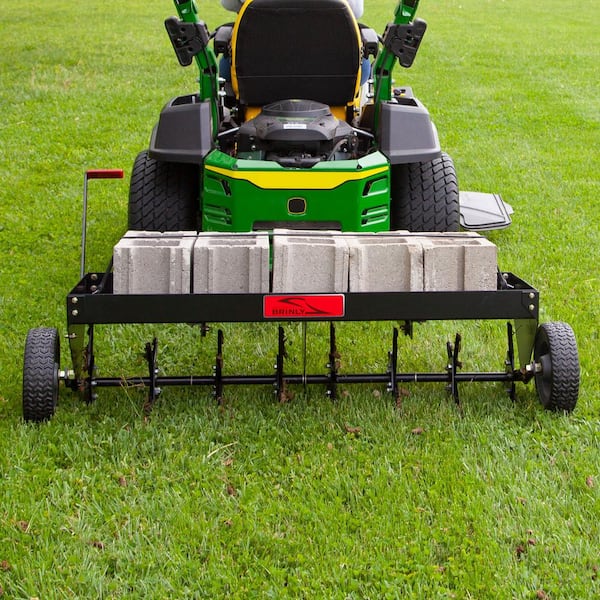
Plug aerators rely on weight to force the spoons into the soil. Models with integrated weight trays allow you to add concrete blocks or sandbags, which is essential for compacted or dry soil conditions.
Plug Depth and Spoon Quality
Look for heat-treated steel spoons capable of pulling plugs at least 2 to 3 inches deep. Shallow plugs reduce effectiveness, especially for overseeding and long-term lawn renovation.
Durability and Storage
A tow-behind aerator is a heavy tool. Weld quality, frame thickness, and transport wheels all matter if you want something that lasts more than a few seasons.
Best Tow-Behind Lawn Aerators for Homeowners
Below are some of the most reliable and commonly recommended tow-behind plug aerators for residential use. Each serves a slightly different type of homeowner, depending on lawn size, budget, and long-term expectations.
Agri-Fab 45-0299 48-Inch Tow-Behind Plug Aerator
Best Overall Value for Most Homeowners
Agri-Fab’s 48-inch tow-behind plug aerator consistently ranks as one of the most popular choices for homeowners with medium to large yards—and for good reason.
The wide working width allows you to aerate large areas efficiently, while the steel plug spoons remove substantial soil cores that actually relieve compaction. The integrated weight tray lets you customize penetration depending on soil conditions, which is especially helpful in early spring or during dry fall weather.
Agri-Fab strikes a strong balance between durability and affordability. It’s robust enough to handle repeated seasonal use but priced within reach for homeowners who want long-term value without stepping into commercial-grade pricing.
Best for:
Homeowners with ¼ acre to several acres who want effective plug aeration and plan to aerate every year.
Brinly-Hardy 48-Inch Tow-Behind Plug Aerator
Best Alternative Value Pick
Brinly is another well-known name in tow-behind lawn equipment, and its 48-inch plug aerator competes directly with Agri-Fab’s offering.
The Brinly model features heat-treated steel plugging spoons, a fully enclosed weight tray, and transport wheels that make it easier to cross driveways or paved surfaces. Build quality is solid, and the unit feels designed for homeowners who expect to keep it for many seasons.
In practice, Brinly’s aerator performs very similarly to Agri-Fab’s, with the decision often coming down to availability or price at the time of purchase.
For smaller yards, Brinly also offers a 40″ tow-behind aerator.
Best for:
Homeowners who want a proven, widely available tow-behind aerator with strong build quality and good resale value.
John Deere 48-Inch Tow-Behind Plug Aerator
Best Premium Residential Option
For homeowners already invested in premium lawn equipment, John Deere’s tow-behind plug aerator offers a step up in fit, finish, and long-term durability.
This model is built with heavier materials and designed to pair seamlessly with John Deere lawn tractors. Plugging spoons are durable, penetration is consistent, and the overall design emphasizes longevity.
The downside is cost. This aerator is significantly more expensive than value-focused alternatives, and for many homeowners, the performance gains may be incremental rather than transformative.
Best for:
Large-property owners who already own premium tractors and prefer matching attachments built for long-term use.
Commercial-Grade Tow-Behind Aerators (BlueBird, Similar Brands)
Best for Very Large or Demanding Properties
Commercial-leaning tow-behind aerators are designed for repeated use on large acreage, challenging soil conditions, or semi-professional applications.
These units typically feature thicker frames, replaceable spoons, deeper plug capability, and heavier weight capacity. They are often sold through specialty dealers rather than big-box stores and may require a more powerful towing vehicle.
While expensive, commercial-grade aerators can make sense for homeowners managing multiple acres, compacted soil, or properties where rental costs add up year after year.
Best for:
Large estates, rural properties, or homeowners who want one aerator that will last decades with proper maintenance.
How to Get the Best Results from a Tow-Behind Aerator
Buying the right aerator is only part of the equation. Proper timing and follow-up care dramatically affect results.
Aerate at the Right Time
For cool-season grasses, aerate in early fall or spring when grass is actively growing. Warm-season lawns benefit most from late spring or early summer aeration.
Moist Soil Works Best
Water the lawn a day or two before aerating. Soil should be damp but not muddy. Dry soil limits penetration, even with added weight.
Add Weight Gradually
Start with moderate weight and increase as needed. Excessive weight can tear turf or strain your towing vehicle.
Follow with Overseeding and Fertilization
Aeration creates the perfect environment for overseeding. Spread seed and fertilizer immediately after aerating to take full advantage of open soil channels.
Is a Tow-Behind Aerator Worth Buying?
If you own a riding mower or ATV and aerate regularly, a tow-behind plug aerator often pays for itself within a few seasons compared to rentals. More importantly, owning your own tool lets you aerate when conditions are ideal—not when the rental schedule allows.
For homeowners committed to improving soil health, lawn density, and long-term turf performance, a tow-behind aerator is one of the most impactful investments you can make.