Landscape & Leisure is reader-supported. When you buy through links on our site, including Botanical Interests seed links, we may earn a commission at no extra cost to you. Prices change, so click through to confirm current pricing.
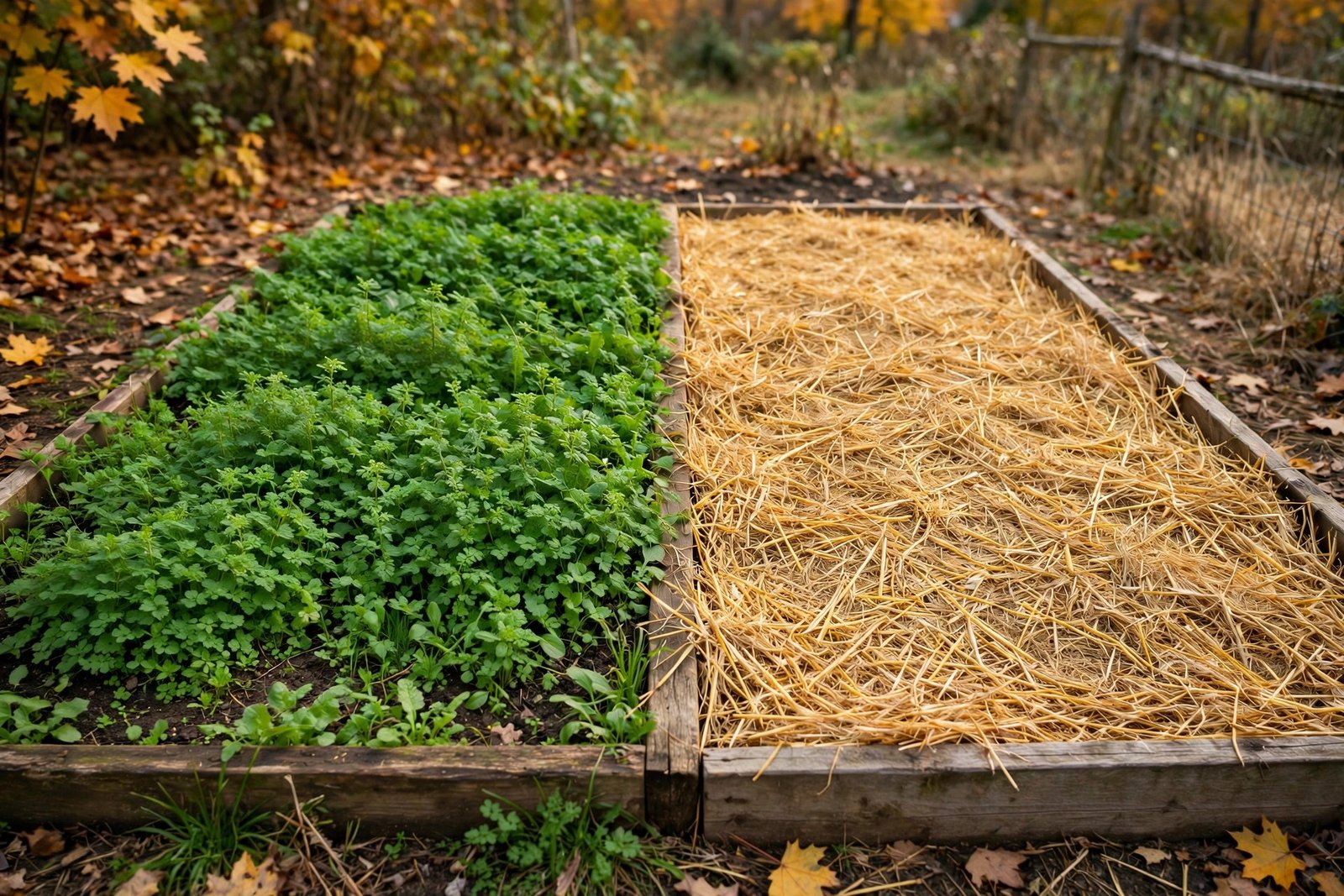
Here is the mistake: treating “cover the soil” as one job, then picking whichever bag is closest. A pile of mulch and a living cover crop both cover the soil, but they do different work, they cost different effort, and picking the wrong one for your bed wastes a whole season. Mulch sits there. A cover crop works while it grows.
That does not make mulch useless — far from it. It makes the choice a real one, with a right answer that depends on what the bed needs and when you need it back. This comparison settles it: what each one actually does, what each one costs you in time, and which one fits each kind of bed. For the full list of covers worth sowing, see our best cover crops roundup, and for the indoor side of winter growing, our microgreens guide.
| Cover crop (living) | Mulch (spread) | |
|---|---|---|
| Feeds the soil | Yes — legumes add nitrogen; all covers add organic matter when turned under | Slowly, as it breaks down; wood mulch can tie up nitrogen at first |
| Weed suppression | Strong while growing; needs a full stand to work | Strong immediately, if laid thick enough |
| Erosion protection | Excellent — living roots hold soil all season | Good on flat beds; washes off slopes in heavy rain |
| Time to payoff | Weeks to a season, depending on the crop | Instant |
| Bed availability | Bed is occupied until you turn it under, plus a few weeks of rest | Plant through it any time |
| Extra harvest | Sometimes — daikon roots, borage flowers, clover tea | None |
What a Cover Crop Actually Does
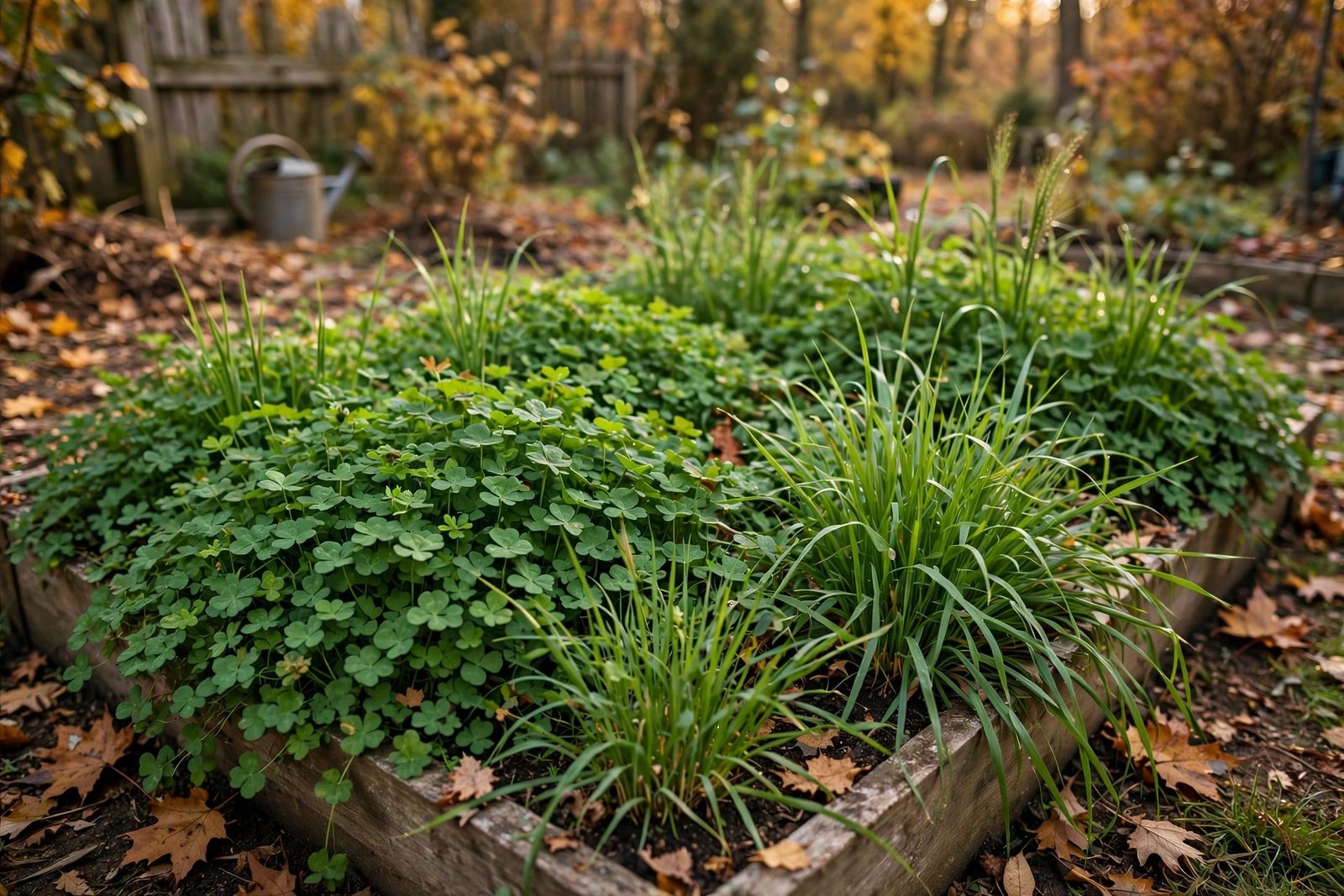
A cover crop is a plant with a job description. Legumes like crimson clover fix nitrogen from the air into the soil. Deep-rooted crops like daikon break up compaction. Fast growers like buckwheat smother weeds and add green matter in weeks. And every one of them holds the soil with living roots through rain and wind, which is the one thing a spread mulch can only partly do.
The trade-off is time and timing. A cover crop occupies the bed while it grows, and you have to turn it under before it sets seed, then wait a few weeks before planting into that bed again. Sow crimson clover 6 to 8 weeks before your first fall frost and you are committing that bed until spring. That is the right call for a resting vegetable bed. It is the wrong call for a bed you need next month.
What Mulch Actually Does
Mulch is the instant answer. Spread straw, shredded leaves, or wood chips thick enough and weeds are suppressed today, moisture stays in the soil tomorrow, and the bed looks finished immediately. You can plant through it any time, and on a slope or a path it is often the only practical choice.
What mulch does not do is feed the soil the way a living crop does. It breaks down slowly from the top, and fresh wood mulch can temporarily tie up nitrogen at the soil surface while it decomposes. It also does nothing for compaction below the surface — no root is down there doing the digging. Mulch protects soil. A cover crop improves it.
The Verdict by Bed
Resting vegetable bed, fall to spring: cover crop, no contest. Sow crimson clover for nitrogen, or buckwheat if the gap is short and the weather is warm. The bed comes back darker and looser than mulch alone leaves it.
Perennial beds and paths you walk through: mulch. You need the bed usable now, and you are not turning the soil over each year anyway. A thick leaf or straw mulch, topped up annually, is the low-effort winner here.
Heavy clay you want to fix: cover crop, specifically a deep root. Daikon is the pick — its roots do work no spread material can do. Follow it with a legume the next season for nitrogen.
A bed you need back in a month: mulch, or buckwheat if you can give it a few weeks. A slow cover crop in a bed with a deadline is how gardeners end up tilling under a half-grown crop and wondering why the soil did not improve.
The Covers Worth Sowing
If the verdict points to a cover crop, these are the three to start with. All three were verified in stock at the time of writing.
Crimson Clover: The Nitrogen Pick
Seventy to ninety days, about 178 square feet per packet, and a flower show the bees find before you do. Sow 6 to 8 weeks before your first fall frost, cut at the end of bloom before seed forms, and turn it under for the nitrogen payoff. This is the default cover crop for a resting vegetable bed, and it is the one most gardens should start with.
Crimson Clover Cover Crop Seeds
Nitrogen, pollinators, and a flower show from one packet — the cover crop that earns its bed space twice over.
Common Buckwheat: The Fast Pick
When the gap is short, buckwheat is the answer. It germinates fast, smothers weeds, grows in poor soil, and breaks down quickly enough that you can plant the same bed 3 to 4 weeks after turning it under. It is frost-sensitive, so keep it for spring and summer gaps, not winter cover.
Common Buckwheat Cover Crop Seeds
The quick gap-filler for poor soil: up fast, smothers weeds, and gone in time for your next planting.
Miyashige White Daikon: The Clay Pick
If your soil is heavy clay, start here. Daikon’s deep roots push into ground a fork struggles with, and when they rot down they leave channels for water and air. Sow after midsummer or in fall for the cool-season window it needs, pull some roots for the kitchen, and leave the rest to do the soil work.
Miyashige White Daikon Radish Seeds
Let a root do the digging: deep daikon roots open heavy soil and still make a harvest worth eating.
Can You Use Both?
Yes, and the combination is often better than either alone. Mow a cover crop and leave the cuttings on the surface instead of turning them under, and you have just made mulch out of a cover crop — the cuttings retain moisture, slow erosion, and break down into the soil they grew from. Or spread mulch over a bed in spring, then sow a cover crop into the gaps in fall when the bed rests.
The mistake is not using both. The mistake is using one when the bed needed the other: mulch on a tired vegetable bed that needed nitrogen, or a slow cover crop in a bed you needed next month. Match the tool to the bed, and both of them work.
Bottom Line
Cover crops feed and fix soil; mulch protects it instantly. Resting beds and clay get a cover crop — crimson clover for nitrogen, buckwheat for speed, daikon for compaction. Paths, perennials, and beds you need now get mulch. And when in doubt, mow the cover and let it become the mulch. That is the one move that gives you both jobs from one planting.