Few lawn care decisions cause more confusion than choosing between a dethatcher and an aerator. Both promise healthier grass, better water absorption, and stronger growth—but they solve entirely different problems.
Buying the wrong tool doesn’t just waste money. It can delay results, stress your turf, and create more work than necessary.
Understanding what each tool actually does—and when it makes sense to use them together—is the difference between guessing and managing your lawn with confidence.
The Core Difference (In Plain Terms)
If you remember only one thing, remember this:
- Dethatchers remove material on top of the soil
- Aerators fix problems below the soil surface
They address different layers of the lawn ecosystem.
What a Dethatcher Does
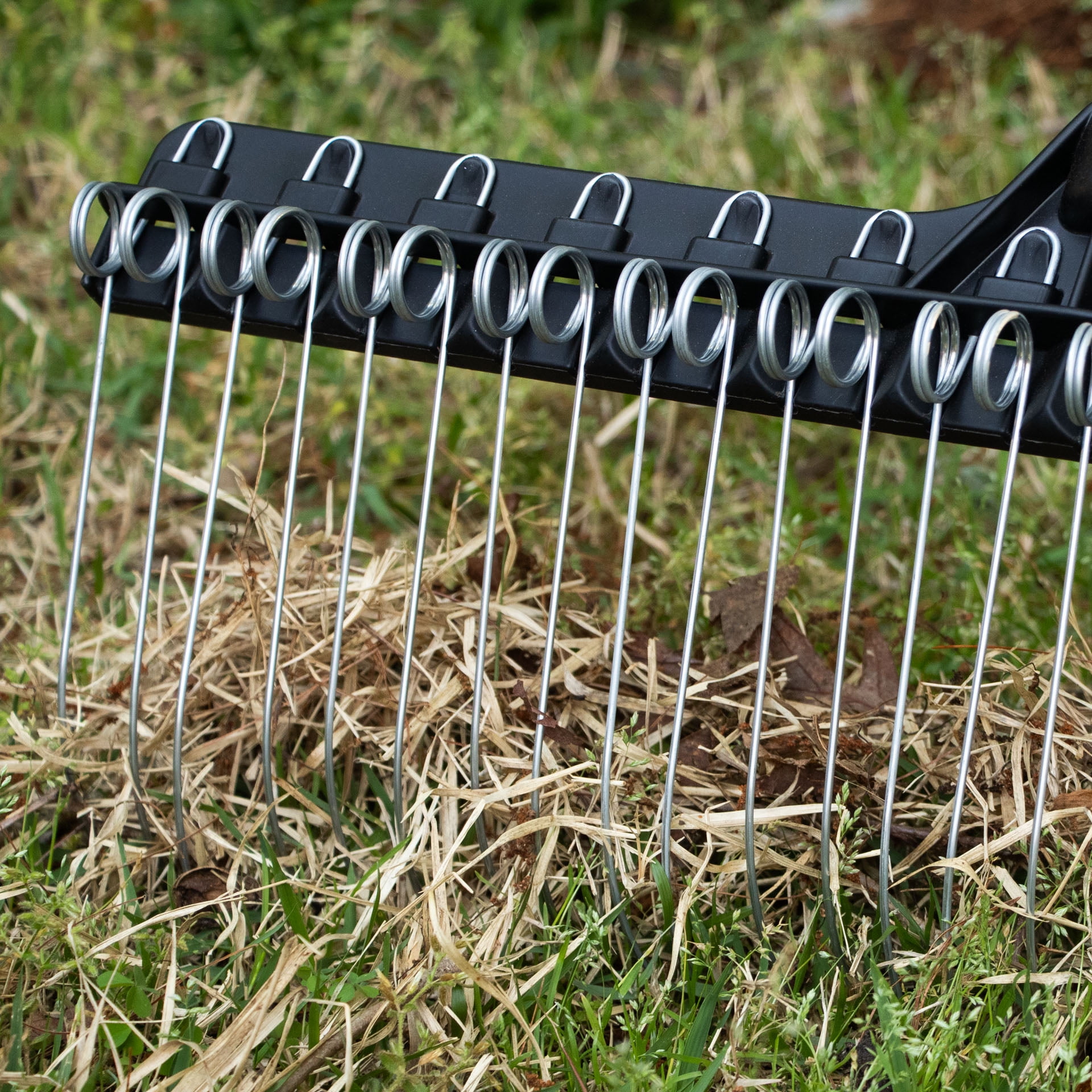
A dethatcher removes excess thatch—the layer of dead grass stems, roots, and organic debris that accumulates between the soil and green grass blades.
A thin layer of thatch is normal. Too much blocks:
- Water penetration
- Nutrient absorption
- Airflow to roots
Signs Your Lawn Needs Dethatching
- Grass feels spongy underfoot
- Water pools instead of soaking in
- Grass struggles despite fertilizer
- Thatch layer thicker than ½ inch
Types of Dethatchers
- Electric dethatchers (small to medium lawns)
- Tow-behind dethatchers (large lawns)
- Power rakes (heavy renovation)
Dethatching is most effective in early spring or early fall, when grass can recover quickly.
What an Aerator Does
Aerators relieve soil compaction by creating holes in the soil that allow air, water, and nutrients to reach grass roots.
This is especially important for lawns with:
- Heavy foot traffic
- Clay soil
- Construction damage
- Long periods without maintenance
Signs Your Lawn Needs Aeration
- Hard, compacted soil
- Water runoff after rain
- Thin or shallow roots
- Grass that doesn’t respond to watering
Types of Aerators
- Spike aerators (penetrate but don’t remove soil)
- Core aerators (remove plugs of soil; preferred)
Core aeration delivers the most reliable long-term improvement.
Dethatcher vs Aerator: Side-by-Side Comparison
| Feature | Dethatcher | Aerator |
|---|---|---|
| Primary purpose | Remove surface thatch | Relieve soil compaction |
| Works on | Lawn surface | Soil beneath turf |
| Best timing | Spring or fall | Spring or fall |
| Immediate mess | Yes | Moderate |
| Improves root growth | Indirectly | Directly |
| Typical recovery | 1–3 weeks | 2–4 weeks |
Which One Should You Use First?
If your lawn needs both, dethatch first, aerate second.
Why:
- Thatch removal allows aeration holes to function properly
- Aeration is more effective when debris isn’t blocking soil contact
Many homeowners see the best results by pairing dethatching, aeration, and overseeding as part of a single renovation window.
Do You Ever Need Both?
Yes—and this is where many lawns turn the corner.
Lawns with:
- Thick thatch and compacted soil
- Years of neglect
- Heavy shade or tree debris
often respond best to combined treatment.
A common sequence:
- Dethatch
- Sweep debris
- Core aerate
- Overseed
- Apply starter fertilizer
This approach creates ideal seed-to-soil contact and faster recovery.
Recommended Tools (Based on Lawn Size)
Best Dethatcher for Small to Medium Lawns
Electric dethatchers with spring tines
Affordable, effective, and easy to store.
Best Dethatcher for Large Lawns
Tow-behind dethatchers
Cover wide areas efficiently behind a lawn tractor.
Best Aeration Option for Homeowners
Rental core aerators
Often more cost-effective than purchasing unless aerating annually.
Common Mistakes to Avoid
- Dethatching when the lawn is dormant
- Aerating bone-dry or waterlogged soil
- Using spike aerators expecting core-aerator results
- Skipping debris cleanup after dethatching
Each step builds on the previous one.
Is It Worth Owning Both Tools?
For most homeowners:
- Yes for dethatchers (used more frequently)
- Maybe for aerators (often rented instead)
Many homeowners own a dethatcher and rent an aerator once every one to three years.
Final Thoughts
Dethatchers and aerators aren’t competing tools—they’re complementary ones. When used correctly and at the right time, they address separate but equally important problems.
Understanding which problem your lawn actually has is what separates frustration from results.