Do pine needles make soil too acidic? It is one of the most repeated claims in gardening, and the measured answer is no — fallen pine needles do not acidify soil in any amount that matters to the plants growing in it. The needles are not innocent of being acidic. They are innocent of passing that acidity on.
The confusion is understandable, because the starting number is real. The claim falls apart in what happens between the branch and the soil, and in what is actually making plants struggle under pine trees — which is worth sorting out, because liming a bed that was never too acidic fixes nothing and costs a season.
The myth vs. the measurement
Fresh, green pine needles are genuinely acidic. Oregon State University Extension puts the pH of needles as they drop from the tree at 3.2 to 3.8, against a neutral 7.0. That figure is the whole foundation of the myth, and it is accurate — for a needle that has just fallen.
What the myth skips is the next step. Once needles turn brown and begin to decompose, the organic acids in them break down with the rest of the tissue, and aged pine straw tests close to neutral, in the neighborhood of pH 6.0 to 6.5. The material that actually sits on your soil for months is the brown version, not the green one.
Soil also pushes back. Most soils have buffering capacity — a reserve of minerals that resists pH change — and the slow trickle of acidity from decomposing needles is small against it. Extension specialists make the point directly: even freshly fallen needles turned straight into the soil might cause a slight, temporary dip, and not a damaging one.
There is a chicken-and-egg error underneath the whole belief. Soil under established pines is often acidic, but pines are frequently growing there because the soil was acidic, sandy, and low in fertility to begin with — conditions pines tolerate better than most trees. The tree did not sour the ground. It moved into ground that was already sour, and then got blamed for it.
What’s actually wrong with plants under pines
Here is the symptom that starts the whole question: grass thins out, perennials sulk, and new plantings under a pine never quite take off. Acidity gets blamed because it is invisible and the needles are right there. Ranked by how often each one is the real cause, the list looks like this.
1. Root competition for water. A mature pine carries a wide, shallow root system that is very good at its job, and its job is taking water before anything else gets it. Plants under a pine are not growing in the same soil moisture as plants ten feet away; they are growing in what the tree left behind. This is the cause to rule out first, because it is the most common and the most fixable.
2. Dry soil under the canopy. Separate from the roots, the canopy itself intercepts rain. A dense pine sheds a surprising share of a light rain outward toward the drip line, so the ground beneath can stay dry through weather that soaks the rest of the yard. A bed can be drought-stressed in a wet month, which looks like a soil problem and is actually a plumbing problem.
3. Shade. Pines cast year-round shade, and it deepens as the tree grows. A perennial that managed in the spot five years ago may simply be receiving less light than it needs now. Shade stress reads as general weakness — thin growth, few flowers, slow everything — and it mimics nutrient problems closely enough to send people shopping for amendments.
4. Acidity. Real acidity does exist under some pines, in soils that were acidic before the tree arrived. It belongs on the list, last — checked, not assumed. Treating it first, with lime, while the plant is actually thirsty is the expensive version of guessing.
How to tell which cause you have
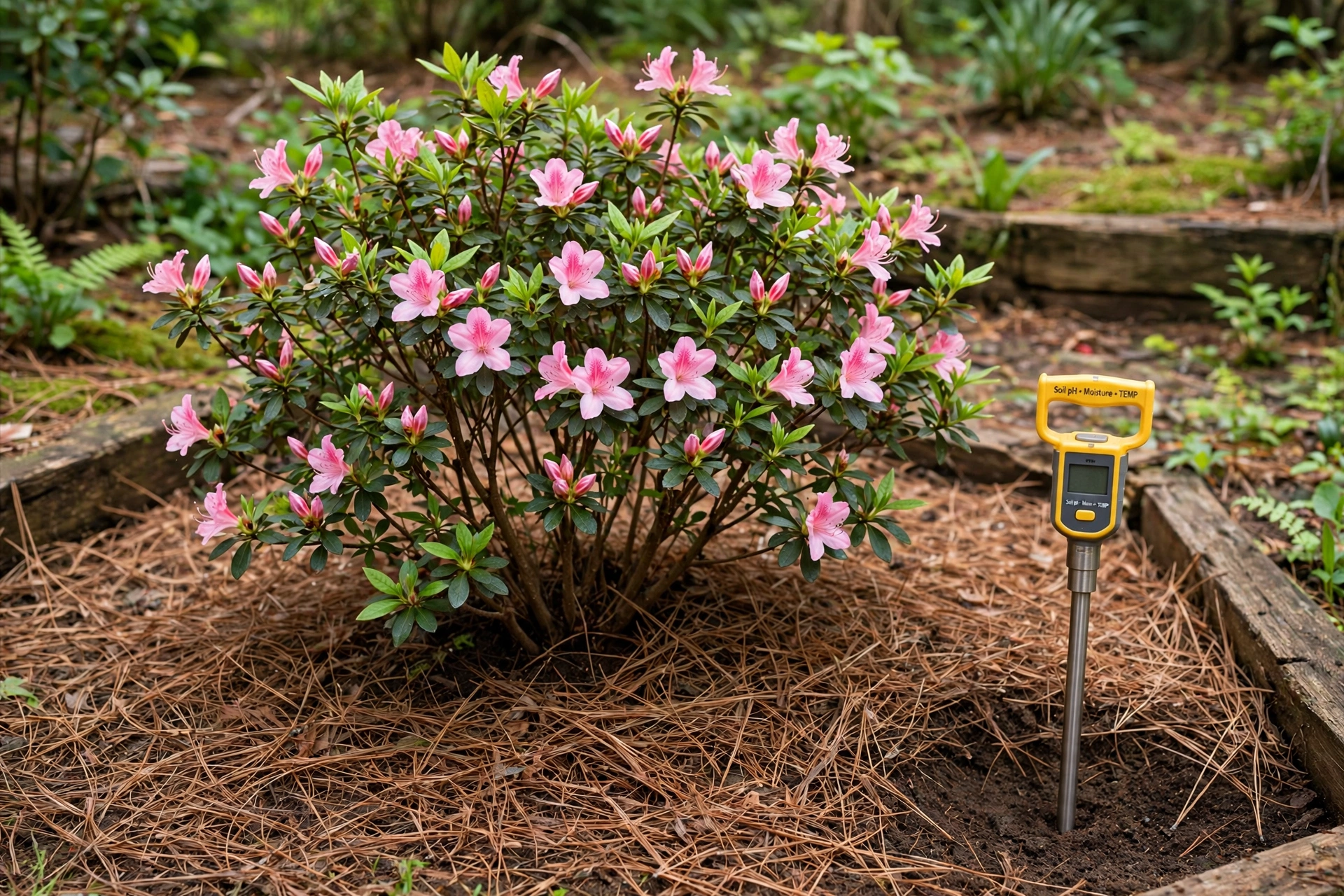
The checks are quick, and each one separates a cause from the others. Push a screwdriver or a soil probe into the ground under the pine after a rain: if it stops at dry soil an inch or two down while the open yard is moist, the problem is water — interception, root competition, or both — not chemistry.
Watch the light for one day in the growing season. Count the hours of direct sun the spot actually receives, not the hours it received when the tree was smaller. Fewer than the plant’s label asks for explains thin, flowerless growth without any soil story at all.
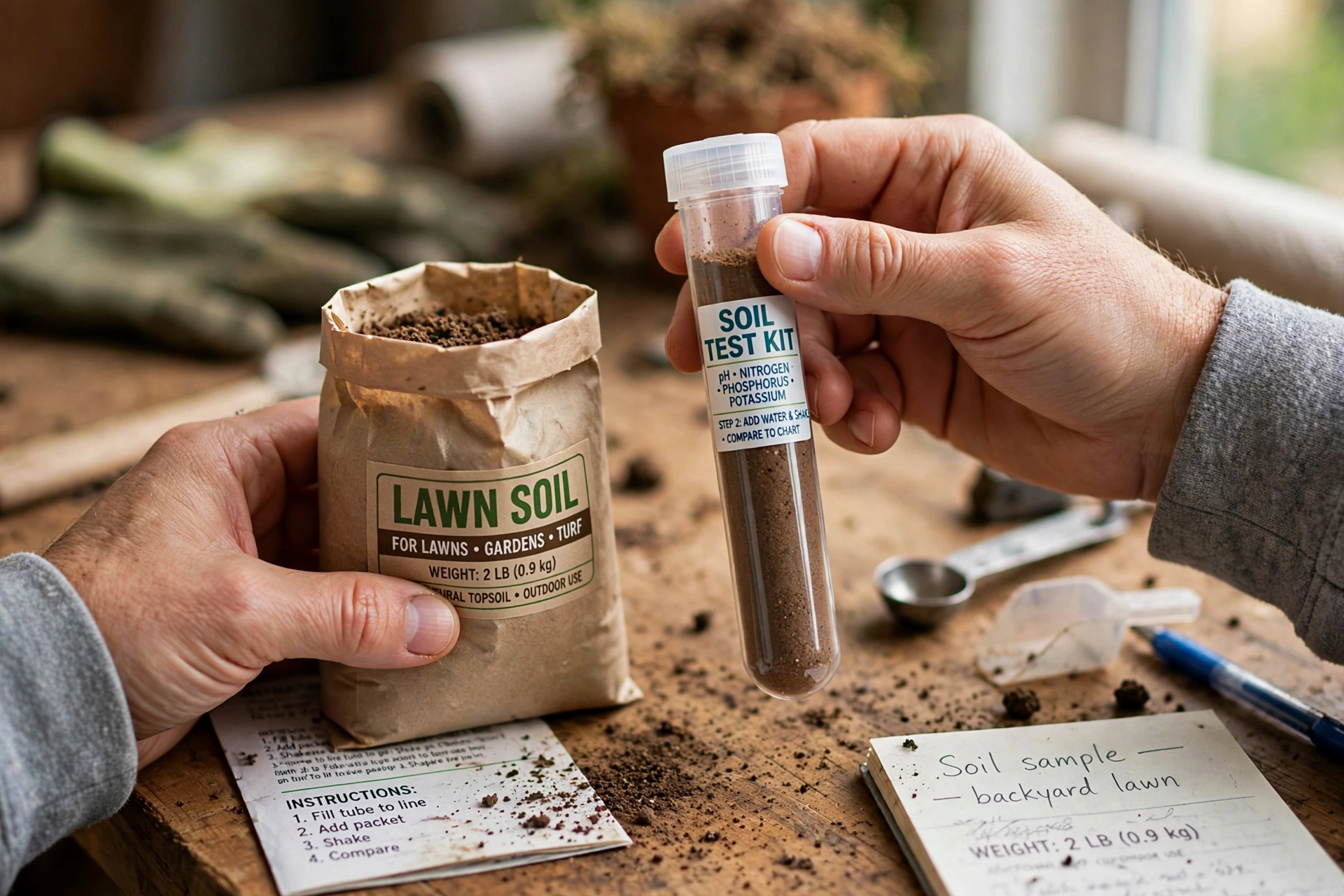
Then, and only then, test the soil. A lab soil test through your state Extension service reports the actual pH along with nutrient levels and a lime recommendation calculated for your soil, for a small fee. It replaces the argument with a number.
What to do with the answer
If the test comes back in the normal range for your plants, the fix is water and light management: water deeply under the canopy during dry spells, choose plants that tolerate dry shade, and mulch to hold what moisture arrives. The needles themselves can stay — used deliberately, they make a light, long-lasting mulch, as covered in can you use pine needles as mulch.
If needles have built up in thick layers over your beds, clearing them is a technique job rather than a chemistry one, and how to remove pine needles from mulch beds covers getting the layer out without stripping the mulch under it. Needles you pull can also go to the compost pile; how to compost pine needles faster explains how to speed up a material that is in no hurry on its own.
If the test does show genuinely low pH, lime is the fix — at the rate the test report specifies, not a bag-rate guess. Lime is a real amendment with a real dose, and it should only ever be applied against a measured number.
So the recommendation is plain: stop liming on suspicion. Test the soil under your pines once, read the number, and spend your effort on the water and shade that are actually limiting the plants there.
Sources
Oregon State University Extension — guidance on pine needle pH (3.2 to 3.8 as needles drop) and the minimal effect of decomposing needles on soil pH, as reported by North Carolina State University Cooperative Extension, “Pine Needle Mulch — the Myths and Legends” (lee.ces.ncsu.edu). University of New Hampshire Extension — pines grow in acidic soil rather than creating it; failure under white pines is attributed to shallow roots and shade.