Three kinds of faucet cover dominate the shelf, and they are not interchangeable. Pick the wrong one and you get a cover that gaps at the wall, pops off in the wind, or will not close over your faucet at all.
Here is the straight comparison: what each type is, where it wins, where it loses, and which one fits your situation.
Foam covers: the default for a standard faucet
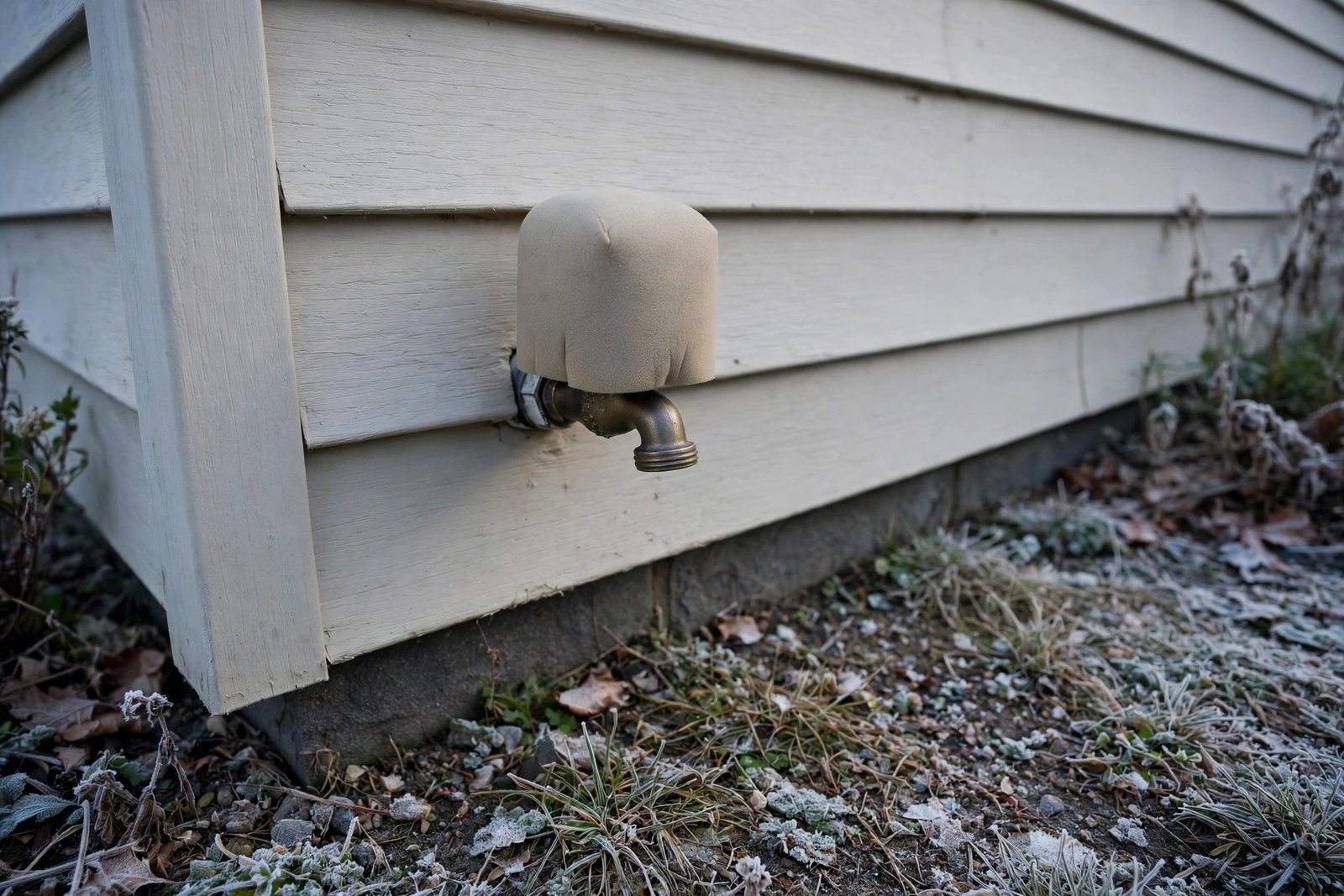
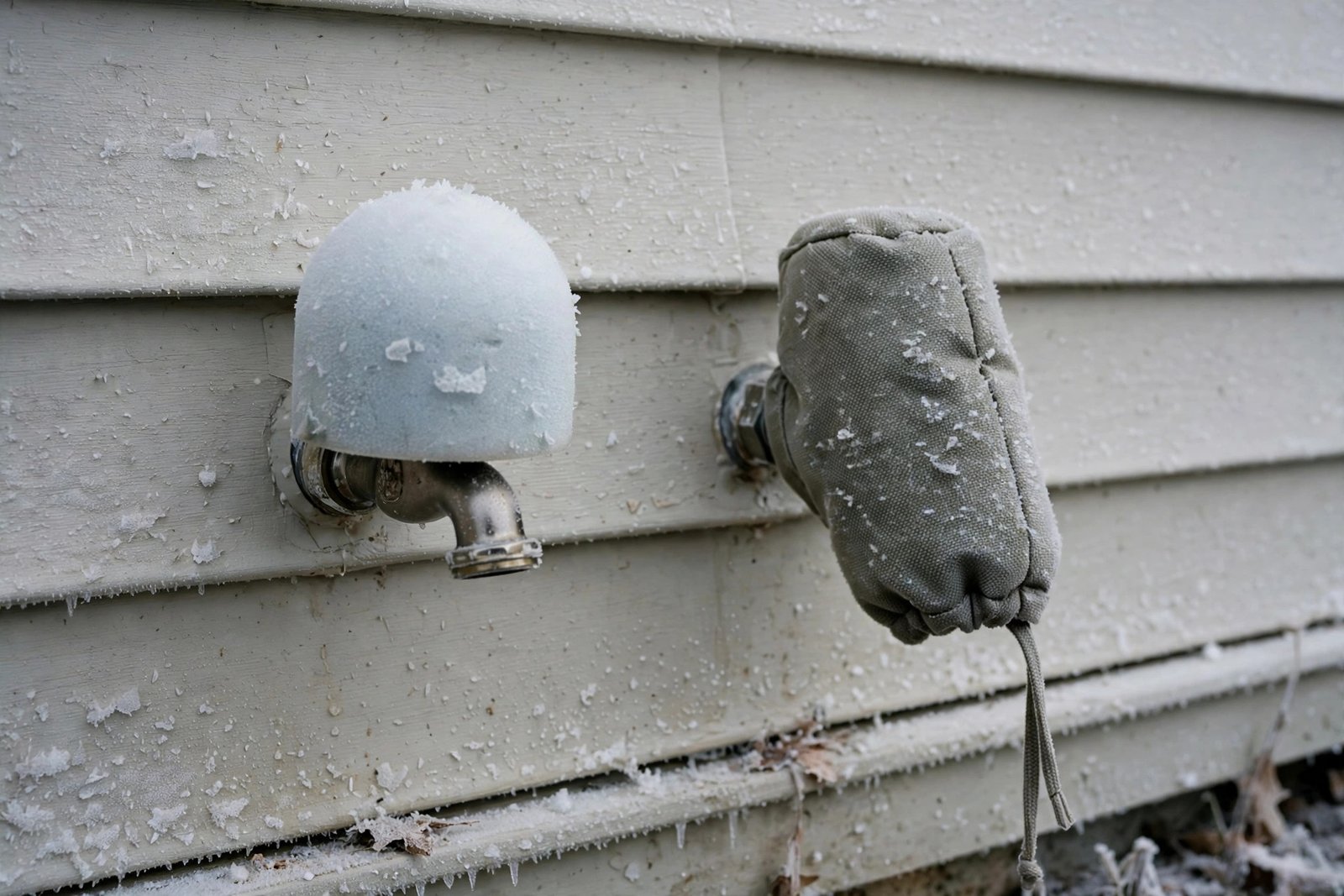
A foam cover is a thick molded cup, usually oval, that slides over the faucet and seals flat against the wall. No parts, no straps, no assembly. It insulates well because the foam itself is the insulation — thick, closed-cell, and snug.
Where foam wins: standard sillcocks on sheltered walls, in moderate to cold climates. It is the simplest fit and the cheapest way to cover every faucet you own.
Where foam loses: exposed walls, high wind, and anywhere the cover takes abuse. Foam can be knocked loose, chewed, or crushed, and once it gaps at the wall, cold air gets behind it.
Verdict: if your faucet is a standard size on a reasonably sheltered wall, foam is the answer. No reason to overthink it.
Sock covers: the fix for odd shapes and fast fits
A sock cover is an insulated fabric bag — waterproof fabric outside, insulated cotton inside — that slips over the faucet and ties on. It flexes, which is the whole point: it fits anti-siphon valves, long handles, bulky vacuum breakers, and older faucets that no rigid cover will close over.
Where socks win: odd shapes, oversized faucets, and speed. Tying one on takes seconds, and one purchase often covers two faucets. They are also the easiest to store flat in spring.
Where socks lose: the fit depends on the tie. A loose tie leaves a gap at the wall, and fabric will not shrug off a hard knock the way a rigid shell does. In a truly brutal, windy winter, a sock is not the toughest option on this list.
Verdict: if your faucet is an odd shape, or you want the fastest possible fit on several faucets, the sock is the right tool. Just pull the tie snug and check the seal.
Hard-shell covers: the pick for exposed, windy faucets
A hard-shell cover pairs a rigid plastic outer shell with a foam inner layer. The shell takes the weather, the wind, and the bumps; the foam does the insulating. It is the most durable of the three and the best at staying put.
Where hard-shell wins: exposed walls, windy corners, faucets near driveways or walkways, and anywhere a cover might get hit by a mower, a shovel, or a trash can. If your foam cover keeps ending up on the ground, this is the upgrade.
Where hard-shell loses: fit forgiveness. A rigid shell will not flex around an unusual faucet, and it is bulkier than foam. If your faucet sits tight against a corner or an obstruction, measure carefully before buying.
Verdict: if your faucet takes a beating from weather or traffic, hard-shell is the pick. For a sheltered standard faucet, it is more cover than you need.
Side by side
| Type | Insulation | Fit flexibility | Durability | Best for |
|---|---|---|---|---|
| Foam | Thick foam | Standard faucets | Good, can be knocked loose | Sheltered standard faucets |
| Sock | Insulated cotton + fabric | Odd shapes, oversized | Fair against impact | Odd shapes, quick fits |
| Hard-shell | Foam inner + shell | Standard faucets | Best in wind and impact | Exposed, windy faucets |
The mistake most people make
Buying the toughest cover for a faucet that does not need it, or the cheapest cover for a faucet that does. The cover that fits snugly and stays sealed all winter beats the “better” cover that gaps or falls off. Measure your faucet, look at where it sits, and match the type to the situation — not to the price tag.
And remember the order of operations: a cover is the last step. Shut off the interior valve, drain the line, and disconnect the hose first. The full routine is in How to Winterize an Outdoor Faucet, and specific product picks are in The Best Outdoor Faucet Covers for Winter.
When to replace a cover
A faucet cover is not a buy-once item. Foam that has gone soft, cracked, or compressed no longer seals the way it should, and a sock with a frayed tie or torn seam will not stay snug in a January wind. Check each cover when you fit it in fall: press it flat against the wall and look for gaps, cracks, or ties that will not hold.
If a cover fails that check, replace it before the first hard freeze, not after. A cover costs little; a split pipe costs a plumber visit and a wall repair. Keep a spare on the shelf if you have several faucets, so a failed cover never means a faucet left bare.
Bottom line
Standard faucet, sheltered wall: foam. Odd shape or you want the fastest fit: sock. Exposed, windy, or likely to get knocked around: hard-shell. Match the cover to the faucet and the wall it sits on, seal it flat, and check it once midwinter. That is the whole job.