This post contains affiliate links. If you buy through them, we may earn a commission at no extra cost to you.
You are standing over a row of rutabaga seedlings in early summer, three to a station, knowing two of them have to go. That thinning pass, done on time, is the difference between 5-inch storage roots in fall and a row of crowded necks. Rutabaga is not a difficult crop. It is a patient one, and the patience is scheduled: 80 to 120 days from sowing to a root worth storing.
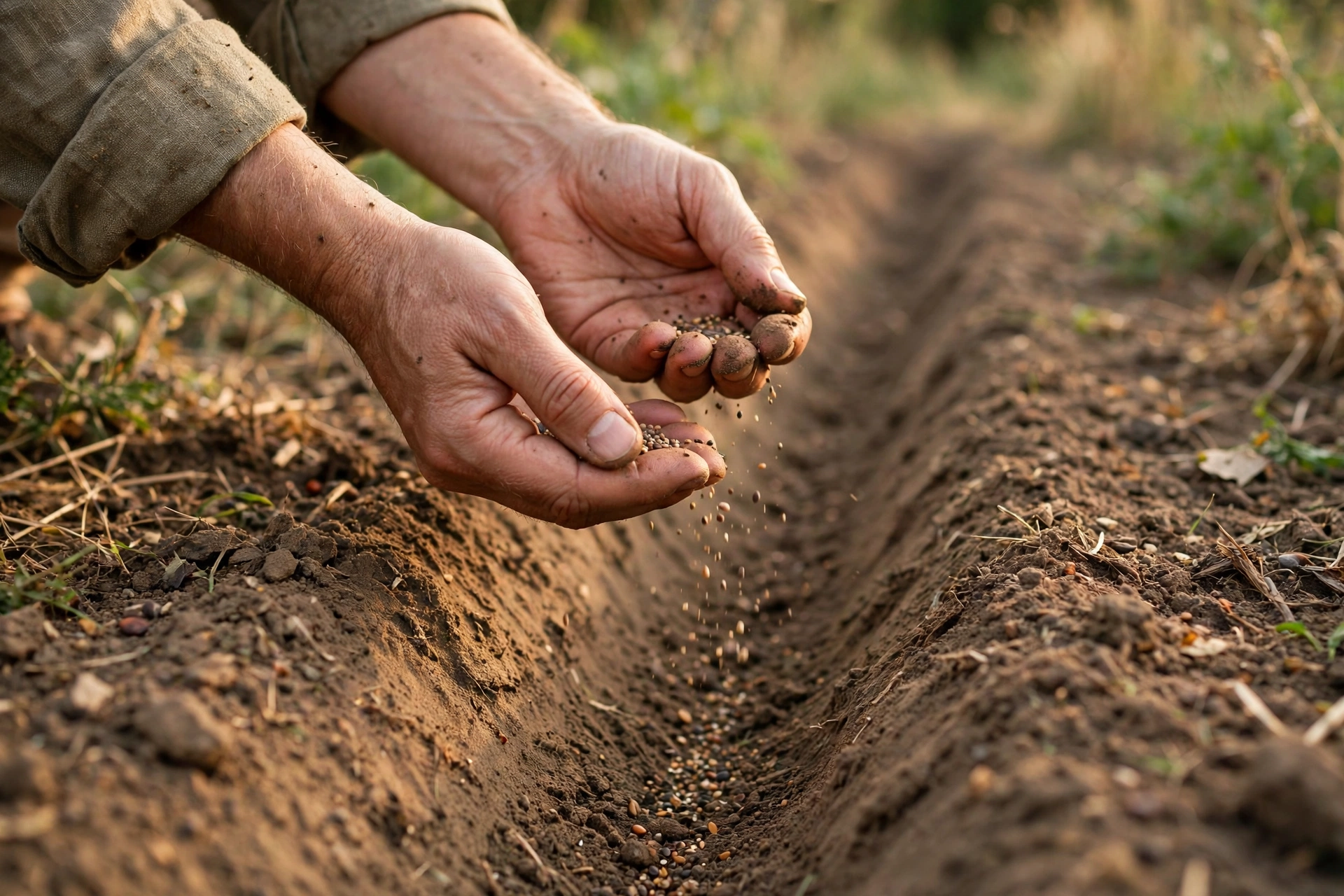
This guide uses American Purple Top, the variety in the rutabaga varieties roundup: 1/4 inch deep, a group of 3 seeds every 6 inches, rows 18 to 24 inches apart, one packet sowing up to 80 feet.
When to sow
In cold climates the packet gives two windows. Sow 4 to 6 weeks before your average last frost date, as soon as the soil can be worked, for an early summer harvest. Or count back 3 to 4 months from your average first fall frost and sow then, which is the sowing I favor, because the roots finish in cool weather and after light frost.
In mild climates, sow in fall for a late winter to spring harvest. The soil temperature for germination is 60 to 80 degrees Fahrenheit, and emergence runs 7 to 14 days. Starting indoors is not recommended; the packet is blunt that root crops do not transplant well, and a rutabaga that starts with a disturbed root rarely rounds out properly.
| Step | Packet figure | Timing |
|---|---|---|
| Sowing depth | 1/4 inch | Direct sow only |
| Spacing | Group of 3 every 6 inches | Rows 18 to 24 inches apart |
| Thinning | Thin to 1 every 6 inches | When seedlings are 4 inches tall |
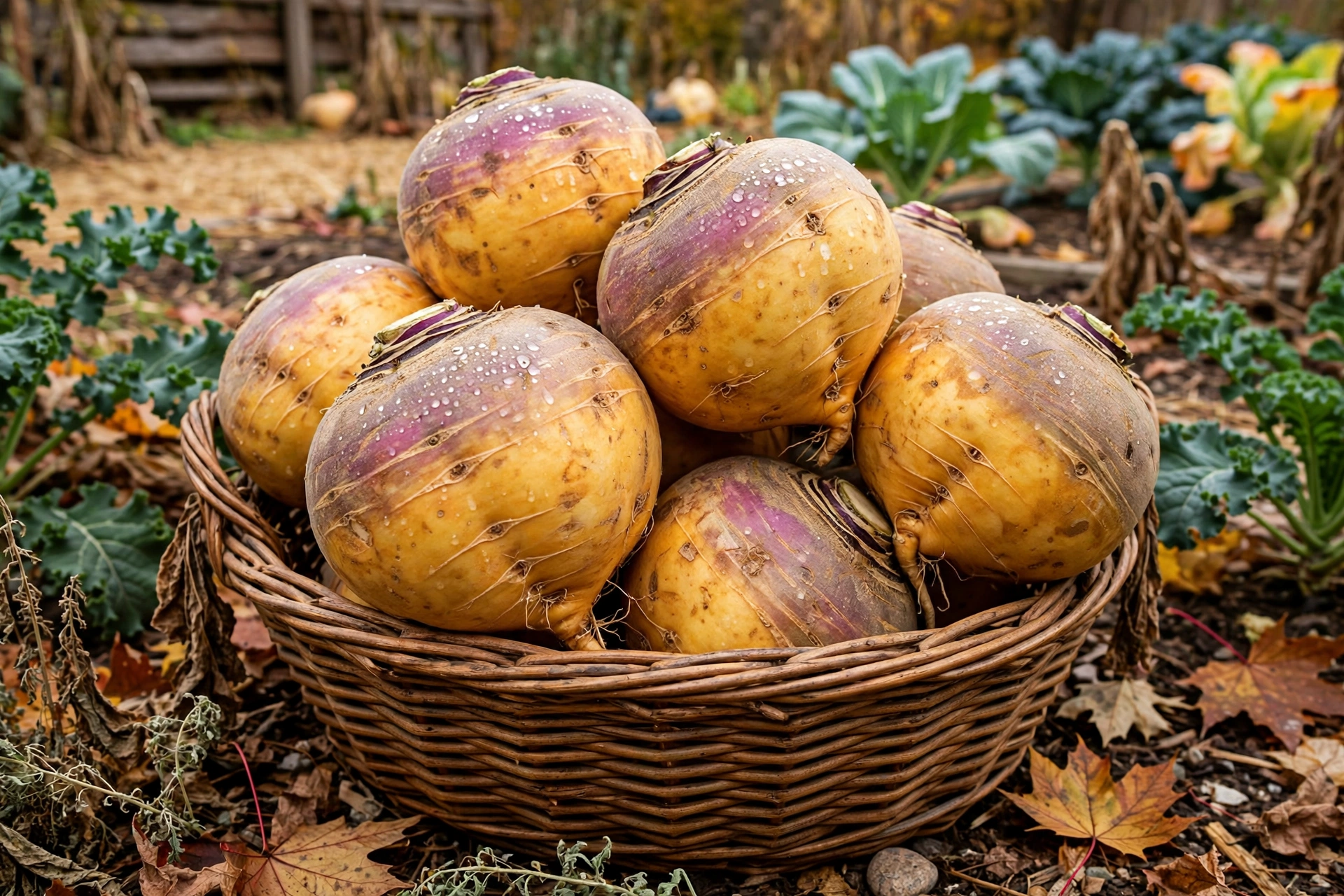
| Harvest | 4 to 6 inches across | 80 to 120 days, after light frosts in fall |
Thinning is the crop
Thin when the plants are 4 inches tall, to one plant every 6 inches. Crowded rutabagas do not catch up later; the root that shares its station in June shares it in October, at half the size. The pulled thinnings are not a harvest, they are the cost of the harvest, and the row will look emptier than feels right for about a week.
Keep the leaves on the plants that remain. The tops are edible and make good sauteed greens, but the packet caps leaf harvest at about 25 percent of a plant at a time, because heavier picking cuts into root size. On a crop this slow, I take greens from the turnip row instead and leave rutabaga foliage to feed the root. The turnip side of that choice is covered in growing turnips from sowing to harvest.
American Purple Top Rutabaga Seeds
One packet sows up to 80 feet; direct sow 1/4 inch deep and thin to one plant every 6 inches.
Harvest and storage
Pull roots at 4 to 6 inches across. In fall, wait for a few light frosts first; the packet notes rutabagas develop their best flavor in cool weather. Do not let the roots freeze in the ground, which is the one hard deadline on this crop. An early summer sowing comes out before consistently high temperatures start, for the same reason: heat is what this root is avoiding at both ends.
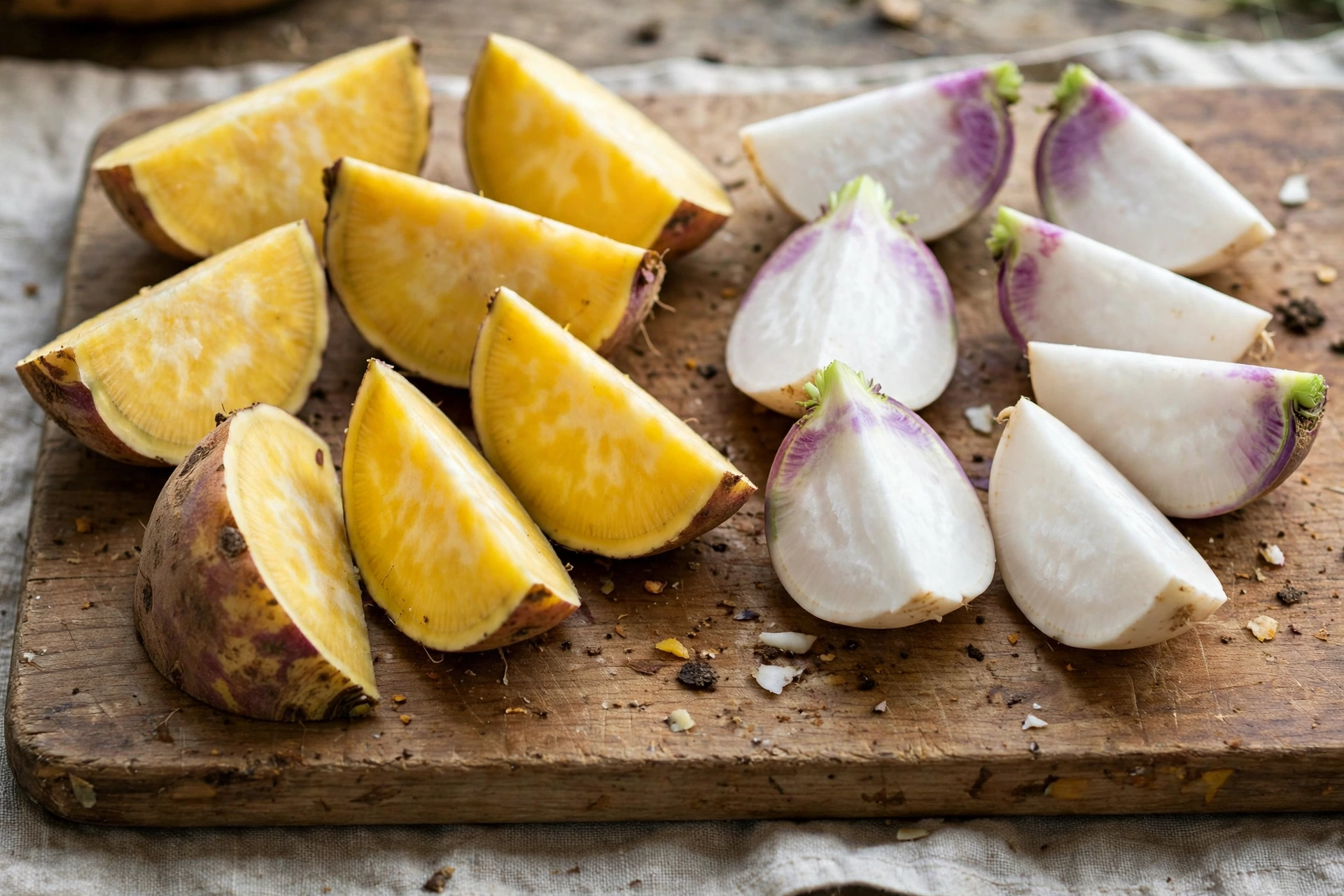
Trim the tops, and store the roots cool. It is a storage crop by design, dense enough to hold for months rather than days, which is the practical split from turnips in rutabaga vs turnips on storage and flavor. A heavy fall pull is easier with a basket that can be rinsed under a hose before the roots come inside.
Harvest Basket
16-quart large size for a full fall pull; wood and vinyl-coated wire, so muddy roots rinse right in the basket.
Sow on the fall count-back, thin at 4 inches tall without negotiating, and pull after the light frosts. A rutabaga row rewards exactly that sequence and very little improvisation.