
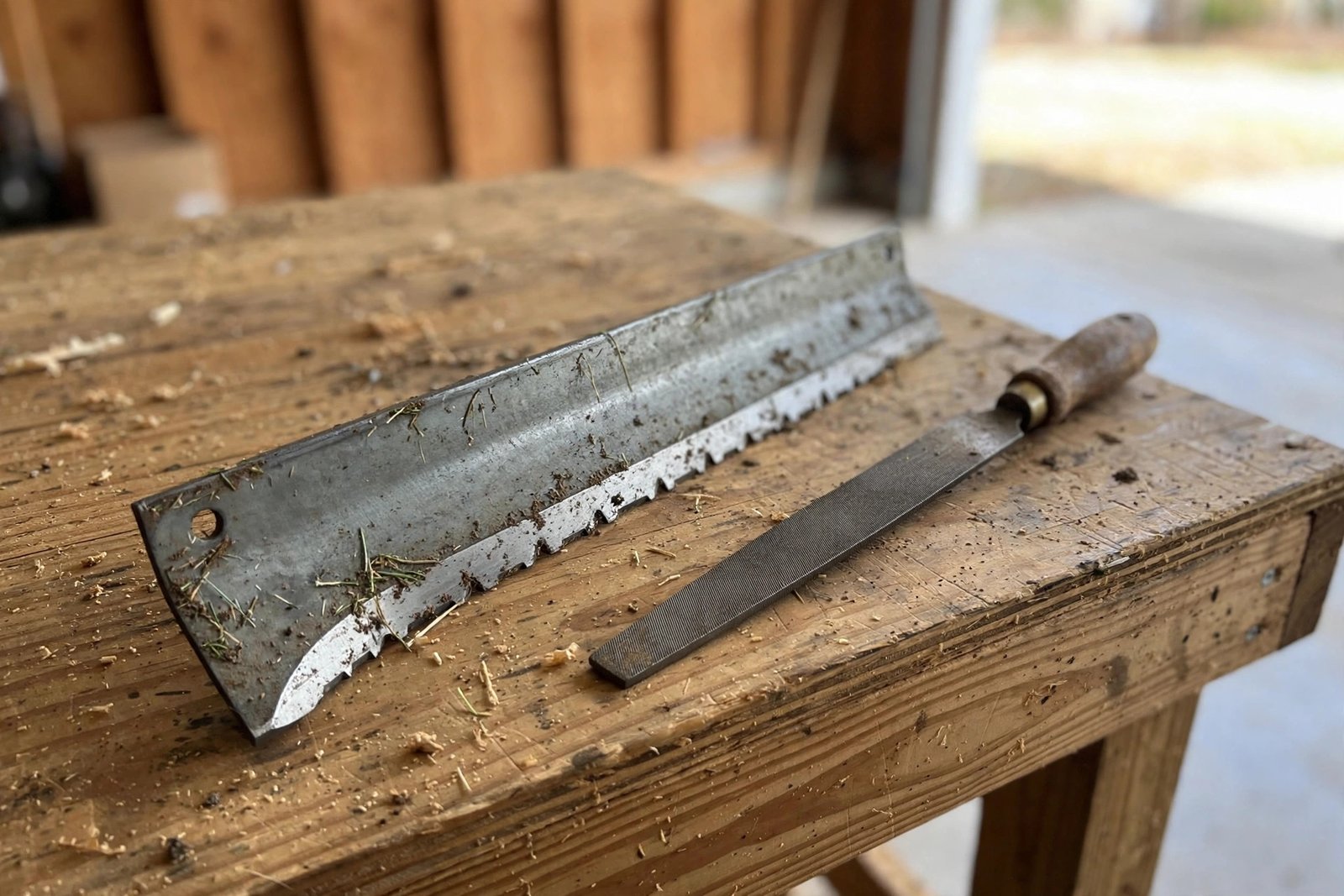
A dull edger blade does not cut — it tears. Torn grass tips brown within a day, the edge looks ragged instead of crisp, and the motor works harder for a worse result. Sharpening takes fifteen minutes and a flat file; replacing takes a wrench and a new blade. Both are safe if the power source is disconnected first, and both are worth doing before the first spring edge of the season.
For choosing the edger itself, see gas vs. cordless lawn edgers.
Before you touch the blade
- Cordless or corded electric: remove the battery or unplug the cord. Do not rely on the trigger lock.
- Gas: disconnect the spark plug wire and keep it away from the plug, so the engine cannot fire while your hands are near the blade.
- Wear work gloves and eye protection; a blade that looks dull can still cut skin, and filings in the eye end the job fast.
- Tip the machine so the blade faces you safely and the machine cannot roll — chock the wheels on a walk-behind.
Sharpening: follow the existing bevel
Remove the blade if you can — one bolt on most stick edgers, a center bolt and washer stack on walk-behinds — and clamp it in a vise. File in one direction only, pushing away from the edge, following the bevel angle the manufacturer ground into the blade; do not guess a new angle. Count strokes and match them on both sides of a two-sided blade so the edge stays even. Five to ten firm strokes per side is usually enough for a maintenance sharpen; if the edge has deep nicks, file past them or accept a slightly shorter blade life.
The balance check everyone skips
An unbalanced blade vibrates, wears bearings, and cuts unevenly. Hang the blade on a nail through its center hole: if one side drops, file a little more off the heavy side until it hangs level. This takes thirty seconds and is the difference between a blade that lasts a season and one that shakes the machine apart. A blade balancer cone does the same job more precisely and costs little.
When to replace instead
Replace the blade when it is worn thin — if the cutting edge is visibly thinner than a new blade, or the blade has lost more than about a quarter inch of width to repeated sharpening — when it is cracked, bent, or wobbles on its mount, or when the center hole is wallowed out. A new blade for a stick edger is inexpensive; a walk-behind blade costs more but still far less than a bearing or spindle repair. Reinstall with the washers in their original order, tighten to the torque figure in your manual (never guess), and re-check the bolt after the first ten minutes of use.
How often
Sharpen once a season for a maintained edge on a typical lot, more often if you edge through sand or gravel, which eats edges fast. Replace every two to three seasons of regular use, or sooner if the blade hits concrete or a buried rock — that impact usually bends the blade beyond filing. Mark the date on the blade with a paint pen so you are not guessing next spring. For project ideas beyond the blade, see DIY lawn edging ideas.