Late November is hose weather, whether you planned it or not
The first hard freeze is close now, and a hose left full of water on the reel is the one that splits. What is at stake is simple: drain and store the hose correctly this week and it waters next spring; skip it and you are buying a replacement in April.
Drain it completely
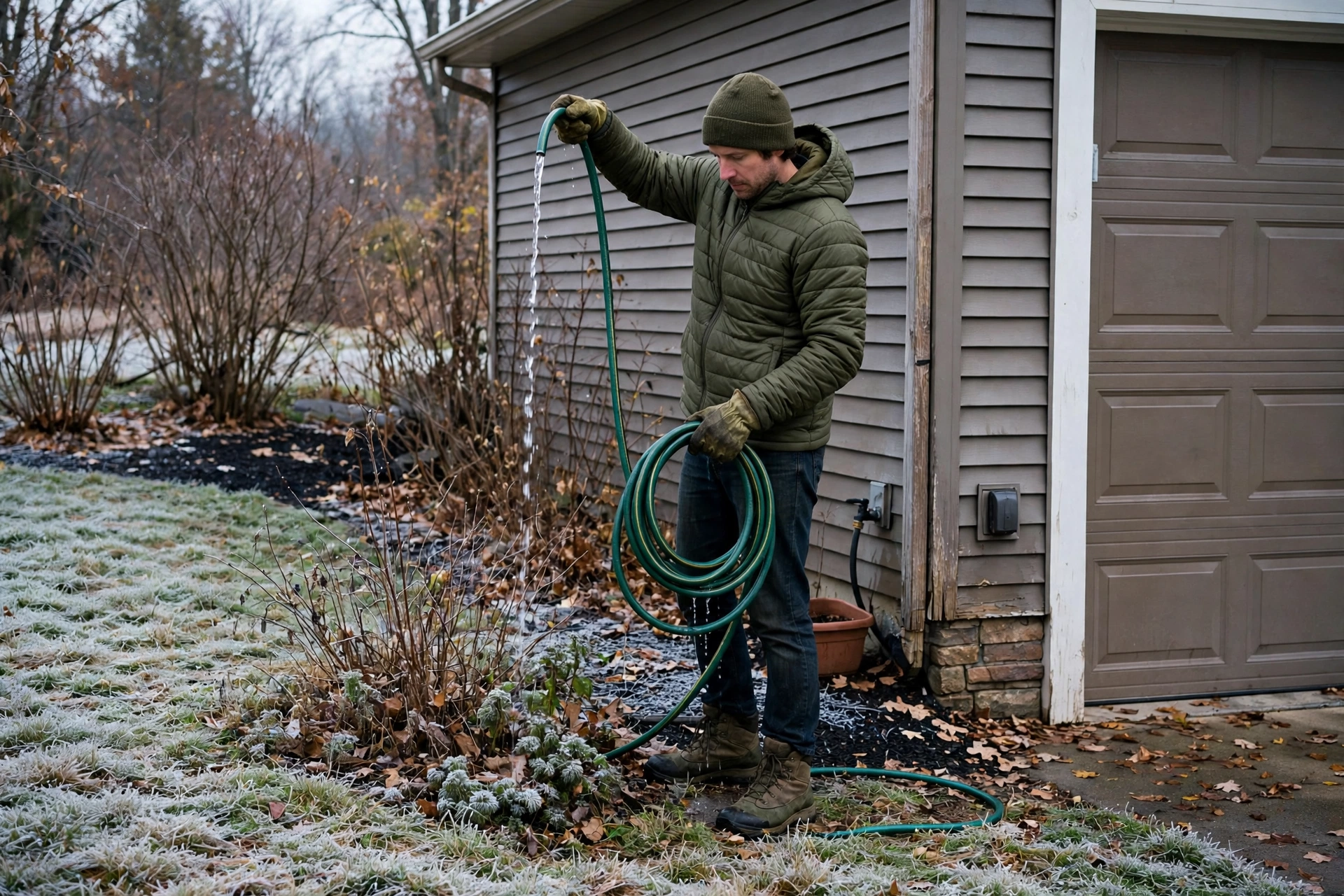
Shut off the indoor valve if your spigot has one, open the outdoor faucet, and disconnect the hose. Stretch it out straight on a slope, nozzle end downhill, and let it run empty.
Then lift one end and walk the length of the hose, pushing the remaining water ahead of you. The last cup of water sitting in a low bend is the cup that freezes.
Coil it loose and bring the fittings in
Coil in large loops, about two feet across, so the hose rests in its natural curve instead of being forced into tight kinks. Connect the two ends together once it is coiled, which keeps spiders and debris out over winter.
A garage wall or a basement joist hook beats a cold shed floor, because repeated freeze-thaw on the ground is harder on the rubber than steady cool air indoors. The faint smell of warm rubber when you uncoil it in spring is the sign it stored well.
Spigots and reels need the same pass
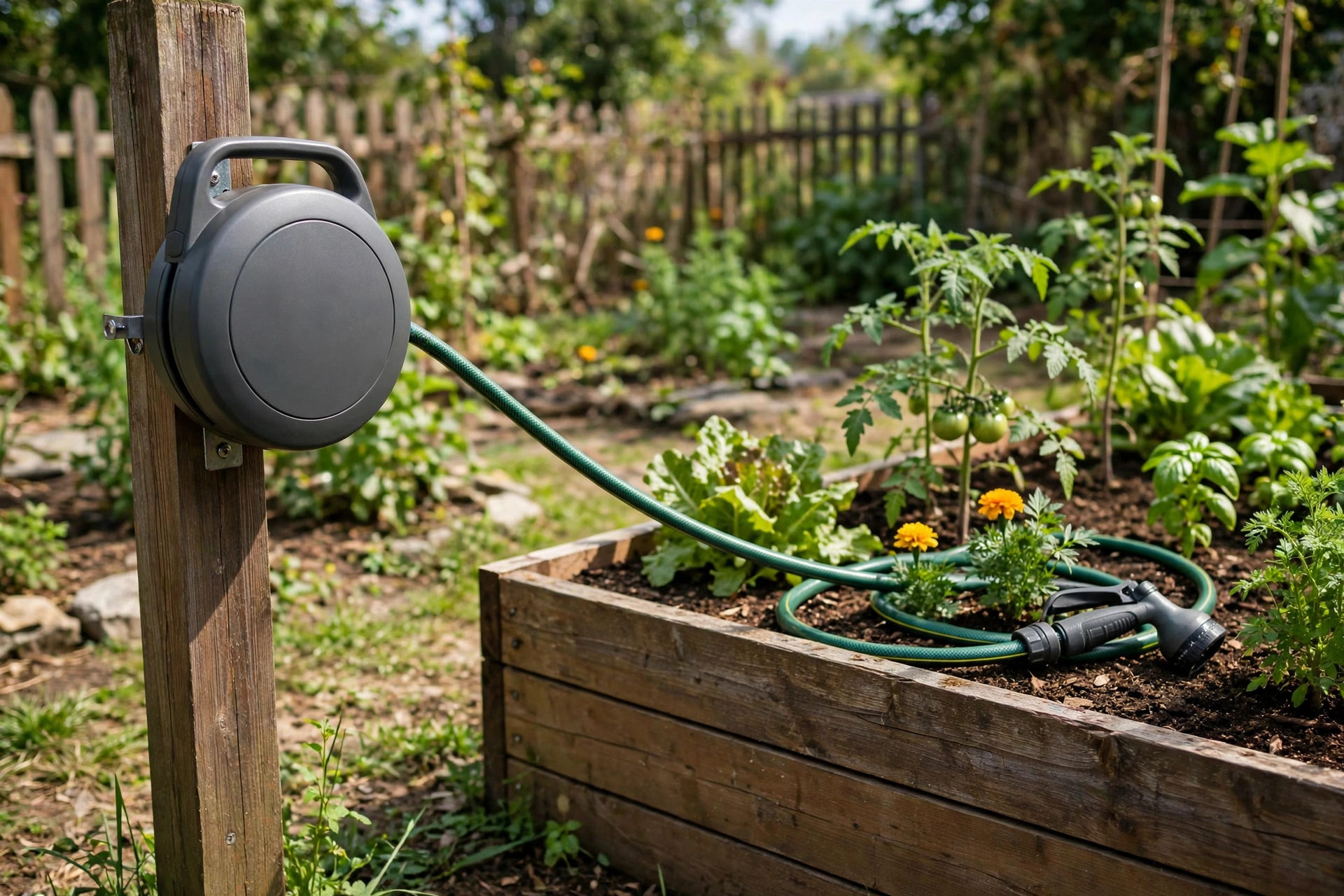
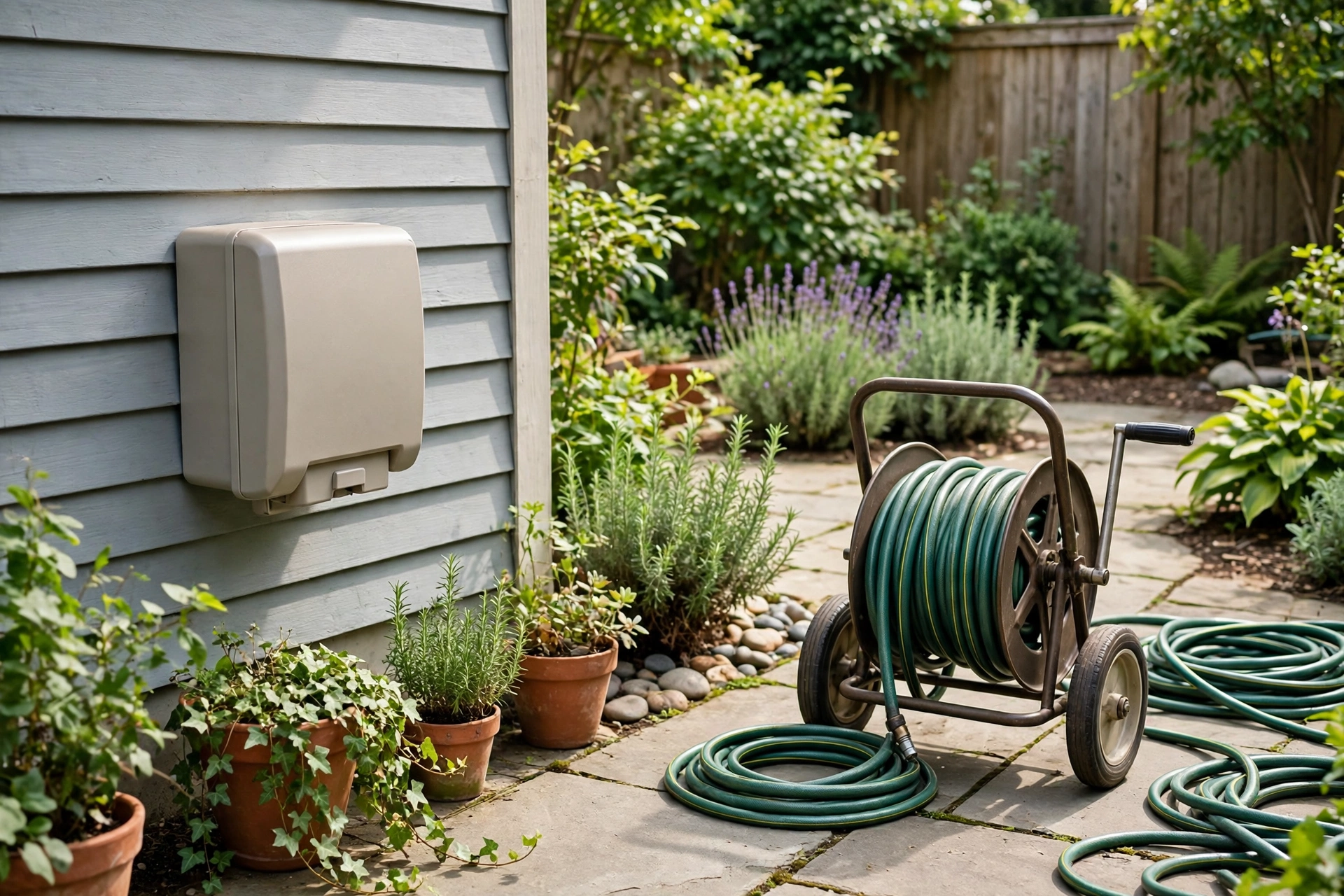
Leave the outdoor faucet open all winter so any trapped water has room to expand. If your hose lives on a reel, the reel choice changes the job — see best garden hose reels and wall-mounted vs retractable garden hose reels for which types should come inside and which can stay mounted, drained.
Bottom line
Drain it, coil it loose, store it inside, and leave the faucet open. Twenty minutes now saves a hose in spring.