The expensive version of this mistake is buying a vacuum to clear an open lawn. You walk every square foot twice, once to suck and once to empty the bag, when a blower would have pushed the whole mess to the curb in one pass.
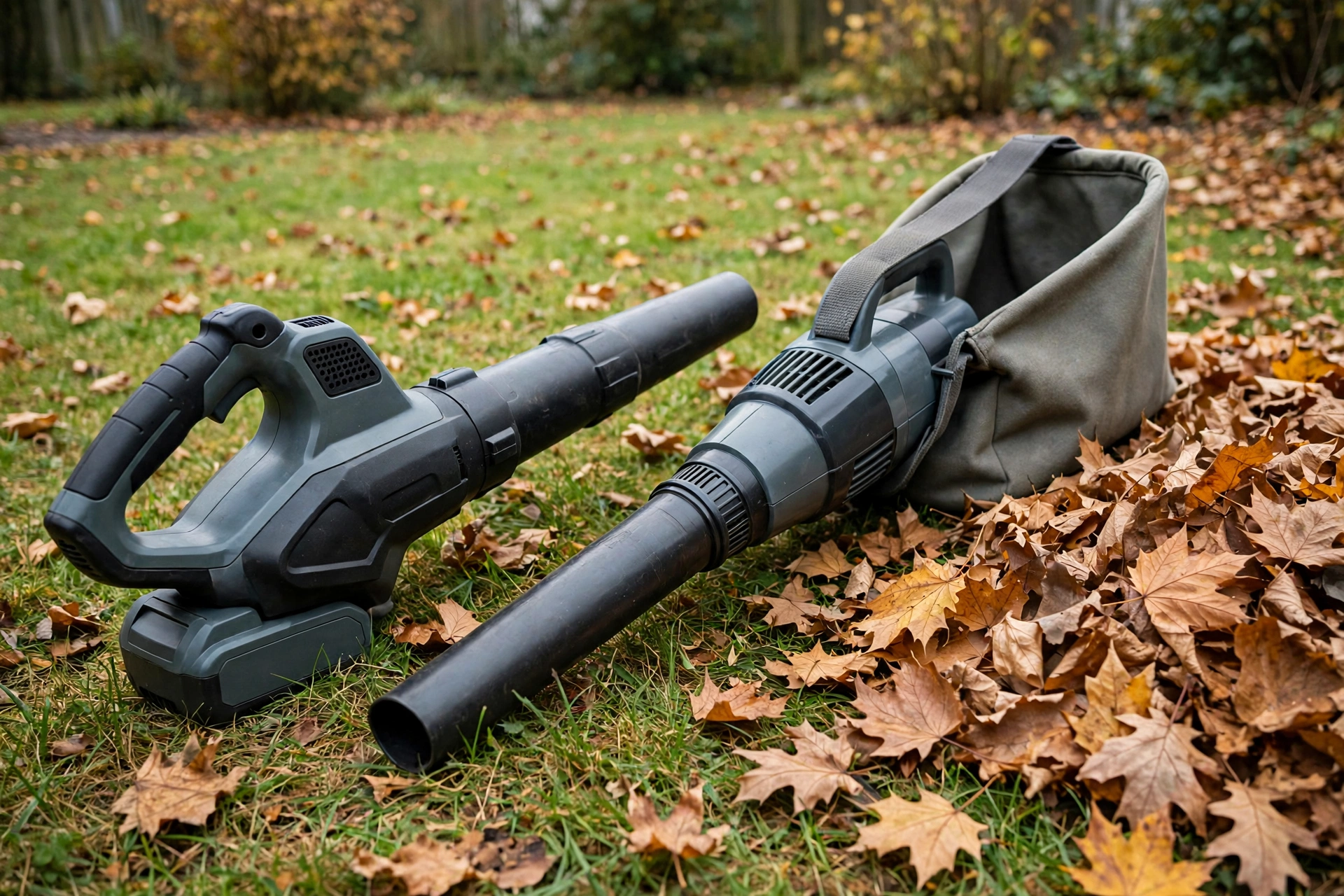
A leaf vacuum and a leaf blower do different jobs, and a small yard usually needs both of them at different moments. Where your leaves land decides which one you reach for.
The One Question That Decides It
Look at where the leaves end up. If most of them sit on open grass, the blower wins on speed every time: it moves a whole lawn of leaves into a pile in minutes, and you rake or bag the pile once. If most of them sit in beds, under shrubs, along fences, and in corners, the vacuum wins: a blower just pushes leaves deeper into the plants, while a vacuum pulls them out and shreds them on the way into the bag.
Most small yards have both. The lawn is open, and the edges are not. That is why the 3-in-1 blower-vacuum-mulcher exists, and why our best leaf vacuums for small yards roundup only recommends machines that do all three jobs.
When the Blower Wins
Open lawn, deep layer. A blower moves leaves across grass faster than any vacuum can pick them up. Work with the wind, push everything to one edge, and deal with a single pile instead of a whole yard.
Hard surfaces. Driveways, patios, decks, and sidewalks are blower territory. Nothing to suck up into a bag, nowhere for leaves to hide, and a blower clears them in a single pass.
Wet leaves on grass. A vacuum clogs on a wet, matted layer. A blower at least loosens it and pushes it into a pile, where it can dry enough to vacuum or bag.
Big area, small budget. A blower-only machine costs less than a blower-vacuum, and for a wide-open lawn it is all you need.
When the Vacuum Wins
Leaves in the beds. This is the vacuum’s real job. It pulls leaves out from under shrubs and groundcover without dragging a rake through the plants, and it shreds them as it collects, so one bag holds what would have been a dozen rake piles.
Corners and edges. Fence lines, foundation beds, and the strip behind the garage collect leaves a blower can only push around. A vacuum tube reaches in and takes them out.
When bagging is the plan. If your town charges per yard-waste bag, mulching matters: a vacuum that shreds 16 bags of leaves into one saves real money and real trips to the curb.
Small yards, one tool. On a small lot, the vacuum’s slower pace stops mattering, because the whole job takes twenty minutes either way. What matters is finishing with the leaves in a bag, not in a pile waiting for the wind.
Which Is Faster, Side by Side
| Situation | Faster Tool | Why |
|---|---|---|
| Open lawn, deep leaf layer | Blower | Pushes the whole lawn into one pile in minutes |
| Leaves packed in beds and under shrubs | Vacuum | Pulls leaves out and shreds them; a blower pushes them deeper |
| Patio, driveway, or deck | Blower | Hard surfaces clear in a single pass, nothing to bag |
| Wet, matted leaves | Blower first, then vacuum | Blower loosens the mat; vacuum collects it once it dries |
| Small yard, one tool only | 3-in-1 blower-vac | Blows the lawn, vacuums the beds, mulches the bag |
The Setup That Works on a Small Yard
Do it in this order. Blow the open lawn into a pile at the edge, and blow the hard surfaces clean. Then switch to vacuum mode and work the beds, the fence lines, and the corners, letting the mulcher shrink each bag as you go. Vacuum the pile last, if it is dry enough, or bag it as it lies.
That order is the whole trick. Blowing first means the vacuum only works where the blower cannot reach, which is the part of the yard that actually needs it. Vacuuming first means walking the whole lawn with a bag on your shoulder for no reason.
What to Do With the Leaves Once They Are Collected
A vacuum bag full of shredded leaves is more useful than a pile of whole ones. Shredded leaves make a better mulch and break down faster in a compost pile, which is why the vacuum earns its keep even on a yard small enough to rake. What to do with vacuumed leaves covers mulch, compost, and bagging in detail, including when bagging is the right call.
If pine needles are part of your fall mess, the same logic applies with a different tool: see the best leaf blower for pine needles and the complete pine needle cleanup guide.
Bottom Line
Buy the 3-in-1 and use it both ways: blower on the lawn and the hard surfaces, vacuum in the beds and the corners. A blower alone leaves you raking the edges by hand, and a vacuum alone wastes an afternoon on open grass. The combination is the fastest way through a small yard, because each half of the yard gets the tool built for it.