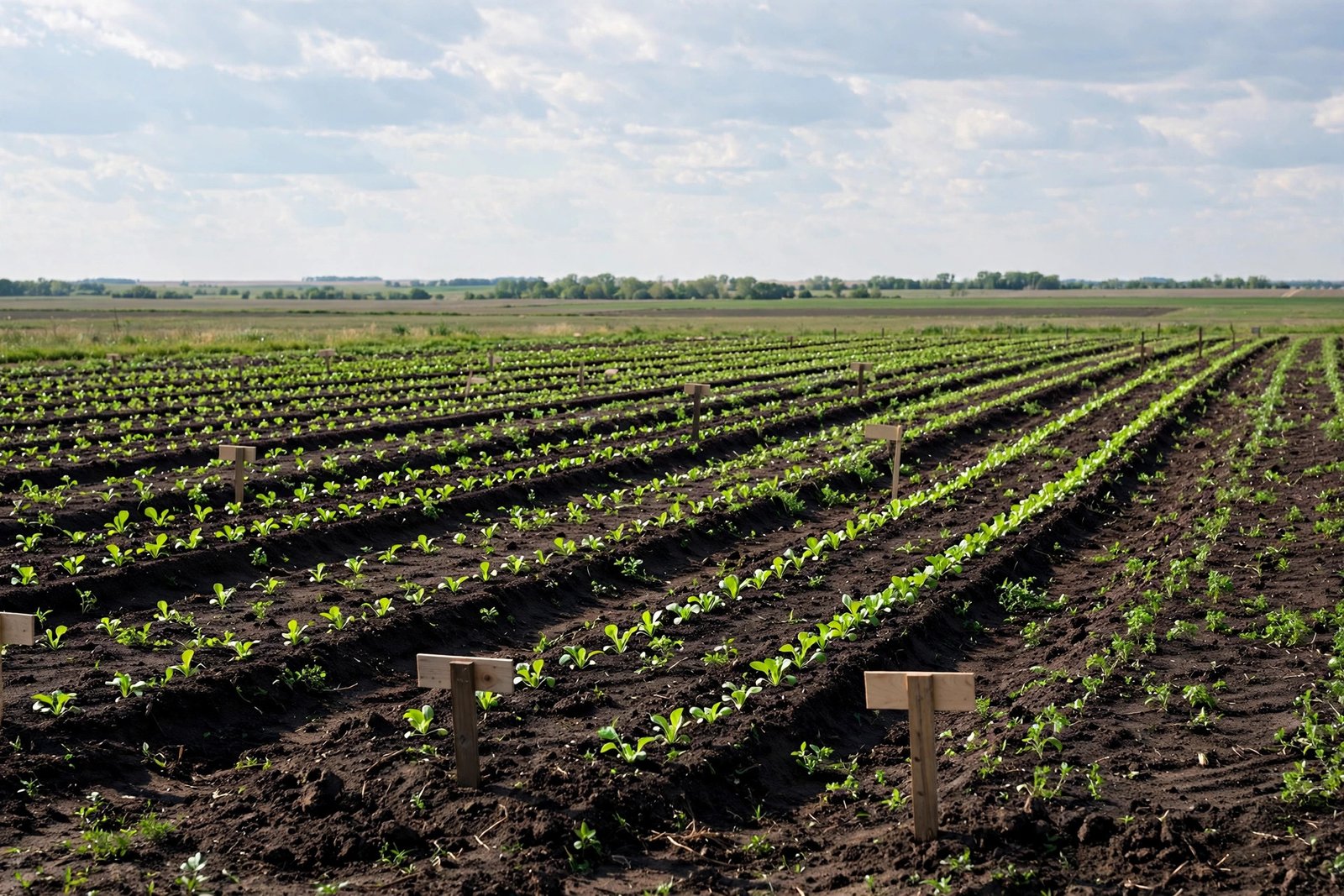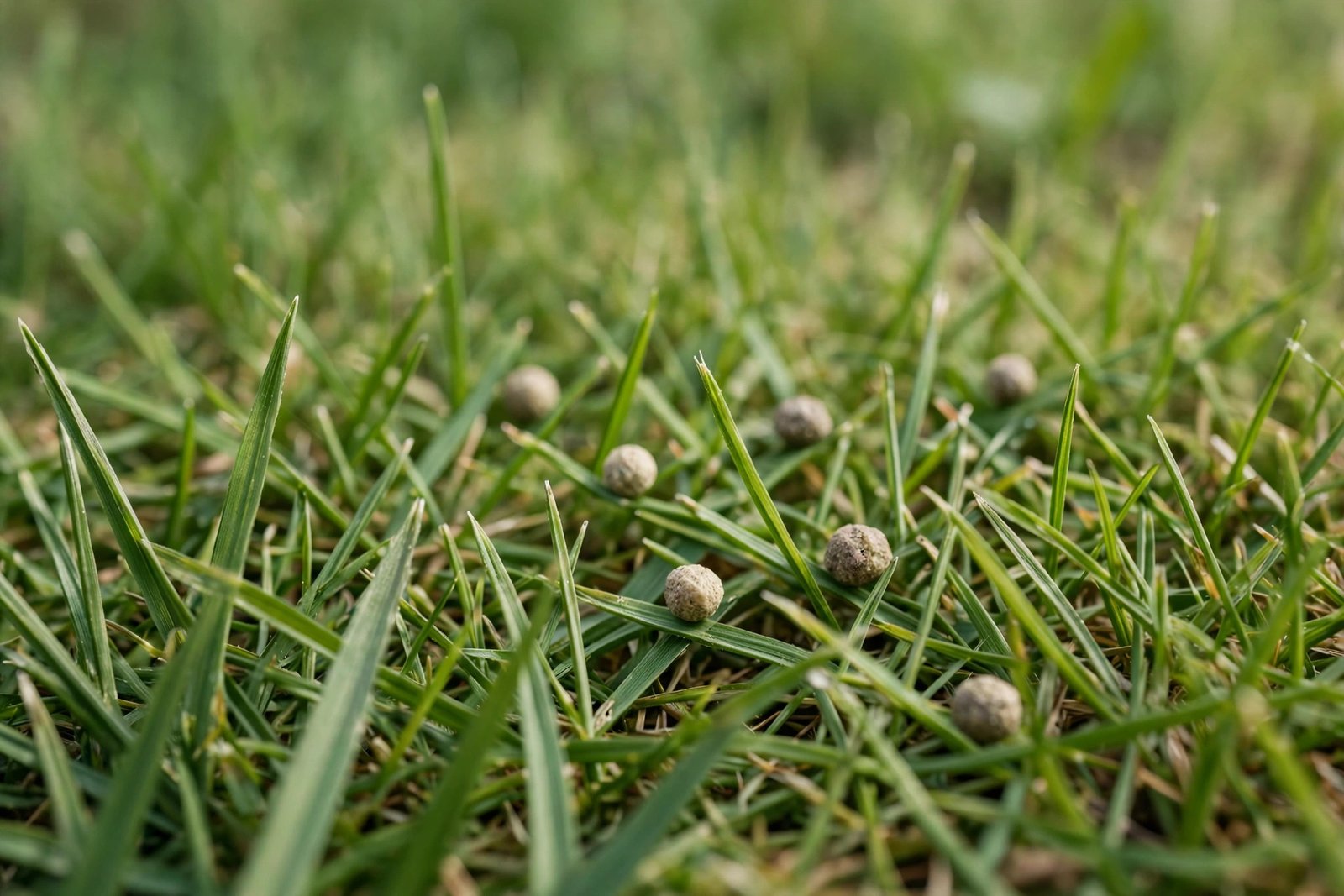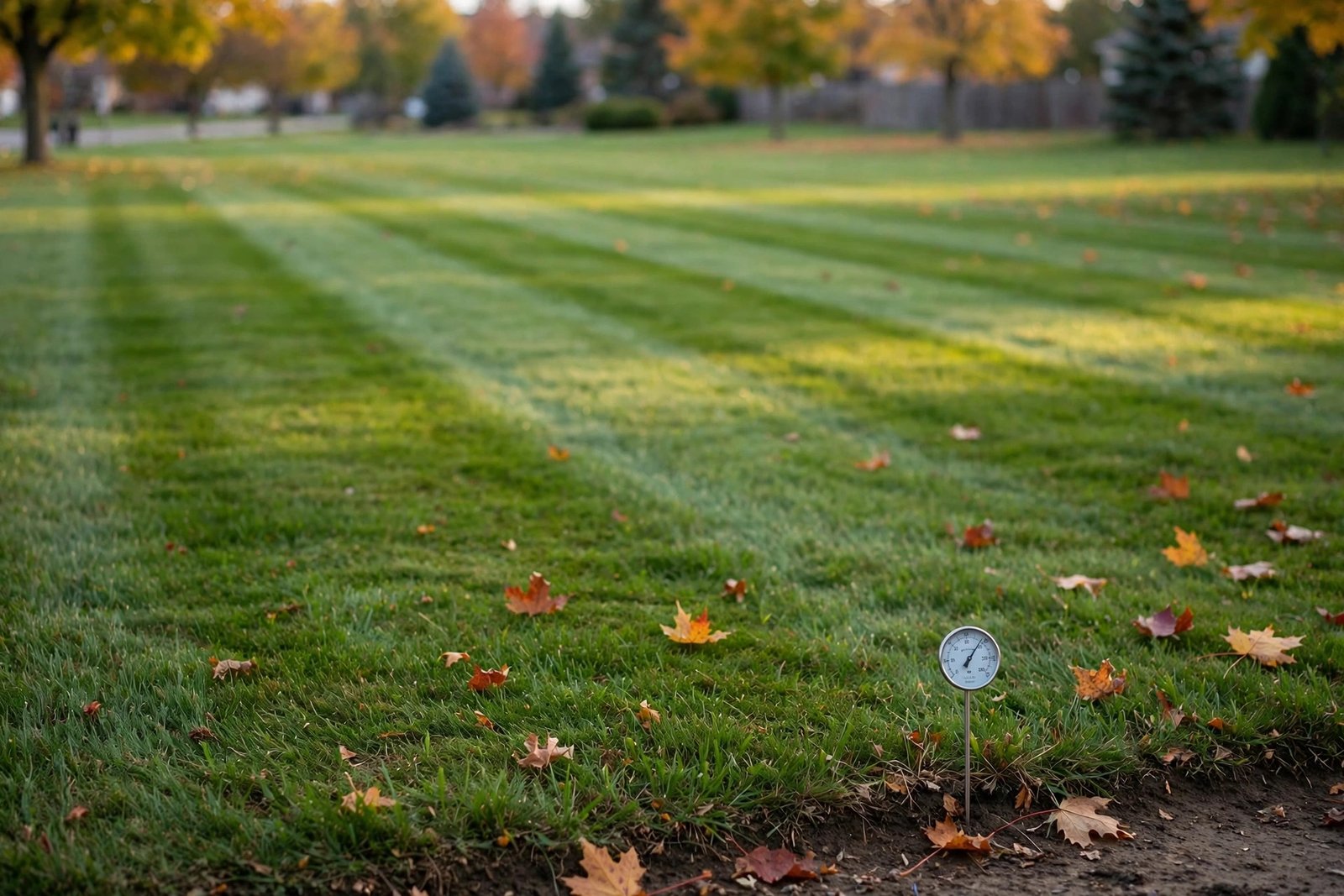
The Minnesota lawn care calendar below follows the University of Minnesota Extension lawn care calendar, the statewide schedule for cool-season turfgrasses, with the soil-temperature triggers that decide the exact week added in. Treat every date as a window, not an appointment: soil temperature overrules the calendar page, and fall work closes roughly two to three weeks earlier near Duluth than in the Twin Cities.
UMN Extension publishes this calendar as one statewide schedule. It does not split the state into bands. Where this page talks about north and south, the shift is derived from NOAA frost data and labeled as such (see “How the calendar shifts across Minnesota”). Always check product labels for their own timing; the calendar gives the season, and the label gives the rate.
The calendar at a glance
Best time is listed first and acceptable time second, following UMN’s own layout. September carries five best windows — more than any other month — which is why fall, not spring, is the main season for Minnesota lawn work.
| Activity | Best time | Acceptable time |
|---|---|---|
| Mowing | Last week of April through early November | — |
| Pre-emergence | Mid-April to mid-May, before crabgrass emerges | — |
| Post-emergence | Mid-May to early July, on small visible crabgrass | — |
| Sodding | Early May through June; mid-August to late October | Late June to 2nd week of August |
| Watering | May through late October | — |
| Seeding | Early August to late September; mid-November (dormant) | May through early June |
| Fertilizing | Early August through mid-October | May through late June |
| Aerating | Mid-August through mid-October | Late April through May |
| Dethatching | Mid-August through September | — |
| Broadleaf control | September through late October | May through late June |
Soil temperatures run this calendar
Cool-season grasses grow fast in spring and fall and rest through summer heat and drought. The roots tell the story: growth starts once soil passes 32°F, runs best between 50°F and 65°F, and can be damaged when soil passes 85°F. Shoots grow best when the air is 55°F to 75°F. Three of the numbers below are triggers for specific jobs, and two of them come with honest disagreements between UMN sources, stated in the open where they belong.
| Soil temperature | What it means | Job it gates |
|---|---|---|
| Above 32°F | Cool-season root growth is stimulated | Spring green-up begins |
| 50–65°F | Optimal root growth | The main root-growing seasons, spring and fall |
| 50–55°F, rising | Pre-emergent window opens (sources differ — see April) | Crabgrass preventer |
| Above 85°F | Roots can be damaged; growth slows | Summer rest — no fertilizer |
| Below 40–45°F | Too cold for seed to germinate this year | Dormant seeding (see November) |
March: wait, test, and prep
March is mostly a waiting month. The lawn is still dormant, and UMN Extension’s first rule of the season is a negative one: do not add fertilizer too early in the spring, when the grass should still be slow or dormant. Nothing on the calendar starts in March, and that is the point.
Use the month for the unglamorous prep. A soil test through the University of Minnesota Soil Testing Laboratory is what UMN’s fertilizing guidance points to before any application, because its nitrogen table keys the yearly amount to maintenance level and soil organic matter. Get the mower serviced and the blade sharpened. No pre-emergent yet: crabgrass does not develop until late spring, and the soil-temperature trigger in April is what decides timing, not the date on the bag.
April: the thermometer takes over
April is when the thermometer takes over. UMN’s calendar puts pre-emergence crabgrass control at mid-April to mid-May, before crabgrass comes out of the ground. But the precise gate is soil temperature, and UMN’s own sources do not agree on the number. Here is the disagreement, stated plainly.
An Ask Extension expert answer from February 2024 says crabgrass seed begins to germinate once soil temperatures pass 50°F, measured in the top 2 to 3 inches, and recommends applying once the soil reads 50°F or above. UMN Extension’s crabgrass page says to apply before soil temperatures reach approximately 55°F, and that germination begins at about 55°F. Turfgrass Science’s Sam Bauer puts soil near 55°F in the upper profile with germination at 60°F, and advises applying before soil temperatures reach 55°F in the upper 1 to 2 inches for several days. The practical reading: the window opens as soil passes 50°F and rises, and closes before it holds at 55°F in the upper inches. Measure your own soil rather than trusting a date. Bauer’s warning is blunt: applications made after crabgrass has germinated will not work.
Mowing starts in the last week of April. Set the deck at 3 inches or higher, and never remove more than one-third of the blade in a single mowing — at a 3-inch target, that means cutting when the grass reaches 4.5 inches, which runs about every 7 days for most of Minnesota. Taller grass needs less water and tolerates heat, insects, and disease better. If pine needles are down, mowing over pine needles is a separate question with its own answer. If fertilizer and preventer are going down together, read up on whether Milorganite and crabgrass preventer can be applied together before mixing the jobs — the timing of the two does not always line up.
May: mowing, watering, and the acceptable window
May is the busiest spring month, and also the month where restraint pays. Mowing is in full swing at 3 inches or higher. Pre-emergent runs through mid-May. Post-emergence control opens in mid-May for small, visible crabgrass; after early July it is ineffective in Minnesota, so the window is short. Watering opens for the season, May through late October: UMN’s Water Wisely guidance is to water deeply and infrequently, between 4 a.m. and 8 a.m., at a quarter inch to one inch per week minus rainfall — sandy soils two to three times a week with less volume each time, clay soils once a week.
Fertilizing is in its acceptable window (May through late June), but the schedule is fall-weighted on purpose: the best window is August through mid-October, and UMN warns against fertilizing too early in spring and in hot mid-summer months. A soil test comes first, and phosphorus goes down only if the test shows a need — Minnesota regulates phosphorus application to established lawns. For one common analysis, see our guide to 28-0-3 fertilizer. Sodding runs early May through June. Seeding in May through early June is acceptable but second-best; the best window is late summer. Broadleaf control is acceptable now, but September is better. And one job to skip: do not treat for grubs in spring. UMN Extension is direct that spring treatment rarely pays — the large grubs are hard to kill, feed briefly, and rarely cause spring damage.
June: heat arrives, and the grub decision
June is mowing and watering weather. Keep the deck at 3 inches or higher; taller turf shades its own soil, holds moisture, and crowds out crabgrass germination. In heat, roots can be damaged when soil passes 85°F, which is one more reason the taller cut matters. Water deeply and infrequently, and let the lawn tell you when it needs it rather than running a fixed schedule.
June into early July is the only preventive grub window, and only for lawns with a recent history of grub damage. UMN Extension notes that healthy turf can typically tolerate up to 10 grubs per square foot, so preventive treatment is insurance for lawns that have been hurt before, not a routine job. The fertilizing acceptable window ends in late June. After that, no fertilizer until August: UMN’s calendar is explicit that fertilizing in hot mid-summer months can cause irreversible damage. Sodding stays acceptable into the second week of August, but the better window is coming.
July: the quiet month
July is the quietest month on the calendar, and that is by design. Cool-season grasses slow down in heat and drought, and there is no fertilizing, seeding, or aerating window open. Keep mowing at 3 inches or higher and keep watering — during high summer, UMN Turf notes, irrigation often runs shallower and more frequent while root systems are shallow, then stretches back toward deep and infrequent as fall approaches.
Japanese beetle adults emerge in late June or early July and feed mainly through July and August. The preventive grub window closes in early July. Post-emergence crabgrass control ends in early July. Watch the lawn rather than working it: yellowing or browning patches in August are the early symptom of grub damage, and the check is to peel back the turf and look underneath before treating anything.
August: the season turns
August is when the lawn year pivots. Seeding opens in early August and runs to late September. Fertilizing opens in early August and runs to mid-October; UMN Turf still recommends putting one-half to two-thirds of the year’s nitrogen down in the fall. Aerating opens in mid-August and runs to mid-October, with late August to early October the best stretch. Dethatching opens in mid-August and runs through September. Sodding reopens in mid-August and runs to late October.
For aeration, UMN’s thatch guidance is specific: the aerifier must have hollow tines that bring cores to the surface, run it several times in different directions, and fertilize the lawn one week prior to aerification so the grass fills the holes faster. For product choices around that job, see our guide to fertilizer for a lawn after aerating. For thatch over half an inch, measured with a two-inch-deep wedge, a vertical mower is the removal tool; a light application of one-half to three-quarters of a pound of actual nitrogen per 1,000 square feet plus regular watering speeds recovery, and power-rake attachments to rotary mowers are not effective and not recommended. Grub control turns curative in late July through mid-September, while grubs are still half an inch or less.
September: the most important month
September carries five best windows on UMN’s calendar — seeding, fertilizing, aerating, dethatching, and broadleaf control — which makes it the most important month of the Minnesota lawn year. If only one month gets full attention, this is the one.
Seeding runs to late September. Fertilizing follows the soil-test timing splits: a single application goes down in early September, and split applications divide between mid-to-late August, September, and mid-October. Each application must not exceed 1 pound of nitrogen per 1,000 square feet, and UMN’s guidance is that up to half the nitrogen should be slow-release. Annual nitrogen runs one-half to 4 pounds per 1,000 square feet depending on maintenance level and soil organic matter, so the amount is a soil-test answer, not a bag-label answer. Aerating and dethatching continue on the August guidance. Broadleaf control opens its best window, September through late October — windows only; this page states no product or temperature guidance for it. Watering continues, and the goal coming into fall is stretching the interval between waterings so roots grow deeper. Curative grub treatment runs to mid-September; a fast-acting rescue treatment in September offers only partial control once grubs are near full size.
October: close it out properly
October finishes the fall windows. Fertilizing runs to mid-October, aerating to mid-October (earlier in the north), broadleaf control to late October, watering to late October, mowing to early November, and sodding to late October. Seeding does not extend into October on purpose: UMN Turf warns that seed put down in a mild October will often germinate before winter and be lost completely, and waiting for the dormant window in November is the better use of the seed.
Two closing jobs matter most. First, leaves: UMN Extension’s late-fall guidance says to remove fallen leaves and debris, which block sunlight and trap moisture that can suffocate the grass, and to expect several rounds before the yard is clear. Second, irrigation: if the lawn has a sprinkler system, winterize it now, emptying lines and blowing them out so pipes do not split. Once grubs have stopped feeding and moved downward in late fall, insecticides no longer work on them, so October is the end of grub season, not the start of it.
November: the last mow and the dormant window
November holds two jobs: the last mowing and dormant seeding. UMN Extension’s late-fall guidance says to mow a little shorter going into winter, but not lower than two inches — the shorter cut helps with leaf collection, lowers snow-mold risk, and reduces damage from voles, mice, and shrews. Bag those last clippings into the compost pile.
Dormant seeding is the calendar’s mid-November entry, and it means exactly what it says: seed spread when the soil is too cold for germination, to sprout with spring warm-up and snowmelt. UMN’s own sources state the trigger differently, so both are given here. Turfgrass Science says dormant seeding can take place after soil temperatures have dropped below 45°F for several days and before consistent snow cover, a window that usually arrives by early to mid-November in the Twin Cities. The Extension dormant-seeding page says it can be done any time soil temperatures are below 40°F, typically early November to mid-March for most of Minnesota. Sam Bauer’s rule of thumb is to wait for high daytime temperatures of 35°F to 40°F, generally mid- to end-November, with northern Minnesota able to seed sooner. The practical signal is the same in all three: soil too cold to sprout, seed worked slightly into unfrozen soil, and no irrigation or fertilizer at seeding time. Buy 10 to 20 percent extra seed for spring patching, and know the trade-off: most crabgrass pre-emergent herbicides cannot be used the following spring without harming the new seedlings.
A “winterizer” fertilizer may be mentioned on shelves now. UMN Extension notes these typically contain urea nitrogen and potassium, that their effectiveness can vary, and that if the lawn is not deficient in potassium the benefit may be minimal; phosphorus rarely needs adding in Midwestern soils. No fertilizer goes down on frozen ground. When the machines are done for the year, see how to winterize and store a lawn aerator before the shed door closes.
December through February: mostly hands off
UMN’s calendar has no December, January, or February entries, and this page invents none. No fertilizer, no mowing, no seeding except the dormant window itself: UMN’s dormant-seeding page puts that window at early November to mid-March, and early winter offers the best seed-to-soil contact through the freeze-thaw cycle, while late winter can still work. Seedlings that emerge early in spring may need hand watering if the spring runs warm and dry, since irrigation systems are often still off.
Winter is for planning and equipment. A soil test ordered now comes back in time to set the spring and fall schedule. The aerator gets its winterizing if November did not finish it. Everything else waits for soil temperatures to climb past 32°F and the calendar to start again in April.
How the calendar shifts across Minnesota
UMN publishes no north, central, and south versions of this calendar. The table below is NOAA frost data, reused from our Minnesota planting calendar build, and it is the reason fall windows close earlier in the north. The shift is derived from these dates and labeled as such — it is arithmetic on frost data, not an Extension-stated band rule. On these three stations, the first fall freeze arrives roughly two to three weeks earlier in Duluth and St. Cloud than in the Twin Cities, so a mid-October deadline in the south is an early-October deadline in the north. Rochester has no NOAA normals file we could locate, so the south is anchored on Minneapolis–St. Paul only.
| Station | Anchor station | Last spring freeze (50%) | First fall freeze (50%) | Frost-free days |
|---|---|---|---|---|
| Duluth | Duluth, MN (USW00014913, 1,428 ft) | May 13 | October 1 | 140 |
| St. Cloud | St. Cloud Regional Airport, MN (USW00014926, 1,018 ft) | May 7 | September 30 | 144 |
| Minneapolis–St. Paul | Minneapolis/St. Paul Airport, MN (USW00014922, 872 ft) | April 23 | October 18 | 176 |
Sources
Every date and number on this page traces to one of the sources below, all fetched in full in October 2026. Where UMN sources disagree, the disagreement is stated on the page rather than resolved silently. Two things this page deliberately does not state: a seeding rate (no current UMN figure was found) and broadleaf product or temperature guidance (only the calendar windows are verified).
- University of Minnesota Extension, Lawn care calendar (reviewed 2024) — the anchor table, the framing rules, and the growth-cycle thresholds.
- University of Minnesota Extension, Crabgrass (reviewed 2024) — pre-emergent timing at approximately 55°F.
- Ask Extension, 2024 Crabgrass Prevention (expert answer, February 29, 2024) — germination above 50°F, measured in the top 2 to 3 inches.
- UMN Turfgrass Science, “It’s time for preemergent applications” (Sam Bauer) — soil near 55°F in the upper profile, germination at 60°F.
- UMN Turfgrass Science, “Spring Preemergent Applications for Crabgrass” (Sam Bauer) — apply before 55°F in the upper 1 to 2 inches for several days; fertilizer timing mid-May to early June.
- UMN Turfgrass Science, “Still bagging your grass clippings?” (Jon Trappe) — the one-third rule, 3.0 to 4.5 inches about every 7 days, 4.0 to 6.0 inches about every 10 to 12 days, clippings returning nitrogen.
- University of Minnesota Extension, How to control thatch in your lawn (reviewed 2024) — the half-inch threshold, hollow tines, fertilize one week prior to aerification, vertical mowing.
- University of Minnesota Extension, Japanese beetles in yards and gardens (reviewed 2025) — grub treatment windows, the 10-grubs-per-square-foot tolerance figure, and no spring treatment.
- University of Minnesota Extension, Water Wisely (reviewed 2024) — a quarter inch to one inch of water per week minus rainfall, 4 a.m. to 8 a.m., mower at 3 inches or higher.
- UMN Turfgrass Science, Summer Turfgrass Update (Sam Bauer) — the one-inch-per-week rule of thumb, the fall nitrogen share, and summer irrigation shifts.
- UMN Turfgrass Science, “Now is the perfect time to dormant seed lawns in Minnesota” (Maggie Reiter) — the below-45°F trigger and the early-to-mid-November Twin Cities window.
- University of Minnesota Extension, Dormant seeding to establish or improve your lawn (reviewed 2025) — the below-40°F trigger, the November-to-March window, and 10 to 20 percent extra seed.
- UMN Turfgrass Science, “There’s Still Time to Dormant Seed Your Lawn” (Sam Bauer) — daytime highs of 35°F to 40°F, mid-to-end November, and the October seeding risk.
- University of Minnesota Extension, Late Fall Lawn Care (November 17, 2025) — the final mow no lower than two inches, leaf removal, vole risk, irrigation winterizing, and the winterizer caveat.
- University of Minnesota Extension, Fertilizing lawns (reviewed 2024) — annual nitrogen by maintenance level and soil organic matter, the 1-pound cap, and phosphorus guidance.
- University of Minnesota Soil Testing Laboratory, example soil test report — application timing splits, the 1-pound cap with the slow-release exception, and no fertilizer on frozen ground.
- NOAA NCEI U.S. Climate Normals 1991–2020, freeze data tables (50%-probability, 32°F), via Minnesota DNR-hosted copies — frost anchors for Duluth (USW00014913), St. Cloud (USW00014926), and Minneapolis–St. Paul (USW00014922), reused from the Minnesota planting calendar build.
One source was checked and deliberately not used: the UMN Yard and Garden News fall-maintenance article URL returned a 404, and a 2021 crabgrass article cited by the crabgrass page could not be read. Neither is cited above.