Most homeowners pick a shed the way they pick a paint color: whichever looks best in the photo. Then the weather votes, and the weather always wins. The right material is the one that survives your climate with the least work from you.
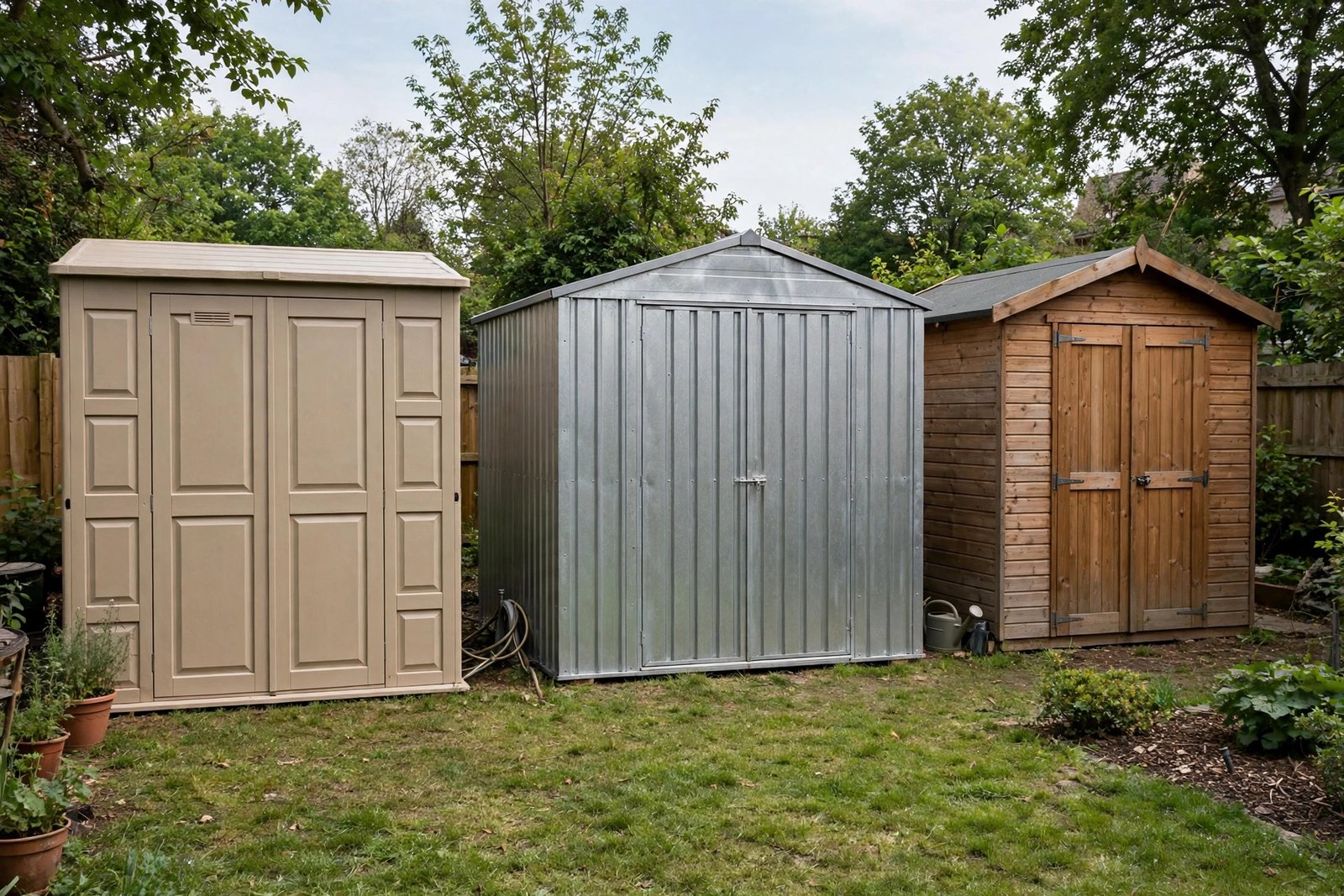
Here is the short version. Resin wins on upkeep. Metal wins on price. Wood wins on looks. The rest of this article is about where each one loses, because that is what decides whether you still like the shed in five years.
Resin: The Low-Upkeep Default
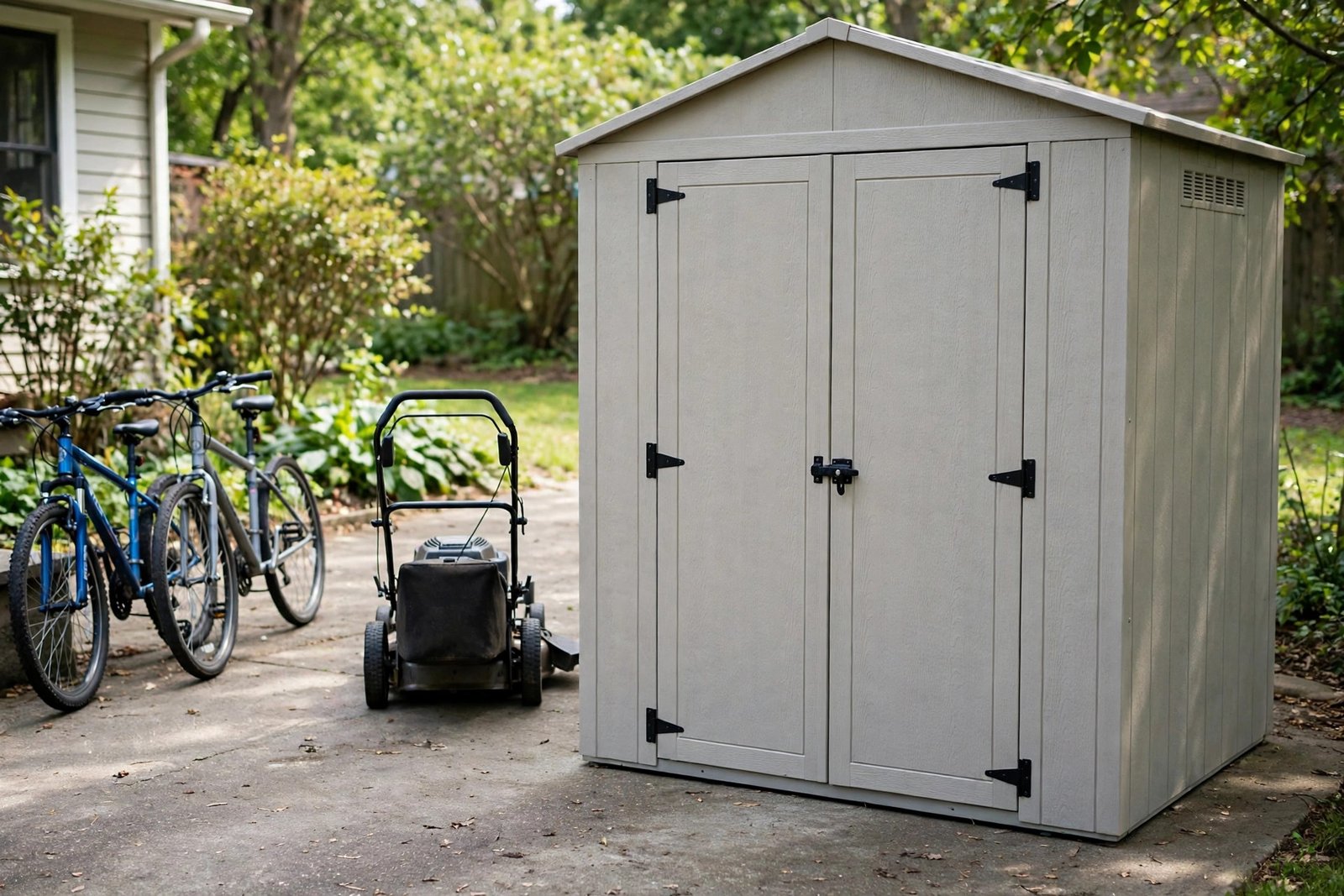
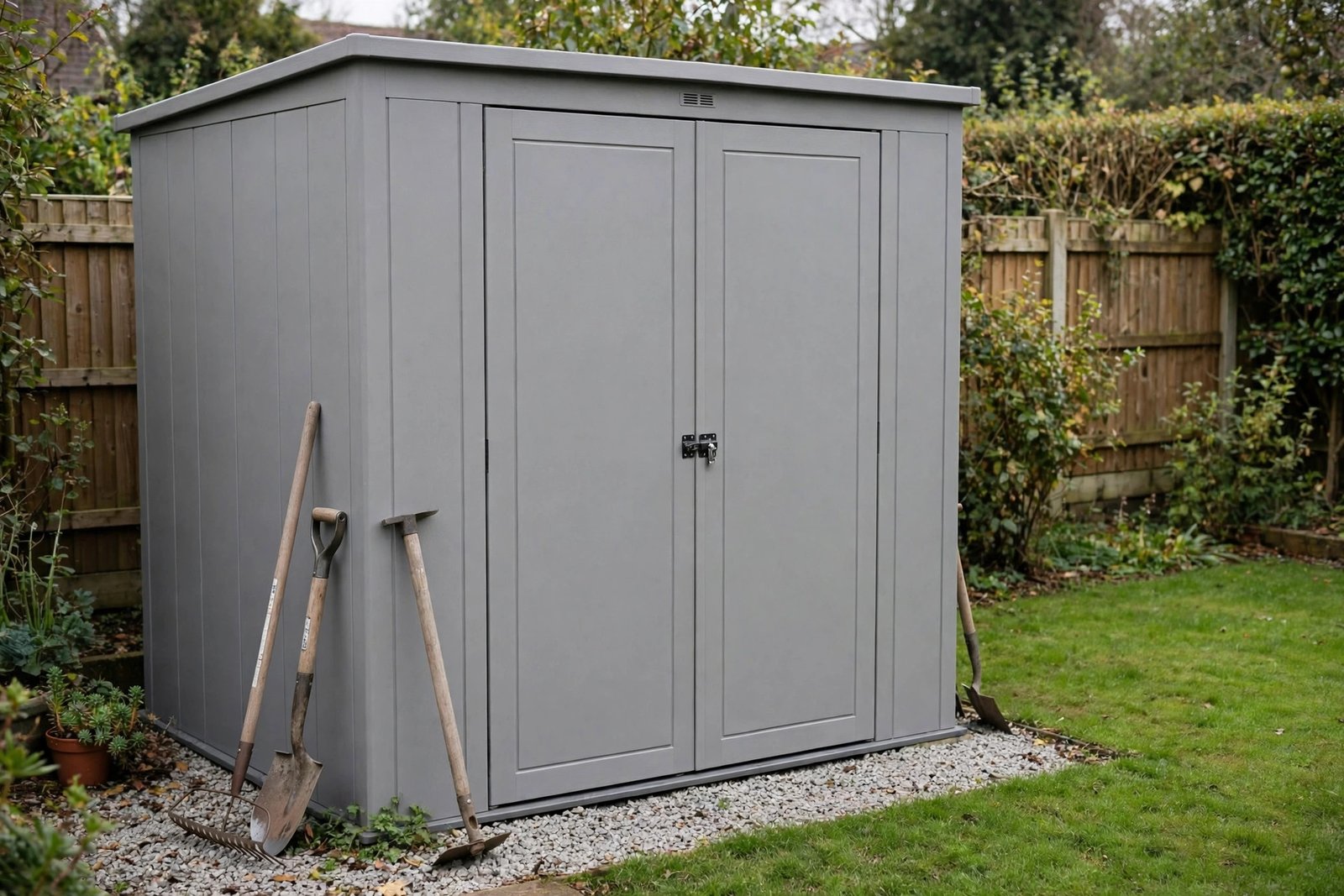
Resin sheds are polypropylene or polyethylene panels, often steel-reinforced, that will not rot, rust, or need paint. The Keter sheds in our resin shed roundup carry five-year to limited-lifetime warranties, and the material itself shrugs off rain, snow, and sun. Assembly is a panel-and-screw job, not a construction project.
Where resin loses: heat and heavy loads. Thin-walled resin can warp in sustained high heat, and a resin floor flexes under a riding mower unless the pad underneath is solid and level. Resin also resists customization — you cannot easily add a window, a loft, or a heavier shelf bracket to a molded wall.
Buy resin if you want a shed you assemble once and mostly ignore. It is the right call for most suburban yards.
Metal: The Cheap, Honest Box
Metal sheds, usually galvanized steel, are the cheapest way to get a roof over a mower. They assemble from flat panels, they do not rot, and insects ignore them. For a tight budget or a shed that mostly holds tools, metal is hard to beat on price per square foot.
Where metal loses: dents, condensation, and rust at the edges. A stray mower handle dents a thin steel wall, and that dent breaks the coating where rust starts. Uninsulated steel also sweats in spring and fall temperature swings, dripping condensation onto whatever sits below. In coastal or humid climates, that combination shortens the shed’s life fast.
Buy metal if the budget is tight, the climate is dry, and the shed’s job is simple storage. Skip it if you live where the air stays damp or the shed will take knocks.
Wood: The Best-Looking, Highest-Upkeep Choice
Wood sheds look like they belong in a garden, and they can be built or modified to any size. Need a wider door, a loft, a workbench wall? Wood takes screws, shelves, and changes of plan in a way molded panels never will. A well-built cedar or treated-pine shed, kept painted and off the ground, lasts decades.
Where wood loses: maintenance, full stop. Paint or stain every few years, or the boards check, warp, and invite rot at the base. Termites and carpenter ants treat an unmaintained wood shed as a buffet. Wood also costs more up front and takes longer to build than either alternative.
Buy wood if the shed is part of the garden’s look and you will actually maintain it. Do not buy wood if “low maintenance” was anywhere in your search.
At a Glance
| Material | Biggest win | Biggest loss | Best climate |
|---|---|---|---|
| Resin | No paint, no rot, no rust | Flexes under heavy loads; hard to modify | Most climates; avoid sustained extreme heat on thin walls |
| Metal | Lowest price per square foot | Dents, condensation, edge rust | Dry climates |
| Wood | Looks and customization | Paint, rot, and insects without upkeep | Anywhere, if maintained |
The table above uses the same card layout as the rest of the site, but the decision is simpler than the table: if you will maintain it, wood is beautiful. If you will not, resin is the honest pick. Metal is the budget pick that works until damp or dents catch up with it.
The Verdict
For most homeowners, resin lasts longest with the least effort. It is not the prettiest shed and not the cheapest, but it is the one still closing square and shedding water in year ten without a repaint. That is what “lasts longest” means in practice: not the material that could last longest in theory, but the one that actually does when nobody maintains it perfectly.
Whatever material you choose, size it first: what size storage shed you need walks through footprint, height, and door width before you order. And if the shed is for winter storage of cushions and furniture, pair it with our cushion storage guide so what goes inside comes back clean in spring.