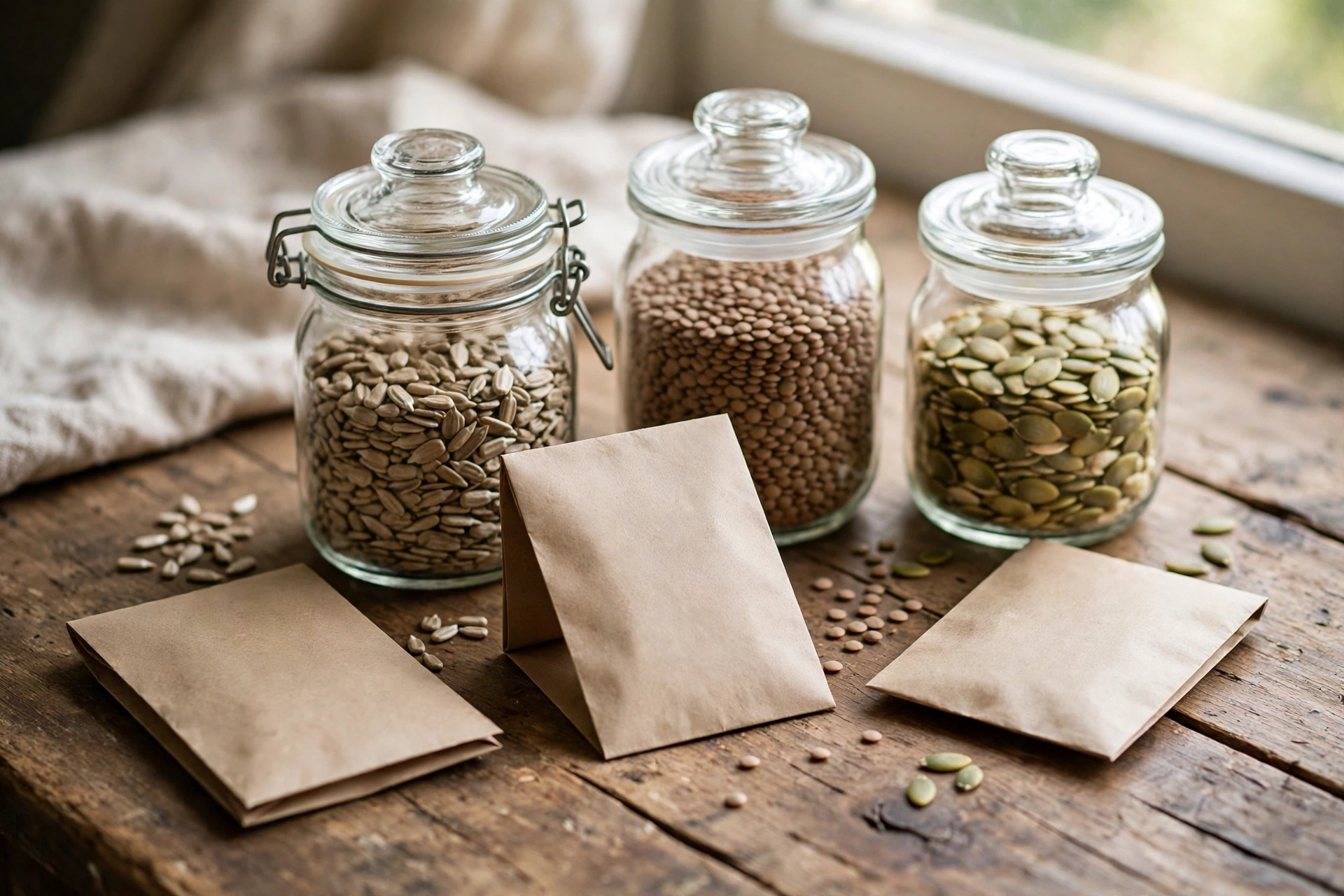
Well, friend, Mabel had the kitchen table covered in paper envelopes this week, and every one of them was labeled in her careful handwriting — Kentucky Wonder beans, Cherokee Purple, marigolds from Granny Mae’s bed — like she was filing away next summer one little packet at a time. She looked up at me over her glasses and said, “Buck, if we don’t save these now, we’ll be buying back our own garden come spring,” and she was right, the way she usually is.
Mama always said a garden that can’t feed itself twice isn’t much of a garden at all, and Granny Mae lived that rule like scripture. She kept her seeds in an old cigar box on the pantry shelf, each envelope marked with the year and the variety.
Now, don’t get me wrong. Saving seeds is not a magic trick, and it is not for every plant in the yard. The hybrids from the garden center will not grow true from saved seed. Plant their seeds and you will get a surprise, and not always a pleasant one. If you ask me, the trick is all in the placement: save seed from the open-pollinated and heirloom varieties, the ones that have been passing themselves down honestly for years, and leave the hybrids to the catalogs.
The Gospel of Good Seed
The easy ones are the ones Granny Mae started me on. Beans and peas do most of the work themselves — let a few pods dry right on the vine until they rattle, shell them out, and let them dry a few more days on a plate in the kitchen. Marigolds and zinnias are just as friendly: wait until the flower heads are dry and brown, crumble them into an envelope, and next year’s border is in your hand. Mabel says a marigold seed looks like a tiny striped arrow, and once you have seen one, you will never mistake it again.
Tomatoes ask a little more of you, but not much. The seeds come out of the fruit wearing a slippery jelly coat, and that coat needs to come off before the seed will store well. Folks who are particular about it let the seeds sit in a jar of water for a few days until the pulp ferments away, then rinse and dry them. Mabel’s shortcut is simpler — she spreads ours on a paper plate and lets them dry until they come off clean. Either way, the rule is the same: dry means dry. A seed that goes into an envelope still damp is a seed that will mold, and a moldy seed is just a sad little science experiment.
That is where the envelopes earn their keep. Paper breathes, and a seed needs to breathe the way we all do. A plastic bag traps whatever dampness is left and turns a good packet into a disappointment by February. So we use plain paper envelopes, write the variety and the year on the front — “Cherokee Purple, 2026” — and tuck them into that same kind of cool, dry spot Granny Mae used. A pantry shelf will do, anywhere out of the sun and away from the damp. And never save seed from a sick plant — whatever ailed the parent rides along to the next generation.
Come spring, the envelopes come out again, and that is when the whole habit pays for itself. There is a particular pleasure in pouring out seeds you gathered with your own hands. If you are new to starting from seed, the guide to starting seeds indoors with natural light will walk you through it without a single grow light. And if you are choosing which tomatoes to save from in the first place, the rundown of heirloom versus hybrid tomatoes explains why the heirlooms are the ones worth keeping.
A Final Thought
Saving seeds is not really about the money, though Lord knows a packet of seed is not getting any cheaper. It is about the thread. Granny Mae’s marigolds bloom in our beds now, and someday Bobby Ray’s kids will plant them too, and somewhere along the way the flowers stop belonging to any one summer and start belonging to the family. That is the thing about Southern living: the garden never really ends, it just changes hands.
So dry your pods, label your envelopes, and tuck them away like the treasures they are. The garden you save in November is the garden that greets you in April, and it will be glad to see you.
That’s all for now, folks.