Landscape & Leisure is reader-supported. When you buy through links on our site, including Botanical Interests seed links, we may earn a commission at no extra cost to you. Prices change, so click through to confirm current pricing.
Starting a vegetable garden for the first time is equal parts exciting and intimidating. The seed catalogs alone can feel like a final exam you didn’t study for. Here’s the good news: a handful of varieties are so forgiving, so eager to grow, that they practically guarantee a first-year win. We dug through Botanical Interests’ catalog — a seed company that’s been supplying home gardeners since 1995 — and picked the varieties we’d hand a brand-new gardener with total confidence.
How We Picked These Varieties
Every seed on this list passed the same three-question test. First: does it germinate reliably without special equipment? Second: can it survive a beginner’s mistakes — inconsistent watering, so-so soil, a week of neglect? Third: does it pay off fast enough to keep a new gardener hooked? We favored direct-sow varieties (no indoor setup required), open-pollinated and heirloom types that let you save seeds, and crops with genuinely short paths from packet to plate. For a deeper dive on the companies behind the seeds, see our Botanical Interests vs. Baker Creek vs. Johnny’s comparison.
Best Overall: Sugar Snap Snap Pea Seeds
If your garden grows only one thing this year, make it snap peas. Sugar Snap peas germinate in cool spring soil when most vegetables are still waiting for warmth, the vines climb a simple trellis (or even a fence), and the payoff — crisp, sweet pods eaten standing right in the garden — is the fastest motivation a beginner can get. Kids who won’t touch vegetables will eat these like candy, which tells you everything about their garden value.
Direct-sow as soon as your soil can be worked in spring; peas actually prefer the cool. Give them something to climb and pick pods often — frequent harvesting keeps the vines producing.
Sugar Snap Snap Pea Seeds — Botanical Interests
The most forgiving first crop you can plant: cool-soil germination, simple trellis, and a harvest sweet enough to eat off the vine.
Best First Tomato: Cherokee Purple Pole Tomato Seeds
Every new gardener wants tomatoes, and Cherokee Purple is a worthy first one: a dusky, smoky-flavored heirloom that tastes nothing like a grocery-store tomato. The catch is honest — it’s an indeterminate (pole-type) tomato, meaning it keeps growing all season and needs a sturdy stake or cage. That’s the one piece of infrastructure a beginner tomato requires, and it’s worth it.
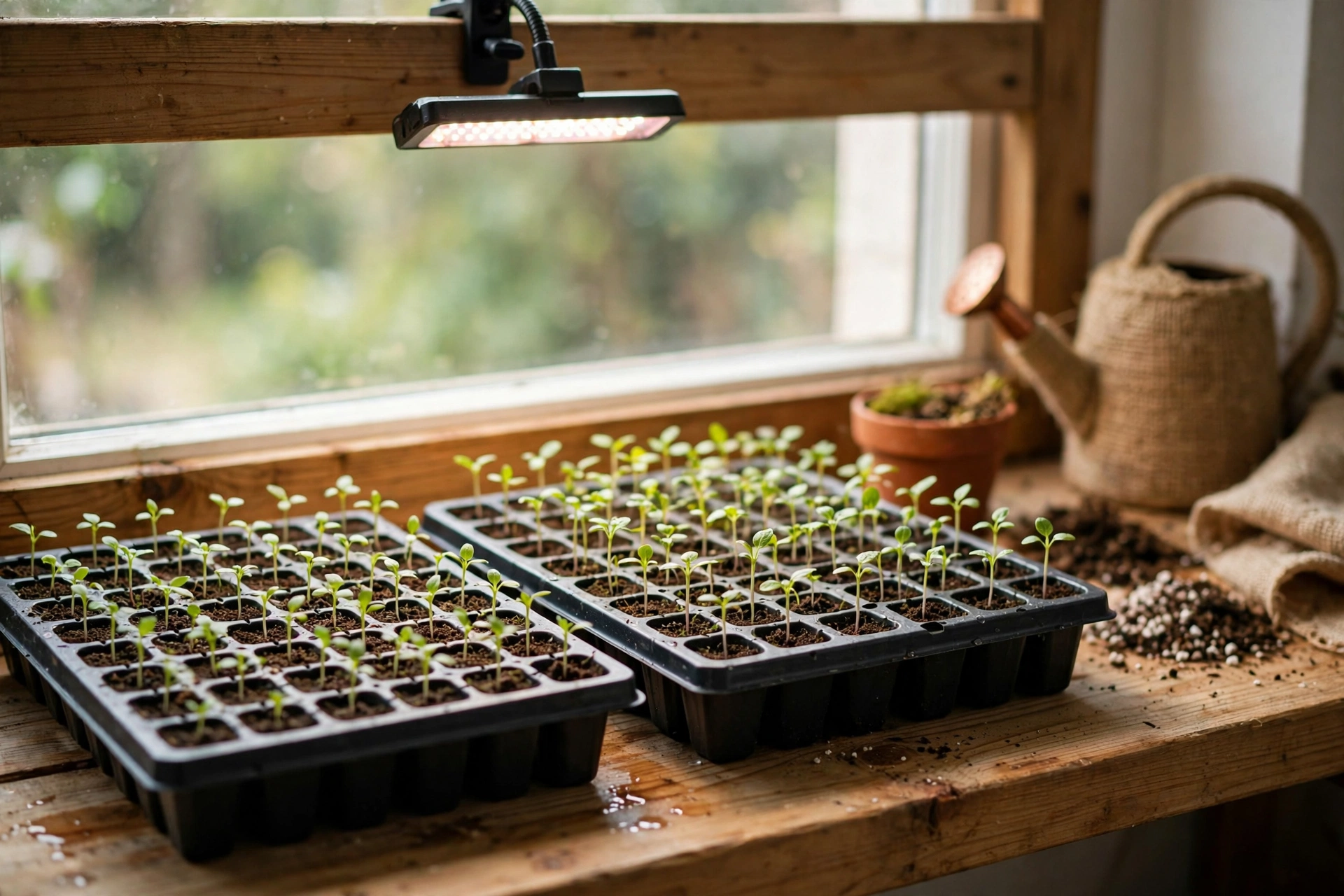
Start seeds indoors 6–8 weeks before your last frost (our seed-starting guide walks through the whole process), or buy a transplant locally and save seed-starting for year two. Either way, give each plant 2–3 feet of space and mulch the base to keep soil from splashing onto leaves.
Cherokee Purple Pole Tomato Seeds — Botanical Interests
A legendary heirloom with rich, smoky flavor — the tomato that ruins store-bought tomatoes for you forever.
Easiest Greens: Buttercrunch Butterhead Lettuce Seeds
Lettuce is the closest thing gardening has to instant gratification: sow it, and you’re harvesting leaves in weeks, not months. Buttercrunch forms soft, buttery heads, but here’s the beginner trick — you don’t have to wait for heads. Sow thickly, snip outer leaves as “cut and come again” greens, and the plants keep producing. Sow in early spring and again in late summer; lettuce bolts (goes bitter) in summer heat, so timing matters more than technique.
Buttercrunch Butterhead Lettuce Seeds — Botanical Interests
Sow it, snip it, and it grows back — the fastest path from packet to salad bowl on this list.
Best Root Crop: Danvers 126 Carrot Seeds
Carrots have a reputation for being fussy, and that reputation is half-earned: they demand loose, stone-free soil and consistent moisture while germinating (up to three weeks). But Danvers 126 is the classic beginner-friendly carrot for a reason — it was bred for heavier soils where daintier varieties fork and sulk. Work the bed deep, keep it evenly moist with a board or burlap over the row until sprouts appear, and thin ruthlessly. The first sweet, crunchy carrot you pull is a core gardening memory.
Danvers 126 Carrot Seeds — Botanical Interests
A classic variety bred to perform in less-than-perfect soil — the most forgiving way to learn root crops.
Biggest Harvest per Plant: Black Beauty Summer Squash Seeds
Plant two Black Beauty zucchini hills and you will be giving squash to neighbors by midsummer — that is a promise, not an exaggeration. Summer squash is absurdly productive, germinates fast in warm soil, and asks for almost nothing beyond space and water. The beginner mistake is planting too much of it. Two plants feed a family; six plants become a part-time job. Direct-sow after all frost danger has passed, and harvest fruits small — the smaller they are, the better they taste.
Black Beauty Summer Squash Seeds — Botanical Interests
Two plants, a mountain of zucchini — the highest yield-per-effort crop a beginner can grow.
Best Herb: Italian Genovese Basil Seeds
Every vegetable garden deserves one herb, and basil is the one. Genovese is the classic pesto basil — sweet, aromatic, and perfectly timed to peak alongside your tomatoes. Start it indoors or direct-sow after frost; either way, the one rule is to pinch: snip the growing tips regularly and never let it flower, and one plant becomes a bush. If you grew tomatoes, you already know what to do with the harvest.
Italian Genovese Basil Seeds — Botanical Interests
The classic pesto basil that peaks right alongside your tomatoes — pinch it often and it just keeps giving.
Best One-Box Start: The Beginner’s Garden Seed Bundle
If choosing individual varieties feels like too many decisions, Botanical Interests sells a curated Beginner’s Garden bundle — a box of easy, reliable varieties selected for new gardeners. Buying a bundle is the lowest-decision way to start: someone already did the variety homework for you. It’s also a genuinely good gift for the friend who keeps saying they want to start a garden.
The Beginner’s Garden Seed Bundle — Botanical Interests
A curated box of easy varieties that removes every decision — the lowest-friction way to start your first garden.
Runner-Up: Spacemaster 80 Cucumber Seeds
Standard cucumbers sprawl like they own the place, which is a problem in a small first garden. Spacemaster 80 was bred for compact vines — it behaves in a container or a modest bed while still producing full-size slicing cucumbers. If space is your constraint, this is the cucumber to start with. One honest note: like all cucumbers, it wants consistent water once fruits start sizing up, or bitterness creeps in.
Spacemaster 80 Cucumber Seeds — Botanical Interests
Compact vines, full-size cucumbers — the small-space answer to the cucumber sprawl problem.
Beginner Picks at a Glance
| Variety | How to sow | Why beginners love it | Watch out for |
|---|---|---|---|
| Sugar Snap pea | Direct sow in cool soil | Fast, sweet, kid-approved harvest | Needs a trellis or fence |
| Cherokee Purple tomato | Indoors 6–8 wks before frost | Legendary flavor; open-pollinated | Needs staking; indeterminate |
| Buttercrunch lettuce | Direct sow, spring & late summer | Cut-and-come-again in weeks | Bolts in summer heat |
| Danvers 126 carrot | Direct sow, keep evenly moist | Tolerates heavier soils | Slow to germinate; thin seedlings |
| Black Beauty squash | Direct sow after frost | Enormous yield per plant | Needs space; don’t overplant |
| Genovese basil | Indoors or direct sow after frost | Pairs with tomatoes; pinch to bush out | Don’t let it flower |
| Spacemaster 80 cucumber | Direct sow after frost | Compact vines for small spaces | Needs steady water for sweet fruit |
One to Skip Until Year Two: Sweet Peppers
Peppers are wonderful, but they’re the divas of the beginner garden: they want real warmth to germinate, a long season to ripen, and patience most first-year gardeners haven’t developed yet. If your heart is set on them, Botanical Interests’ Golden Cal Wonder is a fine heirloom choice — just start it indoors early on a heat mat and treat it as your stretch goal, not your foundation crop.
Final Thoughts
A first garden doesn’t need to be ambitious — it needs to be successful. Pick three or four varieties from this list, give them sun and consistent water, and you’ll spend the summer eating proof that you can do this. Next year, you can get fancy. For now, peas, lettuce, and squash will make you look like you know what you’re doing — and by August, you actually will. Ready to start some indoors? Our beginner’s seed-starting guide covers trays, timing, and the hardening-off step most people skip. And if you’re planning the watering side too, see our drip irrigation roundup for vegetable gardens.