For homeowners managing larger properties, dethatching by hand—or even with a small electric machine—quickly becomes impractical. Thick thatch doesn’t just slow down spring growth; it makes every other lawn care effort less effective.
That’s where tow-behind dethatchers come in. Pulled behind a riding mower or lawn tractor, these tools cover wide areas efficiently, lifting deep layers of thatch that smaller machines simply can’t reach.
When chosen and used correctly, a tow-behind dethatcher can reset a lawn in a single afternoon.
Who Should Use a Tow-Behind Dethatcher
Tow-behind dethatchers are best suited for homeowners who:
- Own a riding mower or lawn tractor
- Maintain medium-to-large lawns
- Deal with heavy or neglected thatch
- Prefer mechanical solutions over repeated manual work
They’re especially effective on lawns that haven’t been dethatched in several years, or where organic debris builds up faster than it breaks down.
How Tow-Behind Dethatchers Work
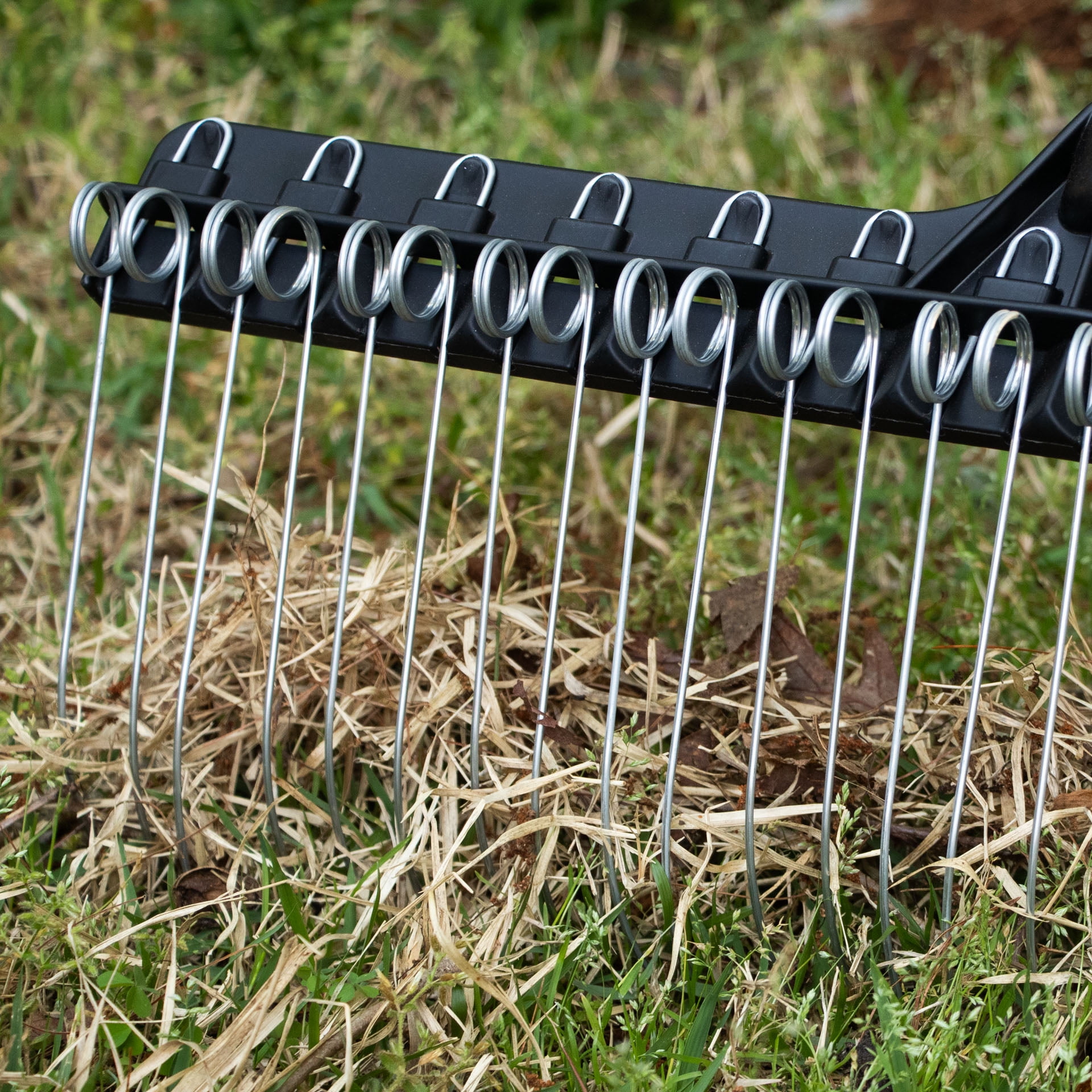
Tow-behind dethatchers use rows of spring-steel tines to rake through the lawn surface as the mower moves forward. Adjustable weights or tension settings control how aggressively the tines penetrate the turf.
Unlike powered dethatchers, tow-behind models rely on consistent ground contact rather than motorized force. This makes them:
- Durable
- Simple to maintain
- Well suited for large, open areas
Their effectiveness comes from coverage and consistency rather than speed or power.
What to Look for in a Tow-Behind Dethatcher
Before choosing a model, focus on these practical features:
Width
Wider dethatchers (48–52 inches) reduce total passes, but narrower models maneuver better around obstacles.
Tine Quality
Look for hardened spring-steel tines that flex without bending permanently.
Weight Capacity
Additional weight improves tine penetration, especially in compacted soil.
Hitch Compatibility
Most models fit standard lawn tractors, but adjustable hitches offer better versatility.
The Best Tow-Behind Dethatchers Available
Best Overall Tow-Behind Dethatcher
Agri-Fab 48-Inch Tow-Behind Dethatcher
This model strikes an excellent balance between durability, coverage, and ease of use. It’s widely used by homeowners and property managers alike.
Why it performs well:
- Consistent tine penetration
- Straightforward height adjustment
- Durable construction
It’s particularly effective when paired with a lawn sweeper for debris removal.
Best Heavy-Duty Option
Brinly DT-48BH Tow-Behind Dethatcher
Brinly equipment is known for long-term reliability, and this dethatcher is no exception.
Why it stands out:
- Heavy-duty tines
- Stable frame design
- Excellent performance on thick thatch
This is a solid choice for homeowners who dethatch infrequently but want strong results when they do.
Best Budget Tow-Behind Dethatcher
Agri-Fab 40-Inch Tow-Behind Dethatcher
For slightly smaller yards or tighter budgets, this model delivers reliable performance without unnecessary extras.
Why it works:
- Narrower width improves maneuverability
- Same proven tine system as larger models
- Lower upfront cost
How to Use a Tow-Behind Dethatcher Effectively
Technique matters more than speed.
- Mow slightly lower before dethatching
- Start with minimal weight
- Make one pass and inspect results
- Increase aggressiveness gradually
- Avoid tight turns that can stress tines
Multiple light passes produce better results than a single aggressive attempt.
What to Do After Tow-Behind Dethatching
Tow-behind dethatching pulls up significant debris. Leaving it on the lawn can smother new growth.
Most homeowners follow up with:
- Lawn sweeping or raking
- Core aeration, if soil is compacted
- Overseeding to improve density
- Starter fertilizer to support recovery
Tow-behind dethatchers pair especially well with tow-behind lawn sweepers, creating an efficient spring renovation workflow.
Is a Tow-Behind Dethatcher Worth the Investment?
For larger properties, the answer is often yes.
While more expensive than electric models, tow-behind dethatchers cover far more ground in less time and can be reused for years. For homeowners who would otherwise hire seasonal services, they often pay for themselves surprisingly quickly.
Final Thoughts
Tow-behind dethatchers aren’t delicate tools—they’re practical ones. Designed for coverage and consistency, they excel where smaller machines fall short.
For homeowners managing large lawns with persistent thatch, they offer one of the most efficient ways to restore lawn health and simplify spring maintenance.