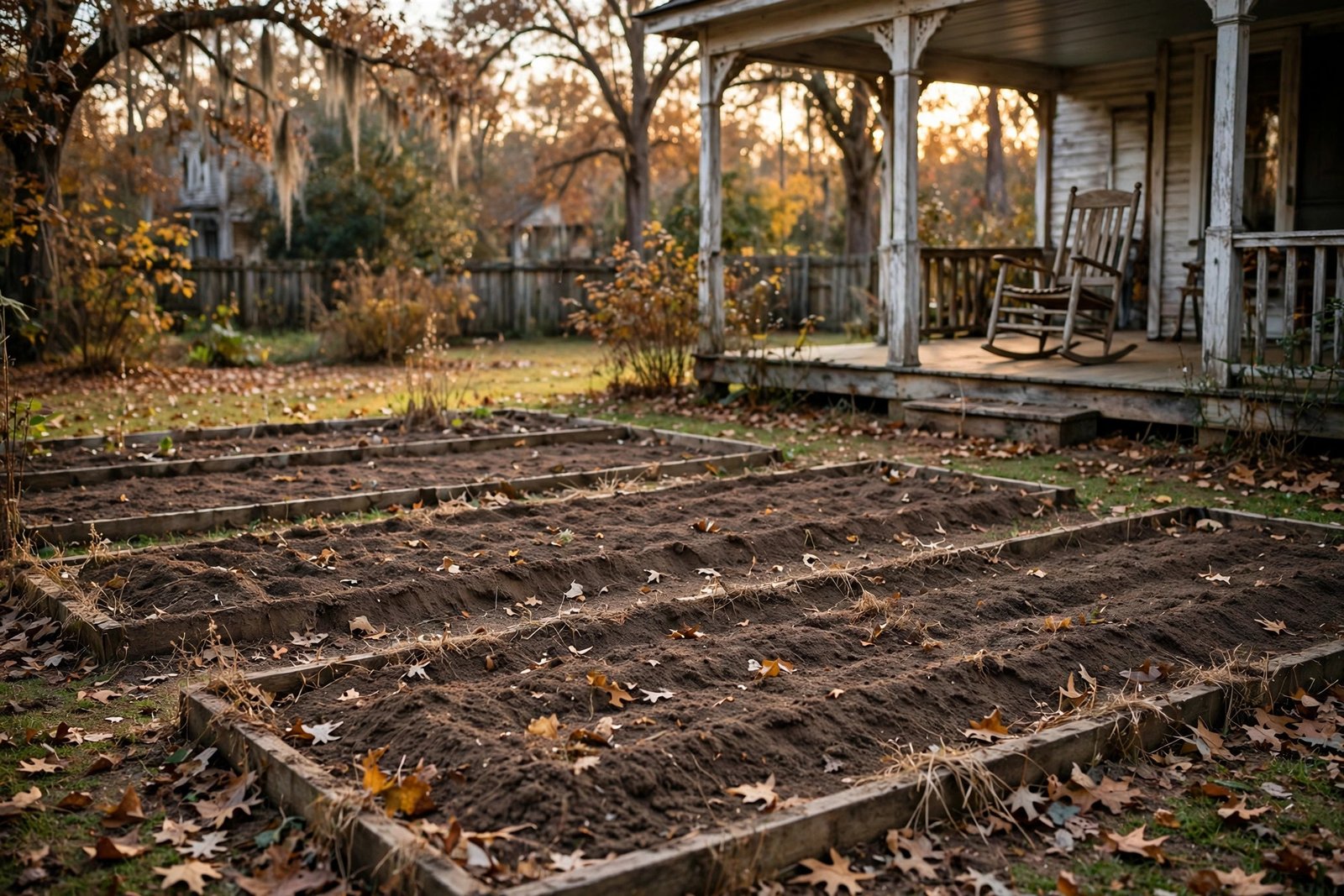
Earl leaned over the fence the other morning, coffee gone cold in his mug, and surveyed my garden like a man saying goodbye at a train station. “Buck,” he said, “it looks like your garden has given up.”
I laughed, because Earl has never been one to let a quiet moment pass without announcing it. But I knew what he meant. The tomatoes had gone leggy and tired. The okra stood tall and bare, like it was waiting for somebody to tell it the party was over. Even the zinnias, which had carried on all summer like they owned the place, had finally started to droop.
Mama always said a garden tells you when it is done, if you will only listen. She did not mean it had failed. She meant it had finished its work for the year, and it was time for us to do ours, which is mostly to leave it alone with a little grace.
The Porch Gets Quiet, Too
That is the thing about Southern living. We measure the seasons less by the calendar and more by the porch. In June, that porch swing never stops. In late October, Mabel brings out the quilt, and Bobby Ray stops asking if the tomatoes are ready yet, because even Bobby Ray can read a room, or in this case, a vine.
Granny Mae used to say October was the garden’s sigh. Not a complaint, mind you. A sigh like you let out after a good meal, when the dishes can wait and the company is still at the table. I reckon she was right. A garden that has fed you all summer deserves a proper farewell, not a scolding for slowing down.
Uncle Roy, who never met a chore he could not turn into a story, used to walk his rows in October just to thank them. I thought that was foolish when I was young. Now I find myself doing the same thing, only quieter, and hoping Mrs. Patterson next door does not catch me talking to the rosemary.
Putting the Garden to Bed, Southern Style
If you ask me, the trick is not to fuss the garden back to life. The trick is to help it rest well. I pull the spent annuals, but I leave the seed heads on the coneflowers a while longer. The birds need them, and on a cold morning there is nothing prettier than a goldfinch having breakfast in a garden you thought was done.
While I have the shovel out, I take a look at what has outgrown its welcome. Fall is a fine time for dividing ornamental grasses and other perennials that have gotten too big for their britches, and a divided plant shared with a neighbor is worth more than any store-bought gift. Mabel wrapped up three clumps for Aunt Marlene last year, and Aunt Marlene is still telling that story like it was a wedding present.
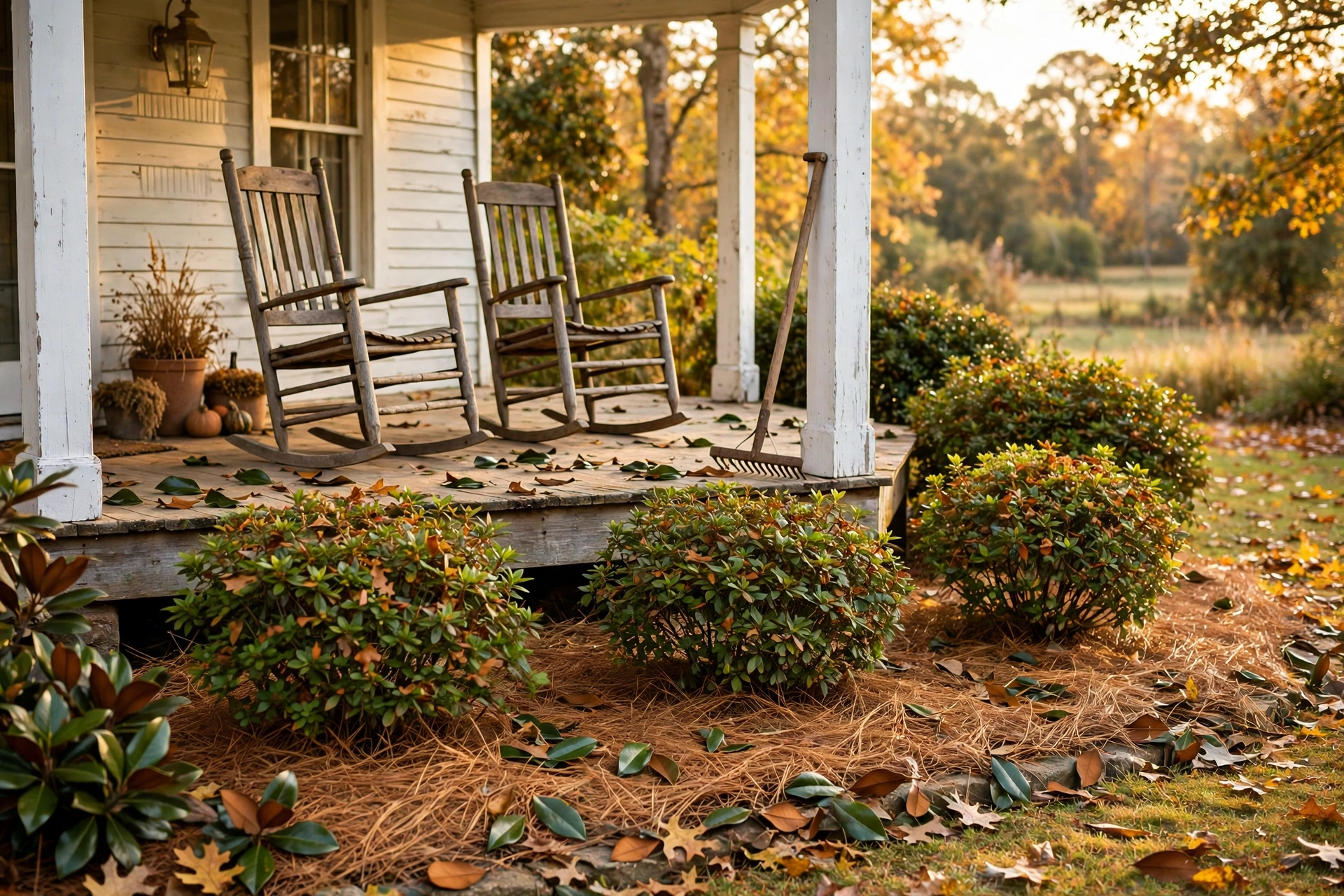
Then there are the leaves. Lord, the leaves. Earl rakes his into neat piles and then watches the wind undo his work, which is the most honest gardening I have ever seen. I let the pine straw stay where it falls under the trees, and where the lawn needs clearing, a lawn sweeper saves my back and my temper both. Do not get me wrong, a rake still has its place. It is just that my place, these days, is usually on the porch swing.
I clean my tools, oil the handles, and put everything away dry. Daddy always said a tool put away dirty in October will greet you rusty in March, and Daddy was not a man to argue with about tools, weather, or cornbread.
A Final Thought
The garden going quiet is not a loss. It is a promise kept. The bulbs are already down there, doing their secret work. The perennials are resting their roots. The soil, if we let it be, is getting ready in its own slow Southern way.
So I sit with Mabel on the porch, sweet tea gone to hot cider, and I do not mourn the tomatoes. I thank them. And I reckon that is the best gardening advice I have ever given anybody: learn to love the quiet season, too. It is where next summer starts.
That’s all for now, folks.