Every spring, homeowners rush outside eager to revive their lawns after a long winter. The first mow, the first fertilizer application, and the first warm weekend all feel like the official start of lawn season. But while enthusiasm is great, spring is also when many lawns experience unnecessary stress — often from well-intentioned maintenance.
The truth is that grass emerging from winter dormancy is surprisingly delicate. A few common mistakes made in early spring can weaken root systems, invite weeds, increase disease pressure, and create thin turf that struggles through the heat of summer.
If you want a healthier, greener lawn this year, avoiding these four common spring lawn mistakes can make a bigger difference than almost any product you buy.
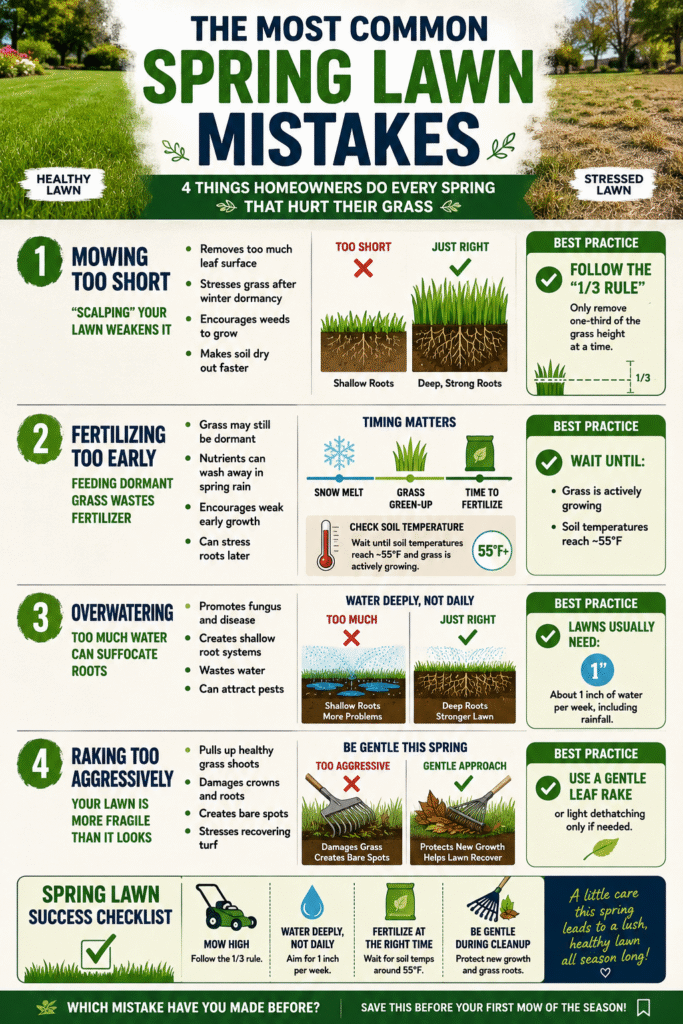
Mistake #1: Mowing Too Short
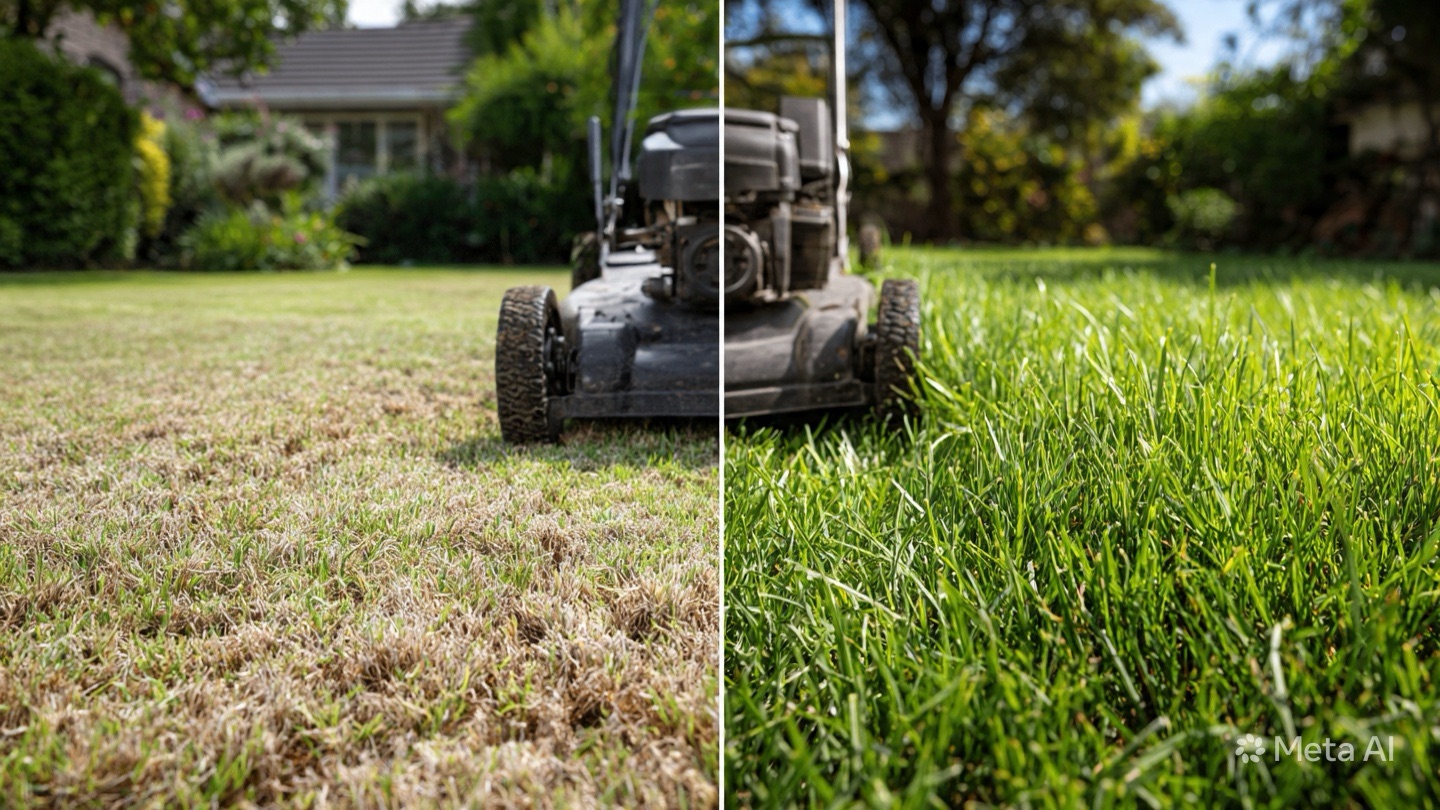
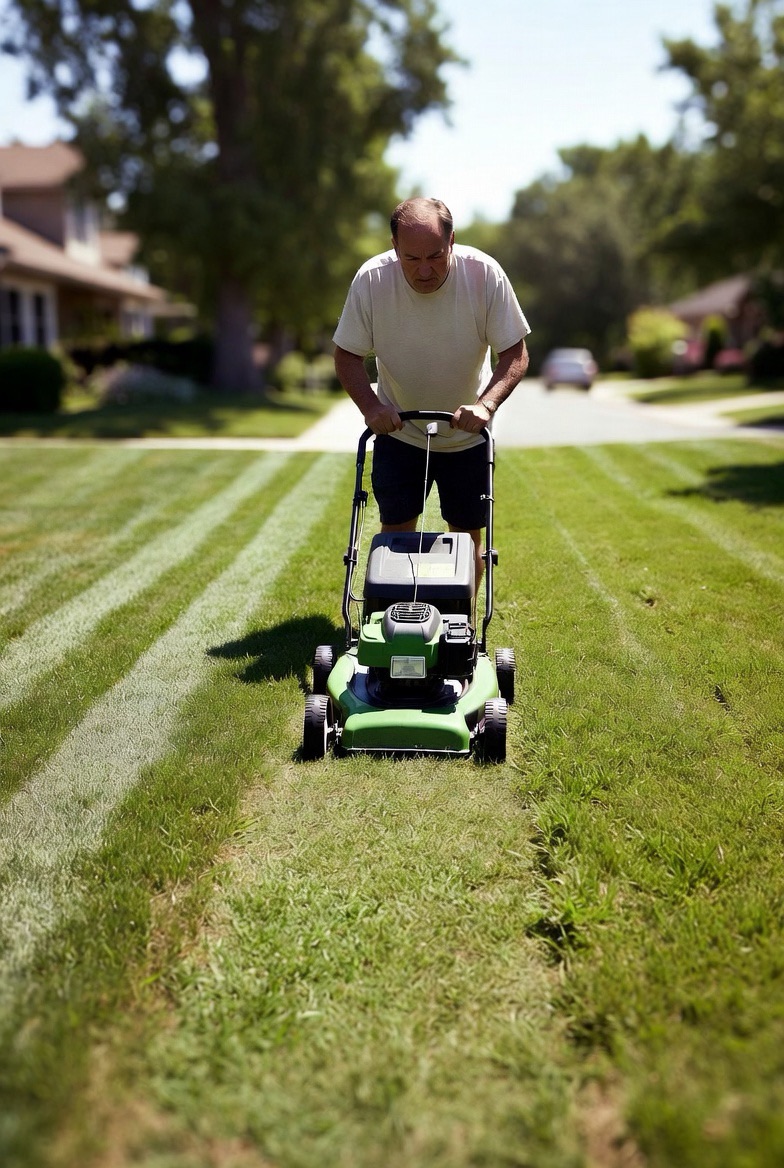
One of the fastest ways to stress a lawn in spring is mowing too aggressively. Many homeowners scalp their grass during the first few cuts of the season because they believe shorter grass looks cleaner or requires less maintenance. In reality, cutting grass too short weakens the entire plant.
Grass blades act like solar panels. When too much leaf surface is removed, the lawn loses its ability to efficiently produce energy. The result is shallow roots, reduced drought tolerance, and slower recovery from winter stress.
Short mowing also exposes soil to more sunlight, which encourages weed seeds like crabgrass to germinate more quickly.
Instead of cutting the lawn extremely short, follow the “one-third rule,” which means never removing more than one-third of the grass height during a single mowing session. Taller grass develops deeper roots, shades the soil, and naturally crowds out weeds.
For most cool-season lawns, keeping grass around three to four inches tall during spring creates a healthier, more resilient lawn.
Mistake #2: Fertilizing Too Early
The arrival of warmer temperatures often triggers a rush to apply fertilizer. Unfortunately, fertilizing too early can do more harm than good.
Grass that has not fully exited dormancy cannot efficiently use nutrients yet. Early fertilizer applications may wash away during spring rains or stimulate weak top growth before roots are ready to support it.
This creates lush-looking grass temporarily, but it can leave the lawn more vulnerable to stress later in the season.
A better approach is to wait until the lawn is actively growing and soil temperatures consistently reach around 55 degrees. In many northern regions, this typically coincides with lilacs blooming and lawns requiring regular mowing.
Timing fertilizer properly encourages balanced root and blade growth rather than forcing fragile early-season growth spurts.
Mistake #3: Overwatering
After a dry-looking winter lawn, many homeowners assume more water is always better. But excessive watering in spring can suffocate roots and create ideal conditions for fungal disease.
Constantly damp soil prevents roots from growing deeper in search of moisture. Instead, grass becomes dependent on frequent shallow watering, making it weaker during summer heat and drought.
Overwatering can also contribute to lawn fungus, moss growth, pest activity, and nutrient runoff.
Most lawns only need about one inch of total water per week, including rainfall. Deep, infrequent watering encourages stronger root development and healthier turf overall.
A simple way to check watering levels is by placing a small container, like a tuna can, on the lawn while sprinklers run to measure how much water is being applied.
Mistake #4: Raking Too Aggressively
Spring cleanup can quickly turn destructive when homeowners attack their lawns with heavy raking.
After winter, grass crowns and new shoots are tender. Aggressive dethatching or hard metal raking can tear up healthy turf, expose soil, and create bare spots where weeds thrive.
While removing leaves and debris is important, most lawns only need a gentle cleanup in spring. A lightweight leaf rake or soft spring-tine rake is usually enough for routine maintenance.
If thatch is truly excessive, dethatching is often better saved for fall, when cool-season grasses are actively growing and can recover more effectively.
Being gentler during spring cleanup helps preserve healthy new growth and reduces unnecessary stress on recovering turf.
A Better Spring Lawn Starts With Less
Many homeowners believe achieving a beautiful lawn requires more products, more treatments, and more effort. In reality, healthier lawns often come from avoiding unnecessary stress during the most vulnerable time of year.
Mowing higher, watering properly, fertilizing at the right time, and handling spring cleanup carefully can dramatically improve lawn health before summer even arrives.
Sometimes the best thing you can do for your lawn is simply stop doing the things that quietly damage it.