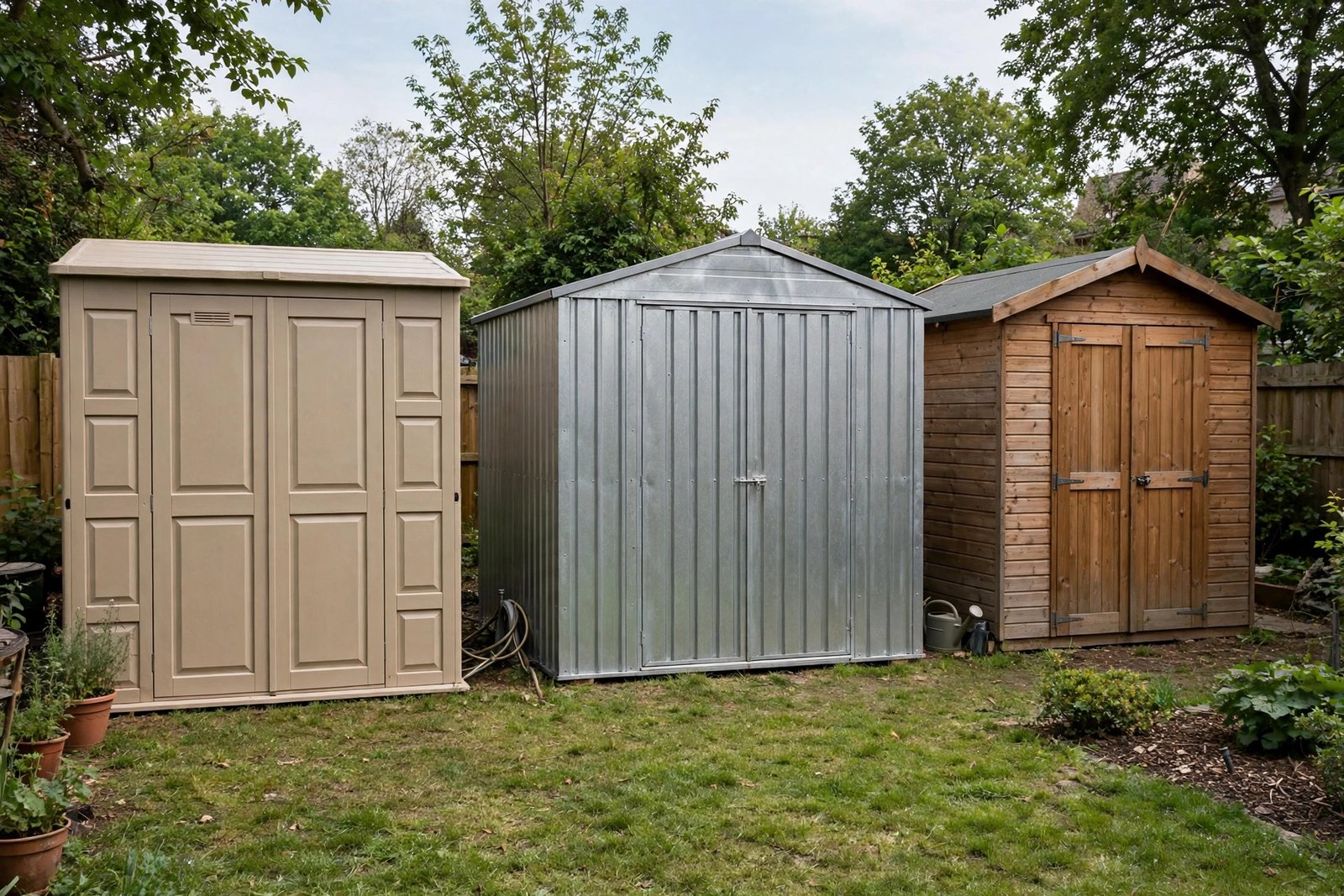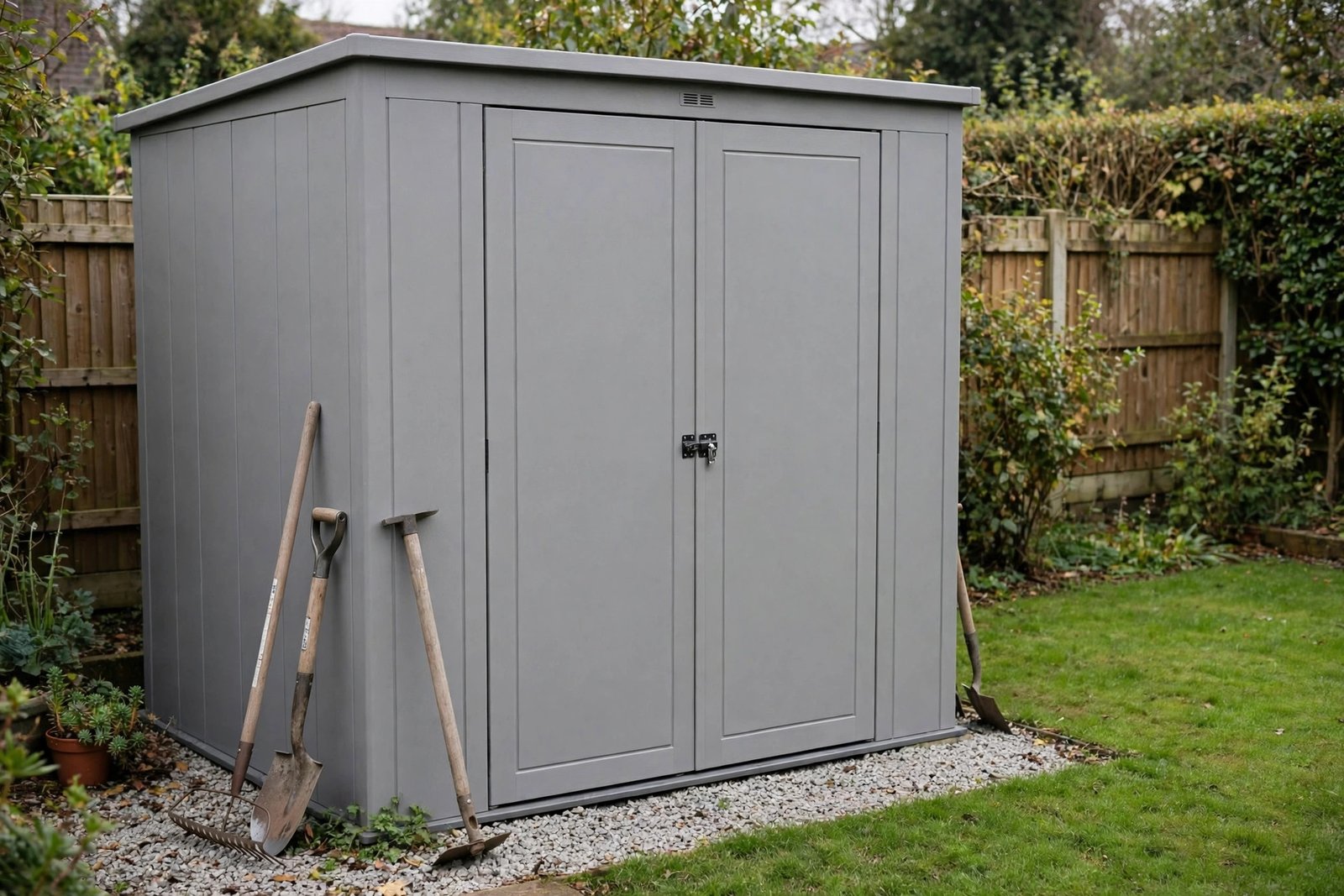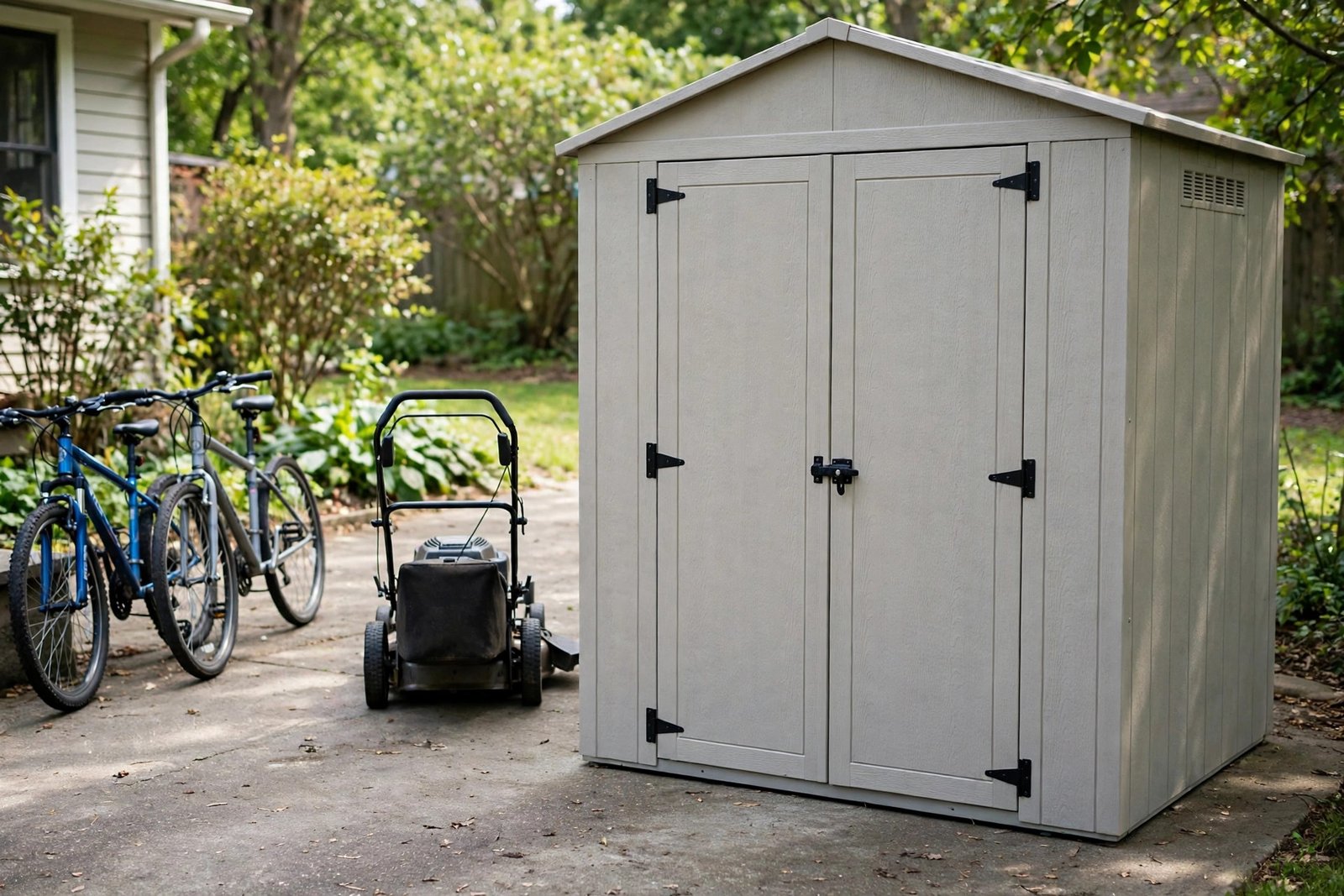
The wrong shed size shows up in small, daily ways. A mower handle that has to fold every time. A bike that only fits if the pedals come off. A door that clears the wheelbarrow by half an inch, on a good day.
Shed size is not one number. It is three: footprint, height, and door width. Get all three right and the shed disappears into the routine. Miss one and the shed becomes the thing you fight with.
Start With What Goes Inside, Not the Shed
List everything the shed must hold, then measure the three items that cause trouble: the widest, the tallest, and the longest. For most yards that list is a walk-behind mower, a string trimmer, a wheelbarrow, and a shelf of hand tools. Bikes and a snow blower change the math fast, so name them now rather than discovering them later.
Measure the mower with its handle up, the way it actually goes through a door. Measure a bike across the handlebars, not the frame. Measure the wheelbarrow at its widest point, which is usually the handles, not the tray.
Footprint: Add Walking Room to the Gear
Once the gear is measured, add room to move around it. A shed that exactly fits its contents is a storage unit you cannot use: you need a path to reach the back shelf and space to turn a mower around.
As a working rule, add at least 2 feet to the width of your widest row of gear and at least 18 inches of depth beyond your longest item. A single mower plus tools fits comfortably in a 6-by-3-foot shed. A mower, bikes, and a workbench want 9 by 7 feet or more. If the shed will also hold patio cushions over winter, count them: a stack of chair cushions eats a full wall.
That is why the best resin sheds roundup starts with the big Artisan 9×7 for full gear loads and steps down to the Factor 6×3 for a single mower. The shed should fit the gear list, not the other way around.
Height: The Number People Forget
Height fails quietly. A shed tall enough for the mower may still be too short for a long-handled lopper hung on the wall, a tall sprayer, or a ladder stored upright. Measure your tallest item standing up, then add a few inches for the wall hook or shelf bracket that holds it.
Interior height matters more than the roof peak printed on the box. Sloped roofs steal headroom at the walls, which is exactly where tall tools hang. If the listing gives an interior height, use that number. If it does not, assume the usable height at the walls is several inches below the peak.
Door Width: The Gatekeeper
Door width decides what actually enters the shed, no matter how generous the interior is. Double doors are worth seeking out: two narrow leaves open wider than one, and wide items go in straight instead of diagonally. A single door under 30 inches will fight a wheelbarrow and lose to a snow blower.
Check the door’s clear opening, not the door panel size, and check it against the mower’s handlebar width and the wheelbarrow’s handle spread. If the biggest item needs an angle to enter, it will scrape the frame every time, and resin frames show those scrapes.
Floor Load and the Pad
A shed’s floor has a job beyond keeping mud out: it carries weight. Riding mowers, snow blowers, and a loaded tool cabinet concentrate hundreds of pounds on small wheels. A resin floor on a soft or uneven pad will flex, and a flexing floor racks the doors out of square.
Before the shed arrives, prepare a level pad — compacted gravel or pavers — slightly larger than the shed’s footprint. It is the least glamorous part of the project and the one that decides whether the doors still close in year three.
The Sizing Worksheet
Work through these five questions in order, and the shed size mostly picks itself:
- Widest item: What is it, and how wide is it really?
- Tallest item: Standing up, with handle extended — how tall?
- Longest item: Mower, ladder, or lumber — how long?
- Door test: Does the widest item pass through the door straight, not angled?
- Growth: What joins the shed in the next two years — a second bike, a snow blower, a bigger mower?
If the answer to the last question is anything at all, buy one size up. Sheds are almost never bought too big; they are bought exactly big enough for today and too small by next spring.
What to Watch Next
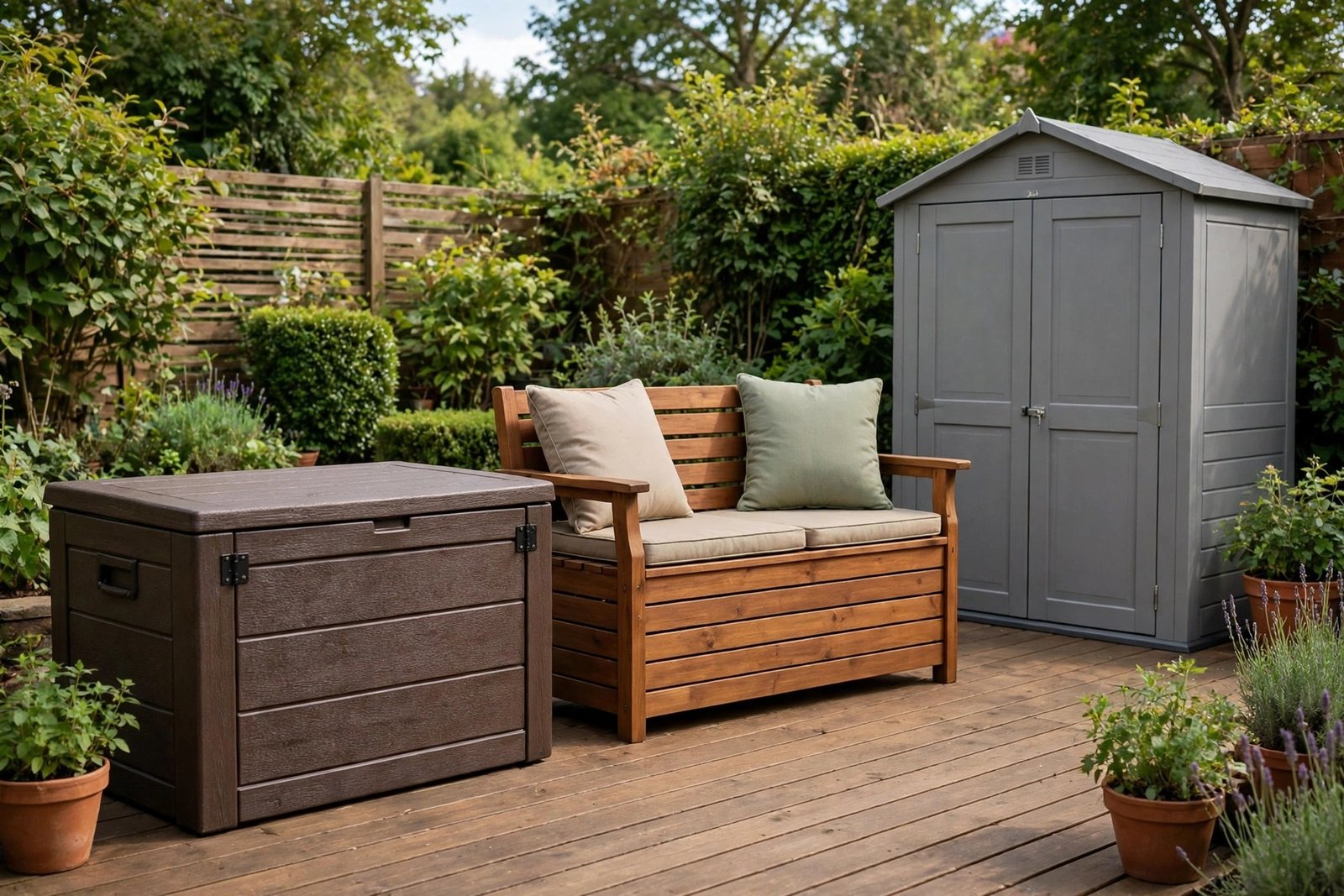
The mistake that undoes a well-sized shed is filling it wall to wall on day one. Leave the path to the back shelf open and keep the heaviest items near the door. If the shed is still easy to walk through in a month, the size was right. If it already needs rearranging, the size was a guess — and the fix is a second shed or a deck box for the overflow, like the ones in our deck storage box guide, not a bigger fight with the same doors.
Still deciding on material? Resin vs metal vs wood sheds compares which one holds up longest outdoors, so the size you choose is the size you keep.