Not every lawn needs a tractor-pulled aerator or a rental machine — especially if your yard is on the smaller side or you’re focused on targeted problem areas. The Yard Butler Manual Lawn Coring Aerator is a simple, steel handheld tool designed to pull small soil cores and relieve surface compaction without gas, electricity, or heavy equipment.
This review explores how it performs in real practice, where it fits in your lawn care routine, and whether it delivers value compared to powered or larger aeration tools.
What It Is
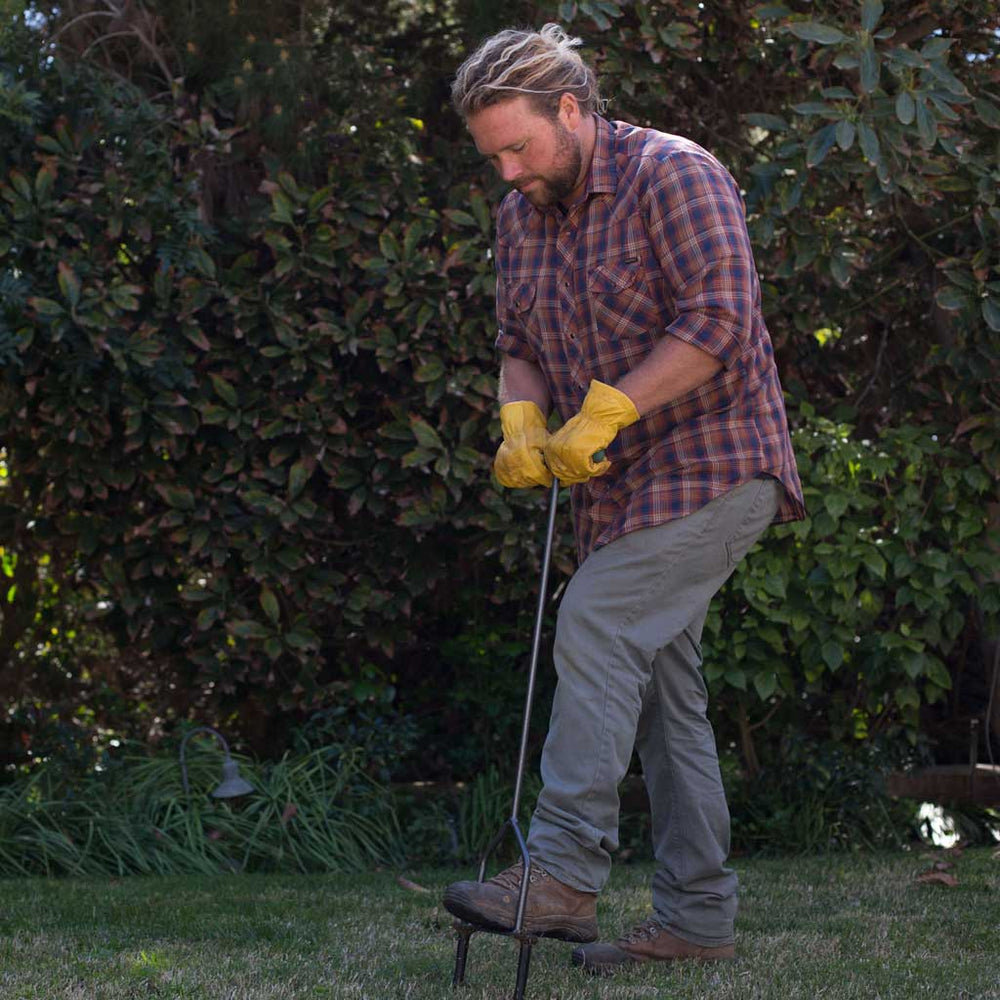
The Yard Butler Manual Lawn Coring Aerator is a hand-powered core aeration tool roughly 37–38 inches tall with dual hollow tines that remove two soil plugs per step. It’s built from powder-coated steel, designed to be durable and resist rust, and includes a foot bar to help you sink the tines into the soil using body weight rather than brute force.
Rather than just poking holes like basic spike aerators, this manual tool actually removes small soil cores — allowing air, water, and fertilizer to access grassroots more effectively.
Design & Build: Simplicity with Strength
One of the first things you’ll notice is the Yard Butler’s all-steel construction and straightforward design. The tool has a foot bar that provides leverage, letting you step down and drive the hollow tines into the soil without stooping or awkward posture.
The powder-coated finish helps resist rust, and the padded T-handle adds comfort during extended use. Its size is optimized for typical homeowners: tall enough to use upright, yet light enough that a reasonably fit person can manage it without excessive strain.
Performance: What to Expect in the Yard
Coring Action
The Yard Butler pulls two 3-inch cores per step, creating channels that allow air, water, and nutrients to penetrate deeper. Leaving those cores on the surface lets them break down naturally and return organic matter to the soil over time.
On looser or moderately compacted soil, this tool performs exactly as designed, delivering clear holes with relatively little effort. On firmer or clay heavy soil, however, the process becomes more physically demanding and the tines can clog with soil — a common theme in user reviews.
Physical Effort
Being a manual tool, this aerator relies on your own strength. For small lawns (under a few thousand square feet) or targeted problem spots, many users find the effort worthwhile. On larger yards, repetition can become tiring — expect to spend several hours if you cover the entire lawn manually.
Several experienced DIYers also note the need to water the lawn beforehand to soften soil and reduce clogging — something many recommend doing the night before aerating.
Pros & Cons
Pros
✔ Effective core aeration — removes real soil plugs rather than just poking holes.
✔ Durable metal construction with powder-coating for weather resistance.
✔ Comfortable upright use, thanks to generous tool height and foot bar.
✔ Budget-friendly — far cheaper than powered aerators or rentals.
✔ Compact and lightweight — easy to store and transport.
Cons
✘ Requires physical effort — not ideal for very large lawns or anyone with mobility limits.
✘ Tines can clog with soil, especially clay, requiring frequent clearing.
✘ Performance depends on soil moisture — works best on moist, not dry or saturated soil.
✘ Slow work rate on larger yards compared with powered or tow-behind aerators.
Best Use Cases
This tool shines in smaller yards, high-traffic areas, and specific problem spots where compaction or runoff is an issue but a full powered aerator would be overkill. It also makes sense if you’re a DIYer who prefers simple, quiet tools and doesn’t mind doing the work by hand.
Many reviewers confirmed that on properly moistened soil, this tool creates clean, uniform cores and improves soil access for water and nutrients — especially useful before overseeding or after heavy use.
However, homeowners with large lawns or dense clay soils often find that manual corers, including this one, are better suited to spot aeration or smaller areas, and that larger mechanical tools save time and energy for full-lawn work.
How It Compares to Alternatives
Compared with spike lawn aerators, which simply poke shallow holes and can exacerbate compaction, the Yard Butler’s hollow cores deliver deeper penetration and real soil relief. It’s also far cheaper and easier to store than powered plug aerators.
Against more robust tools — like tow-behind plug aerators or rental walk-behind units — this tool is slower and more effort-intensive, but it costs a fraction of the price and doesn’t require a tractor or engine power.
Tips to Get the Most Out of It
- Water the lawn first to soften soil and make penetration easier.
- Use consistent spacing (every few inches) to ensure even aeration.
- Clear stuck soil from tines regularly to keep holes clean.
- Pair aeration with overseeding and fertilizing for best spring or fall results.
Final Verdict
The Yard Butler Manual Lawn Coring Aerator is a solid, budget-friendly tool for homeowners who want true core aeration without the expense of rentals or powered machines. It delivers real plugs that improve soil health and increase air, water, and nutrient flow to roots — especially when soil is properly prepared.
It’s not the fastest or easiest option for large lawns, but for small yards, patch aeration, and DIY lawn enthusiasts, it offers significant value and performance in a simple, durable package.