Landscape & Leisure is reader-supported. When you buy through links on our site, including Botanical Interests seed links, we may earn a commission at no extra cost to you. Prices change, so click through to confirm current pricing.
Tomatoes are the crop that separates short-season gardeners from long-season ones. A gardener in Georgia can afford to gamble on a 90-day beefsteak. A gardener in zone 4, with roughly 100 frost-free days, cannot — a late variety that “just needs a little more time” becomes October compost. The fix isn’t heroic season extension. It’s choosing tomato varieties for short growing seasons that were bred, selected, or proven to ripen fast: early determinates, cold-tolerant heirlooms, and cherry types that start producing weeks before the big slicers.
We went through Botanical Interests’ tomato catalog — the company has supplied home gardeners since 1995 — and picked the varieties that genuinely give a short-season garden a harvest. Every pick is in stock and currently sold by Botanical Interests. For the timing and technique to go with these varieties, see our guide to starting tomato seeds indoors; for the heirloom-versus-hybrid question, our side-by-side comparison.
How We Picked These Varieties
Three questions, same as always. First: does it ripen in 90 days or less from transplanting, or has it been proven in cold, short climates? Second: is it genuinely available right now — not discontinued, not sold out? Third: do gardeners actually rate it well? Days-to-maturity below are from transplanting, the industry-standard measure (add the 6–8 weeks the seedlings spent indoors). We favored varieties rated 4 stars or better, with honest caveats where a variety stretches the short-season definition.
Best Overall: Glacier Bush Tomato
If your garden had only one tomato, a Swedish-bred cold-tolerant variety is a defensible choice. Glacier is a 55-day-from-transplant semi-determinate that sets fruit earlier — and in cooler temperatures — than almost anything else in the catalog. The 30-inch plants stay compact, the 2-inch slicers are sandwich-sized rather than impressive, and production runs early summer straight through to frost. It’s the variety for gardeners who have been burned before by big, beautiful tomatoes that never turned red.
Pros: earliest ripening slicer in the lineup; sets fruit in cool weather; compact plants suit containers and small gardens.
Cons: 4.1-star average — a few growers report the flavor is good rather than great; fruits are modest in size.
Glacier Bush Tomato Seeds
The 55-day, cold-tolerant slicer that turns a short season into a full harvest.
Best for Cold Climates: Black Krim Pole Tomato
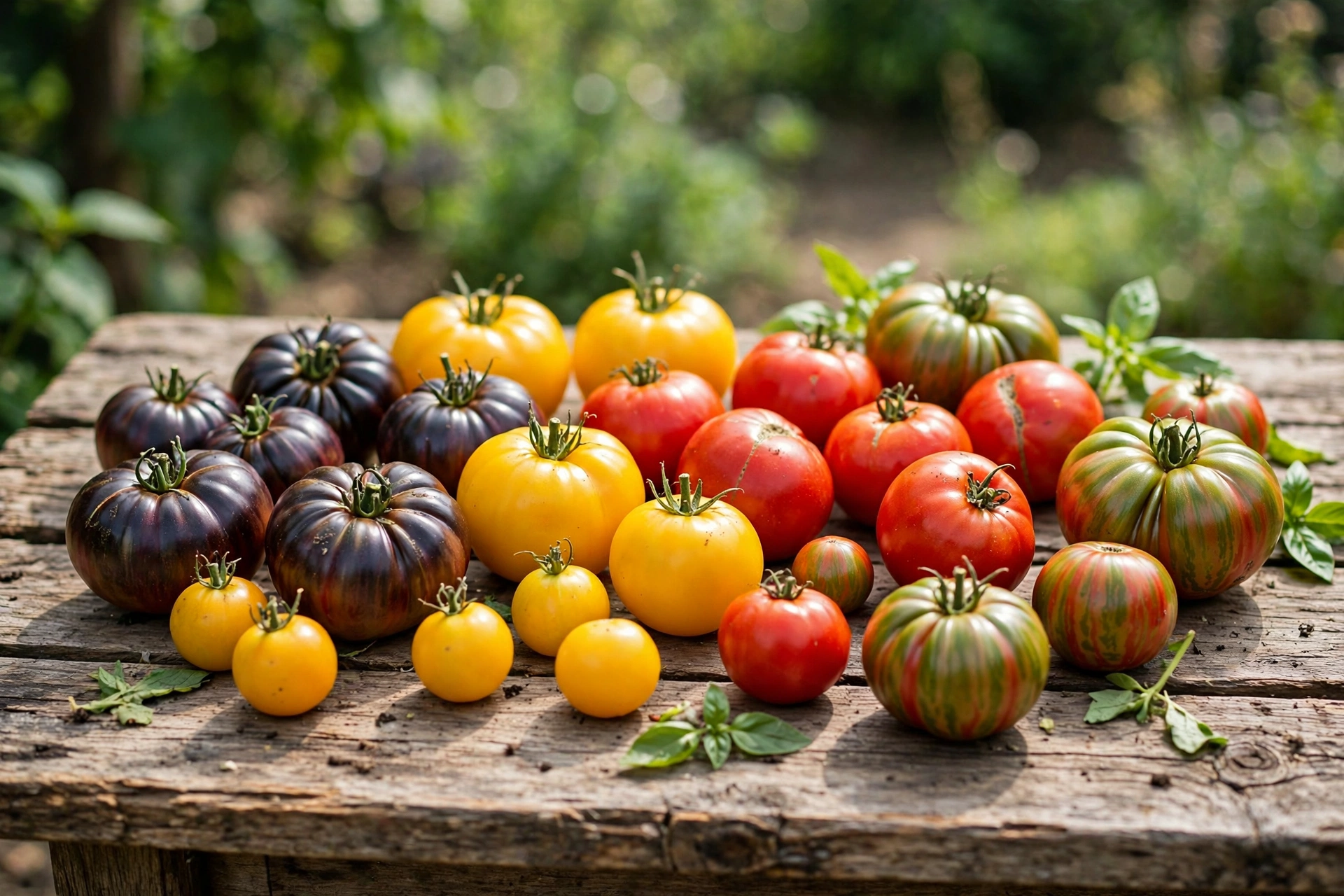
Black Krim is a Russian heirloom — and Russian varieties have a way of shrugging off weather that ruins fussier tomatoes. It’s an indeterminate (pole) type ripening in roughly 70–90 days from transplant, with dark purple-black beefsteaks and the rich, old-fashioned flavor that made it a cult favorite. The short-season case for it isn’t a number on a packet; it’s growers. One verified Botanical Interests buyer in southwest Montana — zone 4, a roughly 100-day season, nights dipping into the low 40s all summer — calls it their year-after-year reliable tomato, “prolific and extremely forgiving.” When a variety earns that in those conditions, the days-to-maturity math takes a back seat.
Pros: outstanding flavor for an early-capable beefsteak; proven by real zone-4 growers; organic seed at $2.99 for 20 seeds.
Cons: indeterminate vines need a serious stake or cage; fruits can crack after heavy rain — pick before storms when they’re near-ripe.
Black Krim Pole Tomato Seeds
A Russian heirloom beefsteak that zone-4 growers keep coming back to, season after season.
Best Hybrid: Mountain Merit Bush Tomato
Short seasons and disease pressure often arrive together — cool springs invite the blights, and a short season leaves no time to recover. Mountain Merit is the modern answer: a 2014 All-America Selections winner with resistance to fusarium wilt, verticillium wilt, late blight, gray leaf spot, root-knot nematode, and tomato spotted wilt virus. It’s determinate, so the harvest comes in a condensed window (handy for canning), and the compact plants work in containers. At about 75 days from transplant it’s not the earliest here, but it’s the most reliable insurance policy on the list — and it rates 4.9 stars.
Pros: best-in-class disease package; condensed determinate harvest; container-friendly.
Cons: $6.49 for 10 seeds — the priciest packet on this list; flavor is very good rather than heirloom-soulful.
Mountain Merit Bush Tomato Seeds
The disease-resistant, determinate slicer that protects a short season from blight.
Best Cherry: Sun Gold Pole Cherry Tomato
Cherry tomatoes are a short-season gardener’s cheat code — small fruits ripen weeks before big ones — and Sun Gold is the most beloved cherry in cultivation. Botanical Interests’ listing carries a 4.7-star average across 105 reviews, the deepest review base of any tomato here. The tangerine fruits are intensely sweet and low-acid, the vigorous vines are disease resistant, and picking them a touch early to finish ripening indoors is standard practice. If the slicers have a bad year, Sun Gold still delivers a harvest.
Pros: enormous, enthusiastic review base; earliest real flavor payoff of the summer; disease resistant.
Cons: vigorous 6-foot vines need sturdy support; at $5.99 it’s a premium cherry packet.
Sun Gold Pole Cherry Tomato Seeds
The 4.7-star cherry that ripens weeks before the slicers and never disappoints.
Best Heirloom Flavor: Cherokee Carbon Pole Tomato
Cherokee Purple is the heirloom flavor benchmark — and the variety short-season gardeners most often watch stay green into October. Cherokee Carbon is the fix: a cross of Cherokee Purple and Carbon that keeps the dusky, smoky heirloom flavor in 10–12-ounce beefsteaks but ripens earlier in the season, with better production and fewer cracks and blemishes. It rates 4.5 stars. Think of it as the heirloom experience adapted for gardens that can’t wait.
Pros: heirloom flavor without the heirloom wait; improved crack resistance; strong 4.5-star rating.
Cons: still an indeterminate that wants the full season — start it indoors at the earliest end of your window.
Cherokee Carbon Pole Tomato Seeds
All the smoky Cherokee flavor, bred to ripen earlier for northern gardens.
Runner-Up Cherry: Gardener’s Delight Pole Cherry Tomato
A 1950s German heirloom with a 4.9-star average — the highest rating on this list. Gardener’s Delight produces long clusters of 6–12 extra-sweet cherries on vigorous 6-foot vines, all summer until frost. It exists here as the honest runner-up to Sun Gold: choose Sun Gold for the deepest review base and earliest payoff, Gardener’s Delight for top-rated heirloom sweetness and seed-saving (it’s open-pollinated; saved seeds grow true).
Pros: highest rating of any variety here; open-pollinated, so you can save seeds; heavy, long-season clusters.
Cons: only 19 reviews behind that rating — less battle-tested than Sun Gold’s 105; vigorous vines need support.
Gardener’s Delight Pole Cherry Tomato Seeds
The 4.9-star German heirloom cherry — extra sweet, and you can save the seeds.
Best for Sauce — With a Caveat: San Marzano Roma Pole Tomato
Honesty first: San Marzano is not a short-season tomato. It’s a full-season indeterminate paste type, and in zones 3–4 it demands your earliest indoor start and your warmest, most sheltered wall. So why is it here? Because if you can tomatoes — if sauce is the point of your garden — one homegrown San Marzano crop replaces a winter of store-bought cans, and it’s worth the extra planning. Start it at the very beginning of your indoor window, transplant only into truly warm soil, and mulch heavily. In a marginal year, Glacier and the cherries still carry the fresh-eating harvest while San Marzano does the heavy preserving work.
Pros: the classic paste tomato — meaty, few seeds, built for sauce; only $2.69.
Cons: needs the full season; in zones 3–4 it’s a gamble without an early start and a hot microclimate. If your season is under 100 days, skip it and double down on the cherries.
San Marzano Roma Pole Tomato Seeds
The classic sauce tomato — worth the earliest indoor start in short-season gardens.
Side-by-Side Comparison
| Variety | Habit | Days to ripen* | Best for |
|---|---|---|---|
| Glacier Bush | Semi-determinate | 55 | Earliest slicer harvest |
| Black Krim Pole | Indeterminate | 70–90 | Cold-climate beefsteaks |
| Mountain Merit Bush | Determinate | 75 | Disease insurance |
| Sun Gold Pole Cherry | Indeterminate | ~60 | Fastest flavor payoff |
| Cherokee Carbon Pole | Indeterminate | Earlier than Cherokee Purple | Heirloom flavor, sooner |
| Gardener’s Delight Pole Cherry | Indeterminate | ~65 | Seed-saving cherry |
| San Marzano Roma Pole | Indeterminate | ~80 | Sauce (with early start) |
*Days from transplanting; “~” figures are typical for the variety.
Final Thoughts
The short-season tomato strategy is a portfolio, not a single variety: Glacier for the first slicers, a cherry (Sun Gold or Gardener’s Delight) for guaranteed early production, Mountain Merit as disease insurance, and one flavor pick — Black Krim or Cherokee Carbon — for the tomatoes you’ll actually remember. Start them all indoors 6–8 weeks before your last frost (our indoor-starting guide walks through the timing), water deeply once they’re in the ground — our drip irrigation guide covers keeping moisture even, which is what prevents cracking — and if you’re new to seed buying generally, our beginner vegetable seed roundup covers the rest of the garden. Short seasons don’t mean small harvests. They just mean choosing like the calendar matters — because it does.