Landscape & Leisure is reader-supported. When you buy through links on our site, including Botanical Interests seed links, we may earn a commission at no extra cost to you. Prices change, so click through to confirm current pricing.
Tomatoes are the reason most gardeners start seeds indoors at all. Direct-sown tomatoes in a short-season climate are a race you usually lose — the soil warms too late, germination drags, and frost arrives with green fruit on the vine. Starting tomato seeds indoors buys you the 6–8 weeks that turn a marginal season into a real harvest. It’s not difficult, but tomatoes are pickier than most seedlings about exactly two things: warmth to germinate, and light once they’re up. Get those right and the rest is routine.
This guide goes deeper than our beginner seed-starting overview — it’s tomato-specific, variety-aware, and built around the varieties in our short-season tomato roundup. University extension guidance (tomatoes are one of the most-covered crops in extension literature) consistently lands on the same numbers you’ll see below.
When to Start: Count Back 6–8 Weeks from Last Frost
The rule is simple: sow tomato seeds indoors 6–8 weeks before your area’s average last frost date. In much of zone 4 — the Twin Cities, for example, where the average last frost falls around mid-May — that means late March to early April. Starting earlier isn’t better; an 10-week-old tomato seedling started in February is leggy, root-bound, and stressed by transplant day, and it will be outperformed by a stocky 6-week-old seedling started on time.
Adjust within the window by variety. Long-season indeterminates (the beefsteaks and paste types like Cherokee Carbon and San Marzano) earn the early end — 7–8 weeks. Fast determinates and cherries (Glacier, Sun Gold) are fine at 6 weeks; they’ll catch up. If you’re growing one of the short-season varieties we recommend, err toward the early side: every week of indoor head start is a week of ripe fruit in September.
Soil Temperature Matters More Than Air Temperature
Here’s the detail that separates tomato success from tomato frustration: tomato seeds germinate best with soil temperatures of 65–75°F. A 68°F room with a cold windowsill can leave the actual seed-starting mix in the high 50s, where germination stalls for two weeks or fails outright. Warmth is the single highest-leverage input at this stage — more important than light, because seeds don’t need light until they sprout.
The practical fix is a seed-starting heat mat under the trays. It’s a one-time purchase that pays off every spring for every warm-season crop you’ll ever start.
Seed Starting Heat Mat
Holds seed-starting mix at germination temperature even in a cool room — the highest-leverage upgrade for tomato starts.
Containers, Mix, and Sowing Depth
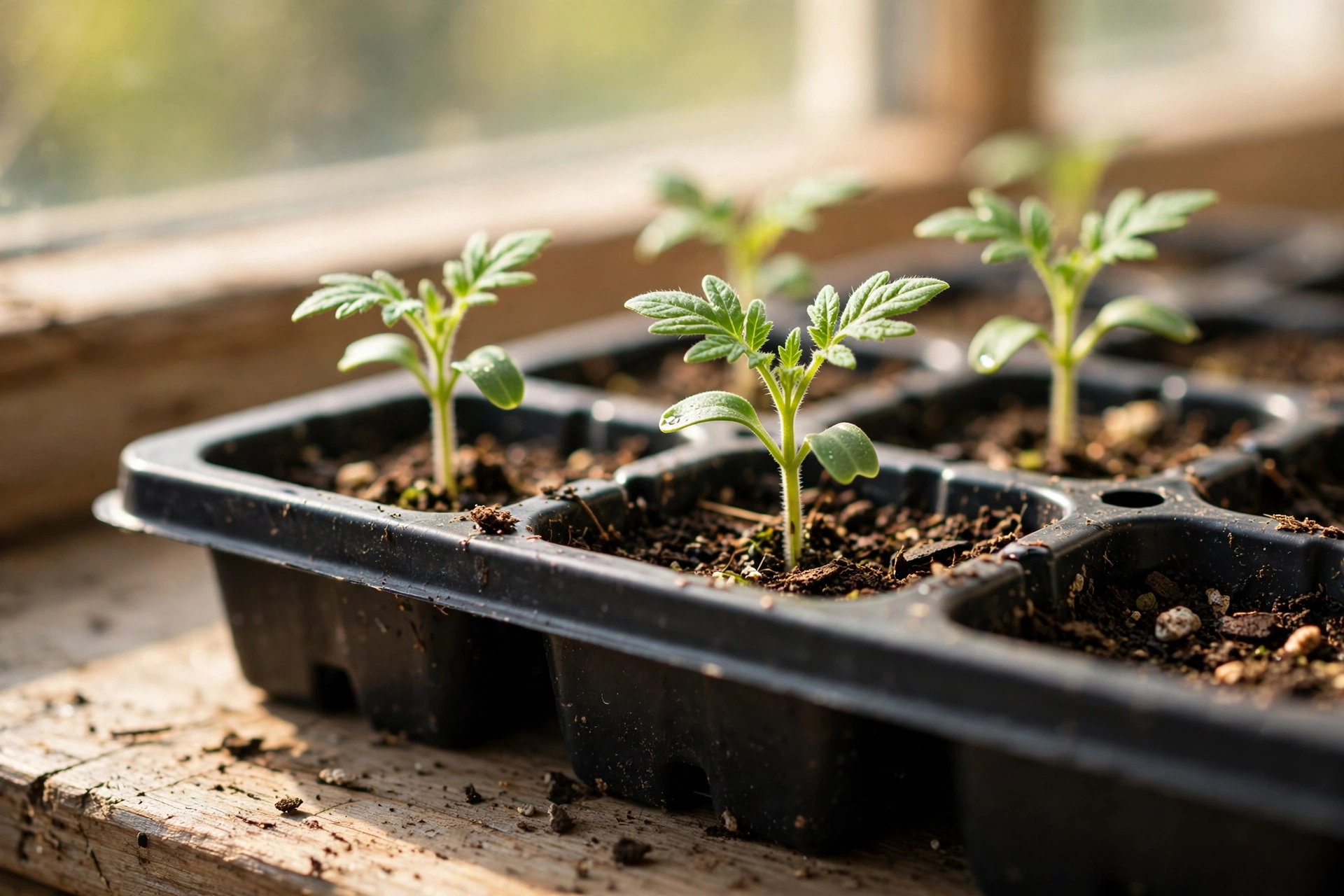
Use a fine, sterile seed-starting mix — not garden soil, not potting soil with big bark chunks. Fill cell trays, water the mix before sowing (moist, not soggy), and sow two seeds per cell at 1/4 inch deep. Two seeds is insurance; thin to the stronger seedling after the first true leaves appear. Cover the trays with a humidity dome or plastic wrap until sprouts emerge, then remove it immediately — trapped humidity after germination invites damping-off.
Sturdy cell trays that survive multiple seasons beat flimsy six-packs that crack in year one. A solid bottom tray underneath lets you water from below, which keeps foliage dry and discourages disease.
Epic 6-Cell Seed Starting Trays
Deep, rigid cells that air-prune roots and survive season after season — sized right for tomato starts.
Epic 1020 Universal Bottom Tray
The no-mess base for bottom-watering — keeps tomato foliage dry and damping-off at bay.
Light: 14–16 Hours, Close and Bright
The moment seedlings emerge, light becomes everything. A sunny windowsill is almost never enough in March — the days are too short and the light too weak, and the result is the classic leggy seedling stretching sideways toward the glass. Give sprouted tomatoes 14–16 hours of light daily, with the light source just 2–3 inches above the seedlings, raising it as they grow. A basic shop light or LED grow light on a timer works; the fancy spectrum marketing matters far less than duration and proximity.
Keep the room cooler once they’re up — 60–65°F produces stockier plants than a warm room. If stems still stretch, a gentle fan for a few hours a day (or lightly brushing your hand over the tops) builds sturdier stems.
Water, Feed, and Pot Up
Water from below when the top of the mix dries out; tomatoes hate wet feet but wilt fast in small cells, so check daily. Once the first true leaves appear, begin feeding with a half-strength liquid fertilizer weekly — seed-starting mix has almost no nutrients by design. When seedlings have 2–3 sets of true leaves and roots fill the cell, pot up into 3–4-inch pots, burying the stem deeper than it was. Tomatoes root along buried stems, so planting deep builds a bigger root system — a genuine advantage you can’t get with most other seedlings.
Harden Off for 7–10 Days
Indoor-grown seedlings will sunburn and go into shock if planted straight into the garden. Harden them off over 7–10 days: start with an hour or two of sheltered shade, increasing sun and wind exposure daily, bringing them in if nights drop near freezing. By the end they should handle a full day outdoors. Transplant only after all frost danger has passed and soil is reliably above 60°F — cold soil stalls tomatoes for weeks, erasing your indoor head start.
What If You Started Late?
Don’t panic, and don’t direct-sow in a short season. Shift your variety plan toward the fastest options: Glacier for slicers and a cherry like Sun Gold for guaranteed production. Or buy transplants for the long-season types and start only the fast ones yourself. A late start with the right variety beats an on-time start with the wrong one — which is exactly why variety selection and seed starting are two halves of the same decision. Our heirloom vs. hybrid comparison can help you pick which type of seed to buy in the first place.
Key Takeaways
- Sow 6–8 weeks before your average last frost; long-season types get the early end of the window.
- Soil at 65–75°F for germination — a heat mat is the single best upgrade.
- Two seeds per cell, 1/4 inch deep; thin to one after true leaves appear.
- 14–16 hours of close, bright light the moment they sprout; cooler air (60–65°F) keeps them stocky.
- Pot up once, burying the stem deep; harden off 7–10 days before transplanting into 60°F+ soil.