Picking an outdoor pizza oven usually comes down to one question before any other: gas or wood? Both can make excellent pizza. They just ask different things of you, and the right answer depends on how you actually cook on a Friday night, not on which fuel sounds more romantic.
This guide compares gas and wood-fired pizza ovens on heat, control, flavor, cost, and hassle, so you can choose with clear eyes. If you have not picked an oven yet, start with our roundup of the best outdoor pizza ovens for backyard pizza night, then come back here to settle the fuel question.
How each fuel actually works
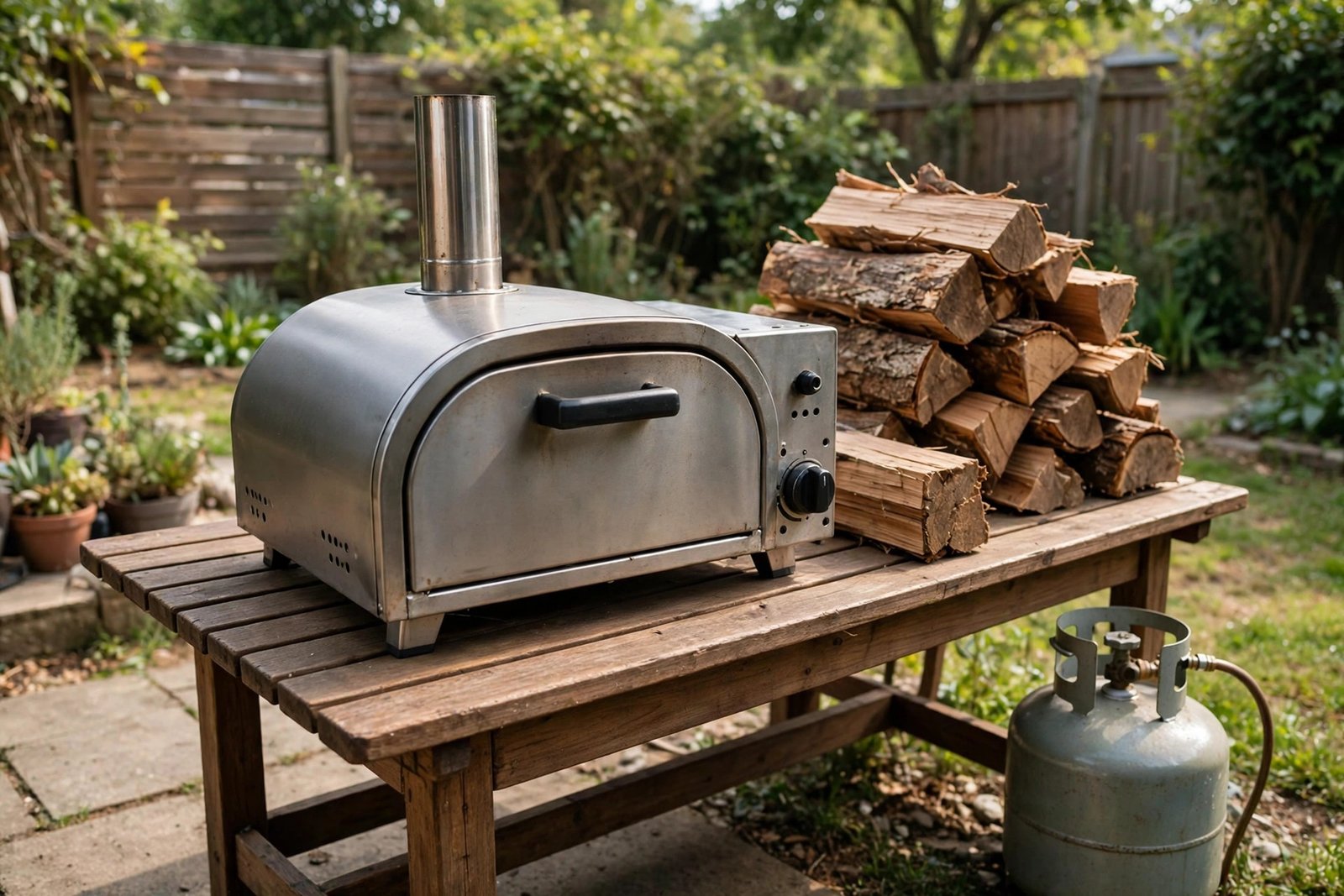
A gas oven burns propane from a standard tank through a burner, much like a grill. You turn a dial, the burner lights, and the oven reaches cooking temperature in about 15 minutes. Turning the dial down lowers the heat, which is useful when a pizza is browning too fast on top.
A wood-fired oven burns hardwood or hardwood pellets in a firebox. You light it, feed it, and wait for the stone to soak up heat. There is no dial. You control temperature by adding or withholding fuel and by managing airflow, which takes practice.
Heat and control: gas wins on consistency
Gas ovens hold a steady temperature with almost no attention. That matters because a pizza at 900°F cooks in about a minute, and a flare-up or a cool spot can ruin it in seconds. With gas, you set the dial and focus on the pizza.
Wood ovens run hotter at their peak in some designs, but they swing. The fire needs feeding, the stone cools between pizzas, and wind changes everything. Experienced wood-oven cooks manage this instinctively. Beginners often burn the first pizza, then undercook the second while the stone recovers.
Flavor: the honest version
Wood smoke does flavor food. The question is how much of it reaches a pizza that cooks in 60 seconds. On a fast Neapolitan-style pie, the smoke contribution is subtle: the crust picks up some char and a faint wood note, but it is not the deep smoke of a slow barbecue cook.
Where wood makes a bigger difference is on longer cooks: breads, roasted vegetables, and meats that sit in the oven for many minutes. If those are a big part of your plans, wood earns its keep. If pizza is the main event, gas gives up very little flavor and a lot of convenience.
One more honest point: most of what people call “wood-fired flavor” in a great pizza is actually high heat. The blistered crust, the leopard-spotted char, the crisp-yet-chewy bite — that comes from a 900°F stone, and a gas oven at 950°F delivers it just as well.
Gas vs. wood at a glance
| Factor | Gas | Wood |
|---|---|---|
| Preheat time | About 15 minutes | 20 to 30 minutes, plus fire tending |
| Temperature control | Dial, steady and repeatable | Fuel and airflow, needs practice |
| Smoke flavor on pizza | Minimal | Subtle on fast pizzas, stronger on long cooks |
| Ongoing cost | Propane refills | Hardwood or pellets, plus storage space |
| Weeknight ease | High: light it and cook | Low: building and tending a fire is the evening |
Cost and hassle over a season
Gas costs a propane refill every so often, and a tank lives outside without fuss. Wood costs less per cook if you have a cheap hardwood source, but it needs dry storage, and damp wood is the single most common reason a wood oven disappoints. Pellets solve the storage problem but add a supply chain to your pizza night.
There is also cleanup. Gas ovens leave little ash. Wood ovens leave ash to scoop, a firebox to brush out, and soot on the oven mouth. None of it is hard, but it is a chore after every cook rather than occasionally.
The hybrid option
Some ovens burn both fuels, either out of the box or with an adapter. The Ooni Karu 12 is the best-known example: it burns wood and charcoal as sold, and a gas burner is available separately. That flexibility is genuinely appealing if you want weeknight gas and weekend wood.
Be careful with the fine print, though. On the Karu 12, the gas burner is sold separately, so the price you see is not the price of a dual-fuel oven. Add the burner, a peel, and a cover before comparing it to a gas-only oven that includes more in the box. Hybrid ovens also tend to be heavier and more complex than single-fuel ovens, since they carry two fuel systems.
Who should buy which
Buy gas if you cook on weeknights, if you are new to pizza ovens, or if you want pizza night to be a 30-minute affair rather than an evening project. Gas is also the better pick if you cook with kids nearby, since there is no open fire to manage and no embers afterward.
Buy wood if you enjoy tending a fire, if you plan to bake bread and roast in the oven as well as make pizza, or if the ritual itself is part of the appeal for you. Wood rewards patience with a cooking experience gas cannot copy, even if the pizza itself is only slightly different.
Buy a hybrid if you honestly want both and will use both. If you suspect you will use gas 90 percent of the time, save the money and weight and buy a gas oven.
Bottom line
For most backyards, gas is the right call: faster, steadier, and easier to live with. Wood is the right call for cooks who want the fire as much as the pizza. Either way, heat matters more than fuel, so buy an oven that genuinely reaches 900°F or more, and read what size pizza oven you need before you order.
And if pizza night is part of a bigger outdoor setup, our guides to smokeless fire pits and patio heaters will help you plan the evenings around the oven.