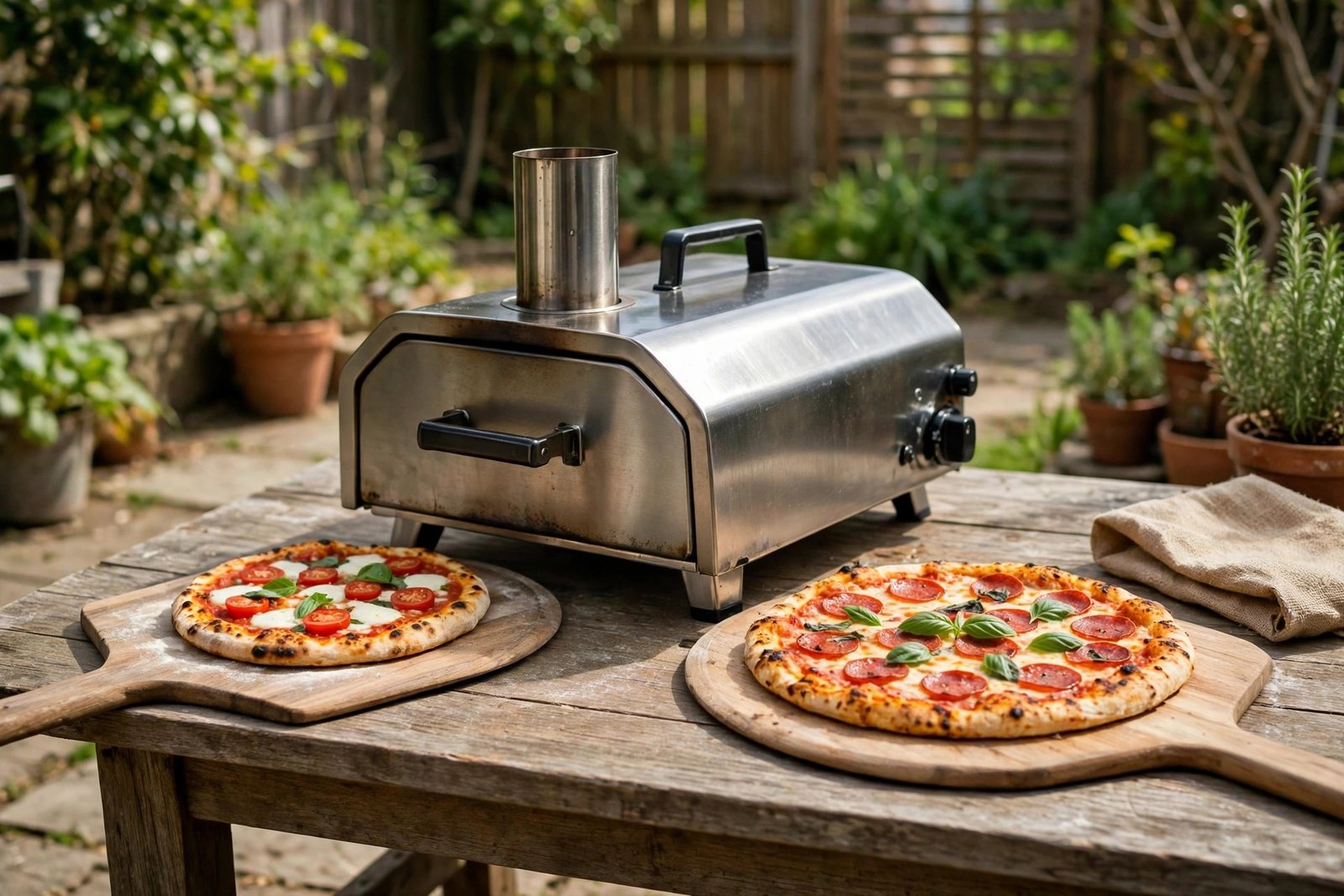
Most first-time buyers ask the wrong size question. They ask what the biggest oven they can afford is, when they should ask how many pizzas they actually cook, and how often. A 12-inch oven is plenty for most families. A 16-inch oven is a better tool for a crowd, but it costs more, weighs more, and needs a bigger table. This guide sorts out the size question, then covers the extras that quietly add to your total.
If you have not chosen an oven yet, start with our roundup of the best outdoor pizza ovens for backyard pizza night. If you are still deciding between fuels, read gas vs. wood-fired pizza ovens first.
The size math that matters
Pizza area grows faster than diameter. A 16-inch pizza has about 78 percent more surface area than a 12-inch pizza (roughly 201 square inches versus 113), so it is not just a little bigger. It is nearly two pizzas in one. That sounds like a bargain until you remember that one topping combination has to please everyone at the table.
Two 12-inch pizzas with different toppings usually make a family happier than one 16-inch pizza with a compromise topping. They also cook faster per pie, since a smaller pizza is easier to launch, turn, and retrieve at 900°F.
What each size is good for
| Oven size | Feeds per pizza | Best for | Watch out for |
|---|---|---|---|
| 12 inches | 2 to 3 people | Families, weeknight pizza, small patios | Cooking in rounds for a crowd |
| 14 inches | 3 to 4 people | A middle ground for larger families | Fewer models and accessories |
| 16 inches | 4 to 6 people | Regular hosts, big gatherings | Weight, table size, dough quantity |
So what size should you buy?
Buy a 12-inch oven if your usual pizza night is your household plus a friend or two. It is lighter, cheaper, and easier to store, and the best ovens in this class, including the Ooni Koda 12 at 20.4 pounds, are genuinely portable. A 12-inch oven also fits on a standard patio table, which a 16-inch oven may not.
Buy a 16-inch oven if you host pizza night for ten or more people on a regular basis, or if you bake large breads and sheet-style items in the oven. Be honest about “regular”: twice a summer does not justify the bigger oven. Twice a month does.
A 14-inch oven splits the difference, but the range of models and accessories is thinner, so check that peels and covers exist for the model you want before committing.
The table question
Size is not just about the pizza. It is about what the oven sits on. A 12-inch oven needs a stable table that can hold 20 to 45 pounds plus a propane tank nearby. A 16-inch oven can weigh 60 pounds or more and needs a wider, sturdier surface.
Measure your table before you order, not after. Leave room beside the oven for a peel, a tray of dough, and toppings. A cramped setup at 900°F is how pizzas end up on the patio instead of the stone.
What else to budget for
The oven is the biggest purchase, but it is not the only one. Budget for these from the start so the first pizza night is not a scramble.
- A pizza peel. Essential, not optional. You need one to launch and retrieve pizzas. Wood peels are forgiving for launching; metal peels are thinner and better for retrieving.
- A turning peel. A smaller, round metal peel for rotating the pizza mid-cook. Not essential on day one, but it is the tool that saves pizzas from burning on one side.
- An infrared thermometer. Essential if your oven has no built-in thermometer, as the Ooni Koda 12 does not. Guessing stone temperature is the top beginner mistake.
- A cover. A stainless oven left uncovered through winter will show it. A cover is cheap insurance for an oven that lives outside.
- Propane. A standard tank is a separate purchase if you do not already grill with gas, and a spare tank avoids a mid-party refill run.
- Dough and toppings. Budget a few practice rounds. Your first pizzas will teach you more than any guide, and store-bought dough is a fine way to start.
Some bundles cover several of these at once. The Solo Stove Pi Prime bundle, for example, includes a peel, an infrared thermometer, and a cover, which is part of why it is the runner-up in our pizza oven roundup. Compare a bare oven plus accessories against a bundle before deciding which is actually cheaper.
Common sizing mistakes
The most common mistake is buying big for a crowd that rarely materializes. The second is forgetting the table: an oven that does not fit its surface is an oven that stays in the garage. The third is skipping the thermometer. At 900°F, the difference between a perfect pizza and a burnt one is about 30 seconds, and you cannot judge that by eye on your first night.
Bottom line
For most households, a 12-inch oven plus a peel, a thermometer, and a cover is the right purchase. Size up to 16 inches only if you regularly cook for a crowd. And whatever size you choose, plan the whole setup — oven, table, and tools — before you order, so the first pizza night goes the way you pictured it.
For the evenings around the oven, see our guides to smokeless fire pits, patio heaters for fall evenings, and outdoor furniture sets under $2,000.