As an Amazon Associate, we earn from qualifying purchases. This post contains affiliate links, which cost you nothing extra.
Short answer: yes, on an established lawn. Milorganite and crabgrass preventer do different jobs and do not fight each other. Milorganite feeds the grass; a pre-emergent like Scotts Halts stops weed seeds from sprouting. Applied together on a lawn with no new seed, they are a sensible spring combination.
The catch is seeding. Crabgrass preventer cannot tell a crabgrass seed from a grass seed. If you overseeded, or plan to, the preventer is the problem, not the Milorganite. Here is how the timing works.
Why They Do Not Conflict
Milorganite is a slow-release 6-4-0 fertilizer made from heat-dried microbes. It contains no herbicide, so it does not interfere with how a pre-emergent works. A pre-emergent such as Scotts Halts, whose active ingredient is pendimethalin at 1.71%, forms a barrier in the soil that stops germinating weed seeds. The two products act on different things: one feeds existing grass, the other blocks new weeds.
That is why applying both on the same day is fine for an established lawn. Spread one, spread the other, water them in, and you have fed the turf and set the weed barrier in a single session.
The One Combination That Fails: Preventer Plus New Seed
Pre-emergent herbicides block all seeds that germinate in treated soil, including the grass seed you just paid for. Scotts Halts labeling is explicit that it is for established lawns and not for newly seeded ones, and the standard wait before overseeding after Halts is about four months.
So the rule is simple:
- Established lawn, no seeding planned: Milorganite and Halts together are fine.
- Overseeding now or soon: use Milorganite, skip the preventer, and seed. You can deal with crabgrass later in the season.
- Preventer already applied: wait out the barrier, roughly four months, before seeding. Milorganite is fine during that wait.
The Safe Sequences
Spring: established lawn
- Apply Halts in early spring, before crabgrass germinates. The usual trigger is soil temperatures approaching 55°F, which in most northern lawns means forsythia bloom time.
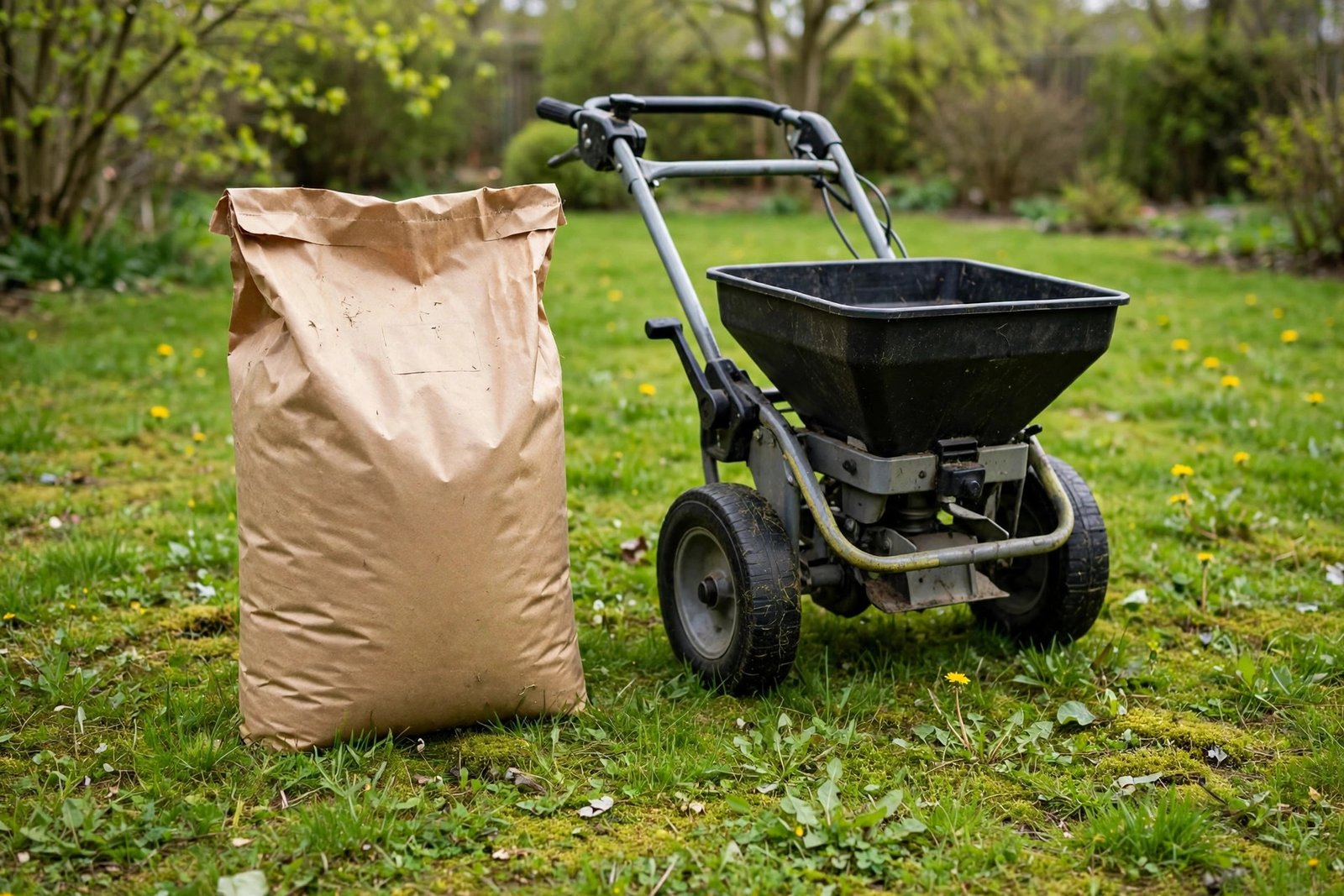
- Apply Milorganite the same day or within the same week. The 32 lb. bag covers 2,500 sq. ft., so measure the lawn first.
- Water both in lightly. Pre-emergent needs water to activate the soil barrier.
Fall: overseeding season
- Skip pre-emergent entirely. Fall is the best seeding window for cool-season lawns, and a spring Halts application has worn off by then.
- Seed, then feed with Milorganite or a starter food. Milorganite’s slow release suits new seedlings because it will not burn them.
- Plan the next spring’s preventer only after the new grass has been mowed several times and is established.
The middle path: spot-seeding a thin lawn
If only part of the lawn needs seed, you have two honest options. Seed the thin areas and skip preventer everywhere, accepting some crabgrass, or use a seeding-safe product such as a starter fertilizer with a seeding-tolerant weed preventer (mesotrione-based products are the common example) on the seeded areas and standard Halts elsewhere. Do not mix the two approaches on the same square foot and hope for the best.
What About the Combination Products?
Scotts sells Halts combined with lawn food, a single bag that feeds and prevents in one pass. That is a legitimate shortcut for an established lawn, and it removes the question of whether two products can share a spreader. The trade-off is control: you cannot adjust the feeding rate without changing the herbicide rate, and you cannot use it where you plan to seed. Separate bags cost a little more effort and give you that control back.
Milorganite All-Purpose Slow-Release Nitrogen 6-4-0 Fertilizer, 32 lb.
Herbicide-free feeding that pairs safely with a pre-emergent on established lawns.
Scotts Halts Crabgrass & Grassy Weed Preventer, 10.06 lb.
Pre-emergent barrier covering 5,000 sq. ft., for established lawns only.
Mistakes to Avoid
- Seeding the same week as Halts. The seed will not establish. This is the most expensive mistake in spring lawn care, because you lose both the seed and the season.
- Applying preventer after crabgrass is up. Pre-emergent stops germination; it does not kill visible crabgrass. If you see crabgrass, you need a post-emergent product, not another round of Halts.
- Skipping the watering-in. A pre-emergent sitting on dry blades does not form its soil barrier. Water within a day or two of spreading.
- Doubling the rate for extra insurance. More herbicide does not mean more protection, and over-application can stress the lawn. Measure the lawn, use the label rate, and calibrate the spreader.
Frequently Asked Questions
Can I apply Milorganite the same day as Halts? Yes, on an established lawn. Spread both, water them in, and the feeding and the weed barrier work independently.
What if I already spread Halts and now want to seed? Wait it out. The barrier lasts roughly four months, so seed in the next suitable window after that period ends rather than wasting seed on treated soil.
Does Milorganite count as a weed preventer? No. It feeds grass only. A thicker lawn crowds out weeds over time, but Milorganite itself stops no weed seeds.
Can I use Milorganite on a lawn treated with a weed-and-feed? Yes, but watch the total nitrogen. A weed-and-feed already fed the lawn, so adding a full Milorganite application on top can overfeed. Space the two applications several weeks apart.
Bottom Line
Milorganite and crabgrass preventer can absolutely share a lawn, and on an established lawn they can share a Saturday. The only hard rule is seed: if grass seed is going down, the preventer stays in the garage until that grass is established.
For more on Milorganite timing, see how long Milorganite takes to work and when to apply Milorganite. For preventer choices, see the best lawn fertilizers with crabgrass control and the best time to apply pre-emergent weed killer.
Related: for feeding right after aeration, see the best fertilizer for your lawn after aerating.