Disclosure: This post contains affiliate links. We may receive a commission if you make a purchase after clicking on one of these links.
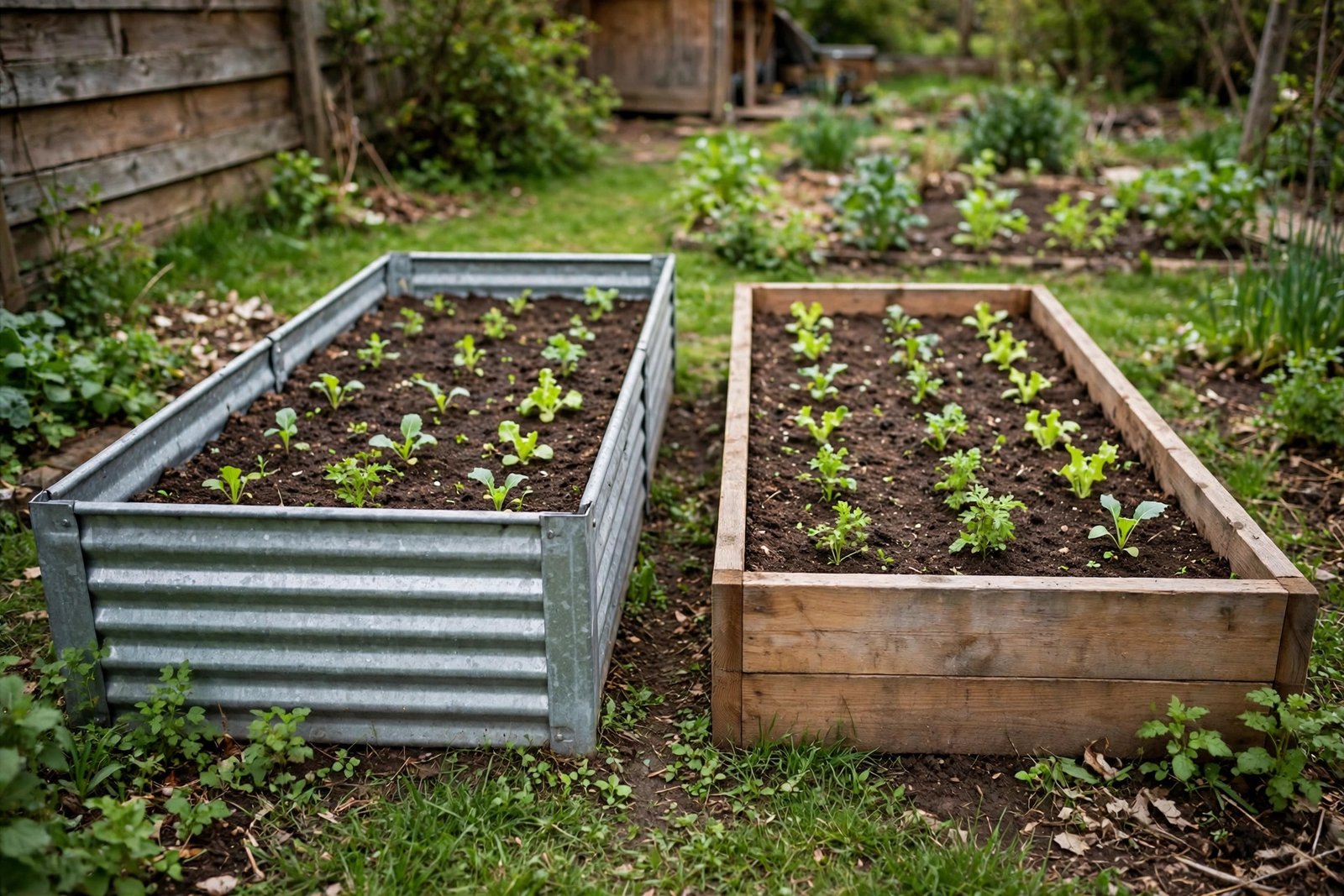
Metal and wood both hold soil. The difference shows up over time: one material quietly rots, the other quietly heats up. Which one lasts longer is the easy question. Which one suits your garden is the better one, and it depends on what you grow, how hot your summers run, and how much maintenance you will actually do.
Why the material matters before the first seed goes in
A raised bed frame lives in constant contact with damp soil. That is the hardest job any garden material gets — wet on one side, weather on the other, frozen and thawed every winter. Wood handles it by resisting rot; metal handles it by not rotting at all. But metal conducts heat, so a steel bed in full July sun warms the soil along its edges faster than a wooden bed does. Seedlings near the edge feel that difference first.
Lifespan: metal wins, and it is not close
Coated steel beds are measured in decades. Vego Garden says its Aluzinc coating lasts three to seven times longer than regular galvanized steel — a manufacturer claim, but the direction is right: coated metal outlasts wood by a wide margin. Plain galvanized beds last less long than coated ones, yet still longer than most wood.
Cedar is the best wood for the job and still the shorter-lived choice. Untreated cedar resists rot and insects, and a 3/4-inch cedar frame like the Greenes Fence premium bed gives years of service. Pine, even treated pine, rots faster and raises the question of what the treatment puts into soil meant for food. Expect to replace wooden boards eventually; expect to replace a coated metal bed only if you move or redesign the garden. Our raised garden bed roundup compares the specific kits behind these numbers.
| Factor | Coated metal | Cedar wood |
|---|---|---|
| Typical lifespan | Decades; coating is the weak point | Years; boards weather and thin over time |
| Soil temperature | Warms faster at the edges in sun | More even; wood insulates |
| Maintenance | Almost none; check bolts | None required; sealing is optional |
| Look over time | Holds its color and shape | Weathers to silver-gray |
| Assembly | Bolt-together panels | Slide boards into posts |
Soil temperature and timing
Metal beds warm up earlier in spring, which can be a small advantage for warm-season transplants — and a small risk in a heat wave, when edge soil dries faster. Mulch the surface and water the edges, and the difference mostly disappears. Wood beds hold a steadier temperature through a hot week, which suits lettuce and other cool-season crops planted close to the frame. Neither material changes the middle of the bed much; the effect is strongest in the outer few inches.
Timing still decides more than material. Soil temperature, not the calendar, tells you when to plant warm-season crops — the same rule that governs the whole vegetable garden. A metal bed does not make an early May tomato safe from a late frost.
Upkeep, honestly
Neither choice needs much. A coated metal bed needs its bolts checked after the first season, once the soil has settled, and a look at the coating where a shovel has scraped it. A cedar bed needs nothing at all to keep growing food; sealing it is cosmetic, and any sealer used on a food bed should be one rated safe around edibles. The maintenance difference that matters is at the end of life: replacing a rotten cedar board is a Saturday job, while a metal bed that finally rusts through is a replacement, not a repair.
Cost over the life of the bed
Metal kits usually cost more up front and less over time, because there is no second purchase. Cedar costs less up front and more over time, because the frame is eventually rebuilt. The cheapest bed on the day you buy it is not always the cheapest bed after ten seasons — but if you may move house or redesign the garden in a few years, the cheaper cedar bed is the rational buy. Buy for the garden you will actually keep.
Which one fits your garden?
Choose coated metal if you want to build once and forget the frame, if your soil is heavy clay that needs a deep bed, or if you plan to reconfigure the layout over time — modular metal kits break down and rebuild in new shapes. Choose cedar if the bed sits where you see it every day and the look matters, if you grow mostly cool-season crops near the edges, or if you prefer a material you can repair board by board. Either way, size the bed before you choose the material: what size raised garden bed you need covers width, depth, and soil volume.
Vego Garden 17-Inch Tall Modular Raised Garden Bed Kit
Coated metal, 17 inches deep, and reconfigurable — the build-once choice.
Greenes Fence Premium Cedar Raised Garden Bed, 4 x 12 ft
Untreated cedar that weathers gracefully and is safe for food plants.
The bottom line
Metal lasts longer. Wood looks better as it ages and keeps soil temperatures steadier. If you only remember one thing, make it this: a well-sized bed in either material, filled with good soil, will outgrow a poorly sized bed in the “better” material every time.