Landscape & Leisure is reader-supported. When you buy through links on our site, including Botanical Interests seed links, we may earn a commission at no extra cost to you. Prices change, so click through to confirm current pricing.
Every gardener has had the same small shock: a plant you never replanted, coming up in the path, in the lawn edge, in a bed where it was never invited. Sometimes it is a gift — chamomile where you wanted chamomile, more or less. Sometimes it is a takeover, and the plant doing the taking is one you planted yourself, on purpose, last year. Herbs come back on their own in three different ways, and knowing which way yours uses is the difference between free plants and a weeding project. This guide sorts them out: the self-sowers, the perennial returners, and the spreaders — and the one habit, letting flowers set seed or not, that controls nearly all of it.
For the full herb lineup, see our roundup of the best culinary herbs to grow from seed, and for the herb that needs the most hands-on timing, our guide to growing basil from seed.
Three Ways Herbs Come Back
First, self-sowing: an annual flowers, drops seed, and the seed germinates next spring where it fell. Second, perennial return: the same plant’s roots survive winter and regrow from the crown. Third, spreading: the plant expands by underground stems or by shedding so much seed that it colonizes new ground. A single herb can use more than one of these — lemon balm is a perennial that also spreads by seed, which is why it earns a whole section below — but the management is different for each, so it pays to know which mechanism you are dealing with before you decide whether to welcome it.
The control lever is almost always the same: flowers. A plant that never sets seed cannot self-sow, and a plant whose flower stalks are cut before seed matures cannot colonize the neighborhood. Deadhead the flowers you do not want seeding, let a few go where you do, and you are managing reseeding instead of fighting it.
The Reliable Self-Sowers: Chamomile and Calendula
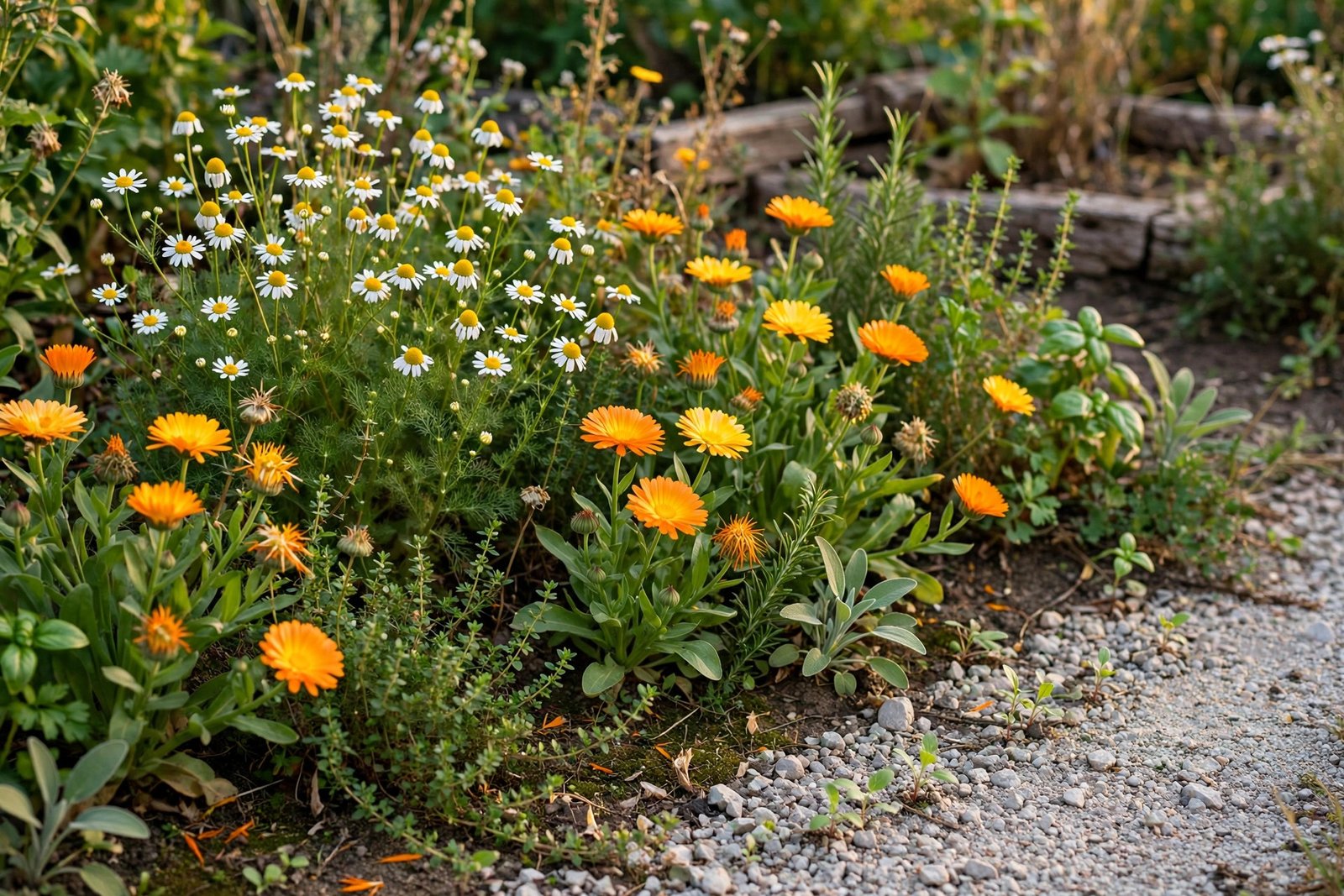
German chamomile is the classic self-sower. An annual over 24 inches tall, it produces masses of small white, apple-scented flowers from late spring into summer, and if you let some of those flowers mature and drop seed, chamomile returns the next year with almost no help from you. Its seed needs light — Botanical Interests says to press it into the surface rather than bury it — so fallen seed germinates best on bare or lightly raked soil, not under a thick mulch. The trick to enjoying it is also the trick to controlling it: harvest flowers for tea through the season, leave a patch to set seed where you want next year’s plants, and pull the volunteers that show up in the path. Learn what the seedlings look like — feathery, fine foliage — so you do not hoe them down with the weeds in spring.
German Chamomile Seeds
Apple-scented tea flowers that return on their own where seed is allowed to fall.
Resina calendula works the same way, with a tougher constitution. Its bright yellow blooms are very frost tolerant — the plant may even be seen blooming in snow — and its resin-rich petals are edible, so it earns its place at the bed edge twice over. Let some flowers set seed and calendula volunteers return readily; deadhead the rest and the plant keeps blooming instead of putting its energy into seed. Calendula seedlings are easy to recognize and easy to move, which makes it one of the friendliest self-sowers to manage: thin the volunteers to the spacing you want, transplant the extras to a gap, and compost the rest. A self-sower you can relocate is barely a weed at all.
Resina Calendula (Pot Marigold) Seeds
Edible, resin-rich petals on a plant tough enough to bloom in snow — and to return next year.
The Perennial Returners: Lemon Balm and Lavender
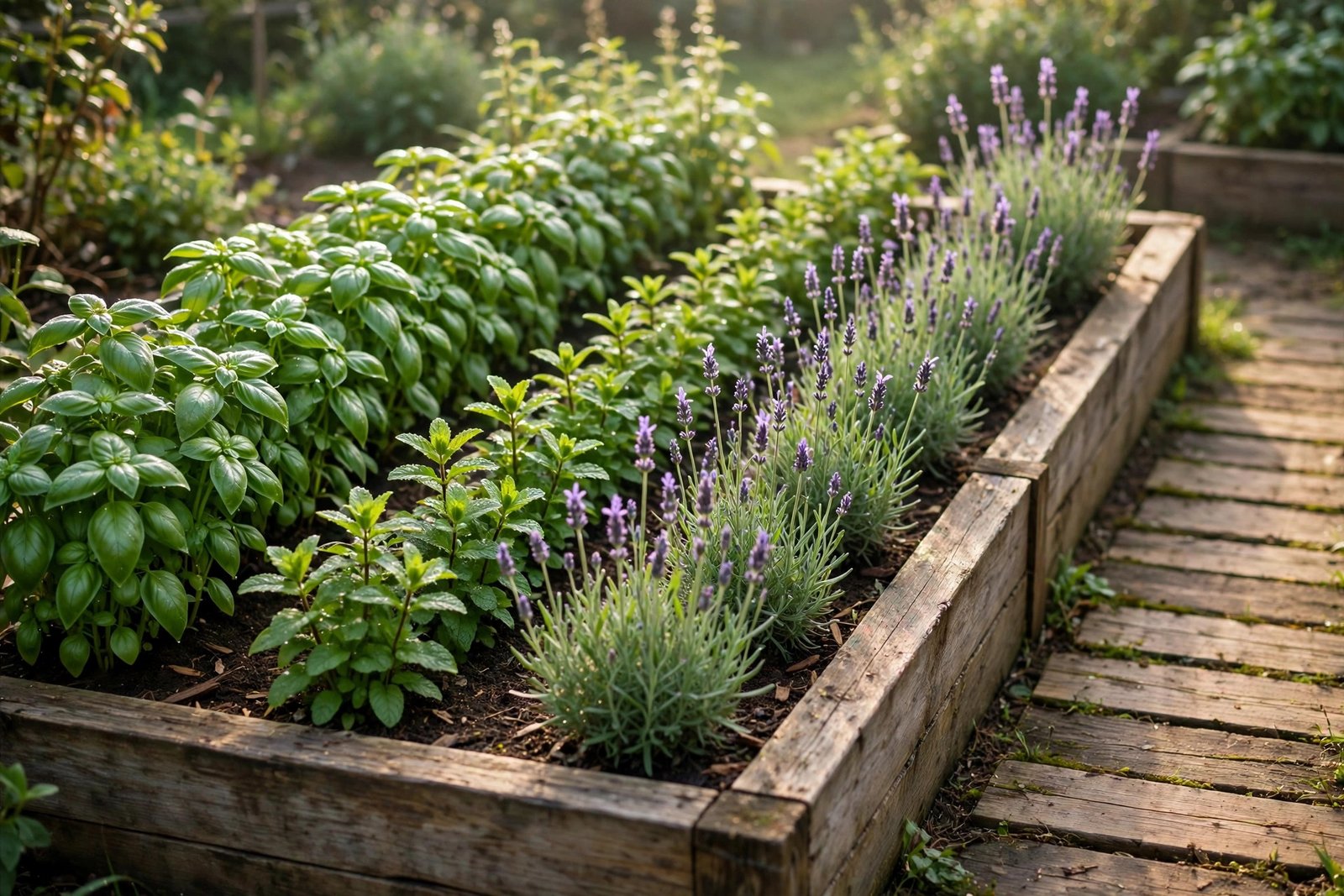
Lemon balm returns two ways, and that is exactly why it needs a plan. It is a perennial hardy in zones 3 to 7, so the same plant comes back from its roots each spring — and it also spreads by setting lots of seed, which is how a single plant becomes a patch, and a patch becomes a problem. Illinois Extension puts it plainly: lemon balm is often confused with mint in how it grows and spreads, but while mint spreads rapidly by underground stems, lemon balm spreads by setting lots of seed and can overtake a garden if allowed to go unchecked. The fix is in the same sentence as the warning: prune the flowering stalks before they have a chance to set seed. Cut stems back by about half in midsummer to keep plants vigorous and open to air, harvest before flowering for the best flavor, and give lemon balm either its own space or a large container. A container is not a defeat. It is the difference between a herb you enjoy and a herb you battle.
Lemon Balm Seeds
Hardy to zone 3 with lemony mint leaves — prune flower stalks before seed set to keep it polite.
Munstead lavender is the well-behaved perennial in this group. Hardy in zones 5 to 9, compact at 12 to 24 inches, it returns from the same plant year after year without colonizing the bed — its long germination (15 to 90 days) tells you everything about its pace. Lavender does not rush, and it does not roam. It wants full sun, sharp drainage, and a gardener who starts seed 10 to 12 weeks before the last frost and then mostly leaves it alone. If your lavender disappears over winter, the usual cause is wet soil or a zone colder than it can handle, not reseeding gone wrong. Plant it once, in the right spot, and it stays put.
The Spreader: Mint, in a Pot or Nowhere
Mint is the herb that gives reseeding a bad name, unfairly — mint’s real trick is not seed at all. Mint spreads rapidly by underground stems, sending runners out under the soil surface and popping up feet from the parent plant. That is why a mint plant in open ground becomes a mint patch, and then a mint lawn edge, and then a conversation you have with yourself about digging. The answer is boring and completely effective: grow mint in a pot. A container with drainage, full sun to part shade, and steady water gives you all the mint you can use — for tea, for cooking, for the bees that love its tiny flowers — with none of the excavation. If you already have mint in a bed, the control is the same discipline as lemon balm: cut flower stalks before seed, pull runners at the bed edge in spring, and accept that a plant this vigorous needs a boundary the way a dog needs a fence. Mint grown from seed is also slow and finicky to germinate, then easy once established, so sow thickly and do not judge the packet by its first two weeks.
Basil: The Conditional Volunteer
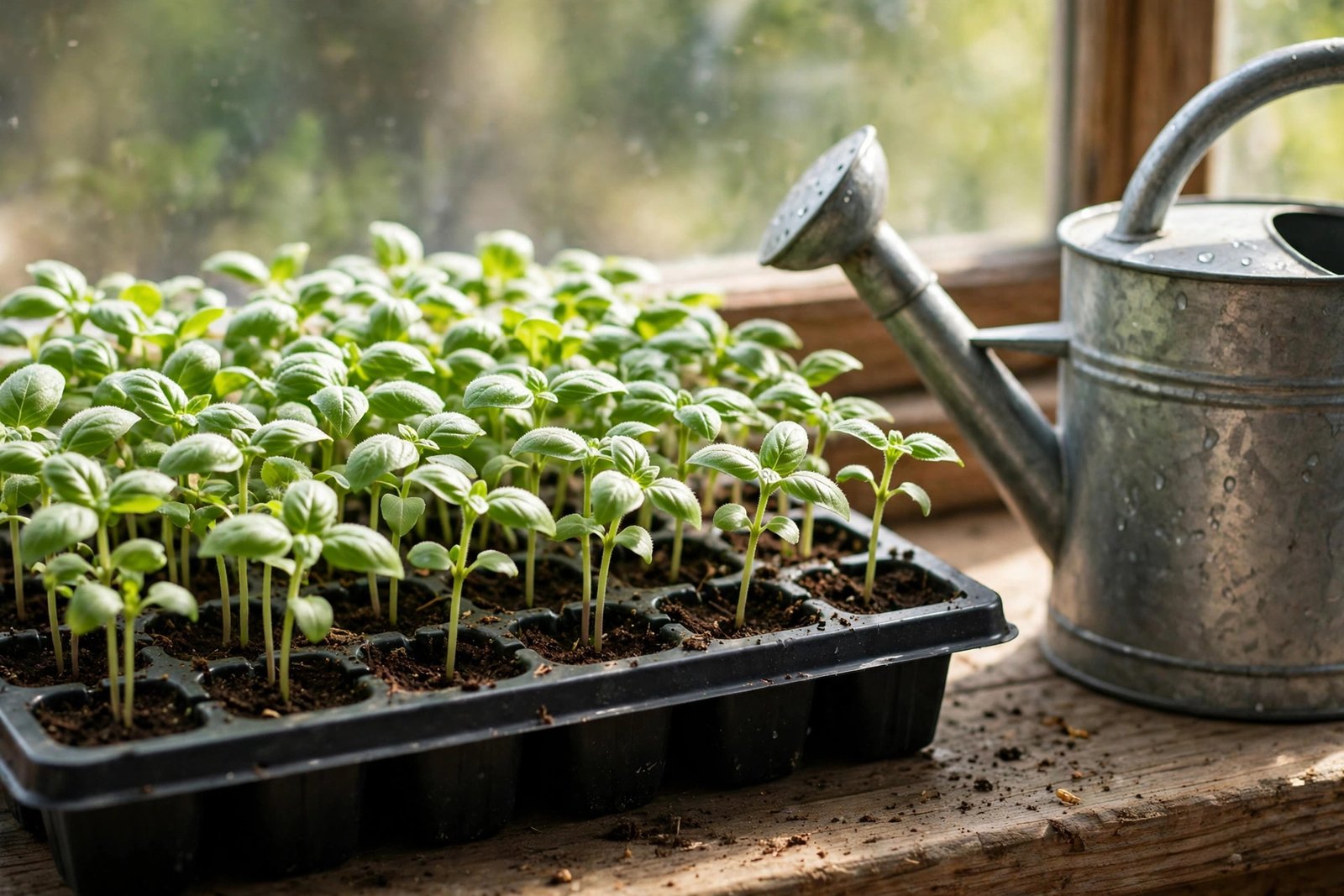
Basil sits in its own category: a tender annual that can self-sow in warm climates, where a plant left to flower drops seed that germinates the next spring after the soil warms. In a northern garden, that rarely happens on its own — basil is very frost sensitive, its seed needs soil of at least 60°F, and a plant killed by the first frost in October leaves seed that faces a long, cold winter. Treat basil as a plant you re-sow, not one you count on returning, and use successive sowings every three weeks (see our basil guide) instead of hoping for volunteers. If a volunteer does appear in a warm, sheltered spot, welcome it — and know that a hybrid like Noga will not come true from saved seed, so volunteers from a hybrid planting are a pleasant surprise, not a variety you can count on.
How to Keep Self-Sowers in Bounds
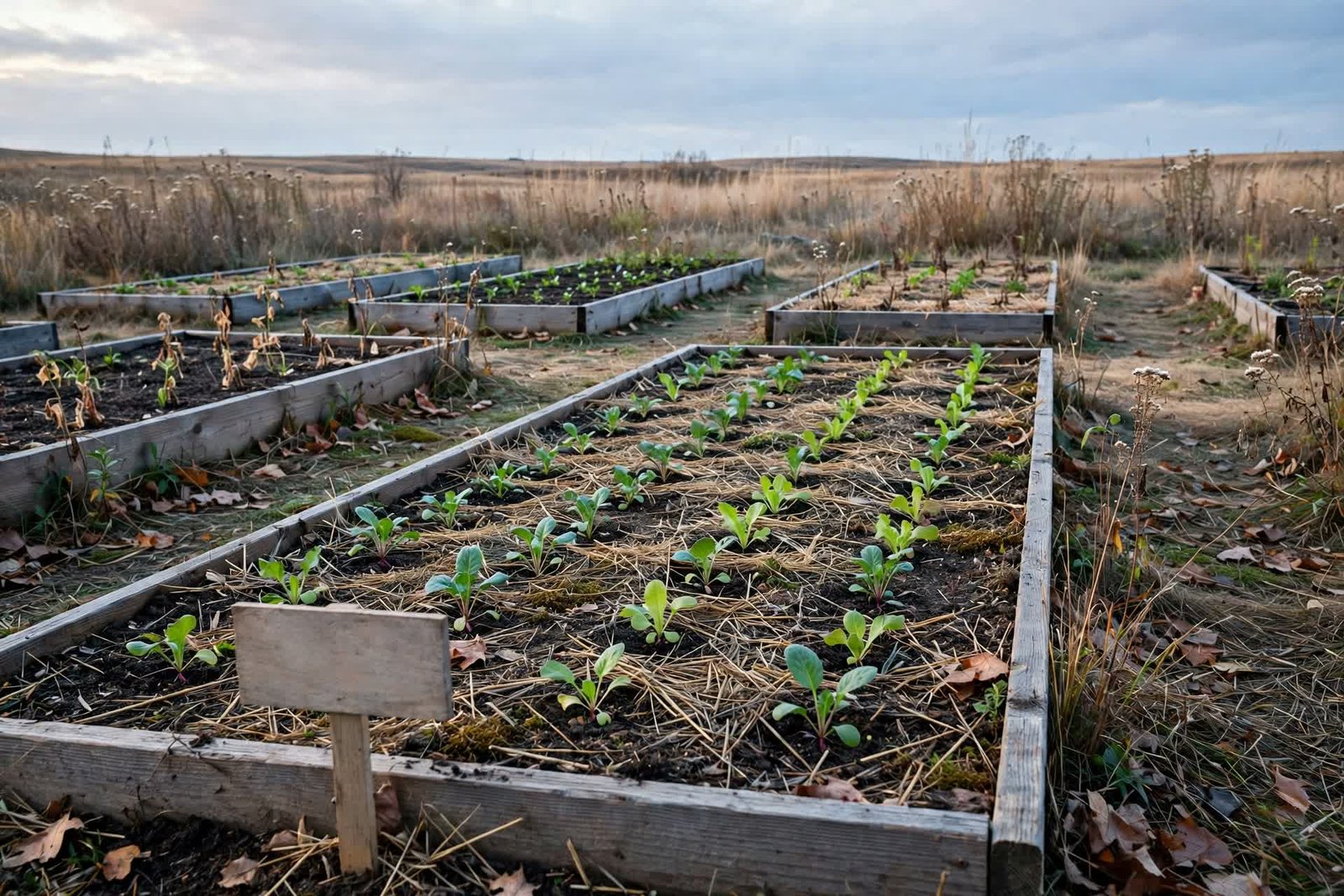
The management is simpler than the reputation. Let a few plants flower and set seed exactly where you want next year’s crop, and deadhead or cut back the rest before seed matures. Minimize soil disturbance where seed has fallen — tilling buries light-needing seed like chamomile’s too deep, or scatters seed you meant to keep in one place. Learn the seedlings: chamomile’s feathery foliage, calendula’s sturdy rosettes, lemon balm’s crinkled ovals. The seedlings you recognize in spring are the ones you will not hoe down by mistake, and the ones you can lift and move to a gap while they are small. And give the vigorous ones a container or a corner of their own from the start. A self-sower with a boundary is free plants. A self-sower without one is a weeding list.
Who Comes Back, and How
| Herb | How it comes back | Keep it in bounds |
|---|---|---|
| German Chamomile | Self-sows freely; seed needs light | Let a patch set seed; pull path volunteers |
| Resina Calendula | Self-sows; volunteers transplant easily | Deadhead some; thin or move volunteers |
| Lemon Balm | Perennial, zones 3–7, plus heavy self-seeding | Prune flower stalks before seed set; container works |
| Munstead Lavender | Perennial, zones 5–9; stays put | Right spot and sharp drainage; little needed |
| Common Mint | Spreads by underground runners | Grow in a pot from day one |
| Basil | May self-sow in warm climates only | Re-sow every 3 weeks; do not count on volunteers up north |
Final Thoughts
The herbs that come back on their own are the best bargain in the garden — provided you are the one deciding where they come back. Let chamomile and calendula seed where you want them, keep lemon balm’s flower stalks cut, put mint in a pot before it ever touches open ground, and let lavender do its slow, steady perennial thing. Do that, and next spring’s volunteers will feel like a gift instead of a chore. For the varieties worth starting with, see our culinary herb roundup, and for the herb that needs your timing most, our basil guide.